In The Midst Of Our Failures

You all know I love rock music and enjoy studying the bands made up of incredible artists. Yesterday, I heard Archetypes Collide for the first time – AWESOME! This is a band I am going to be paying attention to and would love to meet and have a conversation with. The song I heard was ‘What If I Fall’. It was a great song with some super-meaningful lyrics that really made me think about how we deal with failure – our own and the failure of others. The chorus is a leadership lesson: “What if I fall and waste away the life that I have made?; What if I fail and let down everyone who trusted me?; Why does holding on feel so wrong?; It’s weighing down on me; What if I fall and lose everything?” Listening to this song really made me think about my own fears and have me contemplating how to remove those fears from others. We all encounter obstacles, fall/fail, and need to learn how to rise again. We also need to teach those we serve the skills required to pick themselves back up after reaching for a major goal but falling short.
Frontman of the band, Kyle Pastor, said of the song, “I’ve always had a deep rooted fear of letting my friends and family down… Even though I know they’ll love me in the midst of my failures, the anxiety of it all buries me and pushes me further away from them. I hope this song can be an anthem for those who feel that same burden” (Paul Brown, Wall of Sound). This really is a burden for most of us. If we’re honest we all have anxiety for failing. We need to be careful not to equate failure to being less worthy to ourselves and others. We need to create growth mindset cultures where falling and failing is seen as learning and growing. That culture also needs to embrace falling and it not be letting someone down.
There is actually a name for fear of failure: atychiphobia. One of the signs of this is partly what the song is about; fearing people will think differently of us if we fail. We also worry we are letting others down. Again, though, if we create a growth mindset culture, failure won’t be seen as letting anyone down, but as a learning moment. We need to adopt an attitude of failure being an opportunity to learn. I realize it is a whole lot easier to say all this than actually put it into practice, but I love that this song calls out our anxiety. Fear of failure is very real for each of us. It can can us to avoid risk, lose our creativity, and our ability to innovate. We must all make sure all those in our care know that their stumbles will not let us down. And, give ourselves grace for our own moments of learning.
Relinquishing One Dream For Another
Just the other day I wrote the post No Fork Is Without Twists, about the fact that the trails we choose aren’t always smooth and there will be twists and turns in life. This week I started reading another great book, Red Dress In Black and White by Elliot Ackerman. I can already tell this is going to be one of those books that causes a great deal of reflection and pondering – just what I love. One of the lines I read yesterday was that one of the characters had “relinquished one dream for another.” We don’t really know yet in this novel whether that is a good thing or bad, but then I got to thinking about how it can be both good and bad. We all have those dreams and hopes for our future. We all have those things we are passionate about and want to do with our lives. Those dreams help give our lives purpose and direction. Sometimes dreams change, though, right?
“Many of life’s failures are people who did not realise how close they were to success when they gave up.” ~ Thomas Edison
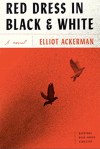
Sometimes, however, those dreams are imposed on us by our parents, partners, or spouses. Then, like both Catherine and Murat in Red Dress In Black and White there becomes a relinquishing of one dream for another. We have been taught from a young age to never give up, but in a society that links the giving up on a dream or goal as failure, we also need to understand how to make adjustments to unattainable goals. Please don’t think I have become a defeatist. I just also believe we must be real and also consider how to think through what psychologists call “goal adjustment capacity.” Check this out:
“…the successful attainment of desired goals facilitates subjective well-being and physical health (Bandura, 1997; Carver & Scheier, 1981, 1998; Emmons, 1986, Heckhausen, Wrosch, & Schulz, 2010). This is not surprising as goals are the building blocks for the accomplishment of a variety of developmental tasks and their attainment is likely to foster long-term patterns of successful development (Heckhausen, 1999; Ryff, 1989). At times, however, it is impossible for a person to make further progress towards an important goal because the goal itself is not attainable.”
Goal Adjustment Capacities, Subjective Well-Being, and Physical Health
Again, I am not advocating for giving up on dreams and goals, but want us to also be able to recognize the times where adjustments may be necessary. Or, we need to be able to recognize when relinquishing one dream for another could be a good thing or bad.
Who Saved Who?
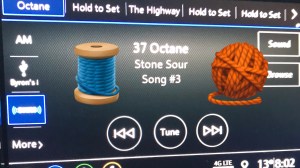
The other day I heard Song #3 by Stone Sour. It had been a while since I had heard this great song that was released in 2017 on the Hydrograd album. The thing I love so much about art is the fact that it has different meaning to whoever is listening to or looking at it. These words jumped out at me from the song: “Did I save you?; ‘Cause I know you saved me too.” These are such powerful lines. If you’ve ever watched relationships, and this may even be true in your own relationship with someone, it is hard to distinguish just who saved who. It’s pretty cool how relationships can work that way. The right people come into our lives at the right time. We need to make sure we are paying attention and don’t miss those individuals that maybe we will save, or that are there to have an impact on our lives in some profound way.
We also don’t want to overlook those individuals we can help in some way. Many times, just like in the song, it’s hard to tell just who is saving who. If we use the metaphor of yarn, the different threads being weaved together comes to mind. Everyone we meet, and particularly those we form relationships with, become a part of the rich tapestry that is our life. Remember, you might just be saving someone.
No Fork Is Without Twists

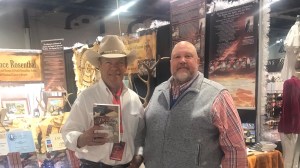
In my post Trails Always Offer Choices, I predicted we would probably be brought back to the quote that was the title of that post somewhere in the last half of the book and we were a couple of times and then again at the very end of the book. The quote first came about half way through Book 4 of Threads West An American Saga: Moccasin Track by Reid Lance Rosenthal. This series is absolutely incredible. I have now finished the first four books and gave them all five stars. I cannot wait for books 5, 6, and 7 to come out. The books are based upon the threads of the lives of characters from very different places, cultures, beliefs, and backgrounds that become weaved together. Interestingly, my becoming inspired by these books happened by chance, or fate, when I met Reid at Cowboy Christmas while I was in Las Vegas doing work for a client. We had a great visit, I ended up with signed copies of the first four books and the rest is history. The weaving of threads being brought together had begun.
Now, back to trails always offering choices. When losing one possible trail to an avalanche, Reuben told Johannes, “There may be no choice in trails but trails always offer choices.” After they parted Johannes said to himself, “Trails always offer choices. What did he mean by that?” Then the last sentences of the book: “There may be no choice trails,” his [Reuben] friend [Johannes] had warned, “but trails always offer choices.” Reuben then says to himself, “Ah, Viking, you forgot to mention choice is sometimes out of one’s hands. No trail is smooth, and no fork is without twists.” These books have reminded me how heavy our choices weigh on us. I am also reminded that sometimes choices really are sometimes out of our hands. Sometimes choices are life-changing. Each path we take, just like the characters in this saga, will send us on a completely different trajectory.
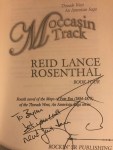
One thing that I have contemplated while reading the first four books in the series is the thought that many of the choices made by the characters were what was best for them, not what might be considered to be the “right” choice. Many times we don’t allow ourselves to make decisions based on “what’s best for me.” I wonder if we shouldn’t try to put ourselves in the frame of mind more often. Wouldn’t this allow us to be our authentic selves and follow our dreams?
On The Journey To The Pinnacle

A person in a board meeting I was in this week introduced himself as having reached the pinnacle of his career. I thought to myself, “What does that mean?” What is left is he has truly reached the pinnacle. I then Googled what pinnacle means. According to Merriam-Webster pinnacle means: “the highest point of development or achievement.” After reading this, I asked myself the question, “Do I ever want to reach the pinnacle of my career?” If I reach the pinnacle would that not mean I would be on the the way down from there? I want my mindset to be that I will always continue on the journey toward pinnacle.
I do, however, want to be a pinnacle leader, as John Maxwell defines it as part of his 5 Levels of Leadership. A pinnacle leader is one that people follow because of who they are and what they represent. Maxwell calls these Level 5 leaders and told us the leaders, “…create a legacy of leadership in the organization they serve.” I have always said I want to be remembered as a thoughtful leader who showed love for those I served by providing growth and development. The pinnacle is not easy to achieve. We start at Level1 leading by position only. Level 1 doesn’t last very long. Then as we build a relationship we move to Level 2 and lead by permission. At Level 3 others follow us because of results. At Level 3 we begin to gain followers because of what we have done for an organization. Then at Level 4 we are in the people development business. People follow us for what we have done for them. My goal is to become a Level 5 leader to as many as I can. Hopefully I can stay true to my never-ending journey to the pinnacle. Where are you on that journey?
What Is Your Brand?

Loved the quote “If you work for the ranch, you ride for the brand” by Reuben Frank in Book 4 of Threads West An American Saga: Moccasin Track by Reid Lance Rosenthal. Being an agriculturalist I have always understood the importance of brands in lots of contexts; cattle in the west needed brands, what brand of tractor or truck we had was a big deal (at least I always thought it was when arguing that Chevy’s were the best truck, which they are!), brand of seed corn, or the design on our silks when we were raising and racing race horses. You get the idea. Yesterday I was reminded how important it is to “ride for our brand.” I was in what I call a partner meeting, discussing what was needed from me for a custom facilitation for a group’s annual conference, when a member of the team said, “Byron, we want you to start the afternoon doing those ‘Byron things’ you do.” I asked, “Can you define that a little better for me?” He answered, “You know, those things where you engage us with reflection and new experiences so our brains can construct new meaning and be really fun.” Alrighty then! I gotta tell you I loved that as a brand being placed on me. I never want to be cookie cutter and want to create engagement that leads to more inclusive and complex perceptions and ways of seeing and knowing. Reflection is a metacapacity that research tells us is an important part of adult engagement leading to learning.
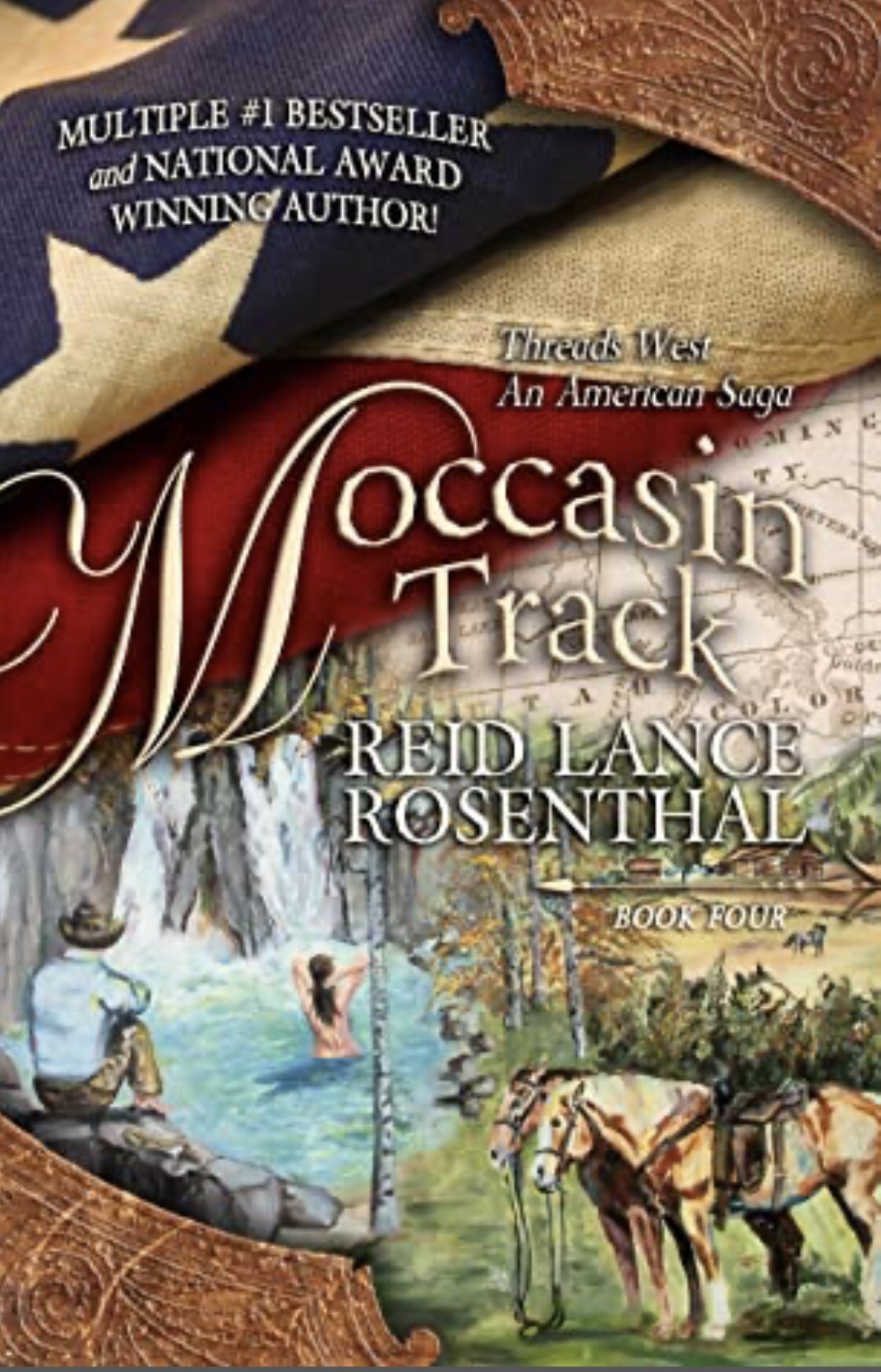
Back to the importance of our brand. Bottom-line is that perception is everything. We must tell the world who we are and what we are about. Then stick to that narrative. The world will see us the way we want to be seen as we walk in our purpose. This is walking the talk or walking the walk. This is what keeps me going. Every time I create a new experience for a client, it a re-enchantment, so to speak. Whether it is creating a new session, coming up with new and engaging ideas, or learning new content that I need to better serve others, it is through creating that I keep falling in love with the world. The other part of my brand I am passionate about is providing creative and collaborative help. We all have those things we do. I’m glad to know those “Byron things” have become part of my brand. What do you that is your brand? Better yet, are you doing things that make a brand you want to ride for?
Trails Always Offer Choices

During the 1850’s, which is the setting for Book 4 of Threads West An American Saga: Moccasin Track by Reid Lance Rosenthal, thousands of immigrant Americans traveled westward. These pioneers had a choice of trails, but none was easy. In many cases the trail had begun a world away in another country. When losing one possible trail to an avalanche, Reuben told Johannes, “There may be no choice in trails but trails always offer choices.” After they parted Johannes said to himself, “Trails always offer choices. What did he mean by that?” I am about half way through Book 4 and I believe Rosenthal will probably bring us full circle back to this comment. Taking a stab at it though, I believe it is a metaphor for all the paths/trails taken for all of those whose threads have now connected through the journey west. Reuben and Rebecca who first met on the ship coming to America from two very different countries and backgrounds, are now married and expecting a baby – choices made. Rosenthal told us, “You will recognize the characters who live in these pages. They are the ancestors of your friends, your neighbors, your co-workers, and your family. They are you. They are us. This is not only their story. It is our story.” This is so true. While we didn’t have a say in the trails of our ancestors, those trails we were put on now offer us choices. Those choices will in turn affect our ancestors and the course of world history.

Our choices lead to consequences. The choices I witnessed in this novel are mostly made for pragmatic reasons of survival, but sometimes are unmotivated by pragmatism, or cultural acceptability. Sometimes the choices are made for emotional reasons, or strictly for pleasure. But always, the choices have consequences. We also know that the choices of previous generations influence our current decisions. Think about it; stories are told to help us be successful and keep us from making the same mistakes as those who have gone before us. While I get that the book inspiring this post is historical fiction, it is nevertheless historically accurate. I love the title Threads West, because it gives a visual metaphor of how the choice of trails and the choices made while on those trails weave us together.
It Ain’t Like You Get Do-Overs
Johannes asked Zeb, “Do you ever regret not doing anything in your life?” Zeb answered, “Don’t think there’s anyone who doesn’t ever regret something. The question is how many regrets we have, how big they are, and how long you let them last. It ain’t like you get do-overs, Johannes.” This conversation took place between western mountain man, Zeb, and immigrant from Denmark, Johannes, in Book 4 of Threads West An American Saga: Moccasin Track by Reid Lance Rosenthal. I love the insight of the character Zeb, here. Sometimes, we like to say we have no regrets, but the truth is that’s not very realistic. Regret is actually an emotion we are psychologically able to deal with. It could be something as simple as ordering the lobster mac and cheese and then seeing someone else’s salmon and wishing you had ordered it. Our mind instantly gives us the solution – we can order the salmon next time. Now, ordering the salmon next time works unless we are at a restaurant in a foreign country that we will never likely return to again. But, according to Zeb’s comment, this would be a small regret. We are probably not losing much sleep over it. Sometimes regret is just regret.

Most of the time we regret more the things we don’t do than the things we do. Zeb said, referring to regrets, that “…we don’t get do-overs” and there’s the question of “how long you let them last.” We need to keep in mind that we really don’t get do-overs. There are second chances, but not do-overs. Remember, the opportunity may, and probably won’t, present itself again. The thing I found most profound about these lines in the book was the question of how long we let regrets last. Sometimes reversing the regret could be as quick as making a phone call and saying what you wish you had said earlier. Sometimes it is not something that can be reversed or anything that can be done. I like the idea, however, of asking myself, “how long will I let this regret last?” Remember, it ain’t like we get do-overs!
I Know Things
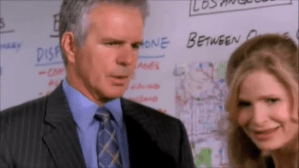
“I know things.” Detective Lt. Andy Flynn (Tony Denison) said this to Deputy Chief Brenda Johnson (Kyra Sedgwick) in The Closer. He made this comment in relation to a discussion about Johnson’s dealing with her father’s cancer. Flynn had gone through the same cancer with a family member. Don’t you love it when people know things. Better yet, we all know things. I try to learn new things every day. Those things then become knowledge I can share with others. In the case above that knowledge allowed Flynn to practice a type of empathy known as empathic concern. Empathic concern is the ability to sense what another person needs from you. When my father had cancer, my principal at the time had gone through the same cancer with his wife. He would brace me for how my dad would be reacting to different drugs and treatments. I needed this and was so grateful that Mr. Watson knew things. More importantly I was blessed that we had the relationship that allowed the sharing. Mr. Watson was critical in my making it through that six month ordeal and the passing of my father.
Each of us “know things” and have unique lives. Sharing what we know can make our lives worthwhile. Think of that feeling you get when someone gives you a needed piece of information. You too, give that feeling to others. Think about it; if you share with someone else, they could be transformed. We all have a way of being at the right place at the right time. We might just be creating their moment – opening a door of opportunity. Sometimes these moments have a way of transforming the person sharing the knowledge as well. Always remember, the more of what you know you give away, the more things you’ll be ready to learn.
It Is What It Is
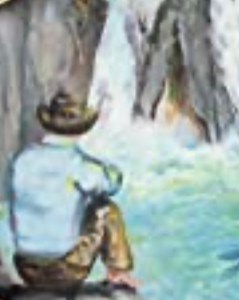
Those who know me well, know that I sometimes use the phrase “It is what it is.” When I use it I really do mean it. I never use it as an excuse or explanation for inaction. For those who hate the phrase, hear me out. A character, Reuben, in the great historical fiction novel, Threads West An American Saga by Reid Lance Rosenthal often uses that phrase. The context is usually that there is nothing that can be done so an alternative needs to be created. An example was wanting to use a shorter trail, but an avalanche had block the trail. Reuben commented “It is what it is” and began plotting a new way up the mountain. For me, recognizing something for what it is begins to make it possible to get creative with alternatives. I’ve always believed I use and believe the phrase because of being comfortable with the unknown. Sometimes we have to let things exist in their uniqueness. Sometimes there just is not an objective answer.
As a creative/artistic person I am okay with things being ambiguous. If something has the potential to unfold into different actual states than its current state it may very well be ambiguous. By allowing things to be ambiguous we get a richer, more nuanced understanding of them, which may lead to a new insight or invention. “It is what it is” can suggest a world of possibilities.
“It is what it is” is a statement of potential. The statement indicates acceptance of complexity and ambiguity. It can also be an anthem to accepting limitations. Sometimes we can’t control everything. Sometimes things just are what they are. By recognizing that we can add to the statement and say, “It is what it is, but we can…” Sometimes the contexts we are put in are malleable. We cannot control everything in our lives and organizations, but we can make a choice to learn, grow and become a better version of ourself.
 Byron's Babbles
leave a comment