Just 10 Minutes Of Your Time

This morning I am reflecting on another topic brought up in Rachel Pedersen’s great book, Unfiltered: Proven Strategies To Start And Grow Your Business By Not Following The Rules: Parkinson’s Law. Parkinson’s Law states that as “Work expands so as to fill the time available for its completion.” In other words, work expands to fill the time available for its completion. If you give yourself a week to complete a task, it will take a week, but if you give yourself a day, you will be able to complete it in a day. Rachel emphasized the importance of setting realistic, but aggressive deadlines up front. She also discussed limiting the amount of time spent on tasks to increase productivity and efficiency. I have been paying attention to this lately. In fact this week I had a client schedule a 15 minute meeting with me. Guess what? It took 13 minutes. So, another client asked for an hour. I suggested a 30 minute gap between other meetings. You guessed it; the meeting took 26 minutes. So, one of my big takeaways is to get away from the default time periods for meetings – 30 minutes or one hour. I’m even trying some 10 minute calls. Calendly really helps me with that kind of scheduling.
One thing I have learned is that setting a clear deadline, breaking the task down into smaller chunks, and limiting the time spent, I can accomplish more in less time and feel more satisfied with the progress. Ingvar Kamprad, Founder of IKEA, advocated for splitting our days into 10 minute increments. Then, trying to waste as few of those 10 minutes as possible. I tried it – I was amazed at how few I wasted. And…I didn’t get bored with any one thing. Now, will that work for everything? Nope, but one more tool in the toolbox. I love having tools in the toolbox. Instead of letting projects take on a life of their own, we need to design the scope up front, because otherwise those projects will take on a life if their own and take as long as we let them.
Happy Birthday Question

I got a great birthday wish last week from the awesome leader and author, Bob Tiede. Here is the message he sent me: “Happy Birthday Byron! When you reflect on your past year what might be the one thing you are most grateful for?” Bob is all about leading with questions. That’s what I love about him and why he is one of my role models from afar. Here was my answer: “Thank you for the birthday wishes, Bob. Also, I love the question. Here are my thoughts: I am grateful for loving relationships and the opportunities that have come my way. Reflecting on the positives always helps me have a mindset of gratitude and contentment.” It was hard to stop thinking about the question, though. Questions are so powerful.
Many of those relationships I was referring to in my answer to Bob’s question were related to those new relationships I have made and old relationships that have been strengthened in the first two years of founding my own company. As I reflect on the past year, I am struck by how lucky I am to have such fantastic clients that really are more like partners. Their feedback and encouragement have kept me motivated and inspired, and I am deeply grateful for their continued patronage. I am also grateful for the lessons learned through challenging experiences. Wow! All this reflection from Bob’s question. There is so much power in the question. What are you grateful for?
Passion Bubbles

This morning I am contemplating a few things out of recently read books. One out of the great book I finished a couple of weeks ago, Red Dress In Black and White by Elliot Ackerman where it was said, “Family should be at the center of who you are, not the circumference.” The others were by Mark Twain in Volume 3 of his autobiography. Twain spoke of “The things that take up the spare room in my heart.” He also said, “I refuse to take part in things where my heart is indifferent.” This made me think about all the, what I call my “passion bubbles,” I have. These would really be those things that take up the spare room in my heart. This, in turn, got me to thinking about our hearts capacity. Just how much room is in our hearts?
Twain had decided not to take part in things where his heart was indifferent. I consider this a pretty good rule of thumb. It’s usually easy to tell when I am indifferent; I’m not going to comment or not going to get heavily involved. This idea that Elliot Ackerman put in his book of family at the center and not at the circumference is a really good metaphor of how I want to arrange my passion bubbles. Our family should be at the core of what is given prime space in our hearts along with those other prime time passions we have. Then we can fill in the spare space. Interestingly, we also consider the heart being limitless in its ability to love, but we need to realize our limits on the number of passion bubbles we can support.
Each of us has a unique drive to make a contribution and fulfill a purpose. When we combine our passions with our strengths, we can achieve things never even imagined. But, it would probably do us well to consider Twain’s rule of not wasting too much of our heart’s spare room with those things we are indifferent to. This will also give us the room for keeping our family at the center. It’s about having an uncluttered heart.
Assumptions Are Dangerous

I love the television show FBI International. It’s even better when it’s a new episode and I am able to be home to watch it. Carter Redwood plays Special Agent Andre Raines who in the episode I was watching was comforting the son of a kidnapping victim. Raines told the son, who was jumping to the conclusion that his father was dead that, “Assumptions are dangerous. They are made without evidence.” A good reminder that we are just assuming if we don’t have any evidence. Making assumptions is dangerous. We need to look for the evidence. But when we make assumptions it makes it hard to change our minds, even with evidence.
Unfortunately, assumptions underlie many of our biases as humans. Our minds naturally jump to conclusions and make meaning. The great leaders, as Special Agent Raines reminded us, look to the evidence to tell the story. Assumptions lead to ineffective behavior, unnecessary worry, or reactionary responses. These behaviors can lead to cycles of assumption to reaction to assumption. A good way to fight our urge to jump to assumptions is to take an attitude of inquiry. Instead of guessing, ask. Instead of assuming, look for and find the evidence. Oh, by the way, the boys father was found and was alive.
Problem Versus Challenge

Rachel Pedersen discussed “problem mindset” versus “challenge mindset” in her great book, Unfiltered: Proven Strategies To Start And Grow Your Business By Not Following The Rules. We all know how important our mindset is in everything we do. For me, the challenge mindset is about seeing opportunities. Sort of like when instead of just seeing a gum wrapper, MacGyver sees an opportunity to get out of a life threatening situation. He is seeing the situation as a challenge instead of a problem. In fact, in Owning Up To Our Mistakes, I blogged about an early mentor of mine that taught me to see problems as opportunities. As he would say, “We’ve got an opportunity.” I never heard him say problem, obstacle, or challenge. And, framed as opportunities they always became just that – opportunities for growth and success.

By having a mindset that sees challenges instead of problems we see these opportunities as jumping-off points for growth and for enlargement of our existing abilities. I loved where Rachel went with this by discussing challenges as chances to grow and learn new things. One of the things I love about owning my own business right now is how every new thing I take on has given me to opportunity to learn in new areas I had never dreamed of. It’s exhilarating, really. Just like MacGyver, we need to see challenges not as problems or forces of opposition, but as opportunities. Those opportunities enable us to learn, grow, improve, or adjust in a way that leaves them better off than before the problem existed.
Being Me All The Time
Think about this question posed by Rachel Pedersen in her great book, Unfiltered: Proven Strategies To Start And Grow Your Business By Not Following The Rules: “What if I decided to be me all the time?” Now, really reflect on that question. For example, I usually live by the rule of not wearing a tie on days of the week that end in the letter “y”. That’s every day, by the way. But, there are times that I wear a tie. Why? Because everyone else will have one on. So, Rachel has us questioning why we do that to ourselves. Again, what if we decided to be ourselves all the time? How many times do we do something because of some social norm? There is a lot of imitating that goes on in this world. And, that imitating involves envying others, too. What if we really started being ourselves ALL the time? What if we, as leaders, made space for others to be themselves and show their creative selves all the time?

For the most part I think I’m pretty good at being me, but there are those moments where I find myself conforming. I already mentioned the tie thing. This is where Rachel also taught us that, “professionalism is killing creativity.” So true! I have, no surprise, been told to tone it down before. Just how does one do that? Pretty hard for a guy like me that gets “giddy” over the smallest of things. Rachel even talks in her TED Talk about being given the advice to “dull her sparkle.” I like sparkle!!! She asks the question: “Who decides what is right?” The point here is, what if we were always ourselves? We are all packaged a little differently and we need to make sure we appreciate all those differences. Let’s all try to make a little more space for others to be themselves all the time.
Wabi Sabi Leadership

In our complex world of creativity, innovation, and disruption, imperfection is inevitable. And, last time I checked, nobody’s perfect. That is why I am glad I have an artistic mind and disposition. Art isn’t about being perfect. Art is about influencing others. Last night I was watching an episode of the Lethal Weapon television series and was reminded of the ancient Japanese philosophy of Wabi-Sabi. The basic gist of Wabi-Sabi is for us to find beauty in imperfection. This philosophy can help us accept what is, stay in the present moment, and appreciate the simple, transient stages of life. Perfection really does not exist, but society has defined perfection for us. I read that the 2020 market for anti-aging products was $60 billion. Aging is natural, why do we want to look younger? I’m not sure I know the answer to that, but society teaches us we are not good enough.
“No palm tree is perfectly shaped, yet we marvel at the beauty with which it stands. No sea shell is perfectly drawn, yet we marvel at the beauty with which it curves. Accept and appreciate yourself as you are today, in your natural state, just like you would a tree in the forest, a flower in the garden, or a seashell by the shore. You are the entirety of you. You are whole. And you are beautiful.” ~ Omar Itani
All this does not mean we shouldn’t be striving for excellence. We should be striving for continual improvement, but we need to be defining what those improvements are. Wabi-Sabi brings us independence of thought.
A Taste Of Leadership
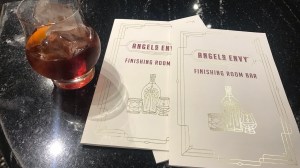
One of my favorite times of the year is in February when my son and I attend the National Farm Machinery Show. This year we are getting to spend yesterday and today at the show learning about all the latest in agriculture technologies, genetics, and innovative genius. The show is held in Louisville, Kentucky and I’ve been coming for as long as I can remember when I started coming with my dad. Now, my son and I come every year as one of our sacred dad and lad memory-making excursions. This year, while on our exploration, my son wanted to go to Angel’s Envy distillery in downtown Louisville. So, I arranged for him to fill, cork and label his own bottle of Angel’s Envy single barrel Kentucky straight bourbon finished in a Port wine barrel. Needless to say, it was a great experience and we learned a lot. Angel’s Envy would be on my highly recommended and must visit list.
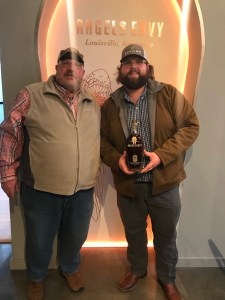
During my son’s bottling experience we learned the proper way to taste bourbon, or what is called the “Kentucky Chew” to those, well, in Kentucky. A few things in the tasting process jumped out at me as great metaphors to the journey of leadership. One big thing our guide told us that proper tasting includes a visual inspection, followed by taking in the aroma, and finally the tasting. This would allow us to take in all the nuances of the complex flavors the distiller created, and would allow us to appreciate the time and patience that went into the delicate art of the bourbon’s maturation. This jumped out at me because I think about how nuanced leadership is all the time and the nuances of those I serve that need to be appreciated. Nuance is not easy to notice. Just like with bourbon, we have to be paying attention to the complexities. I spoke of this in Nuanced Complexity. In leadership, the real depth of learning comes from individuals exploring their own views first and then placing them within the context of their organization. The depth of learning comes from the heuristic nature of nuance.
Continuing with the tasting metaphor, we were told to take three tastes of the bourbon and to roll it around, or “chew”, in our mouths to make sure it hit all the flavor sensors of our tongue and mouth. The first taste was to reset our palette. The second taste would allow us to begin to pick up the several layers of flavor. The third taste really allows you to enjoy the complexity and subtle nuances. Are you catching the leadership metaphor here? Just like every bourbon has a ton of different notes, so do the people we serve. We need to take the time to build the relationships so we understand the complexity and nuance we all possess. We, like bourbon, have all aged for different amounts of time. Also, like bourbon has been aged in different types of barrels, we have all grown up in different environments with different experiences. If we take the time to understand those in our communities in a way that allows us to pick up all the subtle nuances, we will be able to, like with bourbon, unleash some incredible experiences and appreciate the unique way each of us has been distilled.
Holding Up A Mirror To Our Own Self Interests

I finish reading an incredible novel yesterday. Red Dress In Black and White by Elliot Ackerman was a great book that caused a great deal of thought and reflection. Before I go on, let me just say, “Read this book.” I have several notes from yesterday as I finished up the book, but one of the lines that caused great reflection was, “She held up a mirror to my own self interests.” We all have self interests. In the policy side of my world I call this ‘turf,’ but we all have self interests. Rightly so, and there is nothing wrong with that. Reading Red Dress In Black and White, made me realize how important it is to hold up a mirror to those self interests often and reflect.
In doing a little research on mirrors, I found they were invented in 1835 as we know them today. Prior to that people used reflections in water or other polished items to get a distorted view of themselves. Click here for a pretty good history of mirrors. Think about it; mirrors changed the way we walk through the world. We can’t help ourselves, but to look in a mirror or in a window reflection to see how we look. There are huge psychological impacts of so clearly being a subject of ourself. Mirrors give us a perspective on how we look to the rest of the world. Now that we have mirrors and we all have looked into one, we can use the great metaphor given to us by Elliott Ackerman of holding up a mirror to our own self interests.
Mirrors allow us to see what we really look like. When it comes to our self interests we need to review how those self interests are affecting the trade-offs we make related to our personal and professional life. Sometimes there is even an intertwining of our personal and professional lives. Now, I love the fact that we have become a society where the private actor can pursue the personal and commercial interests we choose. But, don’t forget, this can lead to greed, vanity, envy, and pride. Which in turn can lead to selfishness. We need that mirror held up in front of us occasionally so we can reflect (pun intended) on how our actions are affecting others. In other words, to stay with the metaphor, have we become ugly.
We will never change the fact that we are self-interested creatures. This is what allows us to have passions and drive. We do, however, owe it to those in our community circles to reflect on how our own self interests are impacting those in our web of influence.
Finesse Is A Good Word

“Finesse. It was a good word.” Peter said this to himself in Red Dress In Black and White by Elliot Ackerman. Finesse is one of those contradictory things that we either see as good or bad. When thought of as manipulating someone, that is a bad thing. But, when thought of as using skill and cleverness to do something with intricate detail, it is a good thing. Also, diplomacy and tact need the skills of finesse. We have learned much about leading through a crisis during the pandemic. Leadership success, we have found, is defined by how our response impacts the greater community, work environment, and all individuals we serve. Finesse, to me, is how we navigate through the tricky situations. In other words, how do we rise to the occasion. Last night I was watching an old episode of Tour of Duty and Sargent Anderson told Lieutenant Goldman, “Rank is something you wear, respect is something you earn.” In other words producing results matters.

Finesse requires being prepared. We must do our research, anticipate adversity and obstacles, and then prepare possible solutions. Being able to finesse requires personal attention to the homework and requires preparation. Finesse is not about how much you know, but about proficiency.
 Byron's Babbles
leave a comment