Balancing Respect & Friendship

Over the weekend I heard a person describe herself as being no one’s friend, but having everyone’s respect. I don’t know the person so I don’t know if the statement is true or not. What I do know is that the idea of having no friends but having everyone’s respect really made me think about whether that would work at all. As a person who believes that relationships trump all, I believe it is important for a leader to build positive relationships in order to foster collaboration and trust. Understandably, prioritizing respect allows the leader to maintain objectivity and make decisions that are in the best interest of the group or organization, without being influenced by personal relationships. Even so, striking a balance between respect and friendship can be key to effective leadership.
The Frictionless Experience

I was reading an article, “What Smart Companies Know About Integrating AI: Talent and Data are Just As Important as Technology,”this week in Harvard Business Review last night related to artificial intelligence (AI). It was interesting to contemplate the idea of a “frictionless experience.” Having a frictionless experience means having a smooth and seamless interaction or process without any obstacles or difficulties. This is the customer experience (CX) at its best. We as consumers expect the same level of service, understanding of our needs, and prompt resolution of our issues across all channels. If we are to take a customer-centric approach we need to be able to personalize at every touch point. I really believe this is also true when working with our students and families in our schools. This relates to all the various aspects, such as customer/student services, user interface design, or even personal experiences. It means that everything flows effortlessly and efficiently, making it easy and enjoyable for every person involved.
AI can also analyze user data to personalize interactions and tailor recommendations, making the experience more relevant and personalized. Additionally, AI can automate repetitive tasks and streamline processes, saving time and reducing the chance of errors. One of the big points of the article was that AI does not replace people, but better informs the people who will be doing the inventing, creating, and innovating. It is about the talent using the data.
I also think about how AI-powered chatbots could be used to tutor and help students. Chatbots can provide personalized learning experiences by assessing the student’s needs and adapting the content accordingly. Not to mention the big support to students, this could be of huge help to teachers by providing both a time-savings and important data. The Chatbots could answer questions, provide explanations, and offer additional resources to support the student’s learning journey. Notice I am suggesting giving additional support – not replacing teachers or existing support. Those same Chatbots can also track the student’s progress, provide feedback, and suggest areas for improvement. With their availability 24/7, chatbots can provide continuous support and enhance the learning experience for students. Wouldn’t it then be amazing to get that report of what questions were being asked and what I, as the teacher, needed to go back and provide more learning on. This could be incredible for a frictionless student experience.
Learning By Falling

I am just about finished reading The Pilgrim’s Regress by C. S. Lewis. It is a fascinating book that has had me thinking and reflecting the entire time I have been reading it. Today while reading one of the characters, History, told John that the person who tries to learn to skate without falling down ends up falling down as much, or more, as anyone else learning to skate, but never really learns how to skate in the end. Genius, right? This goes right along with it being hard to win if you are playing not to lose. We must understand that falling is a part of skating, so we need to stop worrying so much about it happening and just skate.

No one wants to fall while skating and possibly get hurt, but the fact is, the more times we fall, the better we get at recovering, and the less painful it becomes. We need to focus more on what we want to happen, the successful outcome. No matter what we are learning to do, we need to visualize ourselves succeeding, over and over again. When learning skating, or anything new we need to be skating without pressure, without winning or losing. To learn to skate, or again do anything, we must get up after a fall. We can’t learn without falling sometimes – or often.
Brinkmanship

In a meeting this week, the posturing (as I call it) going on in Congress over the proposed education budget was being discussed. The House version has stripped some very important programs like Title I and Title II and comes in at around $67B. Whereas, the Senate version keeps those programs, increases funding for career and technical education and apprenticeships, and comes it at $79B. The correct terminology would be that there might be some brinkmanship going on. Brinkmanship refers to the tactic of pushing a situation to the brink of disaster in order to achieve a desired outcome. It can be seen as both good and bad, depending on the context and how it is used. In diplomacy and negotiations, brinkmanship refers to the tactic of pushing a situation to the brink of disaster in order to achieve a desired outcome.
If there is brinkmanship going on in relation to the education budget it is a risky strategy, as it may lead to increased tensions, conflict, or even harmful consequences. A careful assessment of the risks and benefits of engaging in brinkmanship is important. Understanding the potential costs and consequences of the actions need to be contemplated to make informed decisions and choose the most effective strategies. The other thing that bothers me is the question of how much money is being spent on lobbying for something that in reality, might not even need to be lobbied for. This seems like a huge waste of time and money that could be used in more productive ways.
I get it. Brinkmanship is a necessary tool. It concerns me that sometimes we overuse it. There are those things that might argue that brinkmanship is unethical because it involves intentionally pushing the limits and risking potential harm or conflict. Others, on the other hand will argue that it can be seen as a necessary tactic in certain situations to protect national interests or enforce boundaries. I just hope that we consider the unintended consequences of posturing and brinkmanship.
Clean Motivation

The other day a person referred to me as having a “clean motivation” for one of the passion bubbles I have right now. Passion bubbles are those things I’ve made room in my heart to champion. I had never really heard the term “clean motivation” before. I asked the person what they meant and found that clean motivation refers to a person’s genuine and ethical drive to pursue goals for the betterment of all society. A leader with clean motivation prioritizes honesty, integrity, and fairness in their decision-making processes.
The issue that I was being referred to as having a clean motivation for was healthy school facilities. This past year I’ve been driven by a desire to serve the greater good in making sure our students have healthy school facilities. This learning and work is being done through a grant that our state board of education received. This work has nothing to do with personal gain or self-interest. It is about creating a focus on achieving great and healthy school facilities for every student. Are your motivations clean?
Define Your Own Self Worth
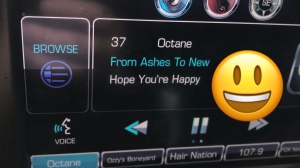
It is important to take care of ourselves and not let the actions of others define our self-worth. The awesome band From Ashes To New has a new song, “Hope Your Happy.” I heard an interview with the band on Serius XM Octane where a band member discussed that the song was about that person who continually stabs us in the back (figuratively of course), demeans or puts us down, or wants to change us, and then wants us to thank and praise them for it. At first, I thought, “Wow, how terrible is that!” Then in reflecting I realized I had experienced a leader, scratch that – let’s call the person a non-leader, like this. When the person was not around everyone would discuss how the person was causing misery. Then when the person was around, everyone would sing a happy song. In the song it says “Should I sing you a happy song?” I guess everyone felt they had to.
This non-leader was always trying to change people and get them to conform. And then expected praise and gratitude for it. As the lyrics say, “And act like I should thank you for the suffering; It’s killing me inside; I’m tired of being someone else; Let me be myself.” The subject matter of this song is clearly not happy, but the situation is real in relationships and the workplace. We need to, at the very least, establish personal and professional boundaries to protect ourselves from people like this. This may involve limiting interactions, in my case with the non-leader, or person, setting clear expectations for how you should be treated, and maintaining a healthy work-life balance. We need to also take an introspective look at ourselves to make sure we are not exhibiting any of these behaviors in our personal or professional lives.
Go Ahead And Love Yourself

The great band Beartooth has an awesome new album coming out entitled, The Surface. One of the songs on the album they have released already is “Might Love Myself” and is incredible. In a press release about the album, Beartooth’s Caleb Shomo said, “This album is the story of my beginnings in the new world I’ve created for myself. One focused on health, self love, positivity, understanding, hard work, and most of all second chances. At the end of the day, life is short for all of us. We can’t escape the end, so why not make friends with it and live in a world focused on living a personally fulfilling life.” In fact I just blogged about our need to prioritize our own needs, desires, and interests in Selfish Or Self-Centered. I believe C. S. Lewis would have greatly appreciated the lyrics of this song. I know I do!
In “Might Love Myself,” Caleb sings, “I’m exactly who I wanna be.” That is a great place to be. Loving ourself means having a deep appreciation and acceptance for who we are as an individual. It involves recognizing our worth, embracing our strengths and weaknesses, and treating ourselves with kindness and compassion. It also means prioritizing self-care – our own well-being. Loving ourselves involves us taking care of our physical, emotional, and mental health. Ultimately, to love myself means believing in my own values and my deserving of happiness and fulfillment. Do you love yourself?
The Push & Pull Of Collaboration

On Friday I heard Tom Morello’s Radio Comandante Show on SiriusXM Octane. If you like hard rock music like me, you will know who he is. If you don’t, you should check him out. He has had multiple Grammy nominations and wins. Also, he has a BA in political science from Harvard University. I really want to hang out with him someday – I’ll bet we could have an awesome discussion on leadership and education. On his show on Friday, Tom said, “I love collaborations with other great artists because it pushes and pulls me in different directions.” He was expressing his tremendous enthusiasm for working with talented individuals and bands. I believe he enjoys the dynamic nature of collaborating with others, as it challenges him creatively and allows for a wider range of ideas and perspectives.
I loved that he called out collaborations because this showed his appreciation for the diversity of input and the growth that can come from being influenced by other artists’ unique styles and approaches. We all need these collaborations. I just got asked to chair/facilitate a big event in Berlin, Germany in November that will involve leadership from companies in several different countries. I love working for this convener because it becomes a collaboration where I get pushed and pulled to learn so many new things – not to mention all the great people I get to meet and collaborate with from around the world. We need to seek out and embrace being pushed and pulled to grow.
Of collaborations, Morello also said it, “Forces me to try things I wouldn’t otherwise try.” This was a great point to hammer home how collaborating with others can stretch us in ways we never imagined. We use stretch lessons in education to take our students learning to new heights and we need to embrace this as adults as well. Let’s all take a page from Tom’s playbook and step up our collaboration game.
Making Friends With All Our Demons
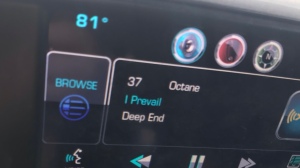
Every time I hear the song Deep End by the great band I Prevail I ponder on the chorus where it says, “So I made friends with all my demons.” I would like to think that by embracing, accepting, and coming to grips with all aspects of ourselves, even the ones that may be considered negative or problematic we can potentially learn from them. By becoming friends with our demons we can find resolution, and ultimately become a more balanced and self-aware individual.
By acknowledging and befriending our insecurities, flaws, and past mistakes in order to grow and develop as a person, we can stay out of the deep end. If we know those demons are there we can begin to look beyond them, not let them get in our way. Our demons, whatever they may be, are many times blocking the thing we really want to see. Many times the very thing we want to create is blocked by the anxiety of not creating, the fear of not making it, or the doubt that we’re not good enough. So maybe the next time some demon comes creeping in we give it a fist-bump, acknowledge it, and then remind ourselves we are worthy and show ourself the compassion needed to move on and do the great things we are capable of.
Selfish Or Self-Centered

As C. S. Lewis put it in Surprised By Joy: The Shape Of My Early Life, “The distinction is not unimportant.” He was referring to the distinction between being selfish or being self-centered. He preferred being selfish over self-centered. In fact I believe he was really on to what we now talk about being self care. Being selfish and being self-centered are not interchangeable. Lewis discussed that to find joy we need to have some selfishness. We need to prioritize our own needs, desires, and interests. These are the things I talk about when discussing self-care. This includes setting up the boundaries in a working relationship. The self-centered leader wants us to give up our personal priorities to make themselves look good. Is it selfish to not take emails after 5:00? Probably, but probably good for your well-being and your family’s well-being. Does it mean you are selfish if you may have to give up some of the above and beyond things you do as a great school principal during the next year to spend time finishing your dissertation for your PhD? Yes, but there is no way that milestone in your life will be met otherwise. These are completely acceptable forms of selfishness.

Conversely, being self-centered means having an excessive focus on oneself, often accompanied by a lack of interest or concern for others. This is the person that always needs to be in the limelight. It involves being preoccupied with one’s own thoughts, concerns, and desires, disregarding the needs and perspectives of others. Lewis explained that the self-centered person can never find joy. A self-centered person wants to hear about themselves. This person will constantly steer conversations towards themselves or dominate social situations without regard for others’ interests or feelings. The self-centered person is also unwilling to share or compromise.
I’m glad that in Surprised By Joy: The Shape Of My Early Life C. S. Lewis caused me to contemplate this difference between being selfish and being self-centered. The selfish person can have a healthy focus on himself versus the self-centered person’s complete disregard for others’ well-being and perspectives. This distinction is not unimportant. We must care for ourselves and make sure we are prioritizing our own needs and desires.
 Byron's Babbles
leave a comment