Virtue in Action: How Justice and Mercy Shape a Thriving Society

G. K. Chesterton said, “Virtue is not the absence of vices or the avoidance of moral dangers; virtue is a vivid and separate thing, like pain or a particular smell. Mercy does not mean not being cruel or sparing people revenge or punishment; it means a plain and positive thing like the sun, which one has either seen or not see.” Chesterton’s quote emphasizes that virtue isn’t simply about avoiding bad behaviors or moral pitfalls. Instead, he was suggesting to us that virtue is a distinct, positive quality—something tangible and noticeable, much like pain or a specific smell. It’s not just the absence of vice, but an active presence that can be seen or experienced.
The idea that virtues like mercy are active and observable qualities ties closely to how justice functions as a foundational virtue in world-building. Just as mercy isn’t just about avoiding cruelty but actively demonstrating compassion and understanding, justice isn’t merely about avoiding wrongs; it’s about fostering fairness, equity, and integrity in society.
When Chesterton talked about mercy, he was illustrating that showing mercy isn’t just about refraining from cruelty or revenge. Instead, it’s a positive, deliberate act—something as obvious and perceptible as sunlight. You either recognize its presence by seeing it in action, or you don’t. Essentially, Chesterton was highlighting that virtues are active, observable qualities that define character, not merely the lack of negative traits. This all reminds me that actions really do speak louder than words!
When justice is seen as the key to world-building, it emphasizes creating structures and systems that actively promote righteousness, balance, and trust among individuals. It’s not enough to simply prevent injustice—we need proactive measures that encourage positive interactions and uphold moral principles. In this way, justice becomes an observable, guiding force that shapes a stable, thriving community—much like mercy’s visibility in acts of kindness. Both virtues serve as active principles that construct and sustain a healthy social fabric, demonstrating their importance through tangible actions rather than mere absences of bad behavior.
Seeing Beyond the Surface: Father Brown’s Wisdom on Insight and Perception
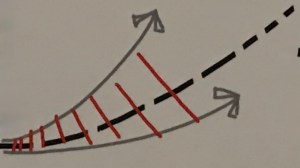
People often try to fix something without fully understanding what the real problem is. We may notice symptoms or surface-level details and jump straight to solutions, but unless we identify and understand the core problem—what’s truly causing the difficulty—our efforts might be misguided or ineffective. In G. K. Chesterton’s Father Brown Story “The Point of a Pin,” Father Brown said, “It isn’t that they can’t see the solution. It is that they can’t see the problem.” This highlighted a common mistake in reasoning: focusing on solving the wrong issue.

Father Brown’s insight emphasized the importance of careful analysis and perception, encouraging us to look beyond initial appearances and identify the true nature of a situation before rushing to solve it. In the context of G. K. Chesterton’s stories, it reflected his appreciation for insight, empathy, and the value of perceiving beneath the surface to find truth.
We All Matter

G. K. Chesterton wrote in the Father Brown Story “The Quick One”, “You see, it’s so easy to be misunderstood. All men matter. You matter. I matter. It’s the hardest thing in theology to believe.” Those words made me think about my own value in being human centered and belief that every human matters and has potential. From Chesterton’s words we can learn that misunderstandings are a common part of human experience, and that recognizing everyone’s inherent dignity is crucial.

The quote emphasizes that every individual matters—yourself, others, and even those we might not fully understand—highlighting the importance of empathy and humility. It reminds us that believing in the worth of all people, despite misinterpretations or differences, is a profound challenge but also a vital aspect of moral and spiritual growth. Ultimately, it encourages us to see beyond surface misunderstandings and appreciate the intrinsic value in every person, fostering compassion and deeper connection.
The Agreement Between Agreement and Disagreement
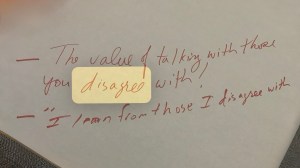
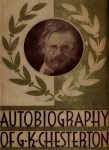
I finished G. K. Chesterton’s Autobiography this past week. It was a great read that prompted a lot of deep thinking and several blog posts. It was interesting to me how Chesterton’s discussions about very specific philosophical or religious doctrines caused me to think about applications in everyday life. One such discussion was about unity and universality. Now, I am not qualified to discuss those differences and similarities, but I found it curious how Chesterton described those with the two views. He said, “The agreement we really want is the agreement between agreement and disagreement. It is the sense that things do really differ, although they are at one” (p. 350). I love this because if you think about it, many issues are that way. We need to find the agreement between agreement and disagreement.
Chesterton used an example of satisfying the unity vs. universality question by quoting Catholic writer, Coventry Patmore: “God is not infinite; He is the synthesis of infinity and boundary” (p. 350). This suggested a nuanced understanding of the divine. Instead of viewing God solely as an endless, boundless infinity, Patmore proposed that God embodies both the limitless and the limited aspects—the infinite and the boundary or limit. It is the nuance of this example I believe we can use as inspiration for approaching many issues – looking for the agreement between agreement and disagreement.
Continuing with Chesterton’s example of Patmore’s view, God’s nature includes not just the vastness and boundlessness associated with infinity but also the presence of boundaries, limits, or structures that define and give shape to that infinity. It emphasized that divinity encompasses both the unbounded and the bounded, integrating the infinite nature of God with specific identities, attributes, or boundaries that make the divine comprehensible and relatable.
This is such a perfect example of the nuanced nature of many disagreements because it highlights the idea that God’s greatness isn’t just about boundless infinity but also includes the necessary boundaries that give meaning, structure, and harmony to that infinity. It’s a philosophical perspective that seeks to balance the concept of the divine as both grand and personal, limitless yet defined.
Beyond the Mirror: G.K. Chesterton’s Wisdom on Vanity and True Self-Understanding

In the Father Brown story “The Chief Mourner of Marne”, G. K. Chesterton described the character of Maurice Mair saying, “He was far more friendly and popular; but his success had made him live in a house of mirrors” (p. 313). This is a very apt metaphor to illustrate how success can distort a person’s perception of themselves and reality. Chesterton often used vivid imagery and metaphors like this to critique vanity, ego, or superficial values that can accompany success. It suggested that success, if not tempered with humility or clarity, can trap a person in a distorted self-image, preventing genuine self-awareness or growth.

In a house of mirrors, reflections are repeated endlessly, often distorting or exaggerating features, making it difficult to see the true form or substance. Similarly, when someone becomes very successful, they might become obsessed with their own image, achievements, or perceptions, leading them to lose touch with reality or become self-absorbed. They might see only flattering reflections of themselves, rather than their authentic self, which can distort their understanding of who they really are. We must always look beyond the mirrors and see our true self.
Leading With Humility
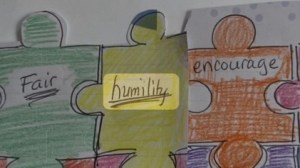
I know the following is a long quote from G. K. Chesterton’s Autobiography, but I hope you will read it because it is profound. Here it goes:
“Anyhow, it is true that both the happy hedonists and the unhappy pessimists were stiffened by the opposite principle of pride. The pessimist was proud of pessimism, because he thought nothing good enough for him; the optimist was proud of optimism, because he thought nothing was bad enough to prevent him from getting good out of it. There were valuable men of both these types; there were men with many virtues; but they not only did not possess the virtue I was thinking of, but they never thought of it. They would decide that life was no good, or that it had a great deal of good; but they were not in touch with this particular notion, of having a great deal of gratitude even for a very little good. And as I began to believe more and more that the clue was to be found in such a principle, even if it was a paradox, I was more and more disposed to seek out those who specialised in humility, though for them it was the door of heaven and for me the door of earth” (p. 346).
Did you catch that humility was the door of heaven and the door of earth to Chesterton? I love this paradox and believe the virtue of the paradox is both!
Chesterton was reflecting on a deep appreciation for humility and the recognition of its true value. When he says he was “more and more disposed to seek out those who specialised in humility,” he suggested that he admired people who practiced humility, perhaps seeing it as a virtue that opens the door to higher understanding or spiritual fulfillment (“the door of heaven”).
At the same time, he contrasted this with his own perspective—“for me the door of earth”—implying that, for himself, humility is more grounded, humble, and connected to the real, tangible experiences of everyday life (“earth”). Essentially, Chesterton was acknowledging that humility is a universal virtue—one that can lead to spiritual heights—but also recognizing his personal connection to it as something rooted in the practical and the earthly realm. That’s what I have come to love about Chesterton – he was able to combine the practical of everyday life with the spiritual. Let’s face it; that is what we all have to do every day.
In sum, the quote highlights the difference between aspiring towards spiritual ideals and maintaining a humble, grounded view of oneself in everyday life. A really great leadership lesson!
Appreciating The Dandelion

I love metaphors and G. K. Chesterton used a great one in his Autobiography – dandelions. When discussing comparing dandelions to other flowers he said, “These are all methods of undervaluing the thing by comparison; for it is not familiarity but comparison that breeds contempt” (p. 344). I believe Chesterton was suggesting that it’s not simply knowing something well that leads to disdain, but rather when we compare it to other things and find it lacking or inferior. Essentially, the idea is that familiarity can sometimes breed a more genuine understanding and appreciation, whereas constantly comparing something unfavorably to others can cause us to look down on it unjustly. Chesterton in his lectures and writing often emphasized the importance of seeing things in their true context and appreciating their unique value instead of dismissing them through unfair comparisons.
Chesterton used the metaphor of dandelions in his Autobiography to illustrate how we often overlook the beauty and value of ordinary things when we compare them to their more glamorous or “noble” counterparts. He described dandelions as humble, yet resilient plants—common and sometimes dismissed as weeds. However, Chesterton highlighted that these simple flowers possess their own charm, vitality, and significance, especially when appreciated in their true context.
Relating this to his idea about familiarity fostering genuine understanding, Chesterton suggested that by truly seeing and appreciating these humble flowers—much like appreciating the ordinary aspects of life—we develop a deeper respect and affection for them. Conversely, if we constantly compare dandelions unfavorably to roses or tulips, we might dismiss their worth unfairly.
This metaphor of the dandelion underscores the importance of seeing things in their true light, valuing their inherent worth without unjust comparisons, which aligns with Chesterton’s broader philosophical perspective on appreciating the ordinary and finding beauty in the everyday.
Eccentric VS Conventional: Fostering Genuine Connections Across Cultures and Contexts

I am a big believer in how important it is to understand and appreciate others. I have blogged about this topic before in posts like, Building Relationships By Understanding and Appreciating. Then today in The Father Brown Stories I read a comment imposed by G. K. Chesterton on Father Brown saying, “To tell the truth, I was thinking how little some kinds of people know about other kinds of people” (p. 258). This is so true and drives home my belief in seeing every human as a unique individual. This is such an important attribute of human centered leadership.

In the context of Chesterton’s story he used the examples of English Barristers and Poets. Chesterton said, “They would think he must be rather eccentric; but he isn’t at all eccentric, he’s only conventional. They would think so, because they don’t know anything about…” (p. 258). Think about that. How many times has someone thought you were eccentric or quirky because that someone did not know anything about you. If we’re honest, we’ve done this same things to others. I work really hard at not doing this. Again, understand and appreciate!

This reminded me of another post I wrote back in 2020 after reading the great book Joyful: The Surprising Power Of Ordinary Things To Create Extraordinary Happiness by Ingrid Fetell Lee. Lee taught us not to feel bound by convention; break the mold and bring joy to the world. We need to use playful design and embrace our quirkiness. I wrote about this in Leading With A Touch Of Quirkiness.
To be effective leaders we need to recognize that we don’t have all the answers or full knowledge of others’ lived realities. Cultivating an inclusive culture involves making genuine efforts to understand diverse viewpoints, experiences, and values within an organization. By acknowledging the gaps in our understanding—much like the Chesterton’s quotes suggest—we can foster empathy, reduce biases, and create an environment where everyone feels valued, heard, understood, and appreciated.
Impossible VS Improbable

I love a good paradox. In my reading of The Father Brown Stories by G. K. Chesterton yesterday I came across a good one. Chesterton imposed the thought from Father Brown that “I can believe the impossible, but not the improbable” (p. 216). After Father Brown said this, another character replied, “That’s what you call a paradox, isn’t it?” To that Father Brown replied, “It’s what I call common sense, properly understood” (p. 216). This thought of impossible vs. improbable intrigued me from a leadership, innovation, and disruption standpoint; not to mention our personal lives.

In this passage, Chesterton had Father Brown expressing a fascinating perspective on belief and faith. highlighted Father Brown’s deep faith and his tendency to see the divine or moral truths behind even the most unlikely circumstances, trusting in what might seem impossible rather than what is merely improbable.
“Impossible,” in this story referred to things that defy all logical or natural explanation—things that are beyond the realm of possibility as we understand it. Despite their fantastical nature, Father Brown stated he believed in these because sometimes extraordinary events can be divine or supernatural, which faith readily accepts.
“Improbable” referred to things that are unlikely or rare but still possible within the laws of probability. However, Father Brown found it harder to believe in these because their likelihood makes them more suspicious or less trustworthy.
For those of us innovators and change agents it encourages us to trust our intuition and moral compass, even when the evidence or conventional wisdom suggests otherwise. Sometimes, true innovation requires believing in ideas or visions that seem improbable or challenge existing norms—much like faith in something unseen or unproven.
It also underscores the importance of having confidence in principles rooted in purpose, ethics, and long-term vision rather than just short-term data or statistical probability. Leaders who are willing to look beyond immediate odds and believe in the potential of their ideas can push boundaries and bring about meaningful change.
Balancing Thoughtfulness and Resolve

I know that many times it is controversial to bring up Machiavelli, but one of the things that really resonated with me from a really deep study of him early in my career was his advice of “declaring.” Leaders who go from person to person, or group to group and tell each what they want to hear or change their thinking according to the group they were just with drive me batty. I know people who I’ve heard others ask who the last person a leader they were going to talk to was they talked to because that will be what that person will be believing today. That is nuts!

I loved how G. K. Chesterton broached this subject in his Autobiography when he said, “I have generally attempted, in a modest way, to have reasons for my opinions; and I have never been able to see why the opinions should change until the reasons change” (p. 255). This really fits with how I believe we should be. I do believe in declaring what we believe and not leaving clarity to chance, but we can adapt our thinking with new growth and learning. But not just on a whim or to appease others. In the same paragraph Chesterton also said, “For that sort of sturdy Briton does not want to be consistent with himself; he only wants to be consistent with everybody else” (p. 255). It should not be our goal to always be consistent with everyone else.
Chesterton’s comments reflectively highlighted the importance of reason and evidence in shaping our beliefs. He was suggesting that opinions are constructed based on the reasons we have at a given time, and it is only logical to reconsider or change those opinions when our underlying reasons or evidence change. This perspective emphasizes intellectual honesty and humility—recognizing that beliefs should be adaptable and grounded in reason rather than stubbornness or dogma.
Chesterton’s advice to not change one’s views until reasons for change are compelling emphasizes the importance of thoughtful deliberation and prudence before altering one’s beliefs. It encourages patience and a careful assessment of evidence, ensuring that change is justified and meaningful. Machiavelli’s advice to always declare—often interpreted as consistently asserting one’s position—stresses the value of clarity, transparency, and steadfastness. It suggests that revealing one’s stance openly can be a source of strength, influence, or strategic advantage, particularly in political or social contexts.
I see these perspectives as complementary because Chesterton urged us to be thoughtful before changing, and Machiavelli encouraged us to be clear and firm in our declarations once we have made a choice. Balancing both ideas can foster a mindset that values reasoned flexibility and confident communication.
 Byron's Babbles
leave a comment