What’s The Next Step?

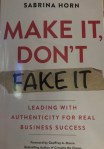
“You don’t need to have all the answers but you do need to have a next step.” Sabrina Horn told us that in her great book Make It, Don’t Fake It: Leading With Authenticity For Real Business Success. I discuss this with teachers a lot. Some in the teacher development arena will tell new teachers they need to have all the answers. This advice includes faking it and not letting students know the teacher doesn’t know the answer. This is very bad advice. Just as this is not true in Sabrina’s world as a CEO, it is not true for teachers. Some of the best labs and lessons I had as a teacher were when something didn’t go as planned. I would say, “I have no idea why this didn’t work, but let’s all dig into this and figure it out together.” The students and I learned so much from this humble act. It was so much fun and I was modeling an important leadership skill for my students. All leaders would do well to learn this.
This humility does not show weakness or confidence. It shows we recognize something pretty obvious – no one knows everything. The great leaders know what they don’t know and understand there are things they don’t know they don’t know. But, learning from and with others, asking questions, and asking for help are hallmarks of an effective and humble leader. This growth mindset modeled curiosity, collaboration, and a plan for discovery with my students. This same mindset also worked for me as a principal and superintendent. Many times the next step might be pausing to learn the answers together as a team.
Don’t Be Colonel Klink

I just finished re-reading the classic great book, How To Win Friends & Influence People by Dale Carnegie. There is so much great stuff in that book. One part made me pause and think, however. Carnegie talked about how to get people in an affirmative state of mind by asking questions that nudge them in the right direction, he argued this as a way to help others arrive at your conclusions or ideas on their own. This feels very coercive to me. But, I am also all too aware of coercive leaders who if it is not their idea, your idea won’t be considered. So sad, but still happens way too much.

I’ve been thinking about this for the last week or so. Then last night I flipped on Hogan’s Heroes to wind down from the day. You know, the fictional comedy based in a Nazi prisoner of war camp, Stalag 13, that ran from 1965-1971 (my childhood). Colonel Hogan was the ranking P.O.W. officer and the throughline of the show was that a group of prisoners, under Hogan’s leadership, were running special operations for the Allied Forces out of the camp. I love watching the show because there are both good and bad leadership examples to think about in a very funny setting. The Commandant, Colonel Klink, is a bumbling, self absorbed, ambitious, and very vane leader who is so inept that he boasts having a no escape record, but has a major underground (literally) Allied operation being run from the camp by prisoners.
Now, back to the topic of nudging ideas in our direction. In almost every episode Hogan will get Klink to do what he wants by putting Kink’s vanity to work. He’ll begin asking Kink things like, “If you would do_____, then you’ll look very innovative.” or “Wow if you”ll order_______, Hitler would probably give you an award or promote you.” Then Klink will turn around and say, “Hogan, I have an idea…” and repeat back the very idea Hogan planted. The best is when Hogan then says to Klink, “I just don’t know how you do it, sir. You come up with the greatest ideas. You have the mind of a great leader.” When in reality Klink couldn’t think himself out of a paper bag.
“Did House interrupt him and say, “That’s not your idea. That’s mine”? Oh, no. Not House. He was too adroit for that. He didn’t care about credit. He wanted results. So he let Wilson continue to feel that the idea was his. House even did more than that. He gave Wilson public credit for these ideas.”
“Let’s remember that everyone we come in contact with is just as human as Woodrow Wilson. So let’s use Colonel House’s technique.”
Dale Carnegie in How To Win Friends & Influence People
In the book, Carnegie used President Woodrow Wilson and Colonel Edward House as examples. House used the strategy, when Woodrow Wilson was president, of rather than giving Wilson explicit advice, the colonel would very casually mention a proposal of his in conversation or ask questions about it. Then, over time, the idea that Colonel House had planted would take root in Wilson’s mind – so much so that Wilson often thought the plan was entirely his own. Of course, House never corrected him. The most important part of this lesson is that House did not care about credit, he just wanted results.
So, if you have that boss (I won’t call them a leader because they don’t deserve it) that everything has to be their idea, give some nudges. But, if you’re that boss – QUIT being Colonel Klink!
What Are You Here For?

If we want to shift from looking at the world to validate and respond to our needs and desires to serving life’s purpose, it requires us to start from within using our profound, magical, and miraculous energy to make shifts to better the world. To do this we must draw on our inner fire. This is really the essence of shifting from surviving into thriving. We must move from ambition to meaning. This life of meaning is a life where everything is primarily influenced by purpose.
Meaning is really how all the moments of our existence are evaluated. If we want to fulfill our greatest calling then we must consciously undertake the journey from ambition to meaning. Then, and only then can transform our individual lives and influence the destiny of our sacred planet as well.
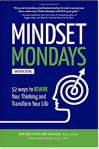
In Chapter 42, “Your Inner Fire” of Mindset Mondays with DTK by David Taylor-Klaus (DTK). He argued “Whether you call it your life purpose, mission, or quest, the work that you do in the world – that for which you are here at this time – is fueled by your inner fire” (p. 294). Only you can identify and put the accelerant on that inner fire. DTK went on to say, “I believe that every human is here to create some sort of a shift” (p. 295). I believe that too. For me, that meaning has become providing growth and development for others, either by working with them directly, or creating the policies and on-ramps to make that personal growth possible. How about you? What are you here for?
The Best Advice

I am so blessed to still be getting inspiration from Paul Stanley. Yesterday he tweeted “Any advice that starts with ‘If I were you’ should be disregarded” in response to the question “What’s the best advice you can give anyone?” asked by Eric Alper. I’ve always hated the “If I were you” advice starter. If someone giving advice starts a sentence with “If I were you…” the result is often the other person shutting down. Think about it, that person isn’t you, right?
A Psychology Today study explained there are four different types of advice; they are advice for, advice against, information, and decision support. The study found that information advice was the most effective. Information advice provides additional knowledge that the advice seeker may not know, that can shed light on other options for the present, and later down the line.
Before even giving advice I believe in taking a position of humble inquiry. Sometimes when someone is seeking advice I like to take a position of inquiry. This allows understanding the context, nuances, and entire situation. This position of inquiry also allows for empathy. Giving advice to someone is an emotional, intimate thing. I try to live by the quote of an unknown person that says, “To argue with someone else’s experience of reality is futile. To add their experience to your own is possibly useful.” The best advice I’ve gotten over the years has felt selfless from the other person.
Opening The Door To All Possibilities

Yesterday in a discussion I was a part of an individual said that we might just need to use the “get a foot in the door” technique. This immediately felt very coercive to me. It was a good discussion and now we had someone wanting to already take a step toward her own ultimate goal. In fact the group was leaning away from some of her ideas. Because this was a policy discussion, suggestion or use of this approach would be a very binary and old industrial model way of doing things. The context here was very different than someone wanting to get a foot in the door so someone, for example, could become familiar with the good work you do. The foot in the door technique referred to in the meeting was a compliance tactic that assumes agreeing to a small change increases the likelihood of agreeing to a second, larger change later.
This has actually been studied extensively. Initially you make a small request and once the person agrees to this they find it more difficult to refuse a bigger one (Freedman & Fraser, 1966). Why does it work so well? Because we like consistency and we like to be consistent. So, for the technique to work, all we have to do is have the second, larger request, be consistent with or similar in nature to the original small request. Do that and the technique will work (Petrova et al., 2007).
This theory was tested in 1980 in my own state of Indiana. Residents were called by Sherman (1980) and asked if, hypothetically, they would volunteer to spend 3 hours collecting for the American Cancer Society. Then, the same group of people were called by a different person three days later and actually asked for help – 31% agreed to help. Of the group that did not get the hypothetical ask, only 4% volunteered to help.
This feels very disingenuous to me. I can think back, even recently, to where this has been done to me in some form or another. This is another form of getting to “buy in.” Which as I always say if you have to go get “buy in” you’ve already failed. Why not do the work of including stakeholders from all vantage points with all different diverging and converging views to start with. Only when everyone has been heard and had a part in the crafting of ideas, can the door be open fully.
References
Freedman, J. L., & Fraser, S. C. (1966). Compliance without pressure: the foot-in-the-door technique. Journal of personality and social psychology, 4(2), 195.
Petrova, P. K., Cialdini, R. B., & Sills, S. J. (2007). Consistency-based compliance across cultures. Journal of Experimental Social Psychology, 43(1), 104-111.
Sherman, S. J. (1980). On the self-erasing nature of errors of prediction. Journal of Personality and Social Psychology, 39(2), 211-221.
Keep Pitching!

I’ve been in southwest Florida doing some professional development for teachers this week, so it’s appropriate that I am watching the Tampa Bay Rays hosting the Washington Nationals to unwind this evening. I love watching baseball and all the details of the game. Just now, in the third inning, I was reminded how important it is to stay focused and keep battling even when things aren’t going exactly as planned.
Shane McClanahan is pitching for the Rays in the third inning and just gave up a home run to Ryan Zimmerman for the Nationals. He then ended up with runners on second and third with two outs in that same inning. I thought to myself, “just keep pitching!” He did and struck out the next man up to get the third out and strand the runners. It is so tough to pitch out of a situation like that. It takes concentration and the ability to just keep pitching and finding command of location.
No matter what the rest of us do for a living, we must, at times, pitch ourselves out of a situation. In other words, keep pitching! Pitchers rely on their teammates, thinking through the fundamentals and the mechanics to keep them maximizing performance. We all can learn from this. Again, lets keep pitching!
Becoming
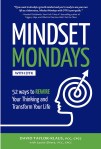
This morning I read Chapter 41, “Constantly Becoming” in Mindset Mondays with DTK by David Taylor-Klaus (DTK). He taught us that becoming is a fulfilling journey that includes all the ways we expand along the way. There will always be new ways to expand, learn, and grow. I always use the metaphor of being a portrait that will never be finished. If I truly believe what Carol S. Dweck told us that, “Becoming is better than being” then that portrait won’t ever be finished, even on the day I die. Being or becoming depicts different outlooks on our worldview. Some people seek change and can’t wait to transform. Others often ask why they have to change.
Becoming is open and unlimited; being is structured and limiting. Just as the artist paints a portrait, we can look at our lives. Learning to live artfully has us see our lives as a process open to inquiry and learning, thus becoming. DTK reminded us that becoming takes courage. Using my portrait metaphor, I would say we don’t always know what the next brush strokes will be. But, that’s alright. The artist is always looking forward. The only way to assess if something was right is to look backward. Let’s not do that. Let’s keep becoming and make those brush strokes into another beautiful part of our life’s portrait of opportunities for exploration and growth.
Learning At The Intersection

This morning as a I was going through my notes of ideas for blog posts, another I made while reading Leadership Unchained: Defy Conventional Wisdom For Breakthrough Performance by Sara Canaday jumped out at me. I already blogged once from inspiration gained from this great book in Unconventionality, but the comment she made saying, “Innovation happens at the intersection of different perspectives” made me reflect on one of my own core values of learning forward from different perspectives. Innovative ideas are not just about adding another feature or an
adjacent market. If we want to keep breaking new ground we must make it a priority to seek out the intersection of multiple fields, disciplines, and cultures. This is a place, Sara argued, we can create in our organizations, teams, and mind. All those different perspectives are far more potent than any incremental extension of what you are already working on using a single perspective. This kind of thinking will lead us to someplace completely different.
“You must go where these very changes are occurring – at all the intersections of industries, cultures, fields and disciplines.”
~Frans Johansson
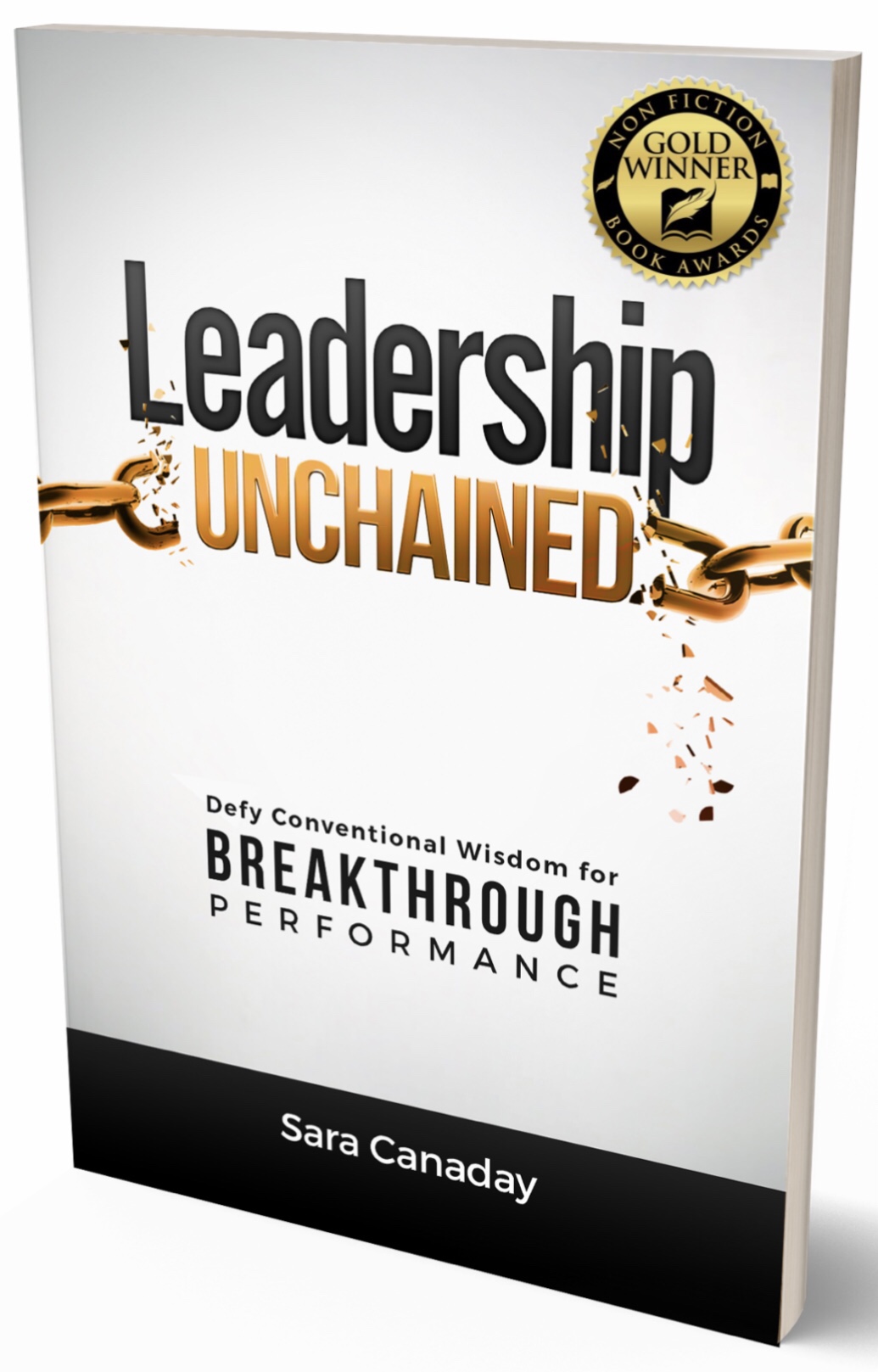
I love spending time with folks in other disciplines. Most of my reading is outside of the field I do most of my work in of education. I love intersectional learning. I want to learn about things I know nothing about and work with people in fields outside of my own and that will, in turn, stretch my learning and give me new ideas. At these intersections I am outside my comfort zone – or maybe I’m in a zone where I just love to learn. I believe we must surround ourselves with diverse cultures, upbringing, backgrounds, and abilities. Someone recently called me a multipotentialite. When I looked it up, because I had no idea what that was (see, I was learning something new), I saw things like “strong artistic curiosity” and “interest spanning multiple fields.” Guilty as charged! But, I really believe this wide interest and curiosity brings value to those I serve. I love it when I am in a planning meeting with a client and they say things like, “Byron, what are things you’ve seen out there that might apply to this, or might make this better?” Solving today’s complex and wicked issues needs a community of diverse thinkers. In a world where more specialization seems to be the conventional trend, I’m glad Sara Canaday reminded us that we need to defy that conventional wisdom and form communities of diverse thinkers.
Are You Where You Are?
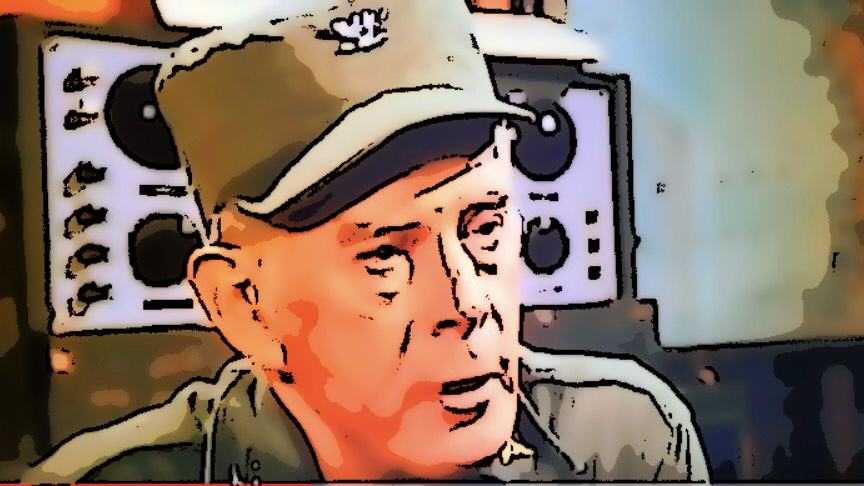
Okay, you caught me. I was watching M*A*S*H again last evening. I just can’t help myself and there are always so many things to think about. Last night I was inspired by a quote I heard Colonel Sherman Potter, played by Harry Morgan, say, “If you ain’t where you are, you’re no place.” This spoke to me, so I wrote it down. His quotes in M*A*S*H are awesome and always cause some deep thought. This quote is really the best definition of being present there is. Let’s read it again, “If you ain’t where you are, you’re no place.” The scene was set on Christmas with others making themselves miserable because they wanted to be somewhere else. Think about a time when you were at a gathering, professional growth opportunity, class, family event, in a conversation with someone, or even speaking to a group or presenting and your mind was somewhere else. What we end up doing is passing through that moment on the way to somewhere else and, in doing so, we miss the moment. During those moments, our time is spent in the past, the future, or wishing to be somewhere else rather than the present moment.
We need to lean into who we are and be fully present where we are. Being fully present is becoming engaged in whatever we are doing at the moment and soaking in all the sensations that go with it. Being a present person does not mean that we never think ahead and that we always live in the moment. Becoming present means that when we have carved out time for something or an opportunity for an experience develops, we are all there. We soak it in. It becomes intentional. The act of being fully present makes a difference not only to yourself, but also to the people you serve, love, and spend time with. The experiences become richer, more meaningful, and more enjoyable because you are there and engaged instead of being no place. Are you where you are?
Unconventionality

I finished a great book this week by the great author and leader, Sara Canaday. The book was Leadership Unchained: Defy Conventional Wisdom For Breakthrough Performance. Anyone who knows me, would know that I’m going to read anything that’s about defying being “conventional.” I had the chance to meet Sara last year. She is such a unique and gifted leader. It is immediately evident when meeting her and reading her work that she “walks the talk.” I was reminded when reading Leadership Unchained that defying conventionality requires allowing for creativity, flexibility, and risk taking. Leadership free of conventionality is the key to creating the unconventional cultures needed today to attract and retain top talent, have engaged and motivated team members, be innovative, and have a notable competitive advantage.
In all this, Sara emphasized that while it is important to not just do things the way we always have, it is imperative we stay true to five timeless qualities:
- Always being present
- Demonstrate grace and humility
- Development of employees
- Integrity
- Contributing on a higher level

One story Sara told in the book that really got me thinking was about the “black belt.” She taught us that being a black belt wasn’t about being an expert, because many times being an expert hinders new learning. The black belt wasn’t a pinnacle, but was about continuing to advance and learn. I’ve never liked or been comfortable with the term expert. It’s too final. When someone says, “Let’s hear from the experts,” it is probably not going to include much curiosity or openness to divergent thinking. In expert mode we are thinking about “what is” instead of “what if.”
Sara used the fact that we tend to think of those with black belts in karate or other disciplines as masters of their craft who have learned everything there is to know about it – a so called expert. But, that’s not true. A person who has achieved the black belt does represent great experience and learning, but according to the World Martial Arts Center, those earning the black belt “seek[s] new, more profound knowledge of the Art.” Just like the greatest leaders are constantly learning, growing, and evolving. I like to think of myself as being in a perpetual learning mode. Actually, I’m kind of weird in that I can learn from the most unlikely of things – a television show, fiction novels, a gummy bear, a song, a Manatee, or even a Platypus. If you don’t belief this, search through my blog.
There is much more that can be learned about all the different “belts” that started out as just white and black when Master Jigoro Kano first introduced the system in 1883. I learned from digging a little deeper that the black color symbolizes the darkness beyond the sun, and a person who has been awarded a black belt seeks to gain a deeper and further understanding. I am committed to continually seeking deeper and further understanding. How about you?


leave a comment