To The Unknown And Beyond
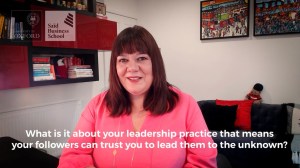
I heard it said once that trust is something others give to us. Therefore, we gain trust by small, consistent actions and behaviors. Our followers must have confidence in our abilities (expertise), intentions (vision), integrity (authenticity), and character (trusted advisor). In the context the work I do I need to be a trusted advisor versus a technical expert. Expertise has become very easy to find. I need to be trusted to help.
This week the following great question was posed by our Head Tutor, Anne McCarthy, in the leadership program I am in right now at the University of Oxford Saïd Business School: “What is it about your leadership practice that means your followers can trust you to lead them to the unknown?” I loved this thought of leading into the unknown. That is really what having a vision and being visionary is all about; moving into a future that is unknown with confidence.
As a trusted leader my followers and those I partner with have confidence in my abilities, intentions, and integrity. Here are few key factors that I believe this trust in me stems from:
- “Walk The Talk” or Lead by Example: We must model the behavior we expect from others. Being authentic and demonstrating the values we promote will inspire trust and followership.
- Reliability: Simply put, a trusted leader does what they say they are going to do. We must consistently meet expectations and follow through on commitments.
- Authentic and Transparent: Open communication about decisions, processes, and challenges fosters trust. When we share information honestly, it builds credibility.
- Integrity: We need to be trustworthy leaders and act ethically, while adhering to our core values. Our actions align with our words, demonstrating authenticity.
- Empathy: Showing understanding and concern for the needs and feelings of those we serve helps build emotional connections, making individuals more likely to trust us.
- Competence: A leader must have the skills and knowledge necessary to guide the organization effectively. Confidence in our expertise contributes significantly to trust.
- Supportiveness: Providing encouragement and constructive feedback reinforces a sense of safety and belonging among team members, which cultivates trust.
This list of key factors is certainly not exhaustive, but by incorporating these practices, we are in a better position to effectively build and maintain trust, creating a more cohesive and high-performing team. Are you ready for the unknown and beyond?
Developing Your Team Into An Ensemble
I was saddened by the loss of Bob Newhart last week. He was such an icon and I grew up watching him. Last night I watched the incredible CBS special, “Bob Newhart: A Legacy of Laughter.” It was very well done and brought back so many memories. I was also reminded of what a great man he was. Besides being a great comedian and actor, he was a faithful husband, great father and grandfather, and loyal friend. You know I couldn’t watch the hour-long program without jotting down a few notes.
One of the things that jumped out at me was when he was describing the casts he worked with. He described them this way: “It was a true ensemble.” When Bob Newhart referred to the actors and actresses he worked with as “a true ensemble,” he likely meant that they worked together cohesively as a united group, contributing equally to the performance. This use of “ensemble” suggested that each member of the cast brought their unique talents and skills allowing them to create a harmonious and effective collaboration. He also pointed out that he just loved being around everyone – they laughed and had fun. An ensemble emphasizes teamwork over individual stardom, highlighting how the collective effort enhances the overall production, making it more impactful and enjoyable for the audience.
We need to consider our teams in our organizations being like ensembles as well. A great ensemble possesses several key characteristics:
- Strong Communication: Members openly share ideas, give feedback, and support one another, fostering a collaborative atmosphere.
- Diverse Talents: A variety of skills and backgrounds contribute to a richer performance. Each member brings unique perspectives and abilities the table.
- Trust and Respect: Trusting and respecting each other in a safe space for creativity and vulnerability, members to take risks and explore new ideas.
- Chemistry: There’s an innate connection among members that enhances their interaction and makes performances more dynamic and engaging.
- Commitment: Each member is dedicated to the group’s success, prioritizing collective goals over individual recognition, which strengthens the overall performance.
- Flexibility: Great ensembles adapt to changes and challenges, whether in rehearsal or performance, showcasing resilience and creativity.
- Shared Vision: A common understanding of the project’s goals and themes ensures that everyone is working towards the same outcome, resulting in a cohesive final product.
- Supportive Environment: Members uplift one another, celebrating successes and providing encouragement through challenges, fostering a positive atmosphere.
- Balanced Contribution: Each member has opportunities to shine while also recognizing when to step back for others, ensuring an equitable distribution of focus.
- Continuous Learning: A commitment to growth and improvement, both individually and as a group, helps refine skills and enhances overall performance quality.
Bob Newhart’s ensemble certainly made it memorable and impactful for the audience. How about you, have you developed your team into an ensemble that is making memorable moments?
Finding Happiness In The Journey

Having just finished John Bunyan’s The Pilgrim’s Progress, I decided to reread C. S. Lewis’s The Pilgrim’s Regress. In The Pilgrim’s Regress, Lewis had Mr. Vertue say, “To travel hopefully is better than to arrive.” Sometimes this is so true. Ever gone somewhere or been working on a project where arriving wasn’t near as great or satisfying as you thought it would be? In other words, the journey was the best part. Mr. Vertue likely referring to the idea that the journey or process of pursuing a goal or dream is often more fulfilling and rewarding than actually achieving it. It highlights the importance of enjoying the journey and not just focusing on the end result.

We can apply this concept to our everyday lives by focusing on the process and journey of achieving our goals, rather than just fixating on the end result. Enjoying the journey, learning from the experiences, and appreciating the growth and development along the way can bring more fulfillment and satisfaction in life. It’s about finding joy and purpose in the journey itself, not just the destination.
We often set high expectations for the end result and too much emphasis on achieving that specific goal. We may overlook the smaller victories, personal growth, and meaningful experiences that occur along the way. That’s why we need to have benchmarks along the way and celebrate the micro-successes. By focusing on the journey and being present in each moment, we can find more fulfillment happiness in the process of working towards our goals.
The Chronic Condition Of Wonder

The wonder of a child is the sense of amazement, curiosity, and excitement they experience when discovering new things in the world. Children are naturally curious and open-minded, and they find joy in even the simplest of things. This wonder allows them to see the world with fresh eyes and appreciate the beauty and magic that surrounds them. I was reminded of this in Phatastes when it was said, “But it is no use trying to account for things in Fairy Land; and one who travels there soon learns to forget the very idea of doing so, and takes everything as it comes; like a child, who, being in a chronic condition of wonder, is surprised at nothing.” I guess I’m lucky because I am still childlike in that I am still curious and get fascinated by the littlest things. I hope I don’t ever lose my sense of wonder.

The lesson from the quote in Phantastes was a reminder of the importance of embracing wonder and allowing ourselves to be fully immersed in the magical and unknown aspects of life. The Fairy Land of Phantastes taught us to let go of the need to always rationalize or explain everything and instead, simply enjoy the beauty and mystery of the world around us.
One way to keep from losing our childlike wonder as we get older is to maintain a sense of curiosity and openness to new experiences. We need to continue seeing the world with fresh eyes, like a child would, and find joy in the simple things. Engage in activities that spark your imagination and creativity, and surround ourselves with people who encourage our sense of wonder. Remember to explore, learn, play just like a child would, and allow ourselves to be wowed.
Our True Essence

At the end of Phantastes, Anodos says, “Yet I know that good is coming to me—that good is always coming; though few have at all times the simplicity and the courage to believe it.” Think about how many times we all have not had the courage or simplicity to believe good things are coming. This is why the dreamt explorations of Anodos were so important in Phantastes. Dreams often symbolize deeper thoughts, feelings, and desires that may not be readily apparent in waking life. In Anodos’ case, his dream in Phantastes allowed him to explore his subconscious mind and gain insights into his own character and the world around him. It served as a powerful tool for self-discovery and personal growth.
Another powerful statement at the end of the book from Anodos was, “Thus I, who set out to find my Ideal, came back rejoicing that I had lost my Shadow.” Anodos was looking for the “Ideal” of beauty, truth, and goodness in Phantastes. He sought to find meaning and purpose in his life, as well as a deeper understanding of himself and the world around him. The journey he embarked on in Phantastes allowed him to explore and discover these ideals in a magical and mystical realm.
George MacDonald used the metaphor of Anodos’ shadow to represent his inner and negative emotions. He was glad to lose his shadow because it symbolized letting go of his past traumas and struggles, allowing him to move forward with a sense of lightness and freedom. Losing his shadow enabled Anodos to embrace personal growth and transformation. In Phantastes we learned the importance of embracing all aspects of ourselves, even the parts we may want to hide or ignore. It serves as a reminder to always stay connected to our inner selves and not let external influences cloud our true essence.
Embracing Growth Through Life’s Challenges: Lessons Learned and Ways to Support Others

I finished reading Phantastes by George MacDonald this week and have already blogged about it a couple of times in “Exploring the Interconnectedness of Nature and Perception: A Deeper Look at Symbolism in Literature” and “A Story Without A Beginning That Will Never Have An End: Lessons From Phantastes.” Now I am working my way through notes I made, while reading, of passages and thoughts I wanted to explore further. MacDonald wrote, “The old woman smiled. ‘Past tears are present strength,’ said she.” This really got me to thinking about the power of transformation and growth we receive through our tears and past experiences. In Phantastes, through the old woman, MacDonald was conveying the message that our past hardships and struggles can serve as a source of strength and resilience in the present. By acknowledging and learning from our past tears, we can become stronger and more capable of facing future challenges with courage and wisdom.
One way to learn from our past tears is to reflect on the experiences that caused them and identify the lessons that can be gained from them. It’s important to acknowledge and process our emotions surrounding those difficult times in order to heal and grow. As for helping others, we can offer support, empathy, and understanding to those who are going through similar struggles. By sharing our own experiences and insights, we can inspire and uplift others on their own paths of transformation and growth. It seems our past tears really are our present strength.
Crowdsourcing AI Expertise
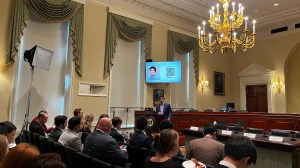
Earlier in the spring of 2024 I had the opportunity to become a member an artificial intelligence (AI) legislative policy sprint with the Federation of American Scientists (FAS). It literally was a sprint as we created all the briefs in about eight weeks. This crowdsourcing of expertise by FAS, as it was described by Daniel Correa, CEO of FAS, was an incredible undertaking on their part. This was truly a bipartisan labor of collaboration bringing together those with experience using AI to create the top ideas for legislation and policy related to AI.
At the time that the FAS put out the call for proposals for the policy sprint I was taking a course in AI in the Saïd Business School at the University of Oxford. I was learning so much and was realizing how far we were behind in the United States in education in terms of utilizing AI for considering the all important questions of how and what students learn. In a project for my Oxford course I wrote:
“First, teaching about artificial intelligence (AI) and teaching with AI are two very different things. In education we are going to have to do both; facilitating learning about the ethical use of AI and using AI in real world/work-based learning, so students understand how to use AI in careers. Therefore, one of the main obstacles that education faces is the need for education to evolve in the face of so many new technological developments making use of AI. Our policies will need to reflect the capabilities AI affords us. Educators must be trained in AI in programs very much like this one I am in now. Skill acquisition will need to be paramount to student seat time. Practicing, memorization, and repetition in many subjects is becoming irrelevant due to AI. AI allows us to shift memorization to understanding. Many are predicting this change in education to take two to six years. In education I believe societal acceptance is the biggest factor determining obstacles and adoption. Many might consider AI a technical challenge, which I recognize there are questions of technological progress, but I believe regulation (and who owns that regulation), economic conditions, plus the societal factor make this, instead, an adaptive challenge.”
Yesterday it was fascinating to listen to my colleagues’ ideas and views on AI in other sectors, including healthcare. One theme that came out throughout the day was that no matter the sector we need proactive prescriptions, not random knee-jerk reactions. This includes being responsive to new sources of risk. In other words, we need to catch threats before they happen. We also need to identify threats before they become public.
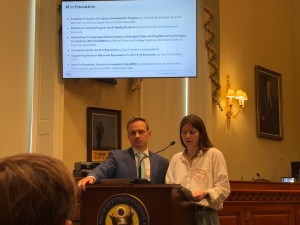
In my sector of education the themes of there not being enough data and the lack of training or guidance for teachers to be successful using and facilitating student use of AI emerged. One thing we need to do is leverage and mine the data we have. One thing is clear; we must be vigilant in helping educators understand AI and how to teach about AI as well as using AI to facilitate learning. I loved Zarek Drozda‘s comment when he said, “Education is a vaccine misinformation.” We must not miss the opportunity to educate our children for dealing with and using AI.
Click on A National Center for AI in Education to read my proposal. You can also click on New Legislative Proposals to Deploy Artificial Intelligence Strategically to see all the FAS Policy Sprint proposals.
Those proposals are broken into four categories:
- AI Innovation, Research and Development, and Entrepreneurship
- AI Trust, Safety, and Privacy
- AI in Education
- AI in Healthcare
I applaud the Federation of American Scientists for doing this innovative crowdsourcing of expertise to bring together great minds for creating policy ideas related to artificial intelligence. It was such an honor to be on the journey with everyone.
Your Favorite Might Not Be The Same As My Favorite

I am in Washington D.C. 🇺🇸 this week and had the opportunity to go out to eat last evening with friends and colleagues from Georgia, Texas, and Utah. We went to one of my favorites, The Monocle Restaurant for dinner. This place has so much history, having been on Capitol Hill since 1960. There are signed pictures of political icons and dignitaries all over the walls and we even sat in The SCOTUS Booth.

When it came time to order I asked our server one of my favorite questions: “What is your favorite thing on the menu?” His answer was not like any I have gotten before and prompted me to think and write this post. He replied, “Remember, your favorite might not be the same as my favorite.” Wow! So true! This got me to thinking about what the big takeaways and learning moments would be from our server’s reply.

One big takeaway from this interaction could be the importance of individual preferences and subjective experiences. It reminds us that what one person likes may not be the same as what someone else likes, and that’s okay. It promotes open-mindedness and understanding of different perspectives. It also encourages us to explore and try new things, rather than sticking to what we already know and like.
Furthermore, knowing others’ favorites at a restaurant can definitely help us make selections for ourselves. If someone we know well recommends a dish that they love, chances are we may enjoy it as well. This can save us time and effort in trying to decide what to order. For me, personally, I like knowing others’ favorites so I don’t miss something.
This can be related to leadership decisions as knowing our team members’ favorites can also play a role in making choices that benefit the team as a whole. By understanding their preferences and strengths, we can assign tasks or projects that suit them best, leading to better outcomes and overall team satisfaction. It shows that we care about their individual needs can help build trust and loyalty within the team.
A Story Without A Beginning That Will Never Have An End: Lessons From Phantastes

“Look at him! Look at him! He has begun a story without a beginning, and it will never have any end. He! he! he! Look at him!” This was said by the thistles about Anodos in Phantastes by George MacDonald. This really made me think about whether our stories really ever have a beginning or ending. And does the beginning or ending really matter. This can be interpreted in different ways depending on the context. Yes, this quote is in a faerie tale, but if you think about it there is no true beginning or ending to any of our stories. Just try it – for every beginning you choose, you can go back just a little further. This symbolizes the endless possibilities we have. This is curious to me because Anodos, whose name means either “pathless” or “upward path” in Ancient Greek flits from possibility to possibility in Phantastes. Anodos is in more of a series of episodes in the book than a single narrative. If you think about it, that is more in parallel with our own lives.

This caused me to dive in further on my study of MacDonald. He didn’t strive for us all to make the same meaning out of his writings and faerie tales. In The Fantastic Imagination, he told us, “A fairytale, like a butterfly or a bee, helps itself on all sides, sips at every wholesome flower, and spoils not one. The true fairytale is, to my mind, very like the sonata. We all know that a sonata means something; and where there is the faculty of talking with suitable vagueness, and choosing metaphor sufficiently loose, mind may approach mind, in the interpretation of a sonata, with the result of a more or less contenting consciousness of sympathy” (p. 12). In the same work MacDonald also explained that “A genuine work of art must mean many things; the truer its art, the more things it will mean” (p. 12.) That is the beauty of the great literary works – they can awaken different meanings for each of us. My meaning is just as right as yours.

I also really liked the metaphor of the butterfly or bee. We need to be like them and “sip from every wholesome flower,” taking advantage of every moment. We need to make sure we are not treating our moments as obstacles to overcome, but as precious moments to be sipped from, and “spoiling not one.” How many moments (flowers) do we miss because they don’t fit the plan, don’t fit the timeline, don’t fit with the so called beginning or end of a story?
“It is there not so much to convey a meaning as to wake a meaning.” ~ George MacDonald

Having just finished rereading The Chronicles of Narnia in published order, I really got to thinking about how C. S. Lewis did not start the story with the beginning of Narnia. That did not come till later. And in the end there really wasn’t an end. There is definitely symbolism there. This made me think of how we always get locked into thinking we need to live in some preset chronological order. Life really happens in more of a lattice-like way. For example, if predicting my own path, most would not have predicted the past two years of deep study of C. S. Lewis and being a Scholar in Residence at The Kilns. Had you told me three years ago I would be doing that I would have laughed. But because of the writing of author Patti Callahan Henry a “wholesome flower” was placed in my reach and another piece to my life’s lattice. Did it fit some “plan?” No. But I am sure glad I am adding this section to the lattice and “sipping from every wholesome flower” that has been made available. Don’t be afraid to jump of the horizontal and chronological timeline that we many times lock ourselves into. Sometimes we need to be more like Anodos and go where there is no path.
Exploring the Interconnectedness of Nature and Perception: A Deeper Look at Symbolism in Literature
I love exploring the layers of meaning in literature and pondering what lessons I can take away from them. I am reading George MacDonald’s Phantastes: A Faerie Romance for Men and Women right now. After spending last month at The Kilns outside Oxford England continuing my study of C. S. Lewis as a Scholar in Residence, I needed to spend some time digging in on the man who Lewis considered to be one of his biggest influences, both personally and in a literary sense. C. S. Lewis spoke of reading Phantastes and it changing his life. Just as one can tell the influence different artists have had on rock bands, I believe I can sense the influence MacDonald had on Lewis’s writing. One of the first things that has jumped out at me is the attention to detail and use of imagery and symbolism.

Let me give you an example from Chapter 2 in Phantastes: Anodos (the book’s central character) said, “And, stranger still, where this carpet, which I had myself designed to imitate a field of grass and daisies, bordered the course of the little stream, the grass-blades and daisies seemed to wave in a tiny breeze that followed the water’s flow; while under the rivulet they bent and swayed with every motion of the changeful current, as if they were about to dissolve with it, and, forsaking their fixed form, become fluent as the waters.” MacDonald’s attention to detail truly made the fixed forms fluent in my mind. The fact that MacDonald also sets it up that Anodose designed the carpet himself to resemble the field of flowers told us that Anodos had been seeking the life he was finding in this faerie tale.
“An almost perfect relationship with his father was the earthly root of all his wisdom. From his own father, he said, he first learned that Fatherhood must be at the core of the universe.” C. S. Lewis speaking of George MacDonald
I believe MacDonald was trying to convey a deeper message about the interconnectedness of nature and our perceptions of reality in that passage. The imagery of the grass and daisies appearing to move with the flow of the stream could symbolize how our beliefs and perceptions can influence our experiences and interactions with the world around us.
Our beliefs and perceptions are heavily influenced by our experiences and interactions with the world around us. These experiences shape our understanding of the world, impacting we interpret events, people, and situations. Our interactions with others also play a significant role in shaping our beliefs perceptions, as we learn from their perspectives and incorporate them into our own worldview. Ultimately, our beliefs and perceptions are constantly evolving as we continue to engage with the world around us.
 Byron's Babbles
1 comment