A Disciple Of Experience

It is said that what we learned from the 4,000 pages of original manuscripts of Leonardo da Vinci’s notebooks is that he knew a lot, and he also learned a lot. He learned from asking questions. Leonardo said of himself that he was “a disciple of experience.” This statement reflected his belief in the importance of learning through direct observation and hands-on practice. He valued experiential knowledge over theoretical understanding, suggesting that true mastery comes from engaging with the world, experimenting, and drawing insights from real-life situations.
Leonardo’s approach involved meticulous observation of nature, human anatomy, and various crafts, allowing him to accumulate wisdom that informed his artistic and scientific work. In essence, he emphasized that experience is a crucial teacher, and by embracing it, one can gain deeper insights and develop a more profound understanding of complex subjects. This ethos is evident in his diverse interests and contributions across art, science, engineering, and pretty much every discipline.
The Winning Combination: Real, Authentic, Fun, & Loving What We Do

Last night, one of the commentators before the Los Angeles Chargers – Cincinnati Bengals game (Chargers won 34-27) made the comment referring to Charger’s Head Coach Jim Harbaugh that, “He’s real, he’s authentic.” He went on to say, “What you see is what you get.” Finally, one of his players in an interview said, “I’ve never seen anyone who loves football as much as Coach Harbaugh does.” His point was they were always having fun because Coach Harbaugh was having fun. All this was clearly a pretty good combination for great leadership.
The phrases “He’s real, he’s authentic” and “What you see is what you get” highlight several key traits that are often associated with effective leadership:
- Authenticity: Leaders who are genuine and transparent foster trust among their team members. When leaders are true to themselves, they create an environment where others feel safe to be themselves, leading to better collaboration and morale.
- Consistency: Being authentic means that a leader’s actions align with their words. This consistency helps establish credibility, as team members can rely on them to act in accordance with their stated values and principles.
- Connection: Authentic leaders are relatable and accessible, making it easier for followers to connect with them on a personal level. This connection can inspire loyalty and motivate teams to work towards shared goals.
- Openness to Feedback: Authentic leaders are approachable and encourage open communication. This openness allows for constructive feedback, which can lead to personal and organizational growth.
- Inspiration: A leader who embodies authenticity can inspire others by demonstrating confidence and integrity. Their realness can motivate team members to strive for their best and align their personal values with the organization’s mission.
Bottom line: Jim Harbaugh’s authenticity and straightforwardness contribute significantly to his leadership effectiveness by building trust, fostering connection, and inspiring his team to achieve their goals. Harbaugh’s enthusiasm for the game creates a positive atmosphere that keeps players engaged and motivated. When a leader is genuinely passionate, it can be contagious, inspiring athletes to give their best effort.
A leader, just as a coach who enjoys the game, fosters a sense of camaraderie among players and those they serve. When others see their coach or leader having fun, it encourages team bonding and helps build strong relationships, which can enhance teamwork on and off the field or in the organization.
We can learn from Coach Harbaugh that by creating an environment where fun is a priority, a culture that values hard work while also encouraging players to enjoy the process is cultivated. This balance, along with being authentic, can lead to higher performance levels and reduced pressure.
Errors Vs Confusion

As a person who likes to get things done I often say, “Let’s do something, even if it’s wrong.” I don’t say this to be funny but to express that if we do nothing we won’t know what’s wrong, or how to fix it. Recently when reading the 50th anniversary edition of Thomas S. Kuhn’s The Structure of Scientific Revolutions I came across Kuhn’s learnings from Francis Bacon. He quoted Bacon. I found that Bacon had affirmed my thinking a long time ago.
Francis Bacon’s quote, “Truth emerges more readily from error than from confusion,” suggested that when we make mistakes, we can often learn and clarify our understanding. Errors can lead us to reassess our beliefs and assumptions, ultimately guiding us toward a clearer sense of truth. In contrast, confusion can cloud our judgment and make it difficult to discern what is true, as it often arises from a lack of clarity or understanding. Essentially, Bacon highlighted the importance of learning from our mistakes, as they can be stepping stones to greater insight, while confusion hinders our ability to find clarity.
Kuhn’s reference to Francis Bacon in The Structure of Scientific Revolutions adds depth to Bacon’s original ideas about knowledge, confusion, and the process of learning from mistakes. While Bacon emphasized the importance of learning from errors as a path to greater understanding, Kuhn built on this foundation by introducing the concept of paradigms in scientific progress.
Kuhn argued that science does not progress through a linear accumulation of facts but rather through a series of revolutionary changes in which existing paradigms are challenged and replaced. He suggested that confusion or anomalies within a prevailing paradigm often lead scientists to re-evaluate their understanding, paving the way for new theories.
In essence, Kuhn wanted us to learn that periods of scientific stability (normal science) can give way to crises when anomalies accumulate, forcing scientists to confront their assumptions. This process can initially seem chaotic and confusing, but it is ultimately essential for scientific advancement. Thus, while both thinkers valued the role of error and confusion in the quest for clarity, Kuhn expanded on Bacon by framing it within the broader context of scientific revolutions and paradigm shifts.
Discovering Stockyards City: A Journey in Relationship Building Through History, Culture, and Cowboy Charm

I pride myself on being the person who finds the cool places to go when coming into a city or state as a visitor. This past week I was in Oklahoma City, Oklahoma for ExcelinEd’s National Summit on Education. I must first say that Oklahoma City far exceeded my expectations. The people are super friendly and there are lots of cool things to see. The coolest, however, was historic Stockyards City, Oklahoma. Luckily I saw a sign for it as my Uber was delivering me to my hotel. Farm kid that I am, with the word stockyards I was in.
Historic Stockyards City, Oklahoma, is a vibrant district that proudly showcases its rich heritage as a hub of cattle trading and ranching. Established in the late 19th century, it became a central site for the livestock industry, particularly with the opening of the Oklahoma City Stockyards in 1910. The area is renowned for its iconic structures, including the impressive Livestock Exchange Building and the famous Stockyards City Main Street, lined with Western shops, restaurants, and museums. Highlights include the annual “World’s Largest Stocker and Feeder Cattle Auction,” which attracts buyers and sellers from across the country, as well as the historic rodeo events that celebrate cowboy culture. Today, Stockyards City remains a lively destination, drawing visitors eager to experience its unique blend of history, culture, and Western charm. In fact there are cattle auctions at the stockyards each Monday and Tuesday.

I still haven’t told you the best part of Stockyards City yet that was also founded in 1910 – Cattlemen’s Steakhouse. Originally, in 1910, it was called the Cattlemen’s Cafe. As soon as I saw this on the web, I knew I had to go! I ended up going twice!!! The first time, a group of us were leaving an early evening event and one of our department of education team members said, “I really need to get something to eat.” I said, “I’ve got just the place.” Off we went.

It was awesome! We had the most incredible server ever who really understood what the customer experience is all about. She told us all about the food, she told us how the food was prepared, gave us recommendations, and gave us a full history lesson – such as that the original owner lost the restaurant in a 🎲 dice roll. True story. We had to have the famous Lamb Fries (I’ll let you click and find out what they are, if you don’t know). Our server put the history into perspective when she explained they were still using the same Lamb Fry recipe as when they opened in 1910. She then went on to tell us that was two years before the Titanic sunk in 1912. We were having the time of our lives!
Needless to say; after everyone heard of our incredible experience, there was a group of my home state peeps that wanted to go the next night. They invited me to go with them. There were other events I maybe should have gone to, but it seemed really important to spend time building relationships with this group. So I did and the group became 15.

Before I get to the real topic of this post (I know. It has taken a while) I need to say that our server the second night was the granddaughter of our server the night before. She was awesome, too! We had an incredible time and one person said to me, “I am so glad I finally got to hang out with you.” Then she texted me when I was on my way home and said, “Thanks for adding some fun to the week.” I so appreciated that! I like being that person who adds fun, smiles, and laughter to others’ lives.

Relationships are so important and I am so glad I practiced what I preach and decided to go with the group. Going to dinner can be a great way for building relationships for several reasons:
- Face-to-Face Interaction: Dining together provides an opportunity for personal, face-to-face interaction, which fosters deeper connections and understanding compared to virtual communication.
- Creating a Comfortable Atmosphere: A relaxed setting, like a restaurant, particularly when you’re eating Lamb Fries, can help people feel more comfortable and open, encouraging honest conversations and sharing of experiences.
- Shared Experience: Sharing a meal creates a communal experience that can strengthen bonds. It allows for the creation of shared memories, which are essential for relationship building. And let me tell you, we have shared memories. Check out the photos for proof.
- Opportunities for Conversation: Meals often last long enough to allow for meaningful dialogue. This time together can be used to learn more about each other’s values, interests, and backgrounds.
- Cultural Significance: In many cultures, dining together is seen as a significant social activity. It can symbolize trust and camaraderie.
- Non-Verbal Communication: During dinner, body language and non-verbal cues play a huge role in communication, allowing people to connect on a deeper emotional level.
- Networking Opportunities: In professional contexts, dinner can facilitate networking and collaboration in a more casual environment, helping to establish rapport among colleagues or business partners.
Overall, going to dinner is not just about the food; it’s about nurturing relationships through shared experiences and open communication. I also really believe that historical or iconic restaurants like Cattlemen’s Steakhouse in Stockyards City can serve as fantastic catalyst for relationship building. Here are a few ways they can be leveraged:
- Cultural Experience: These restaurants often have rich histories and unique atmospheres that can spark conversations and connections. Sharing stories about the restaurant’s past or its significance can foster a deeper bond among diners.
- Shared Experience: Dining in a place with a storied reputation can create lasting memories. When colleagues or business partners share experiences in such settings, it can strengthen their rapport and encourage more informal discussions.
- Local Flavor: Emphasizing the local cuisine can also be a great conversation starter. Discussing regional specialties or the history behind certain dishes can lead to engaging dialogues.
- Networking Opportunities: Iconic restaurants often attract influential patrons. This environment can provide opportunities for networking, allowing guests to meet others, potentially leading to beneficial business relationships. A side note here: many of the first year scenes of Tulsa King were filmed close to where we were and Sylvester Stallone who plays portrays Dwight “The General” Manfredi in Tulsa King ate where we were eating 3-4 times per week. As a huge Stallone fan, I thought that was pretty cool.
- Incorporating Themes: For specific events or meetings, you can incorporate the restaurant’s theme into presentations or discussions, further tying the dining experience to the business objectives.
- Creating Traditions: Regularly meeting at a notable restaurant can become a tradition that strengthens personal and professional bonds over time.
I do really try to find the cool and historic places when I travel to other places. It’s also great to find great restaurants when at conferences. We all need to leverage more time for building and maintaining our relationships.
Navigating Life’s Journey: Embracing The Unknown

The great song Battle Born by one of the bands I really like, Five Finger Death Punch, conveys themes of resilience, perseverance, and the struggle to overcome personal battles. I love that it reflects on the challenges one faces and the strength required to rise above them. The phrase “battle born” suggests that we are shaped by all our experiences and hardships. Ultimately we emerge stronger from the full schedules and adversity that are part of our daily life.
“Everything worth fighting for you will actually HAVE TO fight for. Every wish, every dream, every idea comes to existence only through blood, sweat, and sacrifice… we are all Battle Born” ~ Ivan Moody, Five Finger Death Punch
The lyrics of Battle Born depict a sense of fighting against the odds, highlighting the importance of determination and the spirit of not giving up, even when faced with difficulties. It also touches on the idea of unity and camaraderie in overcoming struggles, emphasizing the support we can find in our connections with others.
Battle Born’s chorus line “I don’t know where I’m going, but I know just where I’ve been (battle born)” speaks to the uncertainty of the future contrasted with the clarity of past experiences. It suggests that while our path ahead may be unclear and unpredictable, we usually have a strong awareness of our journey so far, including the struggles and challenges we’ve faced. This acknowledgment of the past can serve as a foundation for resilience and strength, highlighting that even in moments of doubt, our experiences contribute to our identity and capability to face whatever comes next. It’s a reminder that personal history can guide us, even when the destination isn’t certain.
“Humans Were Made To Work Together”

Earlier today, in Leading By The Courage To See, I blogged about developing our courage by listening and seeing. This had been inspired by my reading in The Upside of Disruption: The Path To Leading and Thriving In The Unknown by Terence Mauri and the fourth book in The Five Towers series, The Yellow Tower, by J. B. Simmons. Still quoting out of the same paragraph as yesterday in The Yellow Tower, I want to tackle the line, “Humans were made to work together.” I believe this was emphasizing emphasizing the importance of collaboration and community in human life. It suggests that we thrive when we support and rely on one another, highlighting our social nature.

In The Upside of Disruption, Mauri also pointed out that the heart of successfully evolving and innovating is collaboration (humans working together). He stressed that great ideas rarely come from individuals isolated from everyone else. As John Hendrix says, “Our work gets better in community.” Just like C. S. Lewis and J. R. R. Tolkien needed each other and the rest of the Inklings, we need teams working together and collaborations to create new and exciting innovations.

The lesson here is that teamwork, connections, partnerships, collaborations, and shared experiences enrich our lives, organizations, and communities. Working together leads to greater innovation, problem-solving, and a sense of belonging.
Leading By The Courage To See

I finished reading the fourth book in The Five Towers series, The Yellow Tower, by J. B. Simmons, a couple of weeks ago but came across a few more notes I wanted to process from the reading. One of the things Cipher (the protagonist) was told was, “It takes courage to see.” This suggested that seeing beyond the surface requires bravery and introspection. This also implied that truly understanding oneself and the world involves confronting uncomfortable truths, acknowledging vulnerabilities, and facing fears.

This kind of insight often demands stepping outside of our comfort zone and challenging prevailing beliefs or perceptions. By highlighting the need for courage in gaining deeper understanding, Simmons, through Cipher, was emphasizing the transformative power of awareness and the importance of personal growth.

I’m reading The Upside of Disruption: The Path To Leading and Thriving In The Unknown right now and author Terence Mauri explained that courage is not innate and can be developed. In fact, he suggested we can sharpen our courage by listening and eliminating our preconceived notions. In a program I was facilitating a week ago, a school principal made the comment, “We need to listen, even when it hurts.” So true!
Another sentence the same paragraph in The Yellow Tower that I first quoted in this post is, “The Healer shows those who serve the most in Yellow how to heal, and those who lead the most how to see.” By stating that those who serve in Yellow (associated with warmth, optimism, and connection) learn to heal, it suggested that service to others can lead to personal growth and emotional resilience. It implied that through acts of kindness and support, we can foster healing, both for ourselves and those we help.
Furthermore, the idea that leaders learn to “see” indicated that leading with influence involves empathy and awareness. We, as leaders, must look beyond our own perspectives to understand the needs and experiences of others. This kind of insight is vital for fostering teamwork and collaboration.
Service and leadership are enriched by a deeper understanding of human connections, ultimately leading to a more harmonious and effective community.
“Burro”wing In And “Mining” Some History

Yesterday I had the opportunity to spend the morning on Lake Havasu in Arizona. It was absolutely glorious. Lake Havasu is a large reservoir located on the Colorado River, straddling the border between California and Arizona. The lake was created in the 1930s by the construction of the Parker Dam (I’m going there today), it serves as a vital water supply for irrigation and municipal use in the region. Lake Havasu is famous for its recreational opportunities, including boating, fishing, and swimming, making it a popular destination for tourists and outdoor enthusiasts.

The area also features the iconic London Bridge, which was relocated from England by Robert P. McCulloch, who founded Lake Havasu City, adding to the lake’s unique charm and cultural significance. I blogged about the London Bridge in Leading Like McCulloch Moving The London Bridge. Lake Havasu offers one of the most picturesque landscapes I’ve ever experienced.

Just as I thought I had seen it all, I spotted burros along the banks of the lake (see the featured photo this post for the picture I took). In doing some research I found out that these burros are direct descendants of the burros used in the gold and silver mines in the mountains and canyons in the area. When the mines were shut down, the miners liberated the burros and they have thrived here in the wild ever since. Amazing!
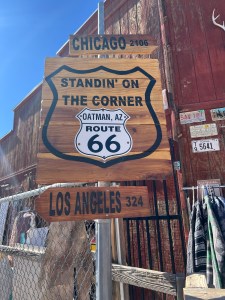
Then I learned of the burros living along Route 66, particularly in Oatman, Arizona. Of course, it was time to make the hour trek up Route 66 to Oatman. Boy am I glad I did. Oatman, Arizona the people, and the burros there are wonderful.

I never would have dreamed I would be taking selfies with descendants of mining burros!

These burros hold a significant place in local history and culture. Here are a few reasons I found are why they are important:
- Historical Background: As I said earlier, the burros are direct descendants of the pack animals used by miners during the gold rush in the early 1900s. When mining declined and ceased all together, the burros were liberated, and they adapted very well to the wild environment.
- Local Symbol: The burros have become a symbol of Oatman and its Old West charm. Their presence contributes to the town’s unique character and attracts tourists, making them an integral part of the local economy. Let me tell you from experience it is UNIQUE! And again, I loved the people, the town, and the burros!
- Wildlife Management: The burros represent a connection to the region’s wildlife heritage. They are now considered part of the local ecosystem, and their management is essential to balance their population and the environment.
- Tourist Attraction: Visitors along Route 66 and to Oatman often enjoy feeding and interacting with the burros, making them a key part of the tourist experience. This interaction helps promote awareness of the town’s history and the importance of conservation.
- Cultural Significance: The burros have been woven into local folklore and stories, enhancing the cultural tapestry of Oatman and reflecting the spirit of the American West.
For me, the burros of Oatman are not just animals; they are iconic representations of the town’s history, tourism, and cultural identity.
Leading Like McCulloch Moving The London Bridge

I am so excited to be in Lake Havasu City, Arizona right now. This has been a place I wanted to come to for quite some time. I wanted to see the London Bridge. At this moment I am looking out my hotel window at the bridge and Lake Havasu. I have always been impressed with the story of Robert P. McCulloch buying the London Bridge and moving it to Lake Havasu City, AZ.

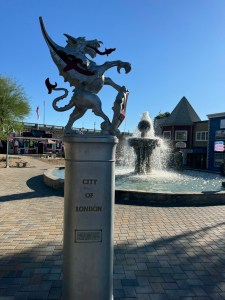
In 1968, American entrepreneur McCulloch purchased the London Bridge, which had been spanning the River Thames since the 19th century, as part of a vision to create a tourist attraction in Lake Havasu City, Arizona. After acquiring the bridge for approximately $2.5 million, he meticulously disassembled it brick by brick, numbering each piece to ensure its reconstruction in the Arizona desert. The bridge was reassembled and opened to the public in 1971, becoming a celebrated landmark that drew tourists and contributed to the economic development of the region. McCulloch’s unique initiative exemplified his belief in creating meaningful attractions that intertwined history with modern life.
This story offers several important lessons for leaders:
- Vision and Innovation: McCulloch had a bold vision of transforming an unremarkable desert town into a tourist destination. Leaders can learn the importance of thinking outside the box and pursuing innovative ideas that may seem unconventional at first.
- Risk-Taking: This project was a significant financial risk. Leaders should recognize that calculated risks can lead to substantial rewards, and embracing uncertainty can often result in groundbreaking outcomes.
- Community Engagement: McCulloch’s decision involved not just a business venture but a commitment to enhancing the community’s identity and economy. Leaders should prioritize engaging with their communities and considering their needs and aspirations in decision-making processes.
- Long-Term Thinking: Moving a historic structure like the London Bridge wasn’t just about immediate gains; it was about creating lasting value for future generations. Leaders can learn the importance of long-term planning and sustainability in their initiatives.
- Marketing and Branding: The bridge became and continues to be to this day a symbol of Lake Havasu City and a major tourist attraction. Leaders can understand the power of branding and how unique projects can enhance a location’s visibility and appeal.
- Cultural Appreciation: By relocating a significant piece of history, McCulloch demonstrated an appreciation for cultural heritage. Leaders should recognize the value of preserving and celebrating heritage as part of their community’s identity.
Tyranny And Power Of The Self

I’m now fully engrossed in the fifth book of J. B. Simmons’ The Five Towers Series, The Black Tower. The Black Tower was really the Purple Tower until evil ambition for power removed all color and it became black. The protagonist, Cipher, spent time learning about the evils of ambition for power without a purpose for good. During a conversation about the strong, even if evil, rising to power in the Black Tower, Jade told Cipher, “Then take power yourself and change it…” Jade smirked at the irony of her words. Cipher then responded, “Maybe I will.” Then Cipher thought to himself, “She’s partly right, but wrong too. It’s what we do with power that matters, not power itself” (p. 147). This is really pretty profound to think about – power itself mattering less than how it is used.
History tells us how true this is with many examples. Throw in unbridled power being driven by selfish ambitions and it is a recipe for disaster. We must recognize, however, that power is always at play in any organization or community. Additionally, power is difficult to observe in action.

The mantra in The Black Tower was “The strong shall rise.” This is purely blind ambition for power – the dark side of power we often see in leaders and organizations: politics and game playing. But…power is the means and mechanism by which we get things done. It is all about how we earn and use the power we have. Power is used best astutely. Power is used best strategically. Power does not need to be used in a visible or explicit way to be effective. Remember, the best use of power is difficult to observe.
Another comment Cipher made was, “I yearned to have power, to create something that changed the world, even if it meant bending others to my will. It was tyranny of the self, not justice” (p. 338). There is so much to unpack here in this quote. The Black Tower gives us examples of power in its narrowest of spheres of influence. Academically this would be called legitimate power. This is positional power of authority. Again, this power has very little influence. As Cipher realized, this is power for power’s sake; or purely ambition and pride. There is no real purpose.
Conversely to positional power we have personal power – referent power. With this power the individual earns the respect and admiration of others. This leadership is driven by purpose rather than ambition. So many times we play power off as a bad thing, but power is what gives us the ability to cause a psychological change in behaviors, beliefs, values, and goals of others. Without purpose, that power is driven by ambition and becomes “tyranny of the self.”
 Byron's Babbles
leave a comment