Childlikeness

Reading George MacDonald has become one of my latest micro-studies. As an influencer of both C.S. Lewis and J.R.R. Tolkien, I have to spend some time studying this literary genius. Symbols and metaphors enrich MacDonald’s narratives, allowing us to engage with the characters on a deeper level and reflect on our own lives and spiritual journeys. Each character’s development is often directly tied to their interactions with these symbols, emphasizing the importance of perseverance and belief in the quest for meaning.
In order for us, as adult readers, to fully interact we must become “childlike.” A passage of scripture that influenced MacDonald was Matthew 18:2-6 King James Version:
2 And Jesus called a little child unto him, and set him in the midst of them,
3 And said, Verily I say unto you, Except ye be converted, and become as little children, ye shall not enter into the kingdom of heaven.
4 Whosoever therefore shall humble himself as this little child, the same is greatest in the kingdom of heaven.
5 And whoso shall receive one such little child in my name receiveth me.
As both an educator and person who is often described as childlike, I love those verses. To really learn we must become like little children. Our days of being hyper inquisitive and imaginative. I believe MacDonald was obsessed with this “childlikeness.” He said of the Bible verse quoted above, “‘He that sees the essential in this child, the pure childhood, sees that which is the essence of me,’ grace and truth – in a word, childlikeness. It follows not that the former is perfect as the latter, but it is the same in kind.” MacDonald’s stories are both for the young in age and for the childlike of any age. This childlikeness go for our spiritual truth as well as our approach to art.
In the latest story I am reading, The Golden Key, we find Grandmother, who is wise, ancient in age, but yet looked and acted like a young woman. The protagonists Mossy and Tangle, who we only know by those nicknames, embark, with Grandmother’s guidance on a journey that explores themes of growth, creativity, and the pursuit of deeper meaning in life. The Golden Key itself serves as a symbol of unlocking new realms of understanding, thus embodying timeless wisdom and insight throughout the narrative.
Macdonald reminded us that curiosity and the pursuit of knowledge, not age, lead to spiritual awakening. True growth and wisdom are not necessarily tied to physical age but rather to one’s inner journey.
Finding Balance: Embracing Playfulness While Grounded in Reality

While being light-hearted and free-spirited can be positive traits, there is also value in grounding oneself and embracing the weight of responsibility and emotion. I was reminded of this while reading George MacDonald’s The Light Princess yesterday. This short fairy tale explores the balance between being playful and maintaining a connection to deeper truths and meaningful experiences in life. I loved this conversation between the queen and king: “It is a good thing to be light-hearted, I am sure, whether she be ours or not.” “It is a bad thing to be light-headed,” answered the queen, looking with prophetic soul far into the future.” The conversation continued after a bit more back and forth with, “But it is a bad thing altogether to be light-minded,” retorted the queen, who was beginning to lose her temper.” Because Princess Adela, in the fairy tale, was cursed by her aunt, Makemnoit, to have no gravity, this really got me thinking of both the metaphorical and literal meaning MacDonald had put into the story.
“It is a bad thing to be light-headed” refers to the idea that being carefree or overly whimsical can lead to a lack of seriousness or depth. In the story, the princess was incapable of taking life seriously. The princess cursed with a lack of gravity—both literally and metaphorically—experiences life in a way that makes her seem detached from reality. As I stated in the beginning, we must strike a balance between being light hearted and light headed and being grounded. Fortunately, unlike Princess Adela, we do not have to be in water to find our gravity – both physical and emotional weight.
Look Closely

I heard a great phrase today: “Looks can be deceiving, but not if you look closely.” There is so much to this phrase that made me pause and reflect. Appearances might mislead people into forming incorrect judgments or conclusions about something or someone. By taking the time to examine the details and not just relying on surface impressions, we can uncover the truth. We are reminded of the importance of careful observation and deeper analysis to see beyond superficial appearances.
Assuming Is A Thought Barrier
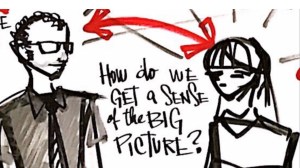
Yesterday, in a panel discussion it came up that assuming is a thought barrier; meaning that making assumptions can limit your thinking and understanding of another person, organization, or situation. In the context of the discussion the point was that when we assume something without asking questions or seeking further information to understand, we may close ourselves off to new ideas or alternative perspectives, or worse yet not understand other people or their context.
Why not just ask instead of assuming? This seems pretty straightforward forward, but seems a struggle for some. It also becomes a struggle because it is not always a comfortable or convenient environment to ask. For example, I have quit using acronyms when I am speaking or in meetings. Ever been in a meeting or reading something with acronyms that you have no idea what they are? I rest my case.
Remember, we need to ask not guess or assume. In his epic 1961 science fiction novel, Robert A. Heinlein wrote in Stranger In A Strange Land, “Only the wearer knows where the shoe pinches.” We need to remember to ask as the first step to understanding. Conversely, we need to be prepared to authentically answer.
Do Better, and Grow Better, and Be Better

I continue to be impressed with the depth of the themes in George MacDonald’s writing. After becoming so enthralled with The Princess and the Goblin I just had to start The Princess and Curdie. Another grandmother conversation serves as inspiration for today’s post. Grandmother told Curdie, “Remember, then, that whoever does not mean good is always in danger of harm” (p. 23). Curdie was encouraged to remain steadfast in his good intentions and to navigate the complexities of his adventures with a focus on what is right and just.

I really had to ponder the meaning of the interaction above. The statement emphasized the idea that intentions matter deeply was a very important concept being used as a through line throughout the entire story. The grandmother’s wisdom reinforces the notion that while one might face dangers in the pursuit of good, the real threat comes from those who choose evil, ultimately leading to their own downfall.
After this lengthy conversation, Curdie got the point the grandmother was trying to make. He said, voice was gentler even than before. “I was doing the wrong of never wanting or trying to be better” (p. 24). Later, the great grandmother replied, “When people don’t care to be better they must be doing everything wrong” (p. 25). Wow, read that again: “When people don’t care to be better they must be doing everything wrong.” We all need to care about getting better.
The grandmother left Curdie with one other great point during this interaction. She said, “Do better, and grow better, and be better” (p. 25). Macdonald created a drop the mic moment with this. We need to do, grow, and be better.
Being Open To Learning and Evolving

Yesterday I started reading George MacDonald’s sequel to The Princess and the Goblin, The Princess and Curdie. As I stated in an earlier post I have really been inspired to dig in on a study of MacDonald. His writing is so genius and he wrote in that way that creates the characters in such a way that we can relate to them. It’s one of the reasons that I have fallen in love with fiction and fairy tales. I continue to say that in fiction we can get to know everything about the characters and take an introspective look at ourselves through the characters in a way not afforded by nonfiction. I’m so glad I have learned that so deeply from my scholarly study of C. S. Lewis.
One the first such introspective looks came early in The Princess and Curdie with an interaction of Curdie and the grandmother when it was said, “There is this difference between the growth of some human beings and that of others: in the one case it is a continuous dying, in the other a continuous resurrection” (p. 13). This interaction highlighted a profound difference in the human experience regarding personal growth and transformation. When he referred to “continuous dying,” he suggested that some individuals may become stagnant, stuck in negative patterns, or lose our sense of purpose and joy over time. In contrast, “continuous resurrection” signified a dynamic process of renewal, where individuals embrace change, learn from our experiences, and strive for personal improvement.
“There is this difference between the growth of some human beings and that of others: in the one case it is a continuous dying, in the other a continuous resurrection. One of the latter sort comes at length to know at once whether a thing is true the moment it comes before him; one of the former class grows more and more afraid of being taken in, so afraid of it that he takes himself in altogether, and comes at length to believe in nothing but his dinner: to be sure of a thing with him is to have it between his teeth.” ~ The Princess and Curdie
MacDonald encouraged readers to seek a life characterized by resilience, growth, and empathy, suggesting that true fulfillment comes from being open to learning and evolving. This perspective invites us to reflect on our own journeys and choose paths that lead to a richer, more compassionate existence rather than allowing ourselves to wither away. Ultimately, it teaches us the importance of nurturing our inner selves and uplifting each other through shared understanding and kindness.
Understanding Those Around Us

Yesterday I wrote Seeing Is Not Believing after being inspired by George MacDonald’s The Princess and the Goblin. Now I’m continuing the thought process using more of the conversation between Princess Irene and her grandmother. The conversation continued, “We are all very anxious to be understood, and it is very hard not to be. But there is one thing much more necessary.’ ‘What is that, grandmother?’ ‘To understand other people.’ ‘Yes, grandmother. I must be fair – for if I’m not fair to other people, I’m not worth being understood myself” (p. 73). The dialogue between Princess Irene and her grandmother highlights a key lesson: while it is natural to desire understanding from others, it is even more crucial to strive to understand those around us.
MacDonald’s fairy tales had a huge impact on C. S. Lewis from an early age. That impact was both of a personal growth nature and an impact on Lewis’s writing development. I’m so fortunate through my studies of Lewis to have also been exposed to MacDonald. The exchange between Princess Irene and her grandmother reminded me that true worth comes not from seeking validation but from being fair and considerate towards others. If we will prioritize understanding, we will foster deeper connections and compassion, creating a more harmonious society.
The passage in the book I referenced here caused me to reflect on my own interactions and to continually cultivate a mindset that values empathy as a fundamental aspect of my relationships with others. In essence, the story continues to teach us today that understanding others enriches our own lives as well as those we seek to understand and contributes to mutual respect and kindness.
As I conclude this post I can’t help but pause and reflect that it’s been 153 years since MacDonald published The Princess and the Goblin. I am amazed by the perennial influence both MacDonald and Lewis have on the lives of others and me personally. They are both continuing to have an influence on me some 120 and 62 years respectively since their deaths. Amazing! And I believe that is a pretty amazing legacy to try and emulate.
Seeing Is Not Believing

Ever heard the phrase “Can’t read a book by its cover?” Ever really thought about what that means? In The Princess and the Goblin, by George MacDonald, the grandmother teaches Princess Irene an important lesson about seeing beyond the surface. We must be aware that merely observing something doesn’t equate to fully comprehending or trusting in its significance.
‘What does it all mean, grandmother?’ she [Princess Irene] sobbed, and burst into fresh tears.
‘It means, my love, that I did not mean to show myself. Curdie is not yet able to believe some things. Seeing is not believing – it is only seeing. You remember I told you that if Lootie were to see me, she would rub her eyes, forget the half she saw, and call the other half nonsense.’ ~ The Princess and the Goblin
In The Princess and the Goblin, MacDonald uses the phrase “Seeing is not believing – it is only seeing” to convey a deeper understanding of perception and belief. The grandmother’s wisdom encourages us to look beyond the surface and recognize that true understanding often requires faith and intuition, rather than just visual evidence. Through the grandmother I believe MacDonald was implying that belief and understanding come from a place of inner conviction, rather than just physical observation.
We need to remember to explore beyond what we can see. MacDonald’s fairy tale helps us consider that there are truths and realities that may not be immediately visible or tangible but can be understood through deeper engagement, reflection, and trust.
The Necessity Of Being Understood

You guessed it. Another post inspired by George MacDonald’s The Princess and the Goblin. Yesterday, I wrote Following The Thread Forward. Today, I am writing after reading the lines, “But in the meantime you must be content, I say, to be misunderstood for a while. We are all very anxious to be understood, and it is very hard not to be. But there is one thing much more necessary.’ ‘What is that, grandmother?’ ‘To understand other people.’ ‘Yes, grandmother. I must be fair – for if I’m not fair to other people, I’m not worth being understood myself” (p. 73). Princess Irene and her grandmother recognize that while it’s natural to desire understanding from others, it is even more vital to strive to understand those around us.

MacDonald was highlighting the importance of empathy and understanding in human relationships. We are reminded to practice compassion and actively listen to others, fostering deeper connections and harmony in their interactions. True communication goes beyond mere words; it involves genuinely seeing and appreciating the perspectives and feelings of others.
Following The Thread Forward

Through my studies of C. S. Lewis I have become a huge fan, and thus student of George MacDonald. Lewis considered MacDonald one his earliest influences after reading Phantastes at the age of 16. I am reading MacDonald’s great faerie tale The Princess and the Goblin right now. In this great literary work MacDonald told the enchanting story of Princess Irene and her brave encounters with the goblins who threaten her kingdom. Through her adventures, Irene discovers inner strength, the importance of faith, and the value of listening to wise guidance. The message MacDonald conveys highlights the triumph of good over evil, the significance of trust in oneself and others, and the idea that courage often comes from unexpected sources.

There was a line in the book as I was reading this morning where Princess Irene was on an adventure following a thread from her grandmother. It was said that, “She rose at once, and found the thread. But the instant she tried to feel it backwards, it vanished from her touch. Forwards, it led her hand up to the heap of stones – backwards it seemed nowhere” (p. 64). This really made me think about our moving forward in life. We really don’t get to go backward.
Then I thought about the genius of MacDonald having the thread represent guidance, intuition, and the idea of trust in one’s instincts or inner direction. When the thread leads Princess Irene forward but disappears when she tries to trace it backwards, it symbolizes the importance of looking ahead and having faith in the path we are on, rather than dwelling on the past or second-guessing.
George MacDonald seemed to be conveying a lesson about the necessity of moving forward in life with confidence, even when faced with uncertainty. He encouraged us to trust our instincts and follow the guiding forces in our lives, rather than getting lost in doubts or regrets about what has already happened. The metaphor of the thread suggested that progress often requires faith and courage, and that the right path may not always be clear if we focus too much on what is behind us.
 Byron's Babbles
leave a comment