Language Matters!
 Have you ever had someone call you out for something you said? Have you ever regretted saying something in the way you said it? Have you ever wondered why your team did not understand what you said? Have you ever been offended by something someone said? I think you probably get the idea of where I am going in this post – Language Matters. Say what you mean. Mean what you say. Lesson #20 in John M. Manning’s book The Disciplined Leader (2015) deals with choosing the right words. Another way of looking at this is to “think before you speak.”
The truth is, leaders rise and fall by the language they use. Sometimes whole visions live and die on the bases of the words the leader chooses for articulating that vision. Using the right message can build champions in your corner. The right words make your ideas and vision memorable and powerful. Additionally, relationships are formed or torn apart by the words chosen. Using the right language and making the implicit explicit gives our stakeholders an insider type language that can bring an entire community of stakeholders together around a change, an idea, or a vision. It’s a battle cry of sorts.
Those I work with will tell you I take a great deal of time constructing how things will be communicated. Sometimes, I have been known to take several days to come up with just the right word or phrase. I want to find just the right way to capture the imagination, reality of context, or lift the spirit of the organization and all stakeholders. I am not suggesting that the time I spend on this is necessarily good – sometimes I am slow to get a message out. We could argue whether this is right or wrong, but I chose to strive to go out with the right thing, not the quickest thing.
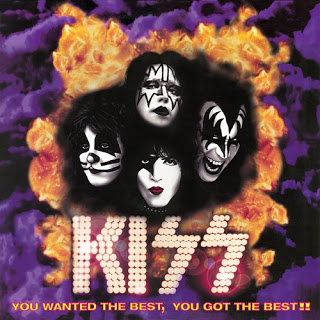 I still remember being inspired by the battle cry that the greatest rock and roll band ever, in my opinion, KISS, uses: “You wanted the best, you got the best. KISS!” Think about that – I wanted to go to the greatest rock show, and I always got it. Language Matters! But then we also know, we must then Walk the Talk!
Choosing the right words will help us set up everyone we lead for a level of effectiveness that will bolster a culture of excellence and steady it against the winds of change. I remember Gene Simmons talking about how the rallying cry of “You wanted the best, you got the best!” brought the entire Kiss Army together and began the huge following that still exists. Again, language matters!
If your not buying into what I am saying, think about this: KISS was started in 1973 with me as an immediate fan at age 10. Now, in the year I will turn 53, I am recalling the rallying cry of a group I still look to as a leadership example and an individual, Gene Simmons, who is on my personal Mount Rushmore as a leader. The bottom line is that the words you choose really do matter. Leaders must make the investment in time and energy and pay the price for choosing the right words based on the context and stakeholders. When we, as leaders, make this investment, the payoff is of “rock star” proportions.
My Vital Few for Leading Myself
 This week I completed Part I of John M. Manning’s great book, The Disciplined Leader (2015). It has been an incredible journey, so far, for our Focused Leader Academy participants and I to read this this book one lesson at a time each week and blog about it. Part I’s 19 lessons have been incredible. Every one of the lessons was applicable at the time I was reading them. At the end of Part I, Manning (2015) encourages us to pick the Vital Three of the lessons in Part I that we need to focus on. Well, honestly, I need to continue improvement in all 19, but I picked one I really need to get better at, “Plan Each Day;” one I always need to remind myself to do, “Tackle the Tough Stuff;” and one I really had some great development of working with our Focused Leader Academy participants on, “Zero In On Your Values.” What I would like to do is share the original post for each of these lessons and explain why it is one of my vital few.
Plan Each Day
Click here to read my original post, “Turning Scattered Ways Into Saner Days.”
Having our day planned out, as leaders, is so important. It is so easy to have our days hijacked. It is important to note that this hijacking is not necessarily for things that are not important, but touch points that just happen. As a school leader, most of my time is spent on people, our most important asset, but I also owe it to our students to get the other important work done as well. I used to say, when I was a principal, “People by day, paperwork at night.” It works, and I still do some of this, but still not the most efficient way to get things done. Therefore, I have adopted the practice of spending at least 15 minutes at the start of each day; creating a plan for the day. It is vital that I do this with fidelity.
 Tackle The Tough Stuff
Click here to read my original post, “Deadline: Yesterday!”
In my world, the toughest stuff is usually working out situations being experienced by students, families, and staff. I have to remember that any issue being experienced by these stakeholders is the most important thing in their life at that moment, and rightly so. It is important for me to tackle this tough stuff first. What is your tough stuff as a leader? Are you tackling the tough stuff first?
Zero In On Your Values
Click here to read my original post, “Values Define Your Unique Leadership Identity.”
I must say in the last seven months on my journey facilitating the Focused Leader Academy that I have been profoundly changed in the areas of vision, mission, and core values development. I have now truly experienced organic organizational development. What started as a simple lesson for Focused Leader Academy participants in vision, mission, and core values development turned into a four month process. I watched in amazement as our 15 participants developed vision, mission, and core value models. I was amazed as we had discussions about core values and we developed our network of school’s core values and honed our own personal core values at the same time. In fact, on February 12th our Focused Leader Academy participants are going to lead a retreat session for our school board on our school’s vision, mission, and core values. 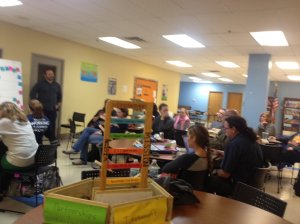
As you can see, the first 19 lessons in The Disciplined Leader have been an incredible journey. Do you know your vital few for leading yourself? If not, I encourage you to get the book and join us in the journey. You can follow along with all our Focused Leader Academy sessions, blogs, and learning by using the Twitter hashtag: #HoosierFLA.
Reference
Manning, John (2015). The disciplined leader: Keeping the focus on what really matters. Berrett-Koehler Publishers.
Better Implementation!
 Last week I wrote “Consensus to Implementation.” In that blog post I focused on consensus. Click here to read the post. For this post I want to focus on the implementation piece. So, here is my definition of implementation: A process that includes and respects all parties, and generates as much agreement as possible sets the stage for greater cooperation in implementing the resulting decisions.
“Where do great initiatives go to die: implementation.”
It is sad, but we see it all the time; great initiatives, ideas, or legislation die during implementation. I have seen this during my time on the Indiana State Board of Education, in schools, and many other organizations. Sometimes this is by design, which is very sad and a whole other story – thus why monitoring will be one of the keys I mention to successful implementation. As I see it, there are keys to successful implementation of anything:
- Organization
- Role development
- Planning
- Resources
- Communication
- Monitoring
I want to speak to two of these specifically. One of the great things I learned at Harvard is how important the role development part of implementation is. It is an element that many leave out of the process. But, it is very important for everyone involved in the implementation of anything that he or she understand their role in carrying out the initiative. This might be the most important element, but is many times left out.
The other important piece is monitoring. As leaders, we must get optics on the necessary data to make sure initiatives are being implemented with fidelity. This might be one of the toughest elements, particularly when it comes to legislative/policy initiatives. Sometimes the optics on the data just is not possible. Therefore, initiatives that really could have done a great deal of good, become failures – not because the concept was bad, but because of implementation. Again, make no mistake, sometimes implementation failure is by design. This is a sad, but true, fact.
Therefore, it is very important that the ability for the correct individuals, governing bodies, or stakeholders be built into the consensus to implementation process. If it is not then great ideas, legislation, and initiatives are doomed to die in implementation. Let’s all strive for Better Implementation!
Great Leaders Never Stop Evolving
 Being a great leader is about adapting and evolving as we go through our journey. I am not talking about adaptive leadership in the sense of adapting to different circumstances. I am talking about growth. This week’s lesson from John M. Manning in The Disciplined Leader was about believing in one’s potential. I am putting a little different twist on this and submitting to you that the way to believe in one’s potential is to develop a mindset of continual honing of one’s potential. This takes us back to the idea of personal growth I blogged about earlier this week. Click here to read “Professional Growth Puzzle.”
Confidence comes from our continuous personal and professional growth. Therefore we must continue to adapt and evolve. I still amazed and excited by the amount of learning that still goes on in my life every day. This is not by chance, however. This comes from being open to learning and realizing I still have a lot of learning to do. This does not mean that I think I dumb; it means I have a mindset of learning in every situation of my life’s leadership journey… and it is o.k. to say, “I’m not there yet.”
“Be realistic and expect an imperfect journey. But always believe in a fulfilling experience regardless of any imperfections.” ~ John M. Manning
 So, be confident is where you are in your professional and personal leadership journey! Know that you will not be perfect in this journey and adopt the mindset of continuous improvement. Learning can be so exciting so I encourage you to love every minute of your own evolution and adaptation as a leader. I’ll leave you with my favorite John F. Kennedy quote:
“Learning and leading are indispensable to each other.” ~ John F. Kennedy
Reference
Manning, John (2015-06-15). The disciplined leader: Keeping the focus on what really matters. Berrett-Koehler Publishers. Kindle Edition.
Consensus To Implementation
 I received an email a couple of days ago from Kris Amundson, Executive Director of the National Association of State Boards of Education posing the question: is consensus even possible in today’s polarized environment? The question gave me pause and is something I have thought about in the context of partisanship and in the context of boards I am a part of. My immediate reaction was to say, “sure.” Particularly because of my own experience when asking Indiana Speaker of the House, Brian Bosma, what success would look like in his eyes after appointing me to the Indiana State Board of Education. His answer was, “Consensus to implementation.” This was a very powerful statement and one I have reflected on a great deal and have tried to live. In fact I have included thoughts on consensus in other blog posts. Click here to read “Civilized Disdain Vs. Political Correctness.” You can also click here to read “The Sheer Guts of Leadership.”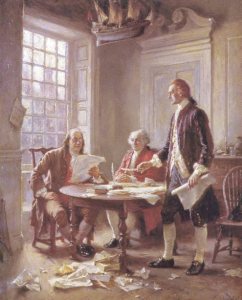
Now, back to the question at hand: is consensus possible? I sure hope so! Within every member of any group there is a lifetime of experiences and knowledge. Consensus is a way to tap the collective knowledge of the group to craft the best decisions possible. I get concerned when everyone wants to argue that we have become polarized because of partisan beliefs. I still firmly believe that these partisan beliefs are what get us to greatness. Where would our country be today had our founding fathers not had the heated debates/arguments about the framing of our democracy. In the end they reached consensus and implemented. The problem is when we let our own beliefs polarize us from truly listening to others’ perspectives, and a lack of willingness to share our own perspectives. We must also have the humility to understand that our own ideas may not be the best ones.
Furthermore, as we study consensus, it is important to remember that consensus is not unanimous agreement. Group members may consent to a decision, or part of a plan they disagree with, but recognize the consented upon decision best meets the needs of the group or organization, and therefore give permission to it. The key here is a commitment by each individual to honor the best interests of the group. In fact I have adopted the idea of “consensus to implementation” as one of my core values. I would submit that every person, organization, and government should do the same.
Using the core value of “consensus to implementation” allows a cooperative interest, where members are willing to work together to find the solution that meets the needs of the group. Consensus allows us to work together and create the best solution. Relationships matter when using consensus. Group members then hold each other accountable to then begin implementation upon reaching consensus.
Here are the keys to practicing in a culture of consensus, as I see it:
- Effective listening
- Humility
- Respect for others’ opinions
- Not using a right or wrong judgmental mindset of everything
- Be prepared explain your own views
- Put the group’s best interest ahead of your own
- Be visionary
- Welcome feedback
- Work to understand others’ opinions and beliefs
- Share your individual expertise
The fundamental idea of consensus is for all people to be able to express themselves in their own words and of their own free will. Consensus assures all can speak and be heard. I would argue that when we say consensus is not happening, or even possible at all, it is because we are really practicing coercion, trade-offs, and being self serving. Consensus allows us to develop creative alternatives, transforming alternatives, and compromise with synthesis.
So, do you agree with me when I say consensus is still possible? As for me, I will continue to work for “consensus to implementation.”
Professional Growth Puzzle
 It never ceases to amaze me how when reading a book with 52 weekly lessons, how each week can somehow be related to something in my weekly leadership journey. This week is no exception. Lesson #18 in The Disciplined Leader (2015) by John M. Manning was titled “Write Your Professional Development Plan.” I am a firm believer that personal professional growth must be personal. In fact I blogged about this back in 2011 back in 2011 after being a part of reimagining 21st century education with the Pearson Foundation and the Smithsonian Institution. Click here to read Autonomy – Professional Growth Must Be Personal.
At the completion of our January Focused Leader Academy session yesterday I had a teacher ask me if at the end of the program in June if I would be doing an evaluation of each participant to see where they were as a leader and what they still needed to work on. Honestly, I had not given that a lot of thought yet, but my answer was: “I hadn’t thought about that yet, but yes that must happen.” Then I told her that part of that would have to be developing a personal professional growth plan. As I explained to her, leaders must own their own professional growth and she would need to continue to take responsibility for it. It is simply ludicrous to think that any organization can provide every piece of professional develop that every individual needs. As Manning (2015) pointed out, “having a professional development plan— a blueprint for where we want to go, what we want to be, and the steps we need to take to achieve it— can make the difference between professional fulfillment and failure (Kindle Location 1053-1055).” Now, it is part of mine and the organization’s responsibility to help mentor this teacher leader and help her to develop her plan. That is really an important part of the Focused Leader Academy.
Our knowledge base is growing so quickly that individuals will no longer be able to think in terms of career education, but rather of a lifetime of multiple careers. It is the job of the organization to assist its employees in coping with this rapid change. The organization must be prepared to help its employees avoid the erosion of their skills and the onset of individual obsolescence. This is such an important concept as a believer that every person must lead from where they are. A professional development effort is most effective when it is integrated in the organization and internalized by the participant. It is why our Focused Leadership Projects are such an important part of our Focused Leader Academy.
“Even leaders with the best of intentions often do not realize the dramatic impact they can exert by being a role model or by providing guidance to employees seeking new paths to career satisfaction.” ~ Beverly L. Kaye
I appreciated this reminder of how important it will be for each of our teacher leaders to develop a professional growth plan. I will need to help mentor each participant and provide feedback. But… the plan will need to be owned by each individual. As Manning (2015) taught us, “Disciplined Leaders have been self-driven, lifelong learners who always put their goals down on paper and assigned a timeline with action steps for accomplishing those goals. They remained personally accountable to whatever they were pushing themselves to learn, do, or achieve (Kindle Locations 1065-1067).” In response to the original question of providing an evaluation – I prefer to call this feedback – I would posit that the feedback must be focused on behavior rather than on personality, that is based on observations rather than opinions, that is descriptive rather that judgmental. She will need for me to share ideas and information, that is specific about situations, and that is given at the appropriate time.
During the writing of this post I am reminded that in addition to taking responsibility for my own professional growth, I must also take personal responsibility for supporting the professional growth of all those I lead.
Reference
Manning, John (2015). The disciplined leader: Keeping the focus on what really matters. Berrett-Koehler Publishers. Kindle Edition.
Turning Scattered Ways Into Saner Days
 It seems that any time leadership is discussed the topic of planning and time management comes up, and rightly so. If you think about it, it really makes sense as to why so many of us do a poor job of planning our day – we are “doers.” We want to get our day started and do something, not plan it. But, John Manning (2015) reminded us in this week’s lesson in The Disciplined Leader that, “Planning helps you plot out the best strategies and actions for achieving your vital goals and how to overcome foreseeable obstacles (Kindle Locations 1011-1012).” It is important to remember that planning is an important part of being a disciplined leader.
We must make time to plan our day if we want to get the most out of our time and be focused on the things that matter. Carving out time, any amount of time, in the day to focus on true strategy or long term planning is also critical. Another very important thing leaders should spend their time on is carving out some time every day for themselves. Time spent improving yourself, your skills and even learning new skills, is never time wasted. It is one more critical action you can take as you model the behavior of great leaders!
For me this really becomes more about doing the right things each day. Manning (2015) pointed out that we must attack our day by having a plan ready the night before for the next day. Great advice! I also read a few years ago, and follow the advice of spending 15 minutes of my morning personal professional development time each morning planning out the day. This has worked well for me. Also, keeping a running list of things I need to do and then looking at this list each day to see what needs to be added to that days priorities also works. Now, I don’t want you to get the idea that I am good at this – I’m not. Some days, in fact, I am terrible at it. If we are all honest, we probably all struggle to be good at this all the time.
The bottom-line is we must take time to plan and review our day, every day. As I stated above, I set aside the first 15 minutes in the morning to note the tasks I need to accomplish each day. Some leaders I know do this as they commute to work. Because I prefer to listen to books when I commute, I don’t use my commute as planning time. We also need to remember to finish the day by reflecting on what went particularly well and where we could improve our performance. We need to take time to reflect on what went well and how conversations or meetings could have gone better.
A little planning can help us to us to turn our scattered ways into saner days. How can you improve your daily plan?
Reference
Manning, John (2015). The disciplined leader: Keeping the focus on what really matters. Berrett-Koehler Publishers. Kindle Edition.
Deadline: Yesterday!
 Do you ever avoid meeting with a direct report who isn’t performing well, telling yourself you’ll get to it later? Or do you tend to postpone intimidating projects that will test your self-confidence, abilities, comfort zone, or patience? These are all questions John Manning posed in this week’s entry in The Disciplined Leader (2015). Manning (2015) told us, “If so, those are a few of the classic red flags of procrastination.” This week’s lesson reminded me how important it is to get the tough stuff tackled first and move on. This keeps us from worrying about something that probably will not be as bad or tough as we think it will be.
This week’s entry also reminded me of another great book that has really brought inspiration to me as a leader. The book is Eat That Frog! by Brian Tracy (2007). His book offers real help on how to overcome procrastination and increase your productivity. It’s known as Eat that Frog! And those that follow this tip recommend eating it for breakfast. The inspiration for the book actually came from a Mark Twain quote:
“If you eat a frog first thing in the morning that will probably be the worst thing you do all day.” – Mark Twain
Really, what Tracy (2007) was telling us is that if you just do the tough task that you have been procrastinating about, all the tasks after that won’t seem as bad. It is a strong idea to help you stop procrastinating. Let me tell you, it works, too. Think about that tough phone call you had to make recently. You put it off and put it off and then finally make the call. Was it as bad as you thought? Probably not. Were you relieved when it was done? Yes! Did you feel better when it was done? Yes! If you can relate to this than you certainly get the idea of “Eat that Frog.” Eat that fog! Get it done and over-with and move on. This is the radical idea. Take the lesson from John Manning (2015):
“Take on difficult challenges earlier in the day when your mind is more focused and you have more energy.” ~ John Manning
Eating the frog may taste nasty or be an annoying or frustrating task. But accomplishing it will lighten up your mood and give you a surge of energy and enthusiasm for the day. It’s an empowering feeling and it will spread into your other activities. Another important point to remember related to Tracy’s (2007) analogy is the longer you keep looking at your frog and procrastinating, the harder and harder it will be to actually eat that frog (get the task completed). Not to mention the fact that having the task on your mind is keeping you from being as effective or sharp on your other tasks. Finally, Tracy (2007) also taught us that when you have two frogs, eat the ugliest one first. That way the second one won’t seem quite as bad. Manning (2015) translated this for us by teaching us to “Schedule these activities first.”
So, get out there and eat that frog and get on to the important activities of the day!
References
Manning, John (2015-06-15). The disciplined leader: keeping the focus on what really matters. Berrett-Koehler Publishers. Kindle Edition.
Tracy, B. (2007). Eat that frog! San Francisco, CA: Berrett-Koehler Publishers.
Expertise Vs. Listening
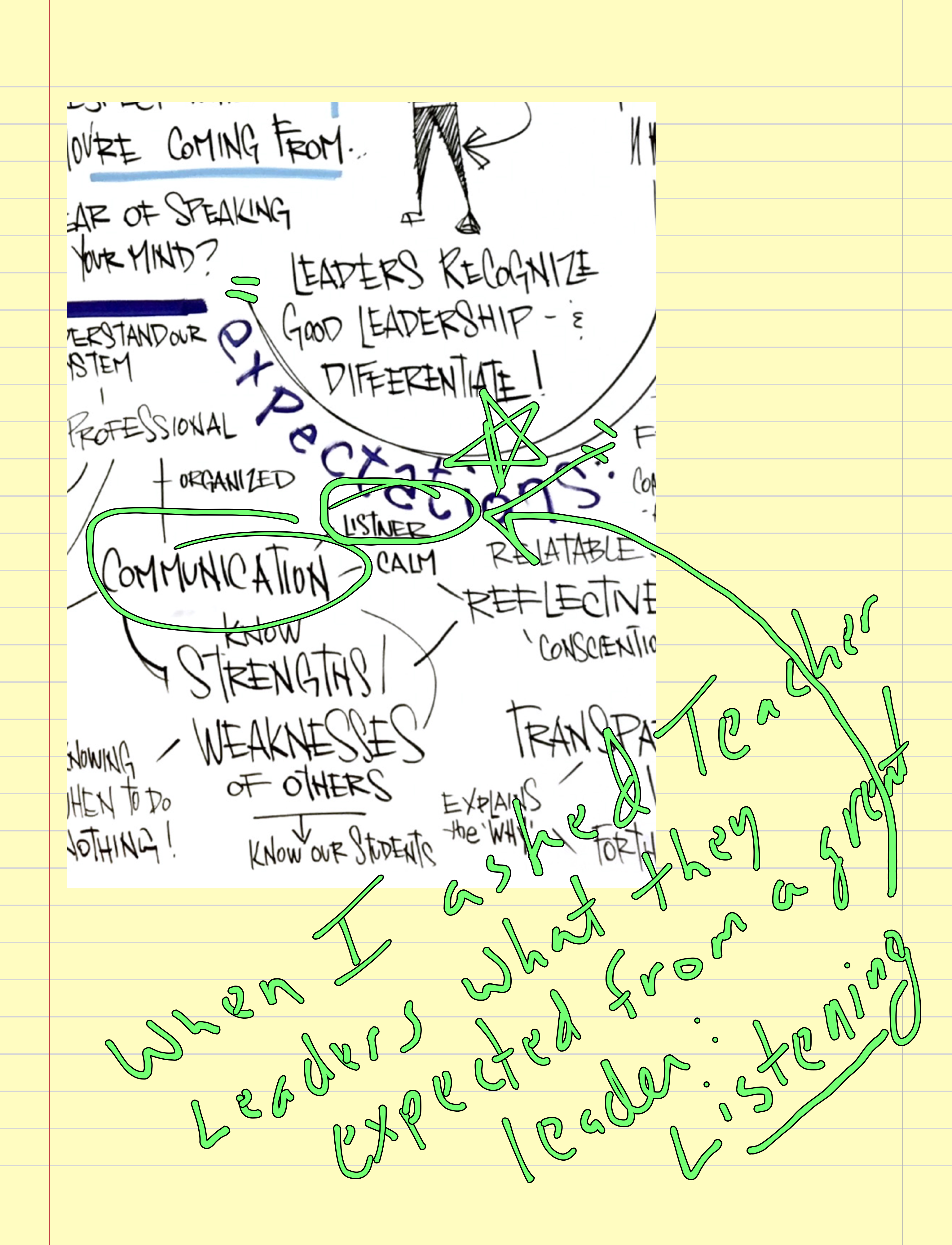
It seems that every leadership book has a part dedicated to listening. The Disciplined Leader (Manning, 2015) is no exception. It is an appropriate subject to keep at the forefront as we hone our leadership skills. In fact, when I asked our Focused Leader Academy participants to develop a list of expectations of great leaders, “listening” hit the graphic early in the discussion. It really comes down to the fact that we all want to be heard. So, it’s pretty simple: as leaders we need to listen.
“There’s no doubt leaders like to talk. But great leaders know one of the keys to effective leadership is suppressing the innate desire to hear oneself speak to create that golden opportunity to listen more and talk less.” ~ John M. Manning
One of the points Manning (2015) made this week in lesson #14 was that, “I needed to listen more to others and talk less about myself. As soon as I started making this shift, I became much more aware of what was really going on around me—as if I were seeing work and life in a totally new light. I also learned many new things about people and the organization as a whole.” The key here is just not to listen instead of talking, but when talking making sure it’s saying the right words – not talking about ourselves or how to one-up what was just said. As Manning (2015) puts it, “Rather than give advice, they [disciplined leaders] ask smart questions, knowing that this coaching style is much more powerful for learning, developing, and generating sustainable change.” I so agree with this. In fact, one of my favorite questions after proposing an idea is to say: “Tell me why I am dumb for thinking this?” If you really mean it, and I always do, it will get a discussion flowing and great ideas/solutions fleshed out.
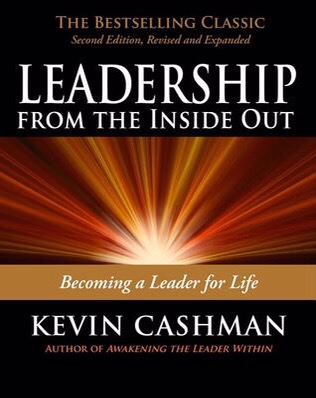
I just finished reading a great book by Kevin Cashman entitled Leadership from the Inside Out: Becoming a Leader for Life. In this book Cashman walks the reader/leader through seven mastery shifts he believes are necessary to become a leader for life. The sixth one applies to this post. Here it is:
“Change Mastery Shift 6: From Expertise Focus to Listening Focus. Effective leaders stay open and practice authentic listening to stay connected with others and to consider multiple, innovative solutions.” ~ Kevin Cashman
This makes so much sense. Have you ever been in a meeting and thought, “Boy, this person likes to hear themselves talk?” Really, all they are doing is trying to display expertise. But, as my dad used to say, “There is no statistical correlation between the amount of taking someone does and knowledge.” Pretty good thought! The key here is “authentic” listening. Really connecting and using what we are hearing and learning from others. I always try to approach listening like reading – I think about what I would be highlighting. This has helped me to be very reflective when listening to others. Others have always found it interesting that for as boisterous as I normally am, in meetings I am pretty quiet – it’s because I need to listen and take time to process.
 What will you do in 2016 to become a more authentic listener?
Reference
Cashman, K. (2008) Leadership from the inside out: Becoming a leader for life. San Francisco, CA: Berrett-Koehler Publishers, Inc.
Manning, J. (2015). The disciplined leader: 52 concise, powerful lessons. Oakland, CA: Barrett – Koehler Publishers, Inc.
“Chance Favors The Prepared Mind”
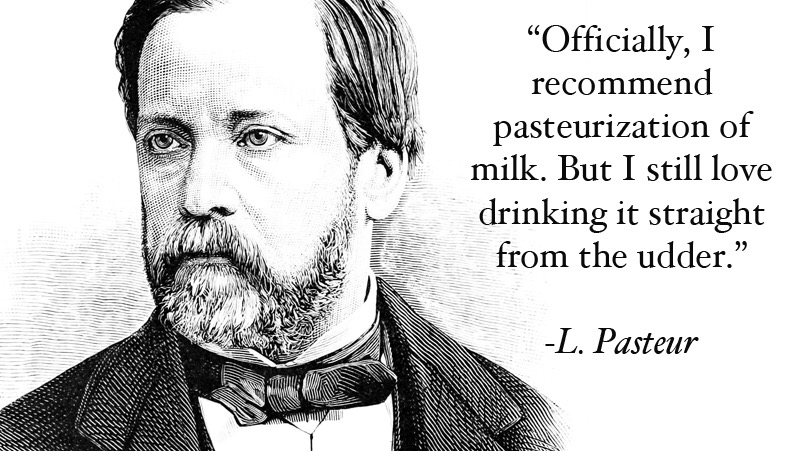 “Chance favors the prepared mind” was the statement Louis Pasteur, the 19 century scientist, used to describe his remarkable ability to invent and innovate across a complex set of problems.
 Peter Drucker believed we needed to notice the little things that other people miss (Maciariello, 2014). If we study Louis Pasteur’s research accomplishments – from his studies of crystallization and fermentation that aided industries ranging from dairying to silk-making to his work with germs and microorganisms that opened up whole new fields of scientific inquiry; we find that he was truly ready for chance to “happen” to him. Some people believe Pasteur was just lucky. Pasteur’s greatest gift may have been his ability to notice the little things that other people missed. Some of those little things proved to be the source of his lucky breaks (Maciariello, 2014).
As leaders and innovators we must immerse ourselves in our work at a level such that we can identify a breakthrough event when we spot it. In order to find significance in life, we need to prepare and dream. This preparation will enable us to spot unexpected opportunities. In 1888, the famous Pasteur Institute was named after him, and upon his death in 1895, he was hailed as a national hero. His last words were, ”One must work; one must work. I have done what I could.” In the last and 52nd entry in “A Year With Peter Drucker,” Maciariello (2014) poses a great question for us as a guide: “What would it take for me to take advantage of this opportunity right now?”
Reference
Maciariello, J. A. (2014). A year with Peter Drucker: 52 weeks of coaching for leadership effectiveness. New York, NY: HarperCollins Publishers.


3 comments