An Adventure Of Our Own Making

It can be a motivational or empowering sentiment, suggesting that we have the freedom and agency to pursue our dreams and explore new possibilities. I also loved the phrase from Padraig Cavender to Megs and George Devonshire, “It’s an adventure of our own making” in Once Upon A Wardrobe, by Patti Callahan Henry. Padraig made this comment as they were visiting castle ruins in Ireland. George, who was eight years old and dying of a heart condition, wanted to see this as his only Christmas present request. Padraig showed up at George and Megs’ house on Christmas Eve Eve (I love that Patti gave Christmas Eve an Eve in this novel) and told them to get their stuff and get ready to leave. Megs left their parents, who were not home, a note and off they went – on an adventure of their own making. I am doing some work for the Smithsonian this week in Washington D.C. and I got to thinking about how great of places all the Smithsonian units are for allowing us to make our own adventures. Especially for our students, having all these archives is incredible. And, with thousands and thousands of the archives on line now, ALL students can have an adventure in learning. I love adventures and we need to encourage our young people be adventuresome.
The phrase “It’s an adventure of our own making” implies a few other things to me, such as:
- that we have the power to create our own unique experiences in life.
- that we have control over our own destiny.
- that we can shape our lives through the choices we make and the actions we take.
We need to help young people to take healthy adventures by leading by example. We need to encourage others and ourselves to try new things. We can develop a sense of adventure while also prioritizing our well-being. We can navigate new experiences by setting goals, managing risks, and learning from any challenges we encounter.
Every Human Interaction Is Eternally Important
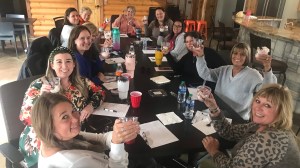
I have spent this entire week working in schools with teacher leadership academies or facilitating strategic planning. Spending time with everyone in a school setting is incredible. I absolutely love the interactions I have now in the work I do, but I do miss the daily interaction with students I had in the classroom as a teacher. Yesterday, I was reminded of this by the phrase, “Megs, every human interaction Is eternally important.” This comment from C.S. Lewis to Megs Devonshire in the historical fiction novel, Once Upon A Wardrobe, by Patti Callahan Henry made me reflect on just how important every interaction really is; even if just a smile or simple hello. The word “every” is very important in this phrase. Those interactions can truly make or break someone. This phrase reminded me, and I hope it does you too, of the value and significance of human connection and the impact it can have on our lives and the lives of those around us.

When I was in the classroom as a teacher I would shake every scholar’s hand before they entered the classroom. This was an important ritual that was extremely important and meaningful to both my students and myself. This interaction allowed me to really know the student in the context of that moment. You can learn a lot about a person when you shake their hand. Particularly if you have a meaningful relationship with that person and interact with them every day. The phrase “every human interaction is eternally important” suggests that each interaction we have with others is significant and has a lasting impact. In Once Upon A Wardrobe, C.S. Lewis was emphasizing to Meg, the importance of our relationships and connections with others, and encourages us to approach each interaction with care and consideration. Focusing on building genuine connections and being present in the moment can lead to more fulfilling relationships and experiences.
Viewing Students Through An Asset Model Lens
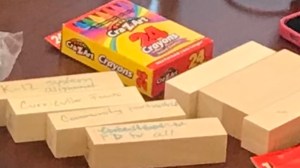
Yesterday, I had the opportunity to facilitate a leadership retreat for Silver Creek School Corporation here in Indiana as they begin a year-long strategic planning process. It was a very inspiring day, and I was reminded of just how complex education is. Every child we serve comes with different experiences and different aspirations. It is our job to make sure each of personal journeys can be pursued and is successful. Each individual should be able to pursue their journey without interference or obstruction. We need to recognize and build upon the unique strengths and talents that each student possesses.
Our students are filled with aspirations, goals, dreams and desires – we should facilitate and learn from these. Our students are rich with experiences and should be viewed through the lens of an asset model instead of a deficit model. By using an asset model, educators can create a positive and empowering learning environment that encourages students to reach their full potential. This approach involves identifying and nurturing the skills, interests, and talents of each student and providing them with opportunities to develop and succeed. Viewing students through an asset model lens helps to create a more inclusive and equitable education system that values diversity and promotes success for all students.
Improving Our Time
I am reading the incredible book, A Man of Iron. The Turbulent Life and Improbable Presidency of Grover Cleveland by Troy Senik right now. I am confident there will be many blog posts prompted by this book. This post is about a comment Senik made early in the book as he was describing Cleveland’s journey as a child and young man. He wrote, “If we want to become great in our future lives we must improve our time in school.” He also said, “We must improve our time as children.” This observation that we must improve our time really jumped out at me. As father of a son who graduates from college this spring it has been awesome to watch him grow, develop, and improve. It has also been my job to not be a main character, that’s his role, but a side character in this journey. It has been such an honor to be a supporting actor in his journey. Funny, I hadn’t really thought of it, but my wife and I’s job has been to provide the experiences for him to improve. Additionally, my son has done a great job of improving his time.

Back to “We must improve our time as children.” Whether as parents or educators, we must improve time by helping children learn new skills, pursue their interests, and develop healthy habits, so that they can become well-rounded and successful individuals later on. Furthermore, we need to focus on our education, social skills, and emotional growth during the formative years so that children can face the challenges of adulthood with confidence and resilience. Bottom-line: the time spent during childhood has an important impact on our future. Every path matters – so we have an obligation to do everything we can to help our our children navigate, both with guidance and providing experiences as supporting actors.
To Learn Without Being Taught

Yesterday I made a comment in a meeting that I make quite often: “I am pretty sure none of our students took a TikTok course in their school.” So, how have they learned to be so proficient with this controversial social media? Easy. The kids were excited to learn it, so they learned without being taught. I actually did a post on this last year entitled, “The Real-World Inspires.” Today I want to go a little further and talk about the idea of to learn without being taught. We all do it. As a founder of a business I have had to learn all kinds of things without being taught in the traditional sense. Yesterday, what prompted the whole conversation was that a person apologized for being self taught on some communication strategies and workflows we were discussing. I asked, “Why are you apologizing? Clearly you are passionate about this and see the need and relevance for your organization.” Some of the most impactful learning involves learning through trial and error, exploration, experimentation, and through exposure to new situations or environments. We all develop new skills, ideas or perspectives by engaging in activities.
Also, think about all that children learn without formal lessons or instructions. We all learned how to walk, talk and interact with others through their own curious exploration and observation of the world around us. We need to create environments for our children, ourselves, and within our organizations for the curious exploration and learning to occur. And, I think you’ll agree that kind of learning is very fulfilling and rewarding; not to mention lasting.
Smiles For All Your Miles

As a friend, student, and fan of Dr. Joseph Michelli and all his books, I understand the importance of the customer experience. I was reminded of this when I stopped at Buc-ee’s yesterday. For those not familiar, it is a humongous gas station/convenience store/outlet mall (with Buc-ee’s brands) all rolled into one. It is an experience! Founded in 1982, the mission is pretty simple: to provide a clean and friendly in-store experience. In fact, if you haven’t been, you need to go, just to experience the award winning bathrooms. Yes, you read that right – award winning. In 2012, Cintas, a corporate supplier to the service industry, named the New Braunfels, Texas Buc-ee’s location the winner of a nationwide restroom contest. You can read about it here.

In Exactly What We Aim For I quoted Michelli stating, “…I believe that even greater customer value comes from moving from services to experiences (rather than from products to services).” Buc-ee’s understands that the experience is everything. The co-founders Arch (“Beaver”) Aplin and Don Wasek set out to make these extravaganzas the very best in the world. They had a pretty simple strategy statement: “To have the cleanest restrooms.” Think about it, isn’t that all we really want when traveling? When exiting for a pit stop, I have heard my family more than once say, “Pick the place that looks like it will have the cleanest restrooms.” With the Buc-ee’s experience, we know it will be them.

They have even made the billboards along the interstate part of the experience. When 212 miles away you are seeing a billboard telling you that you can stop at Buc-ee’s in, well, 212 miles. Then, when you leave and get back on the interstate, the first billboard you see says, “Until We Meet Again – 165 miles” (see photo). Again, part of the experience. The other thing is, you won’t have to deal with 18 wheelers – not allowed. Every fuel pump, of which there are over 100, has both diesel and regular. The Buc-ee’s I was at even featured ethanol-free fuel and DEF. And, if you need it, they’ve got it! They have (and most of it, their own brand) souvenirs, food, snacks, clothing, hunting gear, college wear (although they were missing the Purdue stuff!), and my favorite – a jerky wall.

When you go on Buc-ee’s website and look under employment, they say, “We believe our store should be clean. We believe our staff should be friendly. We believe our prices should be low. If you believe what we believe, come join the Buc-ee’s team!” Then they ask, “Do you believe what we believe?” If that is not customer experience driven, I am not sure what is. As a person whose life-work is supporting education, I wish every young person could have the experience of learning from this business. Check out the photo of the careers available and salaries. Students would certainly be learning leadership and the customer experience. Maybe the Buc-ee’s folks and I should talk! Next time you are on the interstate and see the Buc-ee’s billboards, start planning your incredible travel-stop experience.
Learning Vs Being Right
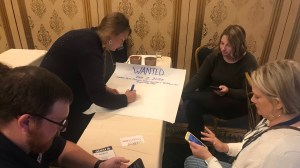
We live, work, and play in such complex institutional and cultural environments today. Therefore, we must be adaptive individual learners, as well as, learning organizations. Mary Catherine Bateson taught us that openness to learning and changing is more important than what one knows at any given point. Openness to learning and willingness to adjust are important qualities. Learning is more important and being right. Learning is a perspective as much as it is a practice. We need to be nurture and encourage an attitude of learning. We must seek out ideas, information, and approaches so we can learn from others, including those whose views diverge from ours.
There are really three pieces to great leadership:
- Curiosity
- Growth Mindset
- Openness
If we go back to the teaching of Bateson, we find openness as an essential trait. If we have an appreciation of diverse perspectives and a willingness to try new things, we can better navigate daily challenges and discover novel solutions. Openness allows ideas to merge and develop by valuing diversity of thinking. Unfortunately, school taught us (and is still doing this) that we need to always be right. But, that binary way of thinking keeps us from considering that there might be a right answer, especially when we are on uncharted ground.
Christmas Playfulness

How are you doing with your playfulness? On this Christmas morning I am thinking about how we learn through our bodies. The somatic side of learning if you will. Watching kids play with toys on Christmas is amazing. Wait a minute; watching adults play with their kid’s toys on Christmas is amazing. With play we get participation and full engagement. Play inspires curiosity. Curiosity in turn opens the door for exploration, experimentation, and more learning. What if we intentionally focused on learning, leading, and living through play? For adults and children alike, play makes use of all our different senses – visual, auditory, and kinesthetic. Our bodies store so much of our information and when we become active, our learning becomes sticky.
I love to use playing as a part of the leadership development work I do. Play fosters our curiosity and strengthens our childlike spirit to transform the way we show up as a conscious leader. Play reduces resistance and pushback because people are relaxed. When we let our guard down, all learning happens more easily. Playing also brings low-stress social interaction. Playing is how we connect. Play stimulates our imagination, helping us adapt and solve problems. Play gives us an opportunity to refresh, rejuvenate, and revitalize. When was the last time you played?
Leading With Impact
In his great book, This Is Day One: A Practical Guide To Leadership That Matters, Drew Dudley told us to create a pledge to create experiences that make others feel good about engaging with you. To do this he explained we need to pick a value. An example would be “impact.” You can define impact as “a commitment to creating experiences that make others feel better after interacting with me.” I love this value you and try really hard to practice it daily by asking myself a question like, “What have I done today to recognize someone else’s leadership?” Sometimes our light shines better by reflecting the light of others.
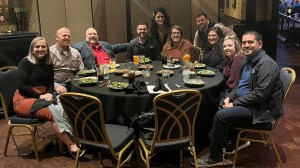
Last night I experienced this first hand by someone else’s living being impactful. Jason Ferreira sat down beside me last night at a dinner we were having for National FFA Teacher Ambassadors and said, “I have something I want to tell you. Not a day goes by that I do not use what I have learned about facilitating in my own classroom, facilitating for teachers, or helping others improve their facilitation.” He went on to say that he keeps many of the objects I use for facilitating on hand, like toys and Big Feelings Pineapples. Then, Jason said, “I wanted to tell you that I’m person because it makes me better to reflect on this and tell you thank you and how much you impact me every day.” I’ve got to tell you that this recognition of my leadership felt really good.
This wasn’t an ego thing. Quite the opposite. It was an affirmation that the teaching I am doing for National FFA Teacher Ambassadors is having a impact. It motivated and inspired me to want to work even harder serving the Ambassadors I love so much. Jason showed me a living example of having a daily “impact” – he made me a better person by his interaction with me and he recognized my leadership. I am grateful for Jason being an example and what he does to impact students lives and the lives of others every day.
Love Is A Practice
I talk a lot about needing to love those we serve. Love is a practice, it is not something you find or don’t find. You can practice love for the rest of your life. We need to take this very seriously. On this Thanksgiving Day 2022 I am reflecting on how we need to love. I know what your thinking. You’re saying to yourself, “Byron, love is something you should write about on Valentine’s Day.” No. That’s about romantic love. I’m talking about real love. The kind of love that emerges from a shared appreciation. This shared appreciation is why I write about this on Thanksgiving morning. If we truly appreciate those we serve, we need to love them.
So, what does that mean, you ask. It means both parties are made better by the relationship. This kind of love takes into consideration the passions, goals, core values, strengths, and weaknesses of one another and use those to set a direction of how to help each other be made better. I seem to interrogate the thought of love a lot. Love is the desire to improve the beloved’s life. When we love our students, we do everything in our power to improve their lives. When we love our teachers, we do everything we can to improve their lives. I love my wife and son, so I do everything I can to improve their lives. I’m sure you get my point by now.
Love is a very profound type of recognition. The best leaders I have know and respected have a keen ability to really see into another person’s normally hidden depths, and to realise how profound and important they are. Those great leaders understand that everyone, yes everyone, has potential. The great leaders will love you enough to pull, mold, develop, and help us hone that potential. Loving others is not something to be taken lightly. It’s about being thankful for those that cross our path and recognizing their greatness and what you can offer to bring about their full potential. Let’s hone our own practice of loving.
 Byron's Babbles
leave a comment