Driven By Data
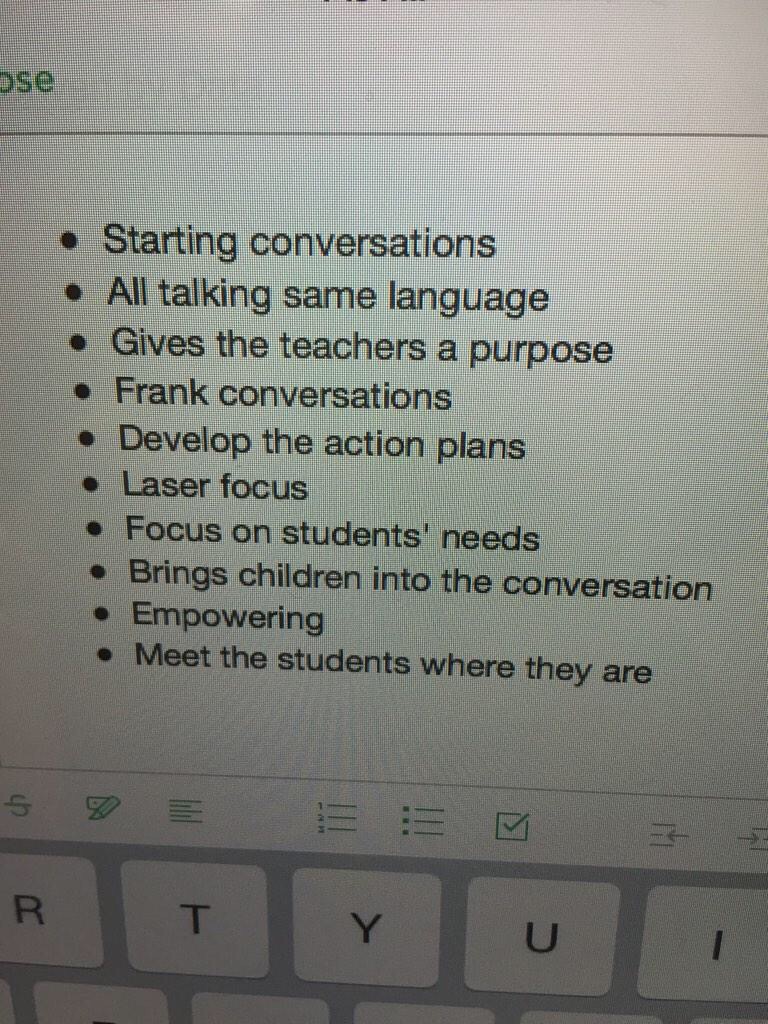 This morning I was so honored to have the opportunity to present at the Fusion East NWEA Education Conference in Charlotte, North Carolina. The conference theme was “Tomorrow Starts Here” and my topic was How High-Performing Schools Develop a Culture Driven By Data. It was exciting to have a standing room only crowd and I hope I lived up to their expectations.
Here is the powerpoint I used for the presentation: Ernest_NWEA_FusionEast
Here are the handouts from the presentation: Ernest_NWEA_HOOSIER HYBRID 7-12 DATA MEETING PROTOCOL Ernest_NWEA_k-8_Data Meeting Protocol Ernest_NWEA_Data Meeting Rubric final
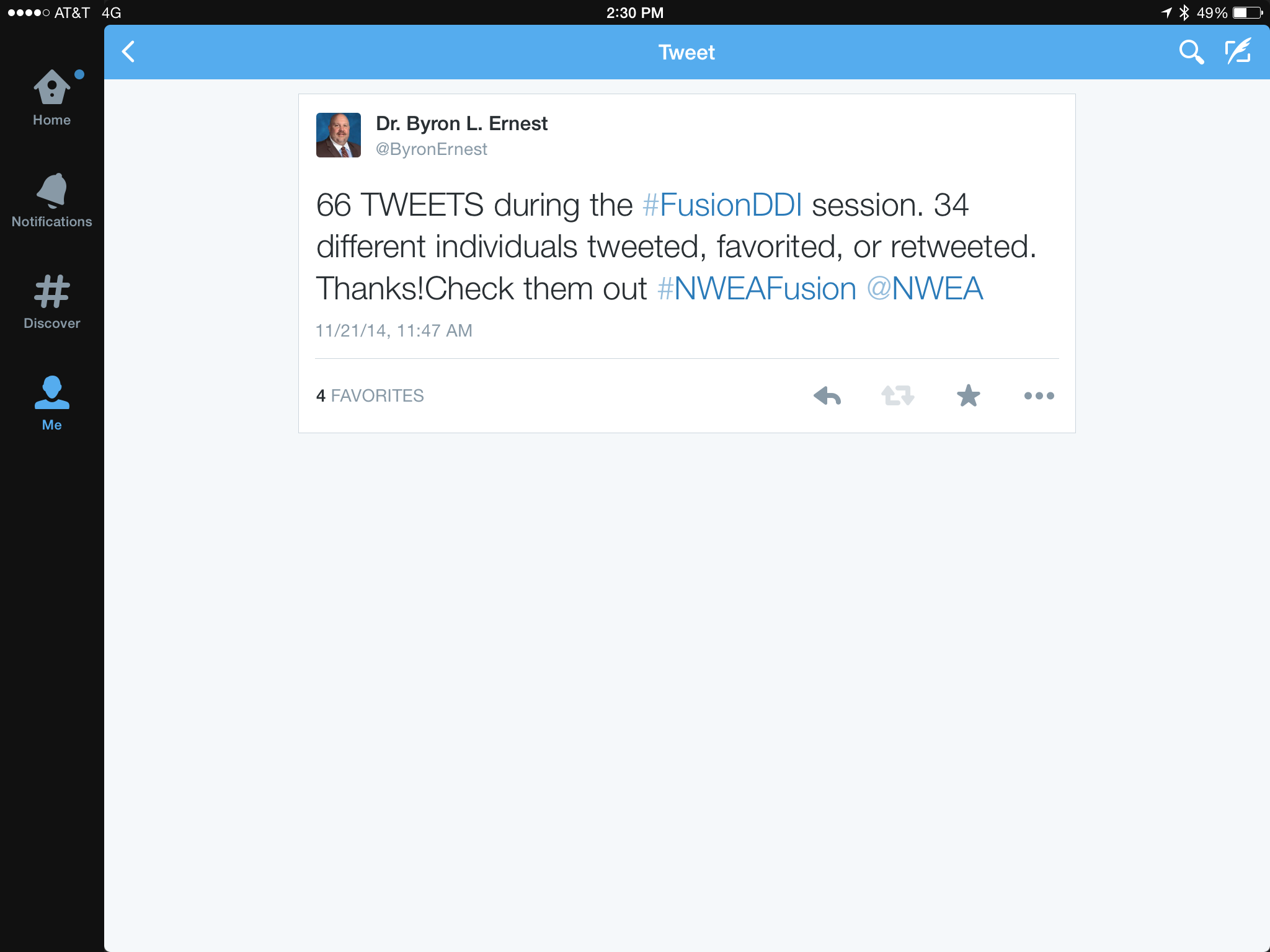
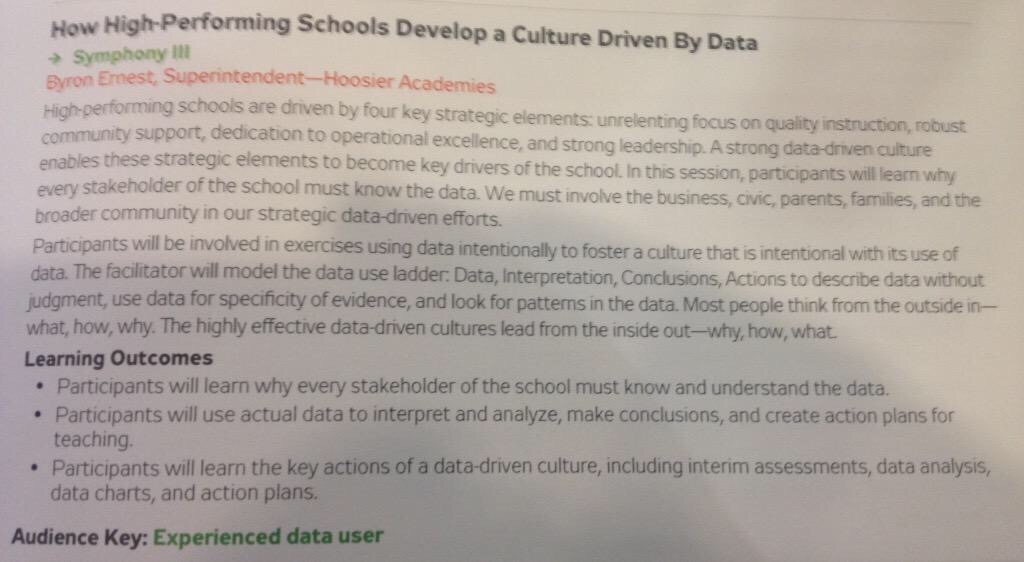 I learned a lot from this group and have shared a list of reasons why we need to create a culture driven by data as a picture in this post. This list was the guide for a very lively discussion. We also had some outstanding tweeting going on during the program using the hashtag #FusionDDI. I am proud to say that we had 66 tweets during the program from 34 different individuals. This was outstanding and further proof of the power of twitter as a professional development tool. In fact I awarded the top five tweeters during the session with copies of the two books I referenced during the session.
 The books I referenced were Driven By Data by Paul Bambrick-Santoyo and Mindset: The New Psychology of Success by Carol Dweck. Both of these books offer so much toward developing a culture driven by data.
Finally, I want to give you some bullets of top tweets from the program:
-“If you don’t have time to do it right, when will you have time to do it over.” ~ John Wooten
-Data chats must be a regular part of your school culture.
-Data chats should be a safe place for teachers
-If your teachers change their teaching, can your students describe how it changed their learning?
-For a data driven culture to really work – there has to be coaching, observation, and feedback.
-Action plans developed after data analysis can be more effective if they are shared with your students.
-You have to describe the data without judgement
-If you don’t see it, it doesn’t exist.
-Assessments are about growth, not gotcha!
-Effective analysis – dive deep! What happened and WHY?
-Effective interim assessments should revisit material from earlier in the year, not just graded unit tests.
-Assessments must be cumulative
-We tend to assess what we taught best
-Data driven instruction gives proof that what we are doing is working, or not.
-Just because you’re teaching…it does not mean they are learning
-I wanna be a Sherpa! Let’s get good at using data! Not just me…but the culture of our schools.
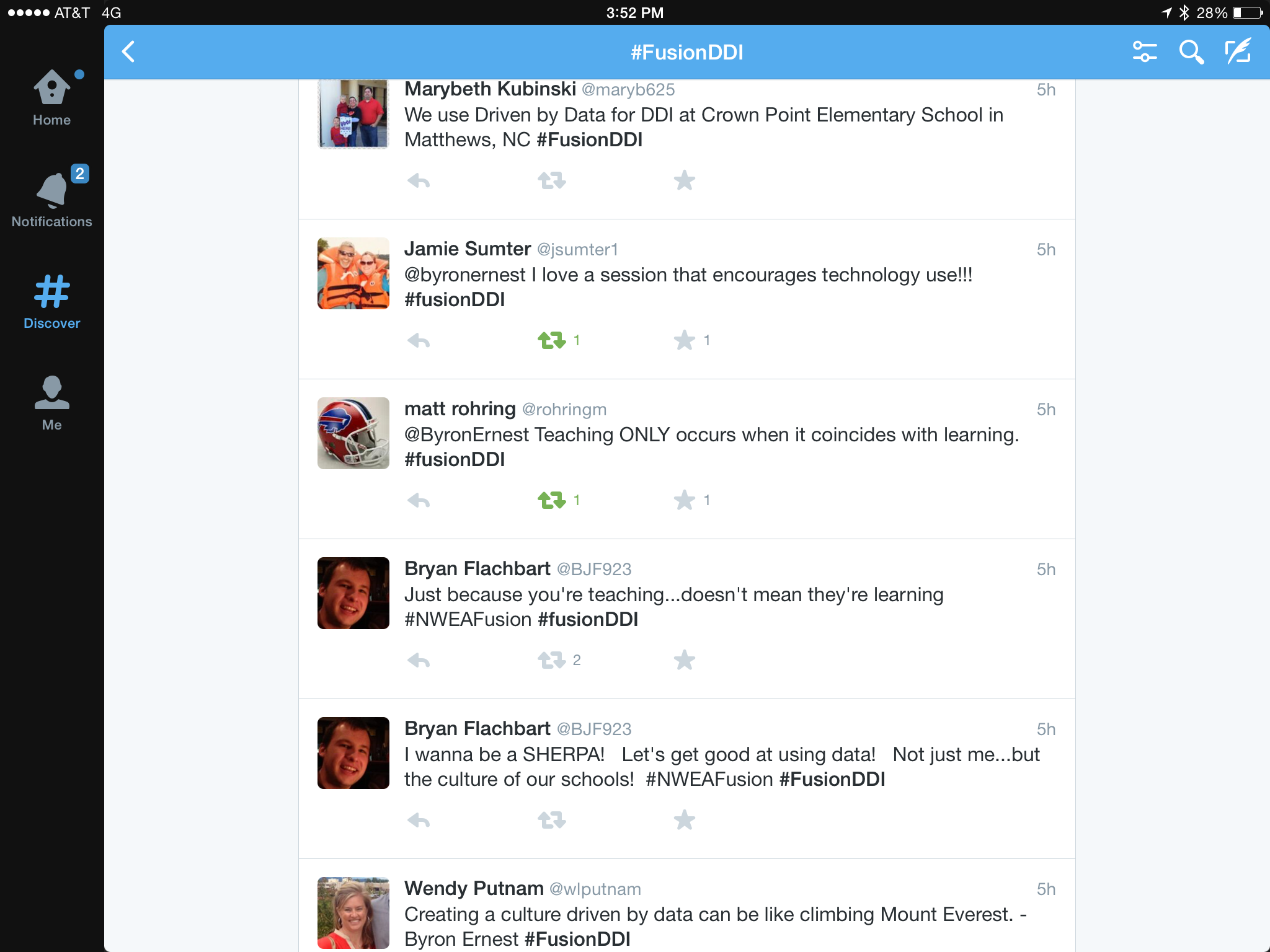 As you can see this was a pretty thoughtful group this morning. I hope I had a small part in helping them be Sherpas of their students’ learning.
“Deer In The Headlights”
 I have been to several great conferences lately and I realized something about some of the so called “experts” that present at the conferences. Now I have to be careful here because I was a speaker at all of these conference. But, I realized that in some cases the person doing the presenting has not had the experience of being the “deer in the headlights.” Usually this term is associated with being a bad thing, but I have come to realize that it really is a great thing. To really become an expert or great at leading in a certain area or circumstance you really have had to be the “deer in the headlights.”
Having successfully served as a principal for a takeover/turnaround school that broke the failing school cycle and came off the “F” list; I can say I truly was that “deer in the headlights.” I still remember that first day of the students coming in, the looks on their faces and saying, “what have I got myself into?” Then a week later after our first round of NWEA testing and seeing that only 19% of our students were on grade level, I was not only the “deer in the headlights,” but the deer smashed in the front grill of your car. Then we began to navigate and I fell in love with our students, as did the whole staff, and we turned the school around. That experience is truly at the top of my list for my career.
My experience under fire really honed me as an educational leader. I learned so many things that I could have never learned had I been in an “A” school. There were so many issues to navigate: students not on grade level, behavioral issues, staffing issues, students’ personal and family issues, operations issues, facility issues, extracurricular issues, teacher coaching, and many, many more. Don’t think for a minute that I believe myself to be an expert leader in all of those areas, but let me tell you I did have to lead the charge on all of these areas and I did learn and grow from it.
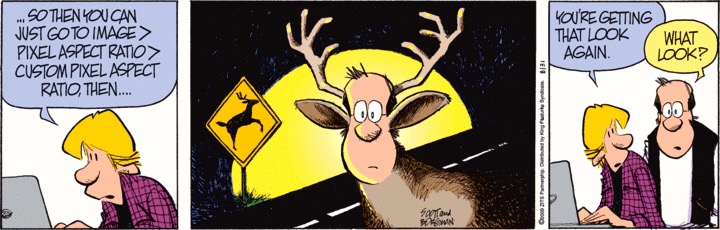 So, my point in this post to my blog is to not be afraid to be the “deer in the headlights.” Don’t be afraid to take on projects or career changes where you will be that “deer in the headlights.” I seem to have moments like that every day, but I am better and growing from it each and every day. I can think of many leaders who have become very status quo about their own professional growth and development. Really, those individuals are like old farm equipment sitting in the fence row rusting. Don’t let yourself become rusty.
I have been reading Water the Bamboo: Unleashing the Potential of Teams and Individuals by Greg Bell. I am so excited to be speaking at the same conference (NWEA Fusion East) this weekend in Charlotte, North Carolina. I can’t wait to have him autograph my book. In his book he suggests developing a personal mission statement. I did. It is: In my professional life, my vision is to always be the “deer in the headlights.” As Bell says, “To accomplish a great vision you will need laser-like focus.” Just imagine the learning I will be doing!
Eliminating Hoops & Hype in Education
 I have had an absolutely incredible first day at the 2014 National Quality Education Conference in Milwaukee, Wisconsin put on by the American Society for Quality and the ASQ Education Division. I was excited to speak on my research of connecting school work to real life, but was more excited to hear the other speakers. Additionally, as always, I learned a great deal from visiting with the other program participants. This post is a compilation of my learning from the first half of the day. You can also check out my tweets from the day by using the hashtag #ASQEd or following my tweets at @ByronErnest.

The day started with Lee Jenkins as the keynote speaker. Lee is education’s expert in continuous improvement. He started by talking about removing the hoops and hype from education. Hoops were described as waste in a school’s time, money, and enthusiasm (staff and students). Hype is a change with no way of know if we’ve improved. The secret to removing hype, according to Jenkins, is to have baseline data to know if an intervention is working or not. Much of Jenkins thoughts on this come from the book: The Toyota Way To Continuous Improvement by Jeffrey Liker.
It is very important that we take an attitude of wanting to be superior to our former selves. If you think about this from a school improvement standpoint it makes perfect sense. We have a starting point and just need to keep getting better from there. Our goal here needs to be to outperform the year before. The secret to this improvement is root cause analysis. When you dig into root causes you find things you never expected to find. When we know the root causes we are able to remove what Jenkins calls “Blamestorming.”
Think about that term “Blamestorming.” We have all done it. We can blame the legislature, political leaders, school leaders, lack of time, too many standards, standardized tests, lack of money, too much money, too many programs, et cetera. But, these are not really root causes. We must dig down deep and find the root causes. Think about this question: Was it the reading program we purchased that improved reading, or the fact that the program required that we triple the amount of time spent reading every day? Think about that. If the root cause was needing to triple the amount of time reading we could have done that without any new program cost, professional development cost, or all the other woes that come with implementing a new program. It is why programs and initiatives don’t work – teachers do! That’s me talking there; not Jenkins.
Remember, if we eliminate the hoops and hype we can optimize our systems for our students and employees and optimize the delivery of our curriculum.
Connecting School Work To Real Life: 2014 National Quality Education Conference
 The challenge to all of us in education is to find ways to make learning visible by connecting school work and real life for the students we serve. One of the ways to do that is to call on “the hand in the back of the room” and answer “why” with real world relevancy. Students understanding, mastery of basic science curriculum, and ability to use science concepts have been shown to improve when the science concepts were taught in the relevant and real world context of agriculture. Teachers many times fail to provide a context through observations, inferences, and actions appropriate for students to make the connection to the real world. These connections help the students to understand higher-level science concepts.
Through my research I investigated low student achievement in science and the social change impact of real world application through a study of agricultural science. Other current research on teaching science in a relevant context and the opportunities for cross-curricular collaboration were also investigated. I will be presenting on how to use transformative educational strategies to help students move from memorizing facts and content to constructing knowledge in meaningful and useful ways.

I am very excited to be presenting at the 2014 National Quality Education Conference this Sunday, November 16th in Milwaukee, Wisconsin. I will be presenting my research on the effects of teaching science concepts in the real world and relevant context of agriculture. While at the conference I will be tweeting using the hashtag #ASQEd. I will be encouraging those attending my session to follow me on twitter @ByronErnest and also tweet using #ASQEd.
Here is the Powerpoint presentation I will using in my presentation: NQEC2014_Ernest
Here are PDFs of the handouts I will be referencing: Ernest_NQEC2014_Handouts_1 Ernest_NQEC2014_Handouts_2
Being an educator can bring an array of challenges. How can you continue following standards, make learning fun and innovative for your students, encourage creativity in the classroom, raise state testing scores, ensure students are college and career ready, and apply student learning in unexpected ways? Discover how continuous improvement strategies, tools, and support can be implemented in order to improve processes to help address some of these challenges and increase student achievement at the 2014 National Quality Education Conference.
Key Learning Outcomes for the 2014 National Quality Education Conference:
1. Discover innovative ways that processes have been made more efficient to allow resources to be applied in unexpected ways from pre-K–12 through higher education.
2. Learn how the Baldrige Criteria can be applied to improve learning, services, and fiscal health.
3. Understand measures that have been taken to narrow achievement gaps and ensure that all students are achieving their goals, regardless of baseline data, and socioeconomic background.
4. Learn advanced practices in continuous improvement as applied to classroom and broader institutional improvements.
5. Find out what tools, practices, and professional development programs designed to assist districts in implementing Common Core standards and in measuring achievement based on these standards.
As you can see it is going to be an exciting learning experience. Don’t forget to follow my tweets from the conference at the hashtag #ASQEd.
Different As Dilly Bars – 2nd Edition
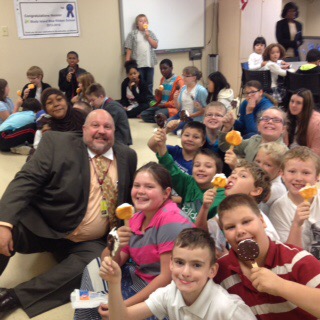 With the end of October came the end of National Antibullying Month. In my opinion, however, every month should be antibullying month. What was fun for me was to bring an activity I had done in the past to my new school system, Hoosier Academies. A few years ago I did a project called Different As Dilly Bars. Click here to read the post I wrote then. Our theme this year was that we are all 99.9% the same. Genetically, we are all 99.9% the same and it is only the .10% that makes us different. Just like there are five different flavors of Dilly Bars: chocolate, butterscotch, Heath Bar, cherry, and mint; they are all vanilla on the inside and the only difference is the flavor they are dipped in. It was exciting to bring all the students together at our elementary school, middle school, and high school and talk to each group about how our differences are really our strengths. It is really asset based thinking – the fact that we all bring strengths to every situation we are in. Again, our strength lies in our differences not in our similarities.
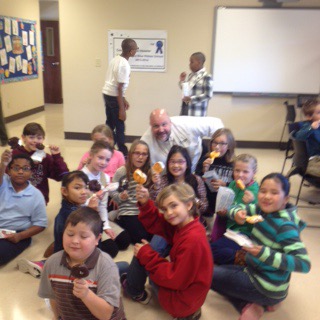
I talked to the students about how there are five different flavors of Dilly Bars, but there is no, one best flavor. If I like Butterscotch and you like chocolate it doesn’t make one Dilly Bar better than the other. The strength is in the fact that we have both to choose from and you can have what you like best and I can have what I like best. The students were then able to pick a Dilly Bar flavor of their choice to eat!
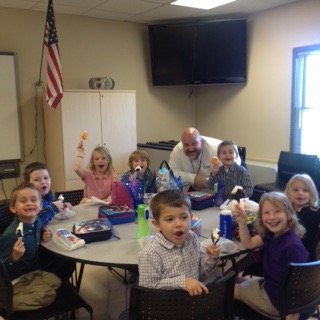
People should be recognized and respected for who they are individually, who they are as defined by the characteristics they possess, and who they are as part of the groups to which they belong. At a minimum, when we think about diversity, we need to consider not only race but gender, religion, physical challenges, economic status, age, disability, sexual orientation, and learning differences. Indeed, some people define themselves not by their race but by one or more of these other descriptors. And, as I said earlier all of those differences become our strength when we all come together. Human diversity is what we espouse to embrace, but seldom do fully embrace. The 21st & 1/2 Century begs for an understanding among peoples and cultures. We have a mandate to teach our students the importance of attaining this understanding with an open mind and a willingness to challenge old beliefs.
Every student has unique cultural experiences, types and amounts of schooling, varied interests, and preferred ways of learning. As students learn, they approach each task with the beliefs, values, and information acquired through their respective backgrounds and knowledge of the world. It is exciting to me that they bring a wealth of experiences, knowledge of vocabulary and concepts, and hopes and dreams to the classroom. It is our job as educators to facilitate a way for our students to express this knowledge and their aspirations in a safe and nurturing environment. With asset based thinking teachers remove barriers to learning and replace them with sound pedagogical practices and culturally competent learning environment. Students’ differences are viewed as assets and respected when planning quality instruction and all students have opportunities to make connections between prior knowledge and new learning, build on existing schema, be active participants in a community of learners, and have numerous opportunities to converse and interact with peers and adults. Above all, in an asset driven classroom and school, all students are provided numerous opportunities to experience success.
Remember, we are different as Dilly Bars. But, it is in those differences we find our strengths.
National Standards Day
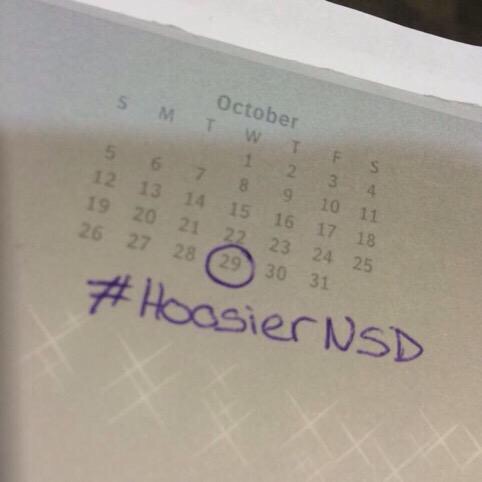 Yesterday was a great day at Hoosier Academies. We brought our entire staff together around the idea of making sure that all of our curriculum was aligned to the Indiana Academic Standards, we were teaching to the standards, and how we would use rigor, relevance, and relationships to be good stewards of our students’ achievement. Our teachers were very engaged and there was incredible collaboration all day.
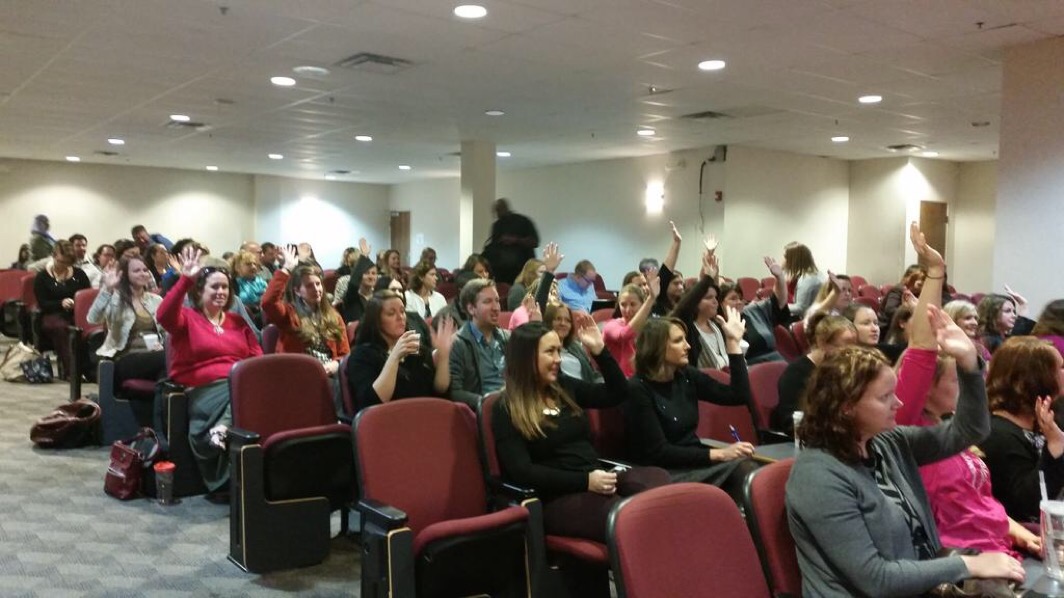
As always, I am using my blog as a way to reflect on the day. For this post I am going to bullet point the top tweets that were done during the day using the hashtag #HoosierNSD. The tweets were great and so was the learning. Also, I have attached the powerpoint that I used to guide my introductory kickoff session to the day. Here is the link for the powerpoint: Ernest_NSD_k12_2014
Here are the top tweets from the day for you to think about and reflect on:
-21st Century Learners? That’s old school. #HoosierNSD is creating 21st&1/2 Century Learners!
-Push for best effort. With effort comes results.
-Acknowledge a student that reaches an expectation, praise a student that exceeds it.
-Assume every kid is your brightest and best!
-Focus on the now and move forward – not on what went wrong #teachlikeachampion
-Describe the next move, not what went wrong #teachlikeachampion
-Positive framing by modeling and narrating your workable goal! It isn’t impossible. #TeachLikeAChampion
-Relevance makes rigor possible; relationships make anything possible.
-Reviewing not repeating. That’s RIGOR.
-Rigor: ask higher level questions and push students to respond at a higher level.
-If they had to buy tickets to your class would they come?
-5 Steps to get to quadrant D. Reaching for the summit one step at a time.
-Less than 5% of high school lessons provide opportunity for student collaboration! This needs to change! We can do this Hoosier Academies.
-Was your lesson worthy of the student’s undivided attention???
-We have to bring the engagement up. Not just Hoosier, but all high school teachers.
-Teamwork makes the dreamwork
-Getting to know those you work with makes a difference
-Reflection is important. Why we are having #HoosierNSD.
-Thankful to have a minute to take a step back, learn the standards, and focus my instruction. #thirdgrade
-Make school work more like real work.
-Demonstrate the rigorous and relevant learning.
-My pillar of rigor would be action.
-Teachers have to make schoolwork more like real work.
-If you say it can’t be done, then you are doing it wrong the first time.
-Rigor and relevance and don’t forget motivation in our virtual environment.
-Great day! Real-world project based learning in HS English. How do literary themes connect with my students’ worlds?
-Real world application can only exist in the virtual world if strong relationships have been built for optimal engagement.
-Rigor and relevance and backwards planning are our best friends.
-Students need collaboration, critical thinking, oral and written communication
-Taking students to the 21st 1/2 Century and beyond
-We’ve been in the 21st Century for 15 year! We’re here. Think 21st 1/2 Century skills.
-As it relates to teaching, these three remain…rigor, relevance, and relationships. But the greatest of these is relationships.
-We’re spending a day breaking down standards.
-Teaching to one standard is not enough. You need to make them all connect together in a meaningful way with purpose.
-It is virtually impossible to make content relevant to students you don’t know – Carol Ann Tomlinson
-Key pieces of education: rigor, relevance and RELATIONSHIPS.
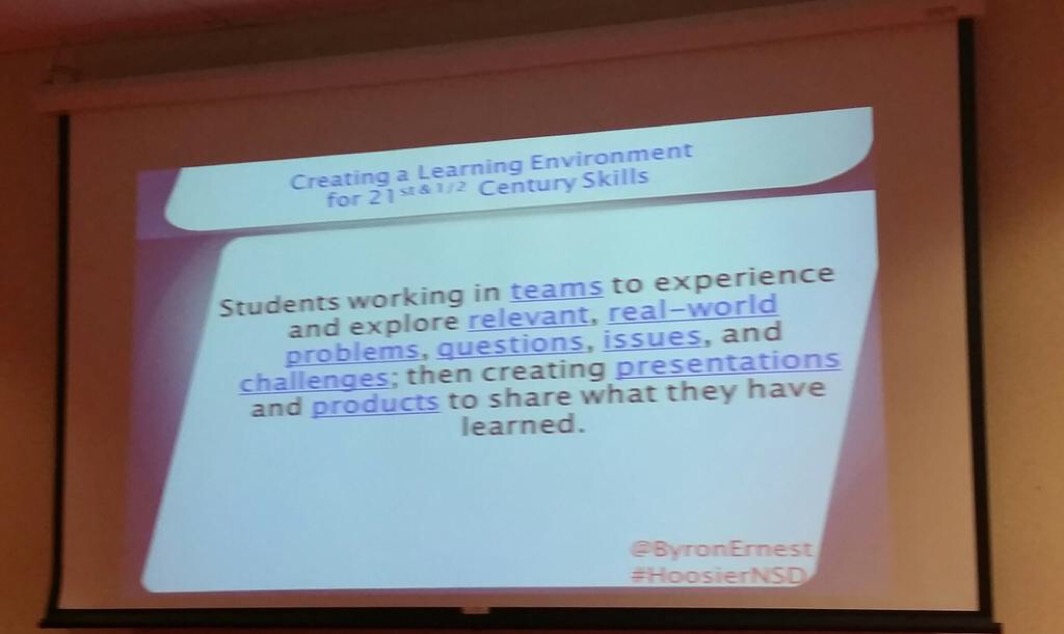
As you can see, some great learning went on. You can’t help but think about making education rigorous and relevant when you reflect on theses tweets. Additionally, the tweets reinforce the importance of building relationships with our students.
Is Your Group Too Small?
 Yesterday I finished the great new book, You Can, You Will: 8 Undeniable Qualities of a Winner by Joel Osteen. If you have not read it; it needs to go on your “to read” bookshelf. One of the comments Osteen makes in the book is: “If your the smartest person in your group, your group is too small.” I loved this comment and tweeted @ByronErnest it. I found that many others loved the comment too because it was retweeted several times. The comment also hit home because I just wrote the post, “Are You The Smartest Person in The Room?” a couple of weeks ago.
When I heard Osteen make this comment (I listened to this book on Audible during my commute) I immediately thought about the advice of always surrounding yourself with the best people. How can your team be great if you are smarter than everyone around you? I’m reminded of my dad’s advice to me at a young age: “Always marry better than yourself!” That’s hard advice to understand, but now coming up on 29 years of marriage; I completely understand it. I certainly married better than myself. Hope is smarter, a better parent, better leader of a household, and the list goes on and on. As I always tell everyone, she is the primary parent! I fail in comparison. In fact I am reminded of a comment my son, Heath, made to his teacher when he was in the fourth grade when asked if he had done all of his reading the night before: “I’m not sure; my mom is out of town for work and dad and I have no adult supervision.” That really is a true story, and of course he had heard me make that comment jokingly before. But, really, there is some truth to it. So, if your still looking for that someone, make sure you marry better than yourself!
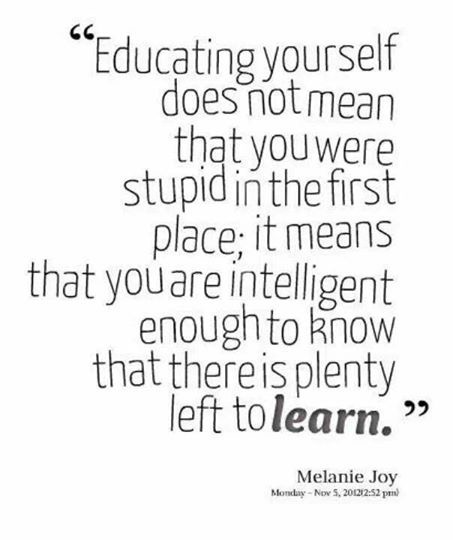
The real point that Osteen was making was, however, that we all need to be taking responsibility for our own personal growth to be the smartest, most skilled person in the room, but we need to also seek those who are talented in the areas we are not. The quote from Melanie Joy sums it up nicely: “Educating yourself does not mean that you were stupid in the first place; it means that you are intelligent enough to know that there is plenty left to learn.” We all need to make sure we are constantly taking advantage of any chance to learn that comes our way. For example, I am excited to be presenting at three conferences yet this fall and early winter. I am most excited because of the chance to learn from all the other conference attendees and the other presenters’ sessions. I am positive I will not be the smartest person in the group of attendees and presenters!
So, think about your own situation and find some ways to get yourself some personal professional growth. It may be reading a book (I am always amazed at how much I learn from every book I read), going to a conference, taking a course (I’m proof it’s never to late to start a doctoral program), or finding a coach, mentor, or sponsor. I loved another comment that Osteen made in his book: “While it may be a lot of fun to hang out with Mo, Larry, and Curly; you probably won’t be getting any smarter or experiencing any personal growth.” In other words, who you hang out with matters!
Finally, don’t forget to give of your “smarts” to others. I am always amazed to watch others in leadership positions who seem to want to hire “dumber” than themselves, suppress the learning of others, and just not provide growth opportunities to others. I guess they think this makes them look smarter – NOT! It has always been my personal mission to make sure that when those I have worked with reflect back that they say, “My life is better and I grew personally and professionally because of being around Byron.” Actually, a pretty good epitaph, don’t you think?
Go forth and make your group big enough that you are not the smartest!
What Is Your Organization’s Microclimate?
 While flying into Denver, Colorado today to get my connecting flight to Indianapolis I noticed what appeared to be clouds stuck on one side of the Rocky Mountains. I have included pictures I took out the plane window here in this post. I then decided to do a little research on this because it really made me think about my journey with Hoosier Academies right now that we have themed, “Hoosier Climbs Everest.” To me, it looked like the clouds were clinging to mountains or stopped on one side. I compared this in my mind to the obstacles and storms that happen as a school system or any other organization is working very hard to put the culture, processes, and learning organization in place to be high achieving.
Mountains also experience more severe weather in the form of rain, sleet, and snow on their windward sides. Think about it, organizations that are in turnaround mode are on the windward side of the mountain. These landforms do not so much attract clouds as cause them to form, in a well documented meteorological phenomenon. They are, in fact, a very important factor in meteorology — without mountains, the Earth’s climate would be very different. To continue my analogy we must realize that the culture we are building will also build the climate of our organization.
Air currents are constantly traveling across the surface of the Earth, usually in patterns that remain consistent. In the United States, for example, the prevailing winds run West to East. As air travels, it picks up water molecules in vapor form, which remain vaporous in the higher pressure at low elevations. When the air encounters mountains, however, it is forced to rise.
In the same way that the air is forced to rise when it reaches the mountain, we know that as we climb the mountains of building and improving our organizations that storm clouds will develop. Just remember, these are a necessary part of the meteorology and climate building of our organization. And, just as certain weather patterns can be dangerous when climbing mountains (remember the Everest disaster of 1996), we must too watch the weather patterns on the organizational mountain climbs we are making with our teams.

With the Continental Divide running northwest to southeast though the center of the park, two distinct weather and climate patterns are created. Typical of the east — Estes Park — side is a dryer, semi-arid climate with annual percipitation of 13.10″. The west — Grand Lake — side is marked by a moister climate with 19.95″ of annual percipitation. I have been on both sides of the Rockies and both sides are beautiful. Therefore, we can use this analogy to realize that the different weather patterns will drive the climate of our organization. Therefore we must always understand how these climate patterns of our organization are developed.
Large mountains often form their own microclimates, with extreme variations in weather depending on whether the observer is on the windward or lee side and what the elevation is. Think about it, our organizations form their own microclimates as well. Improving an organization can be as daunting a task as climbing Mt. Everest and we must make sure we are balancing the weather patterns of the windward and lee sides of the mountain. We need to make sure we create a balanced microclimate of shared leadership and learning.
Education: Our Military Mission
 While flying home from Calgary, Alberta Canada today I had the chance to finish reading Tom Vander Ark’s amazing book Getting Smart. In his book he give vivid descriptions of the ‘digital revolution’ coming in our educational system. One part of the book really jumped out at me and reinforced the topic of using relevant contexts to improve student achievement and performance, and increase student motivation and engagement. Vander Ark tells the story in the book of how the U.K. ministry of defense has tapped Lockheed Martin to train all of its aircrew for the next 25 years. There are at least four things that K–12 education can learn from the military and specifically the relationship with Lockheed. First, they really understand how to differentiate. Something that education and specifically many teachers still struggle with. We should be using Lockheed Martin to help us understand how. In their model, Lockheed Martin creates rapid pathways to mastery and the flexibility to test ways to blend different components and types of learning for different types of students.
Secondly, some of the training is conducted to simulate the stress of realistic situations, but with the safety to fail. Our facilitation of learning needs to use more real-world-connected learning—more opportunities for students to see why learning matters and to experience the consequences of actions. It is why my own research in the effects of using agricultural science to teach biology concepts is so important. Students learn at a much high level when taught in relevant contexts with high rigor. Simulations, internships, lab experiences, inquiry based and problem based learning, can all help make learning real. This in turn has the students solving real world problems. Third, the military is really good at job training and preparation. We need to step up our game in the area of Career and Technical Education (CTE) in the United States. The military takes a systematic approach to certification. As a former CTE I know the value of these programs. The problem is there is a great deal of variation in the quality of programs from school to school and state to state. These programs need to be leveraged to not only provide certifications, but also the relevant context for teaching the core subjects of math, English language arts, science, and social studies.
Finally, the military is an outstanding example of a learning organization. By learning organization I mean an organization that is constantly learning from others, the team members are learning from each other, is free from risk of failure, and is able to put lessons learned into play. The military has perfected the art of being a reflective practitioner; something we know is important as educators, but rarely take, or make, time to do. The military after action reviews are something that every teacher and school leader should take time to study and learn from. Additionally, the military is great at forming partnerships and have systems in place to learn at a high level from those partnerships.
In conclusion, we need to leverage the partnerships we have in our own states and communities to help us provide the four things we have learned will help us achieve Getting Smart!
Reference
Vander Ark, T. (2012). Getting smart. Jossey-Bass: San Francisco, CA.
Learning To Lead Together
 As is standard operating procedure for me after some type of professional development, I have written a post reflecting on my learning. The Kappa Delta Pi Learning, Leadership, and Practice: Educating Global Citizens International Research Conference in Calgary, Alberta, Canada really caused me to reflect on my own leadership journey. Many of the presentations touched on environments, situations, and leadership that were in place, enabling me to get to where I am today. This post is a compilation of the thoughts I have had over the last couple of days and those of the presenters.
There are really five characteristics that great educational leaders that I have been associated with possess: Passion for learning, Supervisory intentionality, Reflective Conversations, Learning Culture, and High Expectations. Other Characteristics of exemplary leaders include moral purpose and interactive visibility (awareness). Great leaders then coach and mentor learning leaders who are “schooled by the system” so they are ready to move into all leadership positions. These all start at teacher leaders.
Highly effective schools with highly effective teachers promote environments where everyone can be “Learning Leaders.” Everyone in an organization fits into one of these three categories: Aspiring, Beginning, and Experienced Leaders. Because of this coherent and coordinated quality learning opportunities to support school leaders must be a part of career long professional learning. As a leader, we are a leader of learning. As such you have a responsibility to take part in career long learning.
Leadership Matters! School leadership is second only to classroom teaching as an influence on student learning. High performing school leaders regularly lead, sponsor and participate in formal and informal teacher learning. Every person in the school shares the leadership for student success. Great school leaders build a strong connection between learning and the collective leadership. High performing schools have fatter decision making structures. This fatter, more effective structure comes from shared leadership. Shared leadership works through its motivational impact and the school staff works to create structures for collaborative decision making. The school then really becomes a shared learning school.
When a school becomes a shared learning school it can more effectively address three of the most important factors of a school: Learning, Well Being, and Engagement. There are four parts of effectively building a shared learning school and classroom: Setting Direction, Developing People, Redesigning the Organization, and Managing the Instructional Program.
Built correctly, a shared learning school has an instructional ethos where there is an an acute awareness of the instructional actions and an acute awareness of teaching and learning in the school. Then everyone in the school become designers of worthwhile tasks for students.
 Byron's Babbles
leave a comment