Being A Bystander

On Monday, through a collaboration I am doing with Marian University’s Center for Vibrant Schools I was working with the teachers at Trinity Lutheran School. It was a great day of visiting classrooms, coaching, working with teacher leaders, and after-school professional development. As I always say when I am in classrooms I pay most attention to what students are doing. In one class the students engaged me in their activity. The students were working in groups preparing for skits. A student proceeded to ask the teacher if she could ask me to be in the skit. He said yes and the student proceeded to ask me if I would portray Jesus in her group’s skit. I was thrilled and I must say our skit was incredible! Another class was studying the book of Matthew and the teacher had a writing prompt for the students to describe which of the persons in the book of Matthew they could relate to best.
After turning in their short essays the teacher asked them to share out who they had chosen and why they best related to them. One student gave an answer that no one was expecting. He said, “The bystanders because they were there listening and learning.” Pretty insightful for an eighth grader, don’t you think? The teacher and I were both blown away by the insight given by this student. I couldn’t quit thinking about it. The student was right, sometimes we need to take the role of the bystander.
There is definitely a lot to learn from being a bystander. By observing situations from a distance, we can gain valuable insights into how people interact, how conflicts unfold, and how different choices lead to different outcomes. Additionally, in situations where our involvement could escalate a conflict or cause harm, it may be better to observe and not get directly involved. It’s important to assess each situation carefully and consider the potential consequences before deciding whether to take action or stay on the sidelines.
Being a bystander can give us the opportunity to reflect on our own values, beliefs, and biases, and consider how they influence our actions or inaction in certain situations. This can help us develop a better understanding of human behavior and improve our own decision-making skills. Bottom line: sometimes it is best for us to listen, learn, and be a bystander rather than being a major contributor.
Someday I Will…

Today, while I was in a school working with teachers, I heard some students making “Someday I will…” statements. I love these visionary statements of future plans and goals. There is a great deal of value in young people, and adults alike, pondering thoughts of “Someday I will…” Making these statements can help us set goals, plan for the future, and stay motivated. Envisioning future accomplishments and aspirations, can help the young and old work toward achieving our dreams and making them a reality.
It can also help them stay focused and determined in the face There will always be obstacles and challenges, but our “Someday I will…” statements keep us focused and determined. Thinking about what we want to achieve someday can inspire all of us to grow.
Leading Fruitful Teams

This week I had the pleasure of working with our Focused Leader Academy at Silver Creek School Corporation. As with all the participants from the schools I do these academies, I love working with this group of aspiring leaders. They are always so creative and inspiring. At this past week’s gathering we started a two part series on building, working with, and leading teams. One of the activities was for participants, in teams of course, to make a representation of what a great team looks like using Play-Doh®️. As always, I was amazed! One team created an incredible bowl of mixed fruit – see the featured picture of this post. The team that created this visual metaphor told us that “A great team that is high functioning can be compared to a bowl of mixed fruit because each member brings their own unique strengths and qualities to the team, just like how different fruits bring different flavors and nutrients to the bowl. Together, they create a well-rounded and balanced team that is more effective and successful.” See why I love working with this group?

One person contributed that the different fruits that need to be peeled can be compared to some members of great teams who require extra support or assistance in order to fully contribute to the team. Just like how peeling the fruits reveals their true potential and enhances their flavor, providing the necessary support and guidance to certain team members can help them unlock their full potential and excel within the team. By recognizing and addressing the unique needs of each team member, the team can work together cohesively and achieve greater success. Never forget that some team members just need to be tapped on the shoulder and reminded how valuable they are and invited to take on the next big challenge, position, or project.
The different fruits in a mixed fruit bowl also represented the diversity in the makeup of a great team in several ways. Just like a team consists of individuals with different backgrounds, skills, and personalities, each fruit brings its own unique flavor, texture, and nutritional benefits to the mix. When combined harmoniously, the variety of fruits in a mixed fruit bowl creates a delightful and satisfying experience for those who enjoy it. Similarly, a diverse team can leverage the strengths and perspectives of its members to collaborate effectively and achieve outstanding results. Embracing diversity in a team can lead to innovation, creativity, and improved problem-solving abilities. Just as each fruit in a mixed fruit bowl plays a vital role in creating a delicious and balanced combination, each team member contributes their own expertise and perspective to the collective success of the team.
Leaders Experiencing The Minute Details

Our “accumulated experience” and “inherited knowledge” are extremely important to us as leaders as they help shape our decision-making process, problem-solving skills, and overall leadership style. Experience allows us to learn from past successes and failures, giving us valuable insights that can guide us in making better decisions in the future. It also helps us earn the trust and respect of our team members, as they see us as someone who has been through various challenges and knows how to navigate them effectively. Overall, accumulated experience can make us a more effective and confident leader.

We were reminded by Mohammed bin Rashid Al Maktoum, just how important our accumulated experience and inherited knowledge are in My Story. He told us that, “Some say a leader must have a bird’s-eye view, looking at things from above so that he or she can assess them and make the relevant decisions. I say a leader must be on the ground living among the people, enduring their conditions, experiencing their lives and knowing the minute details of their suffering in order to change their situation for the better” (p. 67). I call this being the “deer in the headlights.” This is why I am also such a big advocate of, where possible, having people who have actually done what is being taught be the teachers of those transferable skills.
“Inherited knowledge” refers to the knowledge and expertise that is passed from one generation to the next within an organization or team. This knowledge can come in the form of best practices, lessons learned, and insights gained from past experiences.
Inherited knowledge is important to organizations and leadership because it allows us to build on the successes of the past and avoid repeating the mistakes that have been made before. By tapping into the collective wisdom of those who have come before, organizations can make more informed decisions, solve problems more effectively, and drive innovation.
Additionally, inherited knowledge can help to foster a sense of continuity and tradition within an organization, creating a sense of stability and cohesion among team members. It also enables leaders to mentor and develop the next generation of leaders, ensuring a smooth succession of leadership and the continued growth and success of the organization.
Framing The Causes

The term “causality” has always given me pause. First, I believe the term is overused in research. Causality assumes that the value of an interdependent variable is the reason for the value of a dependent variable. Social science and education research is very interested in making causal claims. This causal inference remains especially difficult to prove. My problem with claims of causality are the multiple potential explanations that always exist. This does not mean I don’t think causality is important to science. The best research uses methods for getting to causality. When statistically significant causality is proven it is very valuable. As I stated earlier, however, I just believe we are, at times, too quick to claim causality.
It is also interesting to me that causality is a topic debated in theology. In fact, in The Christian In The World, C.S. Lewis credits Sir Arthur Eddington with saying, “Each event comes from another event.” From the reading I believe Lewis struggled with this as an absolute philosophy and I always have too. Everything in life is too complex for that. Causality at face value means that every event or occurrence is caused by a preceding event or set of events. In other words, there a chain of cause and effect in the world, where one event leads to another, and so on. I believe we need to recognize the interconnectedness and continuity of events in our lives and in the world around us. While there may be provable causalities in some cases, we must remember there may be multiple contributing factors.
The Artwork of Stories & Relationships
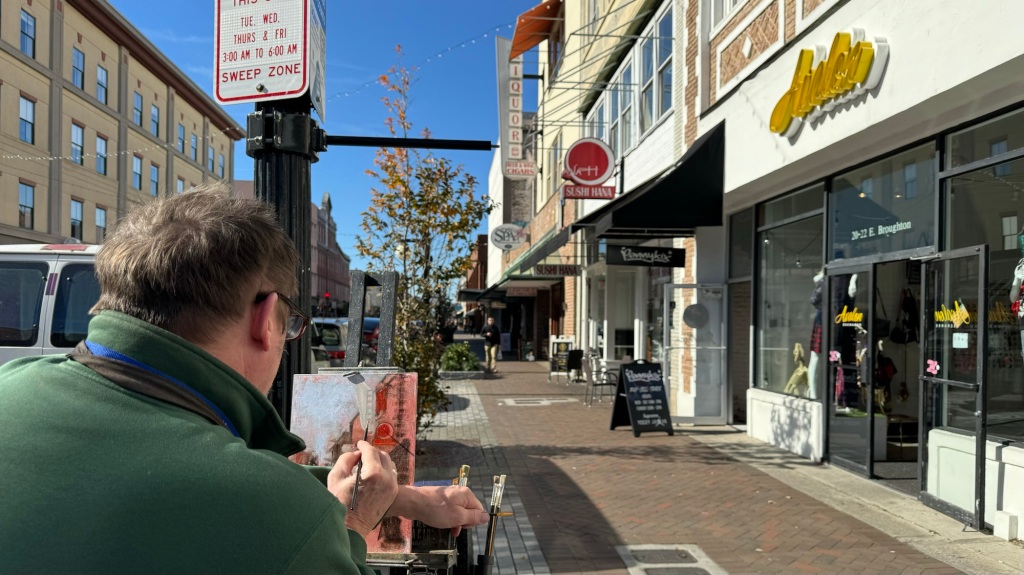
I love the opportunities that chance encounters bring for making new and valuable connections. Last week as we were going into Sushi Hana in Savannah, Georgia for lunch, I noticed an artist painting a streetscape in front of the restaurant. Those of you who know me well, know I can’t resist watching an artist practice their craft. He was just getting started, but I could tell this painting was going to be special (like I really know anything about it). The artist and I exchanged hellos and I told him I liked his work. My family and I went into Sushi Hana’s and ordered and I told them I had to go back out and meet the artist. I met Jeffrey Baumgartner, who coincidentally is from Chicago with Indiana connections. Small world! We immediately connected and he informed me it would take about three hours to complete. I told him I wanted to buy the painting. Then my wife came out and told me I needed to come in and eat. Imagine that!

After lunch I was back out to check the progress of “my” painting. It was coming along nicely and Jeffrey and I talked some more and made a plan for me to call him and 3:00 and see where he was on completing the painting. So, at exactly 3:00 as I stood along the Savannah River, I called my new artist friend back to see how my painting looked. He was just painting his signature on it as I called. Jeffrey told me it looked awesome. So I left my family to explore and climbed those old uneven steps up from River Street with some newfound energy and enthusiasm. Over to Broughton Street to see this exquisite piece of artwork (see photo). It was wonderful and I wanted it.

We agreed on a price then proceeded to talk, laugh, and share stories. Two students from the Savannah College of Art and Design (SCAD) came by who had watched and talked to Jeffrey earlier. He proceeded to give them an art, business, and leadership experience like no college professor could give. This artist was living it. He had driven his van (that he says is a “VanGo,” pun intended) to Savannah, set up in a campground, and was painting a new streetscape every day for a living. If that isn’t a real world and relevant context for teaching I don’t know what is. Not only was he schooling these young and aspiring artists, he was forming relationships. As a believer and teacher of building relationships as the most important leadership trait, I was watching and learning. Jeffrey was a master at it.
As I was complimenting him on his relationship-building prowess he told me that he came from the theater. “It’s all about the story, Byron,” he told me. So true; it is all about the story. I had gotten my painting, made new friends in Jeffrey and the students, and expanding my knowledge in leadership and creating an ideal customer experience. Jeffrey’s ability to connect had made the experience of buying this painting memorable and with a tremendous story.
Being able to build relationships is an important trait to have developed for a painter selling paintings, or any leader for that manner, because it helps in establishing trust and rapport with potential buyers. By building relationships, we can understand the preferences and tastes of our customers, tailor their artworks accordingly, and creating a personalized experience for the buyers. This lesson can also be transferred to all of us as leaders. We are creating experiences for those we serve.
Additionally, building relationships allowed Jeffrey to form a network of loyal clients who most likely will provide repeat business and recommend the artist to others. In Jeffrey’s case, he has a loyal following. This can help in expanding the reach and recognition of the painter’s work.
Moreover, through building relationships, we can also receive feedback and constructive criticism, which can be valuable for growth and improvement. By understanding the needs and desires of our clients and clients and those we serve, can better fulfill their expectations and create artworks that resonate with them.
Overall, being able to build relationships enables a painter to connect with their audience on a deeper level, promote their work effectively, and establish a strong presence in the art market.
A Honey Of A Deal For Being Interested In Learning

I remember being told that being interested makes us interesting. I believe this applies to being curious as well. Yesterday, I spent time at the Savannah Bee Company learning about honeybees, beekeeping, education, stewardship, and love. It was a reminder of just how curious and interested I get about a great number of subjects. Some have even called me eclectic. Guilty! Being interested in something can make us more interesting When we have a genuine passion for a subject or topic, it shows in our conversations and interactions with others. It can make us more engaging and knowledgeable, and can also spark curiosity and interest in those around you.

Yesterday, working with honeybees, I was reminded why I am such a believer in using real world and relevant contexts for learning. The Bee Cause Project introduces children to the science of bees and giving them a hands-on connection between these magnificent pollinators and their own lives. Founder and CEO, Ted Dennard is committed to the mission of building the buzz for integrating bees into education. By incorporating honeybee-related activities into STEAM (science, technology, engineering, agriculture/arts, and math) education, students not only learn important scientific principles but also develop skills in critical thinking, problem-solving, and data analysis. Additionally, they gain an appreciation for the natural world and a sense of responsibility towards sustainable practices.
It was exciting to take a deeper dive into learning about the, ecology, life cycle of bees, their and environmental behavior, and science. I was able to observe the bee’s hive and students in schools who are a part of The Bee Cause Project can also observe their own beehive and the bee’s role in pollination. And, by the way, produce a pretty sweet (honey) product in the process of learning. A relevant context at its best.
And, I can’t leave out the importance of Agriculture: honeybees are essential for pollinating crops, making them crucial to agriculture. By learning about beekeeping, students gain insight into agricultural practices and the importance of sustainable food production.
Being interested in STEAM subjects, for example, can lead to fascinating discussions and opportunities to share ideas and knowledge with others. So, integrating honeybee-related activities into the curriculum, is a great way educators can help students develop an interest in STEAM subjects while also promoting environmental awareness and sustainable practices. So, yes, being interested can definitely make you more interesting.
Leading With Provocations

Yesterday, I had a person describe some of my comments during a meeting as “provocations.” My comments were related to my desire to eliminate credits in education and work toward knowing what transferable skills students had mastered. Then instead of being locked/tied to courses we would be linked by the skills students were learning in their relevant contexts. If that makes me a “provocateur”- guilty! By the way; tomorrow I will post about being a provocateur. I had to think for a moment about what a provocation was. A provocation is a statement, action, or idea that is intended to provoke or stimulate new thoughts, discussions, or actions. It can be positive or negative, depending on the context and intent behind it. In a positive sense, a provocation can be a thought-provoking question, a challenging perspective, or an innovative idea that encourages people to think differently and come up with creative solutions. It can push boundaries, generate excitement, and inspire breakthroughs.
Yes, provocations can be valuable when coming from a visionary leader. A visionary leader often challenges the status quo and pushes boundaries to drive innovation and change. By provoking their team or organization, they encourage creativity, critical thinking, and new perspectives that can lead to breakthrough ideas and solutions. However, it is important for a visionary leader to balance their provocations with support, guidance, and open communication to ensure that their team feels empowered and motivated rather than demoralized or overwhelmed.
Conversely, I do recognize that a provocation used negatively can be a deliberate attempt to upset, anger, or disturb someone. It can create tension, conflict, and negative emotions. This type of provocation is often not productive and can hinder progress or damage relationships. These provocations are what I call being “snarky.” Never helpful. Not saying I don’t have to fight being snarky at times – I think we all do.
As a leader or team member, it’s important to use provocations in a positive and constructive way. Encouraging healthy debates, encouraging thinking outside the box, and empowering others to challenge the status quo can lead to innovation and growth. However, it’s crucial to consider the impact and intent behind your provocations to ensure they are beneficial rather than harmful.
Having A Revolution

In the epilogue of Miracles, C. S. Lewis introduced us to G. K. Chesterton. Chesterton was greatly applauded in his day, and lived as a celebrity. Now he is somewhat veiled in obscurity, but I am coming to greatly appreciate him as I read Orthodoxy. C. S. Lewis was certainly influenced by Chesterton.
Here is a quote from Orthodoxy that Lewis referenced in the epilogue of Miracles:
“But all conservatism is based upon the idea that if you leave things alone you leave them as they are. But you do not. If you leave a thing alone you leave it to a torrent of change. If you leave a white post alone it will soon be a black post. If you particularly want it to be white you must be always painting it again; that is, you must be always having a revolution. Briefly, if you want the old white post you must have a new white post.”
G. K. Chesterton, Orthodoxy, p. 122.

G.K. Chesterton was suggesting that conservatism is grounded the belief that if we refrain from making changes, things will remain unchanged. However, this is not accurate because even by leaving something untouched, it will inevitably undergo change over time. The analogy of a white post turning black indicates that if you desire something to stay the same, constant effort and adaptation are required. In other words, to preserve the original state of something, one must continually work towards maintaining it. This can be compared to having a revolution, as it signifies a complete renewal or transformation in order to preserve what is cherished.
On the white post, the paint will fade away. We must change by continuing to paint. Think about it, there may be better paint with new chemistry to last longer. Even though the post is still white, a revolutionary change has been made. And, if we don’t regularly paint, the post will rot away. The truth that the post is white has not changed, but the fresh coat of paint allows the post the attention it deserves.
Similarly, when applied to other scenarios like technology, organizations, or even personal development, a revolution can involve identifying the root causes of decay and implementing radical changes to revitalize and reinvent the object or system. This might involve adopting new technologies, reorganizing processes, or embracing a new mindset. We really need to keep this in mind when considering education. I hear so many people say that things can’t keep changing, but I am not sure how no change would be possible. We must have continual restoration, renewal, and improvement – revolution.
In essence, a revolution seeks to break free from the constraints of the past and embrace a new paradigm that not only restores the original purpose but also enhances it. It requires active participation, continuous effort, and adaptation to ensure that the transformation is successful and sustainable in the long run.
Not Everyone Has The Same Educational Needs

Right now we are doing a lot of talking about how college is not for every student. Or, going to college isn’t worth the expense. I worry about shallow statements like these. What I believe we need to be contemplating is that not everyone has the same educational needs. In other words we need to consider that not everyone has the means for what we consider the traditional “coming of age” experience of attending a four-year university. Do I wish they did? Yes! And, I am doing lots of work toward this end. But for some, for lots of different reasons that is not possible.
Furthermore, even though I would love for everyone to have that “coming of age” experience appropriate to their individual needs, we must realize the college education is not the end-all-be-all. Recently, I heard someone say “I’ve got a degree but I’m not going to let it ruin my life.” What I believe the person was saying is
that despite having obtained a degree, the person does not want to let their education define or limit them. They recognize that a degree is only one aspect of their life and that they want to pursue personal happiness, fulfillment, and success beyond the boundaries of their academic achievements. This statement suggests a desire to maintain a balanced perspective on life and to prioritize personal growth and well-being over the pressures or expectations that may come with having a degree.
Let’s face it, the traditional college education was built for the elite. There are strides being made to change this, but we still have a ways to go. We must keep working at this because the college degree is still the best predictor of social and economic mobility. And I want that for every student. A postsecondary education is a multi-generational wealth builder. As we continue to shift to a knowledge and creativity era this creates tremendous opportunities for our young scholars. We need to be thinking about bite-size learning or stackable credentials.
 Byron's Babbles
leave a comment