Attracting, Preparing, Developing, Retaining
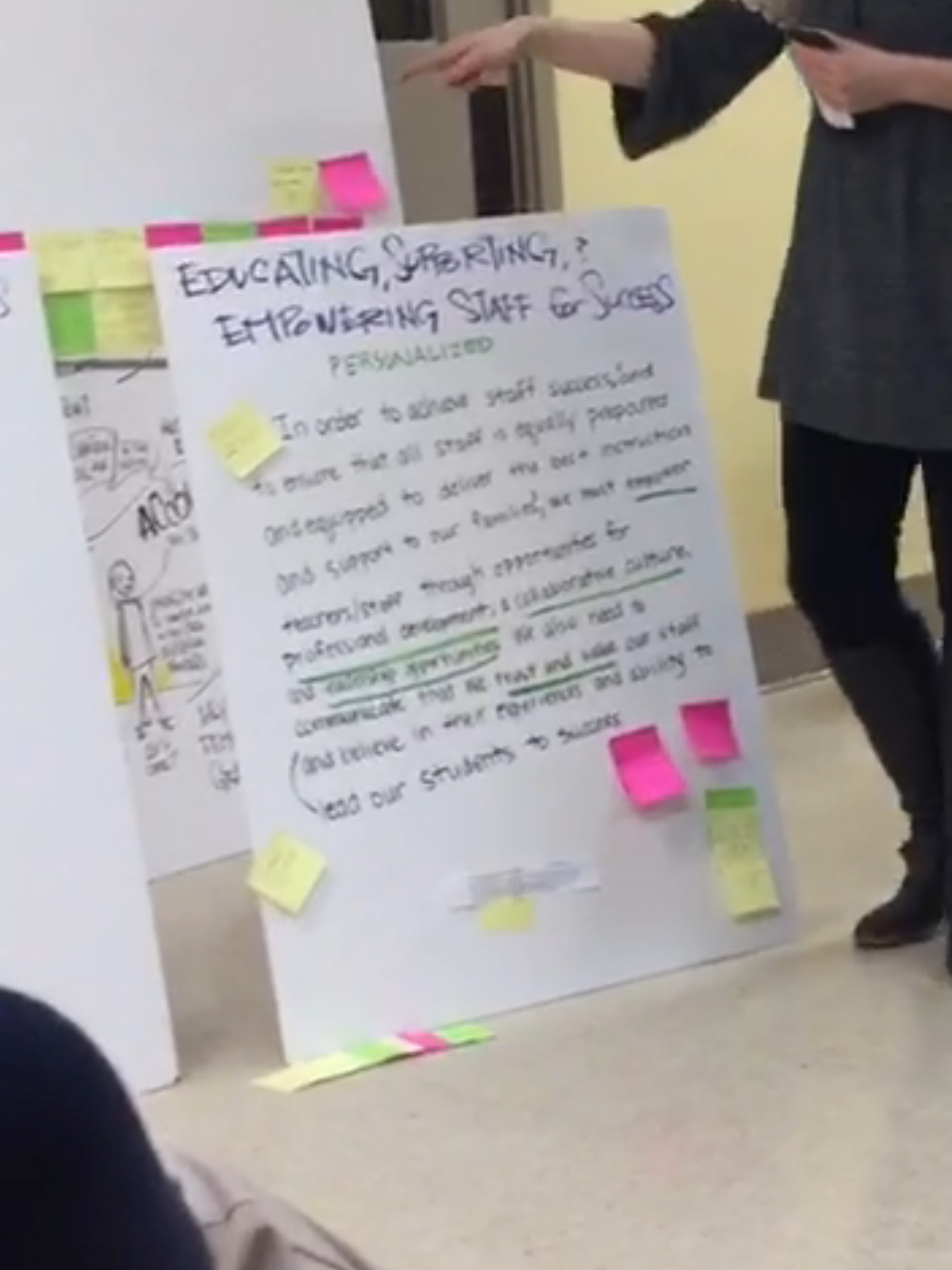
Leadership development and leadership project-based programs provide participants with practical, real world, and in-depth experiences. Well implemented programs provide ongoing mentorship, and targeted training across a range of areas within the organization. The key for success is customizing and personalizing all phases of the professional growth experience. It should truly be personal professional growth. The goal is to recruit and develop leaders for our organizations. With so much micro-knowledge and tacit knowledge needed for an effective school, or most other organizations, we must be building our benches and “raising our own.” As John Manning (2015) pointed out in Lesson 28 in The Disciplined Leader we must be providing growth opportunities and investing in our team members’ future. Never forget, intelligence of an organization is, no surprise here, a product of the intelligence of its members. 
I am writing this post while sitting in the airport in Atlanta. I am heading home from a great meeting of state legislators and state boards of education members held to discuss the new federal education law, Every Student Succeeds Act. One of the things that kept coming up over and over was how imperative it is that schools have robust school leader and teacher leader development programs. It is obvious this is crucial for schools. That is why I am so proud of our Focused Leader Academy. Our Focused Leader Academy is an employee development and engagement program. The idea is that great minds and great motives still matter. Teachers with school leadership aspirations have the opportunity to become part of a cohort which will take part in monthly leadership training and be part of supervised leadership projects of the school. Cohort size is at least 10% of teaching leaders per year. The Vision is: Leadership will be born out of those who are affected by it. The Mission is: Leadership will appear anywhere and anytime it is needed. Our Theory of Action is: If we empower our teachers through leadership skill development…Then we will have teacher leaders ready to contribute to the success of Hoosier Academies and be an important part of our talent pipeline.
In fact we learned this is an important part of our talent management system. If we get it right we will be doing these four things:
- Attracting top talent
- Preparing top talent
- Developing top talent
- Retaining top talent
We need to be intentional about the development of the personal learning agendas of those we serve. In other words, we need to hyper-personalize!
Is your school or organization being intentional in the leadership development of those you serve?
Reference
Manning, J.M. (2015). The disciplined leader: keeping the focus on what really matters. Berrett-Koehler Publishers. Kindle Edition.
We Words for We People

You can tell a lot about a person by paying attention to how many times they use “I” in her average email. John Manning (2015) taught us to, “Make yourself less visible in the ownership of successes by assigning the ownership of the results, accomplishments, and progress to the team, such as ‘Our goals as a team are that we plan to hit $120 million in revenue by year’s end and grow our customer base by 10 percent'” (Kindle location 1489). True leadership isn’t found seeking the spotlight, but seeking to shine the spotlight on others. The best leaders only use “I” when accepting responsibility for failures. Likewise, they are quick to use “we” when referring to successes.
 Leadership isn’t about your rhetoric; it’s about your actions. Leadership might begin with having a vision, but it’s delivering and implementing the vision that will ultimately determine your success as a leader. Remember, without your people there is no platform. Without your team you have nothing to lead. When you place yourself above the people you lead you have failed as a leader.
Reference
Manning, J. (2015). The disciplined leader: 52 concise, powerful lessons. Oakland, CA: Barrett – Koehler Publishers, Inc.
Leadership Heroin

Empowered Teachers for Action with Speaker of the House Brian Bosma
Yesterday was one of those incredible days in the life of a school leader. In the morning I was able to spend time with several teachers from our own school as well as many others from around the state as part of a program developed by one of Hoosier Academies teacher leaders, Jill Landers, in conjunction with Tosha Salyers and the Institute for Quality Education called “Empowered Teachers for Action.” The program included five sessions, four of which were held the previous four Wednesday’s, with the goal of educating teachers on governance, policy, and how to become involved in the legislative process. The program was a total success and culminated yesterday at the Indiana Statehouse with a panel discussion with Indiana Senator Hershman and Indiana Representative Cook, a discussion about how legislation comes about, and finally a discussion with Speaker of the House Brian Bosma. It was AWESOME! I might add this was Jill’s Focused Leadership Project as part of her experience in our Focused Leader Academy (FLA).
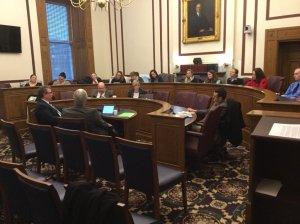
Discussion with Senator Hershman & Representative Tony Cook
As if that were not enough to make the day complete, we were then off to school for an afternoon session with our Focused Leader Academy where they were finishing up the development of our school’s new Vision, Mission, and Core Values. Last week, academy members led a school board retreat session getting board feedback and input. Now, the team was putting the finishing touches on everything. Earlier in the day there had been discussions about what a great experience and journey this has been for our teacher leaders. In fact, I would say our leaders have had an experience of truly building a vision, mission, and core values that very few top level CEOs have ever had. One of our FLA members, Alissa Davis, even said, “You know, I go through other organizations’ mission and vision statements and try to see if I can figure out what they do and stand for, and you know; many of them you can’t.” I have to give credit here to Mike Fleisch, who has been so much more than a graphic facilitator during our journey. He has been a partner, friend, and my jazz partner. We truly have become a jazz improvisation act. I’ll need to blog about this collaboration, but I’ll just say I would not be the leader I am today without the
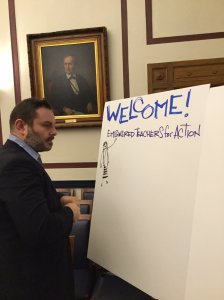
Mike Fleisch
collaborative friendship/partnership, and jazz act, we have developed.
Those that know me won’t be surprised when I say that during our Focused Leader Academy session I get a little, o.k. a lot, excited and animated. How can you not, with a room full of great teacher leaders? Anyway, I had just said earlier in the day that I lived for these days. I was concerned yesterday,however, because there was a snowstorm coming in and I did not want to cancel or quit early (we did not have to). You know how sometimes when weather comes in how great it is when you get part of your day back when something is cancelled or ended early? Let me tell you, I do not ever wish that on these sessions.
During the afternoon session I got all excited when the group finally put the final draft status on the vision and mission and had defined student success (you’ll have to wait for these to be revealed). Then Jill Landers looked over at me and said, “this is your heroin.” Wow, pretty profound, right! Yes, she was correct – leadership and working with our staff is my heroin. Working with our teacher leaders in the area of leadership and professional growth is a drug for me. I get all hopped up just preparing and putting the sessions together. And, at the end of the day, I go through a little withdrawal. We all laughed when Jill made the comment, but she was right. I then shared a story I had heard about why so many rock stars have drug problems – it is because of the rush and high they get being on stage with all the people cheering and then there is not that high when they are not performing and they need something to give them that high. Drugs and alcohol become the medium. Well, let me assure you I do not need the medium in between, but I think we can all understand the situation.
Last night I got to thinking about having a drug addiction-like passion for leadership. Our second President, John Adams, was concerned about this passion for leadership. He posited that leaders become so passionate and addicted to the power of leadership they have the tendency to become tyrannical. He believed that an important task of leaders was both to incite and to control human passion, both in ourselves and those we lead. Make no mistake here, however, it is the passionate leaders we need in the world. It’s the passionate people that take the biggest risks, step up to the plate, and help make the biggest leaps forward within teams, companies, and organizations. People want to follow a passionate leader. Someone who cares about not only the cause for which he or she is working, but also the other people who are involved in the effort. Passion for the projects, for the company and for the people involved are key to successful leadership.
Finally, I guess it comes down to my attitude and mindset that makes working with our future leaders one of my leadership drugs (to continue with the metaphor). I’m driven by curiosity and the motivation to learn about the world around us. As leaders, we need to find ways to connect with the world around us. Curiosity and interest are both key qualities of the best leaders I know. What is your leadership heroin?
Managing Strategies for Engagement

This post is an excerpt from the book Authentic Conversations by James Showkeir and Maren Shokeir. This book is included in BKpedia, a new digital subscription service from Berrett-Koehler Publishers. Please visit bkpedia.bkconnection.com for graphics, tweets, and other resources.
Managing Strategies for Engagement
Engagement means being able to make meaningful decisions and to have the resources to act on those decisions.
The marketplace demands results now. Your customers want attention in this moment. The necessity for flexibility and speed in the face of change is paramount. The question is how to create an organization that can:
• Quickly create and apply new knowledge
• Grant exceptions and deliver unique responses
• Foster passion and accountability throughout the entire enterprise
For these significant changes to occur, three areas in the organization must be affected: (1) culture and management/governance practices, (2) architecture, which includes the ways jobs are designed and how people are grouped, and (3) the ways in which employees are rewarded. For all these changes to be planted and take root, new conversations are required.
Individuals must accept personal accountability for the success of the whole business and be responsible for their own motivation and morale. The culture must generate passion for the work and action in service of customers and good results. This requires less focus on personal ambition and a sincere commitment to the success of others.
Organizations have to create and sustain universal business literacy and adult-to-adult conversations, one person at a time. Management practices, such as budgeting, meetings, training, objective setting, performance reviews, and so on, must be recreated to encourage partnership. Dissent must be viewed as healthy. Through different conversations, knowledge and collaboration are baked into the work process, replacing compliance and control as the operating values.
Where to start? If the longest journey begins with a single step, it won’t surprise you that our advice is to begin by changing the conversations. Better conversations will reap rich, diverse information. They will encourage an examination of who plays key roles in improving business results. They will allow you to address difficult issues in a constructive way.
New conversations will champion the kind of learning and resourcefulness that lead to innovation, cost efficiency, and personal accountability—essential elements in addressing the complex problems of organizational renovation.
*****
James Showkeir and Maren Showkeir are principals of Henning-Showkeir & Associates, Inc., whose clients include 3M, Ford Motor Company, Kaiser Permanente, British Airways, Coca-Cola, Hewlett-Packard, Levi Strauss, the Greenleaf Center for Servant-Leadership, and the Nature Conservancy. Together they authored Authentic Conversations and Yoga Wisdom at Work. James passed away in August of 2015.
Better Implementation!
 Last week I wrote “Consensus to Implementation.” In that blog post I focused on consensus. Click here to read the post. For this post I want to focus on the implementation piece. So, here is my definition of implementation: A process that includes and respects all parties, and generates as much agreement as possible sets the stage for greater cooperation in implementing the resulting decisions.
“Where do great initiatives go to die: implementation.”
It is sad, but we see it all the time; great initiatives, ideas, or legislation die during implementation. I have seen this during my time on the Indiana State Board of Education, in schools, and many other organizations. Sometimes this is by design, which is very sad and a whole other story – thus why monitoring will be one of the keys I mention to successful implementation. As I see it, there are keys to successful implementation of anything:
- Organization
- Role development
- Planning
- Resources
- Communication
- Monitoring
I want to speak to two of these specifically. One of the great things I learned at Harvard is how important the role development part of implementation is. It is an element that many leave out of the process. But, it is very important for everyone involved in the implementation of anything that he or she understand their role in carrying out the initiative. This might be the most important element, but is many times left out.
The other important piece is monitoring. As leaders, we must get optics on the necessary data to make sure initiatives are being implemented with fidelity. This might be one of the toughest elements, particularly when it comes to legislative/policy initiatives. Sometimes the optics on the data just is not possible. Therefore, initiatives that really could have done a great deal of good, become failures – not because the concept was bad, but because of implementation. Again, make no mistake, sometimes implementation failure is by design. This is a sad, but true, fact.
Therefore, it is very important that the ability for the correct individuals, governing bodies, or stakeholders be built into the consensus to implementation process. If it is not then great ideas, legislation, and initiatives are doomed to die in implementation. Let’s all strive for Better Implementation!
Great Leaders Never Stop Evolving
 Being a great leader is about adapting and evolving as we go through our journey. I am not talking about adaptive leadership in the sense of adapting to different circumstances. I am talking about growth. This week’s lesson from John M. Manning in The Disciplined Leader was about believing in one’s potential. I am putting a little different twist on this and submitting to you that the way to believe in one’s potential is to develop a mindset of continual honing of one’s potential. This takes us back to the idea of personal growth I blogged about earlier this week. Click here to read “Professional Growth Puzzle.”
 Confidence comes from our continuous personal and professional growth. Therefore we must continue to adapt and evolve. I still amazed and excited by the amount of learning that still goes on in my life every day. This is not by chance, however. This comes from being open to learning and realizing I still have a lot of learning to do. This does not mean that I think I dumb; it means I have a mindset of learning in every situation of my life’s leadership journey… and it is o.k. to say, “I’m not there yet.”
“Be realistic and expect an imperfect journey. But always believe in a fulfilling experience regardless of any imperfections.” ~ John M. Manning
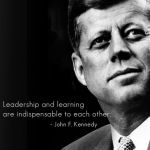 So, be confident is where you are in your professional and personal leadership journey! Know that you will not be perfect in this journey and adopt the mindset of continuous improvement. Learning can be so exciting so I encourage you to love every minute of your own evolution and adaptation as a leader. I’ll leave you with my favorite John F. Kennedy quote:
“Learning and leading are indispensable to each other.” ~ John F. Kennedy
Reference
Manning, John (2015-06-15). The disciplined leader: Keeping the focus on what really matters. Berrett-Koehler Publishers. Kindle Edition.
Consensus To Implementation
 I received an email a couple of days ago from Kris Amundson, Executive Director of the National Association of State Boards of Education posing the question: is consensus even possible in today’s polarized environment? The question gave me pause and is something I have thought about in the context of partisanship and in the context of boards I am a part of. My immediate reaction was to say, “sure.” Particularly because of my own experience when asking Indiana Speaker of the House, Brian Bosma, what success would look like in his eyes after appointing me to the Indiana State Board of Education. His answer was, “Consensus to implementation.” This was a very powerful statement and one I have reflected on a great deal and have tried to live. In fact I have included thoughts on consensus in other blog posts. Click here to read “Civilized Disdain Vs. Political Correctness.” You can also click here to read “The Sheer Guts of Leadership.”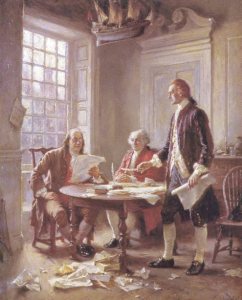
Now, back to the question at hand: is consensus possible? I sure hope so! Within every member of any group there is a lifetime of experiences and knowledge. Consensus is a way to tap the collective knowledge of the group to craft the best decisions possible. I get concerned when everyone wants to argue that we have become polarized because of partisan beliefs. I still firmly believe that these partisan beliefs are what get us to greatness. Where would our country be today had our founding fathers not had the heated debates/arguments about the framing of our democracy. In the end they reached consensus and implemented. The problem is when we let our own beliefs polarize us from truly listening to others’ perspectives, and a lack of willingness to share our own perspectives. We must also have the humility to understand that our own ideas may not be the best ones.
Furthermore, as we study consensus, it is important to remember that consensus is not unanimous agreement. Group members may consent to a decision, or part of a plan they disagree with, but recognize the consented upon decision best meets the needs of the group or organization, and therefore give permission to it. The key here is a commitment by each individual to honor the best interests of the group. In fact I have adopted the idea of “consensus to implementation” as one of my core values. I would submit that every person, organization, and government should do the same.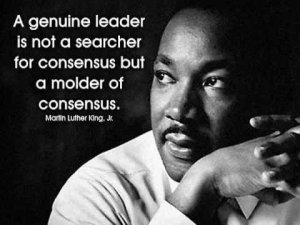
Using the core value of “consensus to implementation” allows a cooperative interest, where members are willing to work together to find the solution that meets the needs of the group. Consensus allows us to work together and create the best solution. Relationships matter when using consensus. Group members then hold each other accountable to then begin implementation upon reaching consensus.
Here are the keys to practicing in a culture of consensus, as I see it:
- Effective listening
- Humility
- Respect for others’ opinions
- Not using a right or wrong judgmental mindset of everything
- Be prepared explain your own views
- Put the group’s best interest ahead of your own
- Be visionary
- Welcome feedback
- Work to understand others’ opinions and beliefs
- Share your individual expertise
The fundamental idea of consensus is for all people to be able to express themselves in their own words and of their own free will. Consensus assures all can speak and be heard. I would argue that when we say consensus is not happening, or even possible at all, it is because we are really practicing coercion, trade-offs, and being self serving. Consensus allows us to develop creative alternatives, transforming alternatives, and compromise with synthesis.
So, do you agree with me when I say consensus is still possible? As for me, I will continue to work for “consensus to implementation.”
Failing Forward
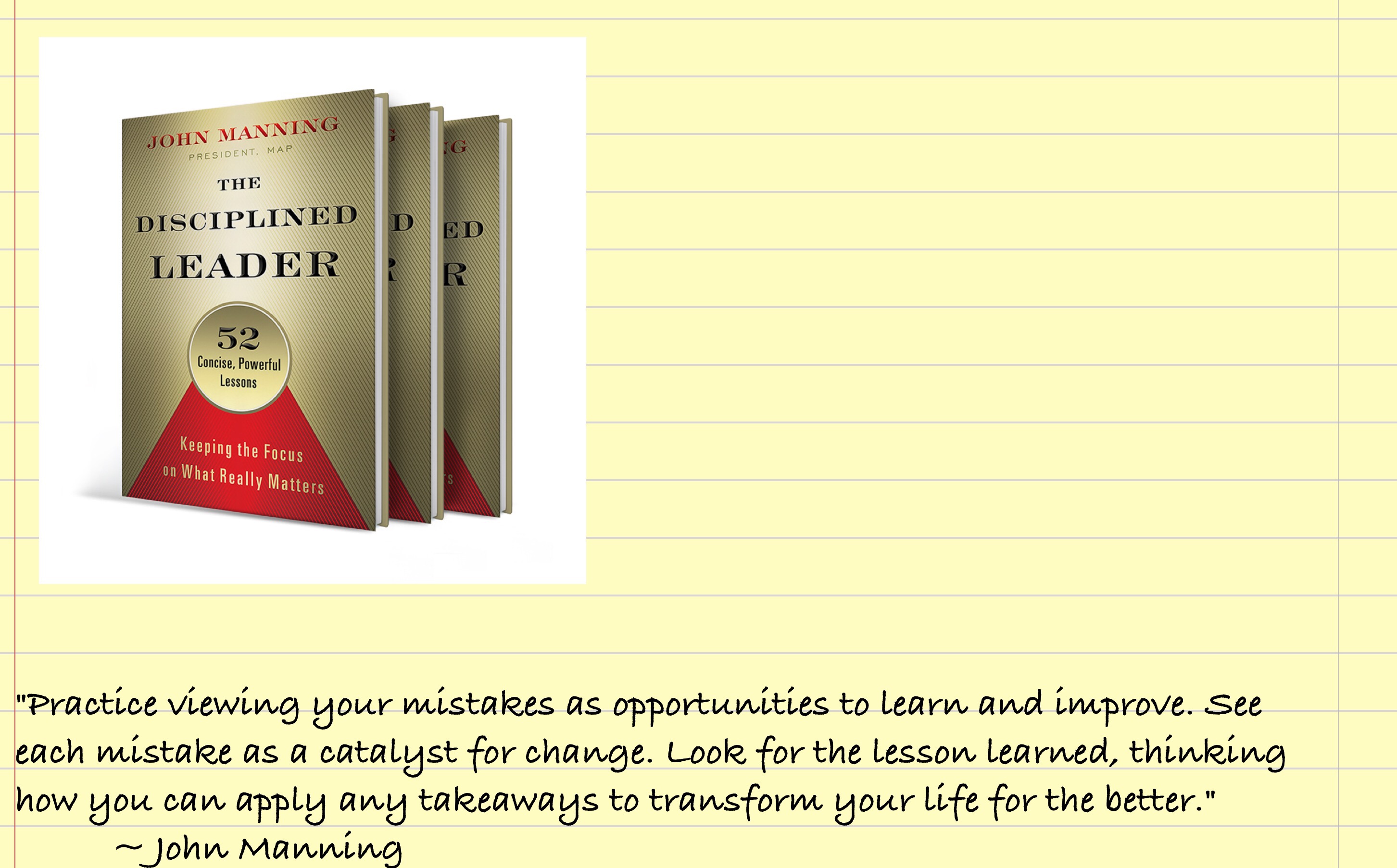
 The whole idea of failing, making mistakes, and losing is an interesting topic. I believe the reason so many talk about it and write about it is that we all fail, make mistakes, and lose. Well, almost everyone. There are those that are so risk averse that they never try anything, do anything, or compete in anything. How sad for them. I’m not sure you can ever fully appreciate the incredible feeling of the win, without first feeling the emptiness of the mistake or loss.
“It takes a leader who’s got guts to own [the mistake].” ~ Jack Welch
This week’s entry in The Disciplined Leader (Manning, 2015) addressed the issue of viewing mistakes as opportunities. When I was much younger I had a tremendous mentor who never used the words problem, challenge, mistake, or any or like-such word. He always used the word, “opportunity.” He truly believed every wrinkle that came along was an opportunity waiting to be developed. His example has stuck with me and resonated throughout my life. It continues to amaze me how true this is.
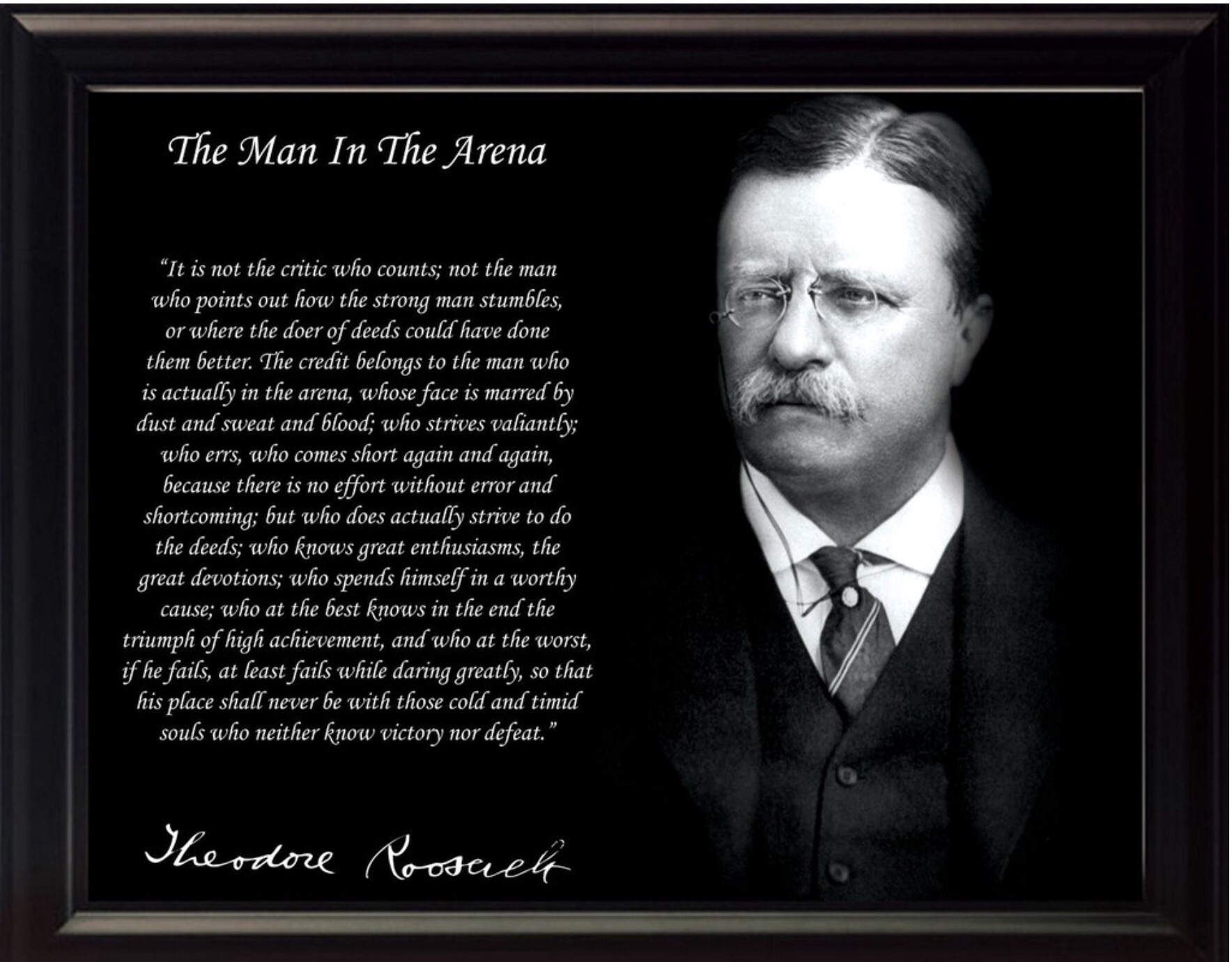
I still believe our 26th President of the United States and reformer, Theodore Roosevelt, summed in up best in “The Man In The Arena.” Here it is, if you’ve not read it:
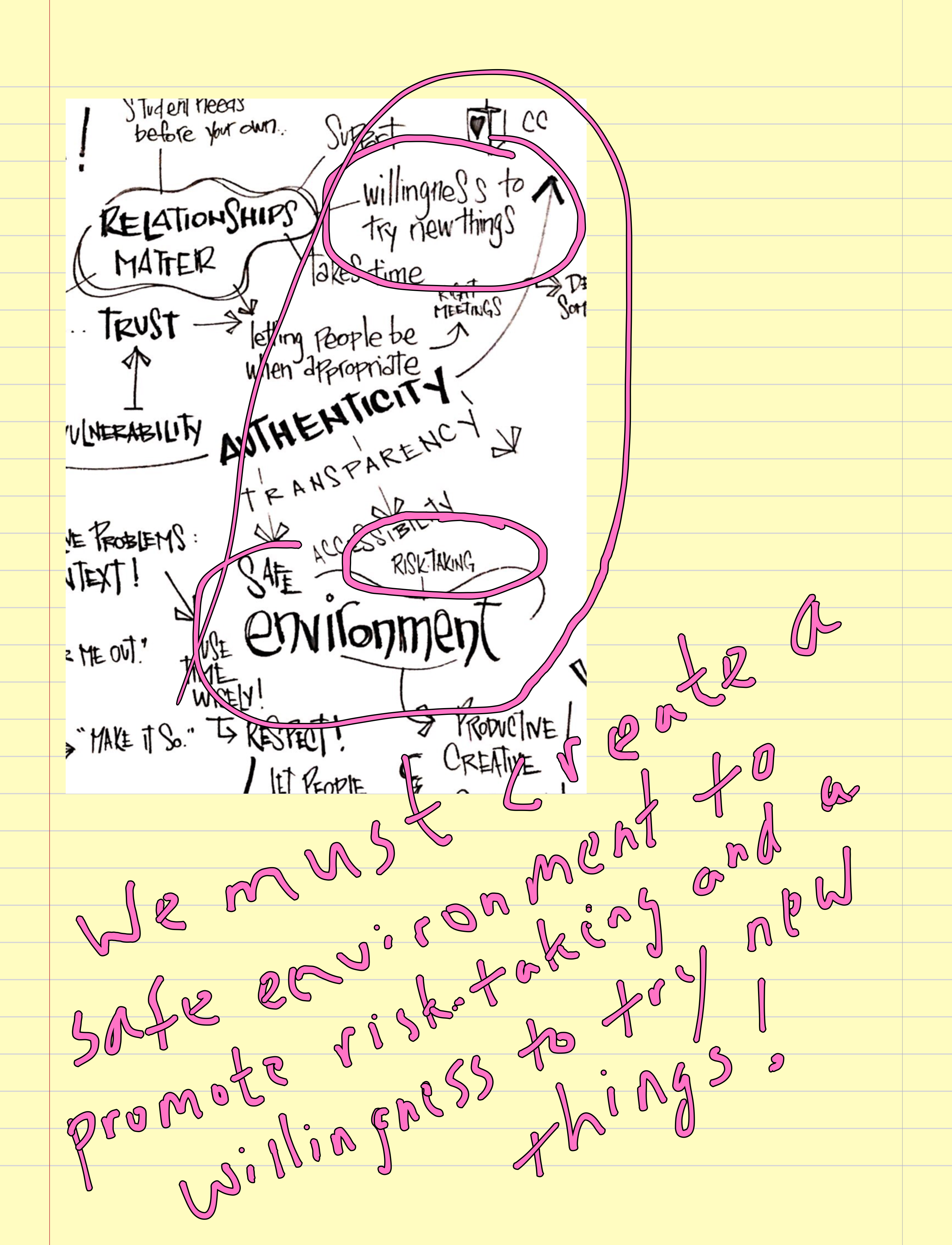
Are you in the arena? Are you creating a safe place for those you serve to get in the arena?
Reference
Manning, J. (2015). The disciplined leader: 52 concise, powerful lessons. Oakland, CA: Barrett – Koehler Publishers, Inc.
Driven Crazy By Data

Yesterday I was involved in some pretty deep discussions on education. During one part of the discussion I made the comment that many times instead of being “driven by data” we are “driven crazy by data.” As usual, I got some weird looks, but it’s only because I was stating what many aren’t willing to discuss. I am calling this Part One because today I am going to use a personal example from our farm to make my point and will come back later in another post and prove an educational example. I believe those of you outside education in other industries and organizations will be able to use this example as well.
Today, my son and I needed to install a continuous 65′ run of matting for tie stalls in our dairy show barn. Pretty great Saturday Dad and Lad activity for a Saturday, I might add. Now here were the data points: Mat roll was 65′ long
Mat is 75″ wide
Mat weighs 2,000 pounds – 1 ton
Need to leave two inches on each end for the mat to expand
Needs to be 22″ from the wall at the top of the mat

The Mat as Shipped

Location of Mat Istallation

Success!
I am guessing that no matter what field you are in you can relate to this. Those in education could make a list of all the data points able to be tracked. But… we need to make sure we focus on data that really matters. Data that informs instruction and highly effective facilitation of learning is what matters most. If we are to be successfully driven by data, we must not let data that does not matter drive us crazy!
What data in your organization drives you crazy? What are the data points that will drive you to success?
Achieving Your Leadership Potential
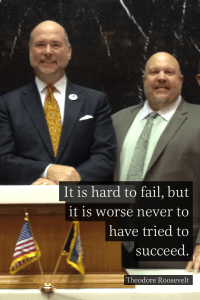
Speaker Bosma & I after an Education Kitchen Cabinet Meeting
“From a professional standpoint, tackling something new has the power to build your capacity for success and is a great discipline worth pursuing.” ~ John M. Manning
I try to model this stretching at every opportunity. I remember my doubters telling me I was making a grave career error when I was excited to take on the leadership of a state takeover school that had failed for seven years in a row. Yes, it was an extreme challenge. Yes, it was some of the hardest work I’ve ever done. Yes, there were many days of failing. But, it was the most rewarding and significant thing I have ever done. But, seeing the school come off the “F” was one of the most exciting things ever. But, watching the team of people coming together to change a culture was breathtaking. Here is a case where the buts prevail. I would not go back and change a thing, except all the mistakes I made in the process, of course.
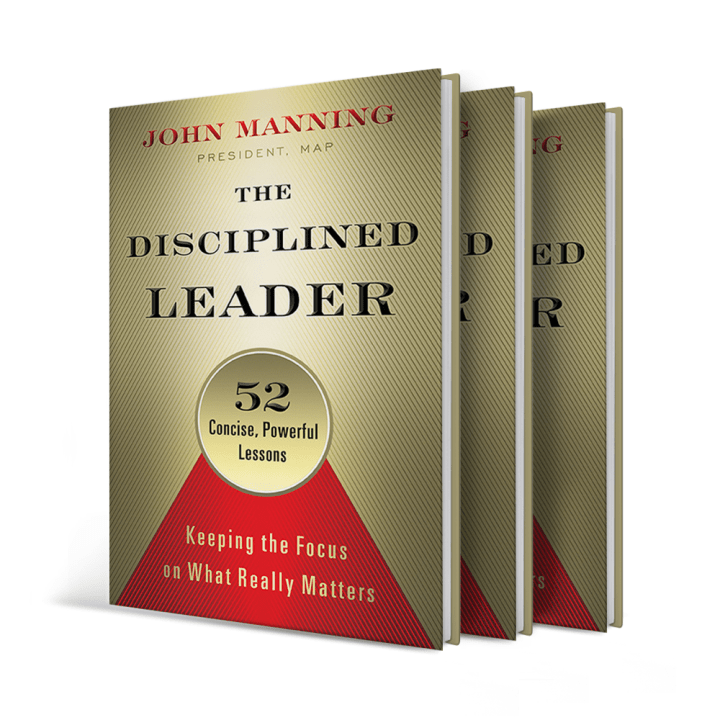 In actuality I followed Manning’s (2015) advice during this experience. I trusted in the power of my learning and viewed that learning as an opportunity to grow confidence. Most importantly, and I love the fact that Manning (2015) pointed this out, we made it fun. We built up what Manning (2015) called the “fun factor” every moment possible.
Another area that has been afforded me to take on responsibility in areas I want to develop is the opportunity to serve on the Indiana State Board of Education. It is an honor to serve as Speaker of the House Brian Bosma’s appointee. Being asked to serve the State of Indiana is certainly a responsibility I take very seriously and I view this commitment as something I want and need to do, not something I have to do. This opportunity gives me the chance to explore new horizons, create new relationships and pushes me out of my comfort zone. I truly want to learn new things.
I’ll close with a couple of questions to you: What do you want to learn that will push you out of your comfort zone? What experience should you take on that will give you the opportunity to explore new horizons?
Reference
Manning, J. (2015). The disciplined leader: 52 concise, powerful lessons. Oakland, CA: Barrett – Koehler Publishers, Inc.
 Byron's Babbles
leave a comment