Education 5.0: Empowering Minds for the Age of AI, Empathy, and Innovation

Yesterday I had the honor of serving on an international panel contemplating “Education 5.0: Empowering Minds for the Age of AI, Empathy, and Innovation.” It was an incredible discussion that was part of the 2026 FLUXX Asia Leadership Conference in Manila Philippines. I wanted to share some of the thoughts I contributed to the discussion yesterday.

When asked about the biggest challenge in education I brought three points:
- We need to make sure students are developing the skills necessary to become worthwhile citizens in a global economy
- Our education entities need to become more systems thinking and have systems change leaders to carry out those changes
- As a global community we need to be learning promising practices from each other

Next, I was asked what critical human skills are at risk of being undervalued or underdeveloped because of the use of AI:
- Critical thinking/Problem solving
- Creativity/Curiosity
- Ethical reasoning
- Adaptability/Resilience
How do we strengthen the human connection for students?
- Students should work on real problems and issues
- Students should work with adults I mentioned my partnership with AgReliant Genetics when I was teaching where students were doing real research for the company and collaborating with the scientists
- We need to provide mentoring by adults for students
- Work-based learning opportunities
- Students present results/proposals
- Help students understand what it means to have ownership in their learning/education and then allow them to have that ownership
- Create space for students to have human to human contact and interaction
What are actions needed for proper use of AI?
- Provide support and professional development in the use of AI
- We need to incorporate AI, not make it an either/or thing
- Get diligent in helping students recognize fact from opinion/false information [Research from Programme for International Student Assessment (PISA) showed that only 9% of 15-year-olds can actually tell when facts are really facts and not just opinions]
Finally, I was asked to complete the following sentences (the italicized are what I contributed):
- AI will replace routine tasks, but never replace the human elements of love, creativity, curiosity, and empathy.
- The most underrated skill is emotional intelligence.
- The future of education is students taking ownership of their own learning and education.
Leading Like Admiral William McRaven

I was so impressed by Admiral William H. McRaven’s keynote yesterday morning at ExcelinEd’s National Summit on Education. He began by saying, “If you are not a person of character, you will struggle in leadership and will really struggle leading in a crisis.” With this comment he really grabbed my attention. I was also reminded of how Angela Duckworth had defined character the day before in her great keynote: “Character is all the things you habitually do, think, say, and feel that are good for others and good for you.” Having encountered leaders in my career that lacked character, all this really resonated with me. To me, character is the “walk” part of “walk the talk.” Character encapsulates how we act and what we do. Whereas, “talk” is the values part of “walk the talk.” Those leaders I mentioned earlier talked a big game of values, but then we never saw the actions, or character. We cannot just say we will do the right thing, we have to actually know what the right thing is and do the right thing. Character is all about our habits. Thus why Admiral McRaven said the leader without character would struggle, especially in a crisis when our character really shows.
“The truth will always, always, always, come out.” ~ Admiral William H. McRaven

Admiral McRaven also shared leadership lessons from his great book, Conquering Crisis: Ten Lessons To Learn Before You Need Them. He outlined five key leadership components:
- Assess: we need procedures for getting facts and evaluating the quality of the information. We need a group of trusted advisors – what McRaven called a Council of Colonels. This is an advisory group that will speak the truth to power.
- Report: I love what the Admiral said here: “Always tell the truth, the whole truth, and nothing but the truth.” Also he told us to, “Use truth and transparency to show you understand the problem.” This helps us to personify the crisis.
- Contain: one point Admiral McRaven made here that really stood out to me here was to, “slow the pace of the crisis with one strong decisive move directed at the fastest-moving concern.” This involves us, as leaders taking control of the crisis and dictating the tempo.
- Shape: we need to actively influence situations and control the narrative. The Admiral told us to, “weaponize the truth.” He urged us to, as leaders, mold the circumstances and perception of the crisis so our organizations come out stronger on the other side, rather than just surviving it.
- Manage: This point said it all: “Reinforce your actions with a resource heavy approach to dictate the tempo and shape the outcome.” In other words, as I stated in the beginning paragraph of this post: “walk the talk”.

I love that in a conversation after his keynote with Jeb Bush, Admiral McRaven discussed the need for leaders to be humble and have the humility to listen and learn first. He discussed having a great team around him so he finish this sentence: “I need to understand…” I’ll conclude this post by saying that Admiral McRaven is one of America’s great and iconic leaders. His record shows him to be a man of character who has walked the talk and walked the walk.
Needed Therefore Belonging

I am a huge believer in “belonging.” Whether it is students in our schools or adults in our organizations, everyone needs to belong. This “belonging” is central to our engagement. When we believe that our presence and contributions matter, we feel more connected to our community—be it a classroom or a broader social environment. This sense of connection fosters trust, safety, and acceptance, making us, whether a student or adult, more comfortable to express themselves and participate actively. As a result, we develop a stronger sense of belonging, which enhances their confidence, motivation, and overall well-being. In essence, when we feel needed and appreciated, we are more likely to feel that we truly belong, supporting our growth and success.
Also, let’s not forget that along with love, belonging is on Maslow’s five tier hierarchy model of human needs. While we used to think of this hierarchy more linearly than we now know it to be, Maslow showed love/belonging to be right after physiological and safety needs. We now know that we seek multiple needs simultaneously.
Yesterday at ExcelinEd’s National Summit on Education, Angela Duckworth told us that “Every student needs to be needed.” 🎤 I loved this and thought it was a drop the mic moment. Angela Duckworth meant that every student should feel valued and important—that their presence and contributions matter. When students feel needed, it boosts their confidence, motivation, and sense of belonging, which are essential for their growth and success. She emphasized the importance of fostering environments where students recognize their importance to others, helping them develop resilience and a positive sense of self.
As leaders, let’s make sure everyone belongs!
Leading By Making Room for Other People’s Ideas
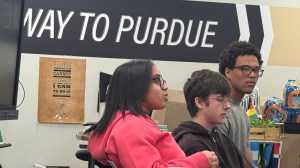
Yesterday, I had the opportunity to spend the morning at Purdue Polytechnic High School here in Indianapolis. We were there as part of the National Association of State Boards of Education’s High School Transformation State Network. There are six states that are part of the network: Washington, Missouri, California, New York, Kentucky, and Indiana. Of course, I was in my element – in classrooms spending time with students. We joined a chemistry class and I could not help myself but to take over a lesson on pH. As a former Ag Science teacher, pH, measuring the free hydrogen ions and hydroxyl ions, is a pretty important concept. Once a teacher always a teacher!
We also had a panel of students speak to us and spend time answering questions and offering advice. One student made a comment that really impressed me. She said, “I have learned to make room for other people’s ideas.” Wow, there was a future leader in the making. There are a lot of adults who have not figured that out.
Making room for other people’s ideas embodies a key principle of great leadership: openness to collaboration and inclusivity. Here’s what it means in the context of effective leadership:
- Valuing Diverse Perspectives: Great leaders understand that diverse viewpoints can lead to better decision-making and innovation. By making room for others’ ideas, we encourage a rich exchange of thoughts, which can enhance creativity and problem-solving.
- Fostering Collaboration: When leaders invite contributions from their team members, we create a collaborative environment. This not only boosts morale but also strengthens team cohesion as everyone feels valued and heard.
- Encouraging Engagement: Making space for others’ ideas promotes engagement and ownership among team members. When individuals see that their opinions matter, they are more likely to invest themselves in the outcomes of their collective efforts.
- Developing Trust: Leaders who are receptive to new ideas build trust within their teams. Team members are more likely to share their thoughts and take risks when they know we respect and consider their input.
- Adapting and Learning: Leaders who embrace others’ ideas demonstrate a willingness to adapt and learn. This flexibility is crucial in dynamic environments where solutions often require input from various sources.
It was great to be reminded yesterday by a young high school leader that making room for other people’s ideas is essential for fostering a positive and productive organizational culture, ultimately leading to greater success.
Beware Of Externally Imposed Definitions Of Success

The word “success” is thrown around a lot today. When we discuss rethinking education, we discuss student success to the point it has become cliché. This is not do say we should not be considering success, but defining it is another beast entirely. Ten years ago when, as a superintendent, I was leading our schools through the strategic planning process, we adopted a definition of success. We adopted, and I still personally ascribe to the definition of Dr. Felice Kaufmann. She defined success as: “SUCCESS: Knowing what one wants in the world and knowing how to get it.” I love this because success is about each of us understanding what we want, not what is prescribed by someone else. Continuing my thoughts on education here I still believe we must help students find their own passions and interests and align those to values so they can define their own success. Then we facilitate going after that success.

I just finished the incredible book, Red Helicopter, by James Rhee. It really helped me sort out the concept of “success” even further. In the book Rhee explained that if we chase after externally imposed definitions of success, and you may find yourself feeling unfulfilled and disconnected rather than successful. This is genius! This idea of “externally imposed definitions of success” – think about how much we do this to ourselves, to others, and most importantly, our children.
James Rhee was cautioning against following society’s expectations of success without considering one’s own values and goals. He suggested that chasing after external definitions of success may lead to a feeling of emptiness and disconnection, rather than true fulfillment. It emphasizes the importance of staying true to oneself and finding personal fulfillment in one’s achievements. I believe we should consider that success looks different for all of us and it is not something we can graph with a straight line.
Not Everyone Has The Same Educational Needs

Right now we are doing a lot of talking about how college is not for every student. Or, going to college isn’t worth the expense. I worry about shallow statements like these. What I believe we need to be contemplating is that not everyone has the same educational needs. In other words we need to consider that not everyone has the means for what we consider the traditional “coming of age” experience of attending a four-year university. Do I wish they did? Yes! And, I am doing lots of work toward this end. But for some, for lots of different reasons that is not possible.
Furthermore, even though I would love for everyone to have that “coming of age” experience appropriate to their individual needs, we must realize the college education is not the end-all-be-all. Recently, I heard someone say “I’ve got a degree but I’m not going to let it ruin my life.” What I believe the person was saying is
that despite having obtained a degree, the person does not want to let their education define or limit them. They recognize that a degree is only one aspect of their life and that they want to pursue personal happiness, fulfillment, and success beyond the boundaries of their academic achievements. This statement suggests a desire to maintain a balanced perspective on life and to prioritize personal growth and well-being over the pressures or expectations that may come with having a degree.
Let’s face it, the traditional college education was built for the elite. There are strides being made to change this, but we still have a ways to go. We must keep working at this because the college degree is still the best predictor of social and economic mobility. And I want that for every student. A postsecondary education is a multi-generational wealth builder. As we continue to shift to a knowledge and creativity era this creates tremendous opportunities for our young scholars. We need to be thinking about bite-size learning or stackable credentials.
Freedom, Wandering, & Finding A Path

In the The Storyteller: Expanded…Because There’s More To The Story, Dave Grohl said of his mother, “I like to say now that she disciplined me with freedom by allowing me to wander, to find my path, and ultimately find myself.” I believe he meant that his mother, who was a public school teacher, gave him the freedom to explore and make his own choices. Rather than imposing strict rules and limitations, she allowed him to venture and discover his own passions and interests. This approach helped him develop his own identity and find his true purpose in life.

This wandering and freedom had to be tough for his mom as it led to Grohl dropping out of school. But, as his mom said, “It’s not always the kid that fails at school sometimes it’s the school that fails the kid.” Grohl really didn’t explain the statement except in his own context of wanting to become an artist as a rock musician. I believe as a school teacher his mom was rightly referring to the idea that sometimes it’s not the child’s fault for struggling in school, but rather the educational system or environment that is not able to meet their needs or support their learning style. I believe, as Grohl does too, that it is important to recognize that each child is unique and may require different approaches to learning. Instead of blaming the child for not succeeding, it is necessary to evaluate and address the shortcomings of the school system to ensure that every student has an equal opportunity to thrive academically. This is why I am so excited to be a part of policymaking for Indiana’ school redesign. We need a system where every child’s uniqueness can be celebrated and developed. We cannot continue as we are right now, where the best choice some is to drop out of school, because the school cannot meet the student’s needs – as was the case for Grohl.
Targeted Universal

I’m contemplating the concept of “targeted universal approach” today. This concept refers to an approach that aims to provide services or benefits to a specific group of people while still being accessible to a broader population. It combines the targeted approach, which focuses on addressing the needs of specific individuals or groups, with the universal approach, which aims to provide benefits to everyone. A targeted universal approach in education can be favorable for several reasons. First, it allows for a highly personalized learning experience for students. By understanding the specific needs and preferences of each student, educators can provide tailored instruction and support that caters to their individual learning styles and abilities.
A targeted universal approach additionally helps address educational inequalities and bridge achievement gaps. It ensures that all students have access to high-quality education and resources, regardless of their background or circumstances. This can ultimately lead to improved academic outcomes and opportunities for all students, promoting equity in education. In practical terms, using a targeted universal approach means designing programs or initiatives that target a specific group based on certain criteria, such as income level or geographic location, while ensuring that the benefits are available to a wider range of people who may also benefit from them.
To apply the concept of “targeted universal,” we must identify the specific group or audience being addressed. This could be based on factors like demographics, needs, or location. In education, a targeted universal approach can promote inclusivity and diversity in the classroom. By valuing and accommodating the unique strengths and challenges of each student, it fosters an environment where every individual feels valued, respected, and supported. Then we can design programs or interventions that specifically target their needs while also ensuring that others who may benefit from the initiatives can also access them.
It’s important to keep in mind that the success of a targeted universal approach relies on careful planning, research, and implementation to ensure that the intended outcomes are achieved. A targeted universal approach in education recognizes the importance of individual differences and seeks to address them through personalized support and inclusive practices. It can contribute to enhanced learning experiences, improved educational outcomes, and a more equitable and inclusive education system. Additionally, ongoing evaluation and feedback from the targeted group and other stakeholders can help refine and improve the approach over time.
Teaching Learning Ability
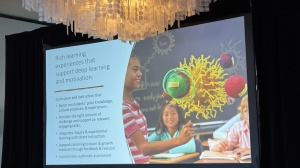
Yesterday in our National Association of State Boards of Education Annual Conference opening session, my friend, Dr. Linda Darling-Hammond made the comment that we need to teach our students learning ability. This enablement of learning is important to Linda and I and we even coauthored an article on opportunity to learn. Click here to read it. I spent some time this morning thinking on teaching learning ability. Teaching our kids learning ability means providing them with the skills and tools to become effective learners. This includes teaching them how to think critically, problem solve, and communicate effectively. It also involves fostering a growth mindset, where they understand that intelligence and abilities can be developed through hard work and effort. Additionally, teaching learning ability involves promoting curiosity, creativity, and a love for learning.
I definitely believe we can teach love for learning. Encouraging a love for learning starts from an early age by creating a positive and engaging learning environment. Providing interesting and relevant content, incorporating hands-on activities, and giving students the opportunity to explore their own interests can help foster a love for learning. Additionally, praising effort and celebrating achievements can also help motivate learners and make the learning experience enjoyable. It’s important to create a supportive and encouraging atmosphere where students feel empowered and excited about learning.
The Real-World Inspires
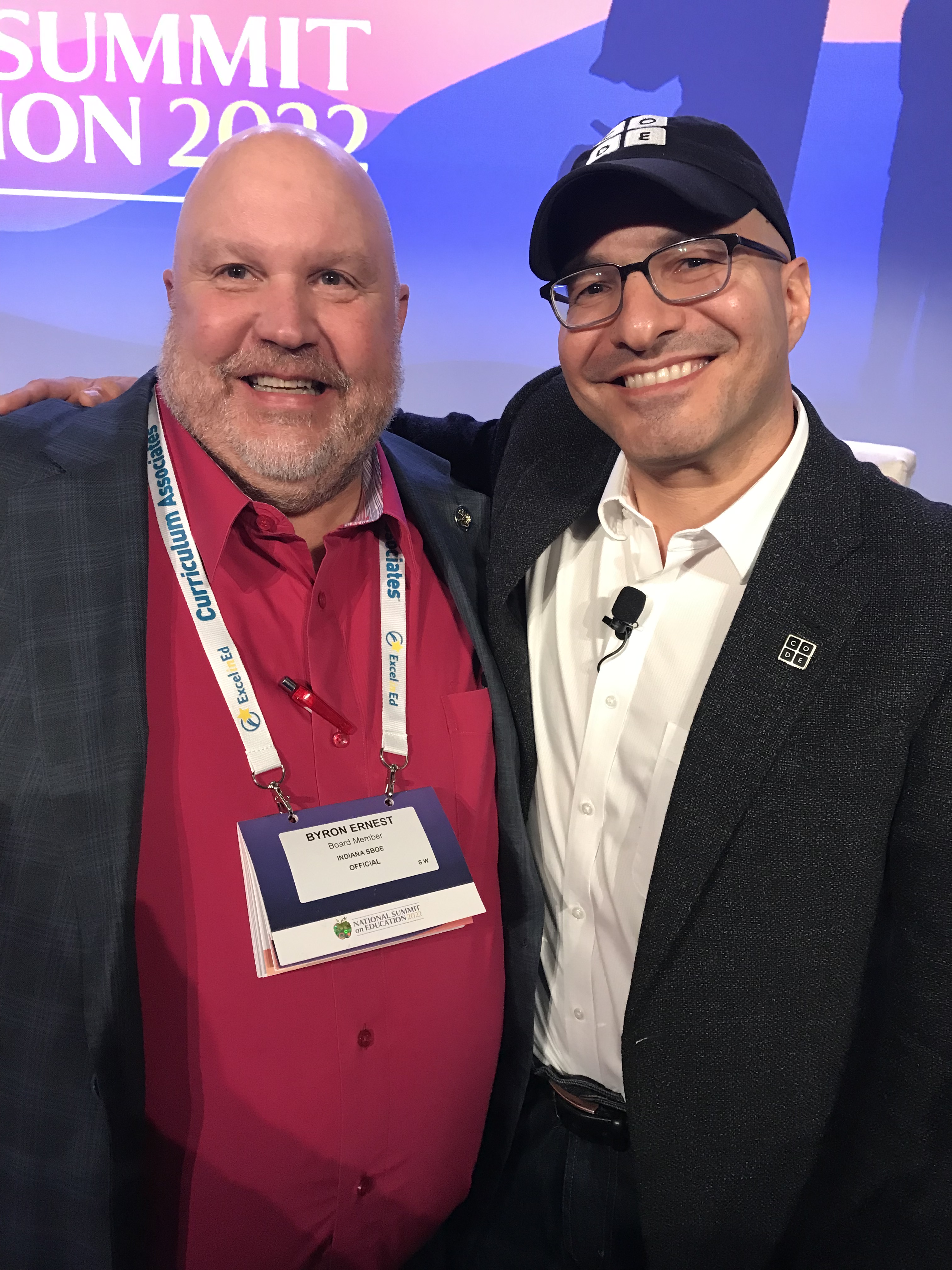
Don’t you just love it when something you advocate a lot is affirmed by someone else? Well, I do! Anyway, yesterday during the keynote lunch panel discussion at the Excelin Ed National Summit on Education 2022 entitled “A 21st-Century Education: Critical Skills for Every Student’s Success” the rest of the attendees at Table 18 kept looking over at me and kept saying things like, “you say that all the time.” And, yes, that was true! I have known one of the keynote panelists, Hadi Partovi, for a long time. Hadi is CEO of the education nonprofit Code.org. I have always known Hadi to be very insightful as what our scholars need to know when continuing the learning journey after high school. Notice I call it a “learning journey” because no matter whether a scholar chooses enrollment, employment, or enlistment, they will be continuing on a learning journey. I am approaching the six decade mark and I am still on an incredible learning journey. In fact, I am not so sure I haven’t learned more in the last year than at any point in my life. How cool is that?
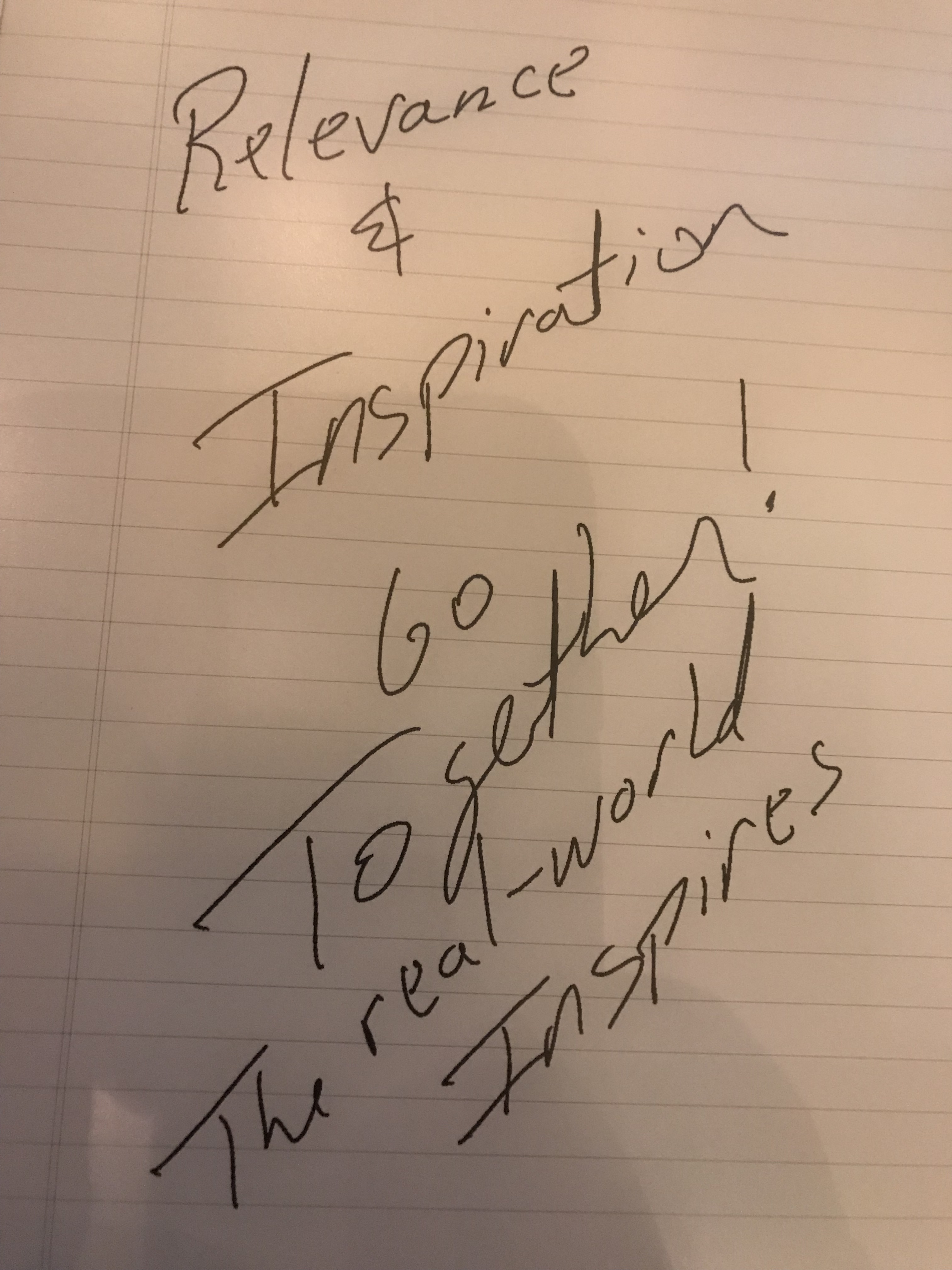
Back to Hadi because some of his comments are the focus here. He said:
- “If kids are excited to learn something, they will go learn it.” – I am thinking TikTok here. I am pretty sure none of our students took a TikTok course in their school.
- “Don’t worry about the order in which we schedule scholars to learn things; more importantly, we need to be inspiring students to go learn.” – Personally, I always advocate that how students are learning is at least as important, if not more important than what they are learning. Learning howto learn is the most important thing we can do in the world today.
- “Relevance and inspiration go together!” – Who knew? Every scholar in every school in the world! They might not say it, although they do, when they say things like, “Why do I need to know this?” If that Hand in the Back of The Room can’t be answered there will be NO inspiration to learn. Trust me, I know because I was that student with his hand up in the back of the room almost six decades ago now.
Bottom-line: we must remember that the real-world inspires. Our students are the expert in their own life in context, no one else is. Our kids are learning in a complex social environment. Our students will inherit the future and we need to do everything we can to have them ready to learn and have the creative designs to solve the future issues.
 Byron's Babbles
leave a comment