Getting Wound Around The Axle
“Learn to Let Go” was the title of Chapter 13 of Mindset Mondays With DTK, by David Taylor-Klaus. Yesterday’s mindset adjustment was about the fact that everything is not always going to go perfect. It also dealt with something I talk about a lot – you have to be bad at something before you can get good at it. DTK taught us that “done” beats “perfect” (p. 117). This is so true, because most perfectionists I know, or have known, have trouble getting things done.
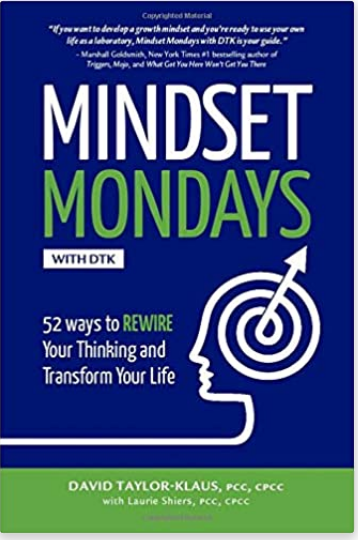
The metaphor used was getting so caught up in every little thing was like your energy getting wound around an axle. As a farm kid, I completely understand this metaphor from experience of twine, wire, hay bale wrap, or any number of items getting wrapped up in an axle, manure spreader beater, mower blade, et cetera. DTK told us, “When you let go of your white-knuckled attachment to something, you have an open hand, an opportunity to pick up something more valuable” (p. 117). This could also be compared to sunk cost fallacy where we continue a behavior or endeavor as a result of previously invested resources (time, money, human capital, effort, et cetera).
There is a great acronym referred to in chapter 13: “GEMO (Good enough, move on)” (p. 116). To me this means knowing when good is good enough, balanced with the critical thinking to determine when and where to invest in better than good. Perfection is an individual ideal. Something that looks perfect to me may not (and probably won’t) look perfect to you and vise versa. Have you ever noticed that a perfectionist can suck every bit of life out of a room where ideation is trying to happen? They are looking for, or think they have found the absolute best solution when the goal is to explore as many options as possible.
Conversely, there was the perfectionist and painter who’s name you will recognize, Claude Monet, who said, ““My life has been nothing but a failure.” He actually destroyed many, would be masterpiece paintings, because he didn’t believe they were perfect. Being a perfectionist is an impossible thing to live up to. A perfectionist’s high bar is a moving target. The better a perfectionist does, the better he or she is supposed to perform. Perfectionism never gives them a break.
Make no mistake, this GEMO deal is not about being mediocre; it is how we keep from continued fiddling (fine-tuning) or getting stuck not seeing the forest for all the trees. We don’t want to let ourselves get so involved that little details or one little thing not going perfect keeps us from living out our dreams or a dream project.
What Are Your Filters?


I promised another post inspired by the Carolina 3D Leadership participants from the activity where I showed the group the picture of a spider web that I had taken in the barn the morning of their gathering to prompt a discussion. The first post was entitled Out of Kilter. This post is about a comment made that the picture has a filter that blocks everything except the spider web, which if you do not like spiders is a bad thing. The picture used for this activity is shown above on the left. The original picture without any filtering is on the right. This was described as a negative filter. Then it was said that we need to remove the negative filter to see the good. Therefore, we need to change the filter we look through at times. This was such an awesome metaphor the group had created.

This also made me think about all the augmented reality filters there are out there right now to use with our images of ourselves to make our Zooms and other interactions more interesting. Honestly, they just annoy me! But, we really do need to think about what our personal filters are. This is particularly true when we are experiencing what David Taylor-Klaus (DTK) describes as “feeling less” (p.109) in Chapter 12 (Choose a New Perspective) of Mindset Mondays With DTK. This would be like the filter only showing the spider web, or an amygdalla hijack, where our brain is seeing the event as a bad thing – real or perceived. The way to shift out of this hijack, as DTK taught us, is to remove the filter as the event is happening so we can see it for what it really is. That spider web doesn’t look near as threatening in the picture on the right. I love DTK’s questions he proposes we ask ourselves for removing filters:
- What am I making up as true?
- Is that actually true? If so, when did it become true?
- What do you know is true?
Now: choose a new perspective, one that serves you and you can honestly believe is true.
DTK’s last thoughts in the chapter on this are very meaningful. He said, “Once you can get beyond your made up beliefs of who you think you are not,creativity emerges. In that more open, receptive space, that’s where ideas are born and connections grow” (p.112). My final thoughts are if you look for things that are wrong with whatever you are looking at you can usually find plenty. After all you are looking through your filter that defines what wrong and right look like. It is easy to find confirmation for any viewpoint, whether negative, positive or neutral. The unfortunate thing for most of us, much of the time, we are unaware that we are looking through our own filter. Therefore, we need to be aware of what filter we are looking through.
Consider using a positive first filter starting today. Life would look much better if we were able to use our very own positive filter to remove the negative and focus on the positive. What are your filters?
Catch Me and Prop Me Up!

In Chapter 11 of Mindset Mondays with DTK, David Taylor-Klaus used the analogy of a fitness class and wearing a weighted vest to discuss “Reclaim Your Brain.” This got me to thinking that athletes are the perfect examples of reclaiming your brain. Let’s use football as the example. When a quarterback throws an interception, they must immediately get their mind back on track and tell themselves the next pass will be caught. Otherwise the mindset of throwing another interception will take over. For the quarterback it becomes about taking a deep breath and the reminder of all the work in practice that has gone into being on the same page that ensures success on the next pass.

Then, during a post-game interview following the New Orleans Saints huge 38-3 win over the Tampa Bay Buccaneers, Drew Brees (Pride of Purdue University and greatest quarterback of all time) reminded us that we also need to be propped up by others to help us see the things that will keep our mindset focused in the the right direction. Here’s an excerpt from Brees’ inspiring comments:
“It was funny, I got hit and I was going down and Terron Armstead caught me and propped me up and said, ‘I just wanted you to see this touchdown.’ So, it’s funny how often the offensive linemen catch that stuff; You know, their blocking, their blocking {and} the minute their guy sees the balls been thrown, the lineman is able to look down the field…So, it’s funny, he caught me, propped me up and said, ‘I just wanted you to see this touchdown.’
Drew Brees is post-game interview
Is that the coolest story or what? It really got me thinking about how many times others have propped me up, even at times when I probably didn’t deserve it. In listening to the interview, this propping up of Drew Brees had a profound impact on him. He was also very complimentary Terron Armstead’s awareness of what was going happening on the whole field. This big picture vision and propping up I’m sure plays a huge role in the team community of the Saints. Armstead saw a need for leadership and seized the moment. I touched on this in Spreading The Wealth. Everyone is a leader and everyone has the responsibility to lead from wherever they are whenever necessary. Period.
Leadership is crucial to setting others up to become successful. By really understanding and paying attention to the needs of those on our teams we can help provide for other to become the “best self” they can be. In our example here, Armstead became a servant leader by being there for Brees. Sometimes we need a cheerleader, other times a champion, and other times a blocker. Through our own curiosity and vision we can help others reflect on their own work and mindset, which helps them be successful the next time around. Don’t think for a minute that Drew Brees won’t be thinking about being propped up and watching that touchdown for some time to come. And, that seeing that touchdown first hand while being propped up hasn’t added to a positive mindset. Success breeds success and the more we learn from what others do right, the more we all grow.
What have great leaders in your life done lately to prop you up and help you reclaim your brain with the right mindset?
Leading With Artisanship

It’s funny to me how reading something can make me think of something that I haven’t thought about, at least consciously, for a while. When reading Lesson 10, “Surrender Overthinking” in Mindset Mondays with DTK by David Taylor-Klaus (DTK), I came across this statement:
“I don’t have a fantasy of being an artist…not in terms of painting, or sculpture, or any of the expressive arts. I do want to be an artist in how I serve people, and the work that I do in the world. If I’m overthinking, my art is compromised and my creative energy is spent spinning my wheels, or ‘catastrophizing forward’.”
~ David Taylor-Klause, 2020, Mindset Mondays with DTK, p. 98.

This got me to thinking about the work of Patricia Pitcher. Her work of studying leaders was very influential and I consider her to have been very influential on my leadership development. Her books The Drama of Leadership: Artists, Craftmen, and Technocrats and the Power Struggle That Shapes Organizations and Societies (1997) and Artists, Craftsmen, and Technocrats: The Dreams, Realities, and Illusions of Leadership (1997, 2nd edition) easily make my top five list of influential books. These books make the top of the list because they helped me understand myself as an artistic leader and be comfortable with that. Pitcher saw the artistic leader as an inspiring and visionary risk-taker, guided by an intuitive sense of the future. Now, unlike DTK who has no interest in being an expressive artist, I really want to be a rock star, but I just don’t have any talent. I do find great inspiration from studying rock bands, the inspiration for songs, and the innovative ideas they come up with.
“I am trying to think out a short story. I’ve got the closing sentence of it all arranged and it is good and strong, but I haven’t got any of the rest of the story yet.”
~ Mark Twain
The technocrat, the category which many leaders fit, is the nemesis of the artist. They are organized box checkers who use the term “teamwork” a lot, but operate with a “my way or the doorway” and “paint-by-numbers” mentality. The technocrat will be fearful of making imaginative decision and before any ideas can be thought through is already trying to fit the ideas in a box and understand how to manage it. Boy am I glad I did not end up a technocrat – I dream too much and I’ve got too much imagination for that. As an artist I do tend to overthink things, but usually not looking for problems. This was the point of DTK’s Lesson 10; we should not focus too much on what could go wrong. We need to anticipate obstacles and opportunities, but not let them hinder moving forward.
I learned from Pitcher that as an artist I will, at times, have vague, indefinable, long-term visions that get clarified by action and remaining open to new insights. Artists know where they are going, but sometimes it’s vague and more a trip that destination. This to me would be one way to keep from overthinking things – focus on the journey more than the destination. It’s why I choose to inspire with metaphors rather than with detailed descriptions of the future. Think about this:
“I claim that the visions of the visionary [artist] leader are no different in form or origin than those of an artist. If you ask a great painter what he or she’s going to paint next, it’s a rare one who will have a detailed answer and if he or she does, I doubt he or she satisfies the definition of great.“
~ Patricia Pitcher, 1997, The Drama of Leadership, kindle location 196 of 2456.
Research tells us that the best artists stay radically open as they work on a canvas; there is a continuous interaction between a vague vision and the concrete act of painting. In my conversations with the artists and song writers in rock bands I have found the same thing. For example, a riff gets written and suddenly an entire song is born. It’s why we artist leaders live for the metaphor. I am always looking for intersectional creativity – the intersection of different fields, ideas, people, and cultures. DTK told us to “Take this moment to consider that there are endless possibilities, opportunities, and forces working on your behalf” (p. 98). We need, as Pitcher taught us, to let our intuitive sense of the future take over. So as we take to our leadership canvas, let’s open our minds to creativity, ideas, and opportunities, but not overthink all that could go wrong.
Do Not Look Outside Yourself

Too often we wait on others to do for us, our communities, or the world what we should be doing for ourselves. In other words we need to step up and be the leaders that we have, for so long, been hoping for. Our choices do not, and have never just affected ourselves. I am reminded of what I have heard Gene Simmons say of what drove him during the founding years of KISS; he wanted KISS to be the band he’d never seen. Mission accomplished! We need to become the leader we’ve been hoping for.

In chapter nine this week, entitled “Take the Lead“ in Mindset Mondays with DTK, the Hopi Elder’s Prophecy was referenced. DTK quoted the Hopi elders, “we are the one we’ve been waiting for.” This caught my attention because I spent some time in the late ‘80s learning about the Hopi in Arizona. The Hopi are a Native American tribe located in northeast Arizona. They are believed to have one of the oldest living cultures in the world. They are referred to as “the oldest of people” by other Native American nations. It was incredible to visit and learn in the Hopi lands.
A Hopi Elder’s Prophecy
“You have been telling the people that this is the Eleventh Hour, now you must go back and tell the people that this is the Hour. And there are things to be considered . . .
Where are you living?
What are you doing?
What are your relationships?
Are you in right relation?
Where is your water?
Know your garden.
It is time to speak your Truth.
Create your community.
Be good to each other.
And do not look outside yourself for the leader.”Then he clasped his hands together, smiled, and said, “This could be a good time!”
“There is a river flowing now very fast. It is so great and swift that there are those who will be afraid. They will try to hold on to the shore. They will feel they are torn apart and will suffer greatly.
“Know the river has its destination. The elders say we must let go of the shore, push off into the middle of the river, keep our eyes open, and our heads above water. And I say, see who is in there with you and celebrate. At this time in history, we are to take nothing personally, Least of all ourselves. For the moment that we do, our spiritual growth and journey comes to a halt.
“The time for the lone wolf is over. Gather yourselves! Banish the word struggle from your attitude and your vocabulary. All that we do now must be done in a sacred manner and in celebration.
“We are the ones we’ve been waiting for.”
Hopi Elders’ Prophecy, June 8, 2000
I’m glad I took the time to look up the Hopi Elder’s Prophecy and read and study it in its entirety because I found another stanza that jumped out at me: “And do not look outside yourself for the leader.” This is a call to be the leaders that we have, for so long, been hoping for. Our choices affect so many more than just ourselves. True leaders lead from inspiration and purpose. We need to seek guidance from within, rather than from without. And share with others in the spirit of servant leadership. As DTK told us, “Leadership starts with you. It’s time to take the lead in your own development” (p. 93). If we are to do this we must take DTK’s advice and lead ourselves first so we can grow to then lead others. We can become the one’s we’ve been waiting for.
Take Off The Mask & Cut Out Those Frustrations
Ever trip over yourself? David Taylor-Klaus (DTK) reminded us this week in Chapter 7 of Mindset Mondays with DTK to “Get Out of Your Own Way.” We need to integrate the brain and body by using awareness and intention.
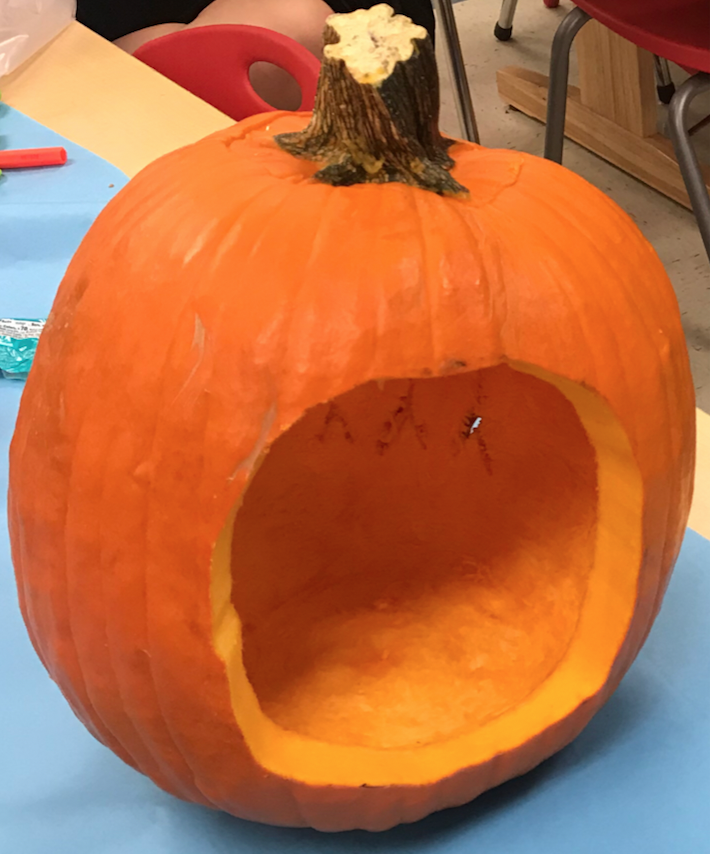
Interestingly, this weekend I did an activity for a leadership training using pumpkins. Participants had to carve their pumpkin using this prompt: “Truths that frustrate you.” This gave participants a chance to ponder where those frustrations come from. Many times those frustrations come from ourselves. We become frustrated when our decisions are not aligned with our core values and purpose.
We need to take time to take an introspective look at ourselves and listen to what both our mind and body are telling us. Then trust what we hear and not sabotage ourselves. Sometimes if we took time to name our frustrations (or carve them into a pumpkin) it gives us the chance to reflect on and even remove the mask that those frustrations form.
As Robbin Jorgensen did in DTK’s story, we can change and cut the frustrations out (pun intended) and remove the mask. Jorgensen’s Women Igniting Change movement is giving women the power to take action around the world. By taking off her own mask she was able to reflect, listen to herself deeply and then trust her own decisions.
What’s keeping you from making the impact you want to make in the world?
Safety Nets Instead Of Safety Barriers

Funny that David Taylor-Klaus (DTK) talked of becoming a grown-up with our fully formed prefrontal cortex, giving us more rational and limiting beliefs. Funny because I had someone (who I have worked with and have a great relationship with), in a loving way, describe me as having the mindset of an eighth grader this past week. Well, I resemble that remark. Grown-up, I am not; and proud of it.
DTK described some of his childhood “rope-in-the-tree” swinging antics that landed him with a broken nose and shattered wrist. His last statement about the story was, “Sadly, my parents forbade any future effort to test my theory.” Probably no one else reading DTK’s book would highlight that sentence but me. But, there is such a fine line between protecting us, which his parents were very well, and beginning to limit our beliefs with, so called, “rationale thinking.”
This is a pretty extreme example, but as an educational leader I think about this a lot. What’s the correct balance of risk-taking and over-protection? What might DTK have learned if after he healed, he had retested his rope swinging theory again? I am not suggesting that we put our children, or ourselves for that matter in harms way, but I am a believer that we cannot live risk-free. What if Thomas Edison had quit risking failure after electric light bulb prototype 9,999?

For me, it’s about the “what if?” I would rather admit failure than having to explain “what if?” DTK in Chapter 6 of Mindset Mondays With DTK told us we must not let ourselves become victims. We have clear choices and clear steps to make a shift in believing in ourselves. We need an “I can” mindset giving us a belief that we are strong and capable. DTK told us, “Who we believe we are matters.” It is so important that we allow for risk with our children and all we serve. Again, I am not advocating putting anyone in harms way, but finding a way to be a safety net. That metaphorical, or maybe even real one, looks like allowing for risk, but allowing for failure so that learning can happen.
To take those risks it is very important that we make sure that we, our children, and those we serve hear “I can” instead of “I can’t.” We need to be safety nets and not safety barriers.
Explicitly Rethinking Your Leadership

There are so many great pieces of information in today’s chapter in Mindset Mondays by David Taylor-Klaus (DTK). The lesson (#5) was entitled “Rethink Your Thinking.” I have a school leader I am mentoring for a client right now who I just had a conversation about this very topic with. In fact, I actually said, “You need to rethink how you are doing this to get it streamlined.” He was involving himself in every single thing that happened. Every single thing that is happening in the school has his fingerprints on it. Result: the rest of the team is not using their expertise to the fullest, and he is so bogged down, he can’t get it all done. As DTK pointed out, “Delegating the activities and tasks that drain energy frees you up for activities that fuel your growth, serve your clients [in this case the teachers and students], and deepen your impact.” We need to think about and recognize how the highest and best use of our time can be most powerfully spent.
This will be easy to solve for my men-tee. He already believes in distributed leadership and a flattened hierarchy, so all he needs to do is “declare explicitly” empowerment to others. Notice my terminology here: “declare explicitly.” I have found this to be a step that gets left out. Sometimes as leaders we need to make sure and make the implicit, explicit. In order to rethink his thinking and go down the much more improved and streamlined path, my men-tee must make sure the teachers know explicitly what needs to have his fingerprints on and what the teachers can just do. The teachers are at street-level working with our students and are in the best position to make many decisions and solve issues because this is where the data is created.
Impossibility To Possibility Thinking
This week’s lesson in Mindset Mondays With DTK was entitled “Challenge What’s Impossible.” I loved David Taylor-Klaus‘ story of early in life deciding he would not become a father because he had come to believe in his high school Human Physiology and Anatomy class (with his favorite teacher, Mrs. Southworth, by the way) that there were just too many things that could go wrong in human development – it was just too high a risk. Bottom-line, he got past this “impossibility thinking” and has three healthy children who completely changed his life. David told us this is proof that the impossible is possible.
As I read this my mind went to how everyone, 192 days ago when the World Health Organization declared us in a Global Pandemic, went “owe my gosh, there is no way we will be able to read facial expressions, body language, or build relationships using virtual options for connecting. In the book The Hidden Brain: How Our Unconscious Minds Elect Presidents, Control Markets, Wage Wars, and Save Our Lives, author Shankar Vedantam taught us that when people lose the ability to read facial expressions, they also lose the ability to make quick, unconscious judgements about people and scenarios. Vedantam also discussed research from Rick van Baaran done in an Applebee’s in the Dutch town of Heerlen that showed a statistical significance in size of tip if the server repeated the order back exes actly as ordered. This research showed how people respond positively when they feel in sync with each other.
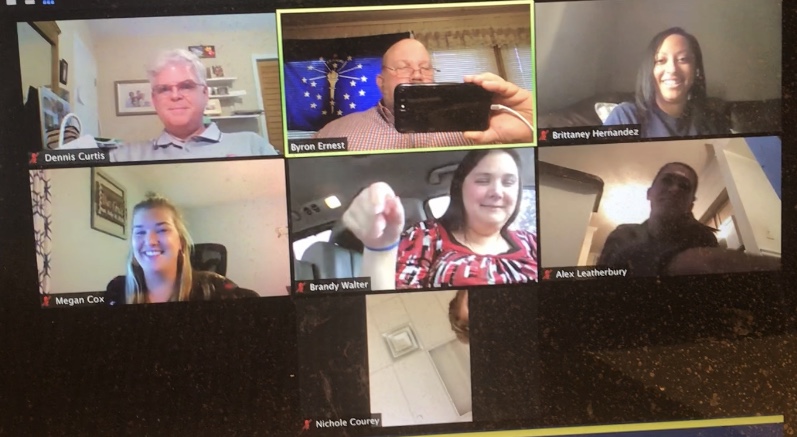
Well, let me tell you, believe we have made the impossible possible using virtual technology to connect. I’m not so sure I am not better and reading faces on Zoom than I was in person. In fact, I stopped a professional development I was doing to ask two participants if they were texting each other. They said “yes” and wanted to know how I knew that (it freaked them out a little). I explained that I was watching there expressions and could tell when one got the text from the other and smiled/laughed and then the other reacted to that reaction. It was not a problem that they were texting because actually they were talking about the content of the webinar, but I needed to see if my skills on reading people had improved that much. Additionally, I believe I am able to uses names (because they are attached to the video of the person on most all virtual connection platforms. So, while being in-person is still my preferred way to connect, at least for now, I, for one, and I know others who would agree, we can make the impossibility of building relationships, reading people, and getting in sync with each other using virtual technology to connect possible.
The lesson here: Way too often we quickly decide something is impossible and then live as if it is absolutely true. David Taylor-Klaus taught us in this fourth chapter that “Labeling something as ‘impossible’ is a close cousin to giving up all together” (p. 60). By believing we can make the seemingly impossible possible, we can create a completely different future for ourselves and those we serve.
Belief Is The Price Of Admission
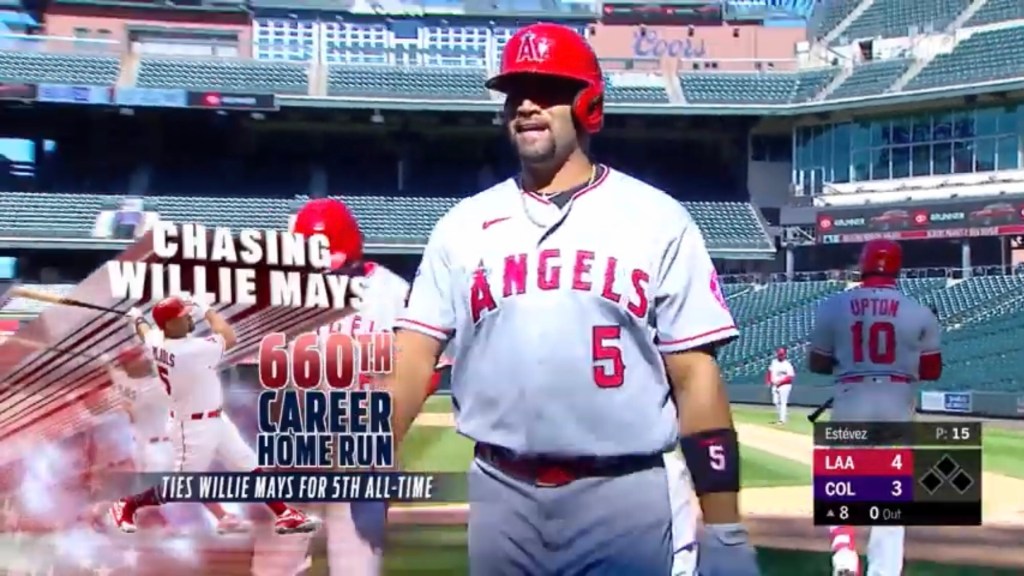
I love baseball. Something exciting happens every day and this past week was a great week for the game of baseball. Albert Pujols hit is 660th career home run this past Sunday, September 13th. This tied him with Willie Mays. That same day, Alec Mills threw a no-hitter for the Chicago Cubs. That was the first of his career. Monday, in Lesson 3 of the great book Mindset Mondays With DTK, by David Taylor-Klaus, which contains 52 weekly chapters designed to be done on Mondays, the lesson was entitled “Believe in the Impossible.” The lesson was about Roger Bannister breaking the four-minute mile in 1954. Everyone told him the four-minute mark could not be broken, but this did not stop him. He believed it could be done and that he was the person to do it. Bannister even broke the traditional way of training (how it’s always been done) and came up with his own, unconventional, way of training.
“Just because they say it’s impossible doesn’t mean you can’t do it.” ~ Roger Bannister
This made me think about professional baseball players and how impossible being good enough to break records or pitch no-hitters must feel at times. After hitting his 660th home run Pujols said, “To be able to have my name in the sentence with Willie Mays is unbelievable,” Pujols said. “I’m really humbled.” But really, Albert Pujols does believe he can do it. He tells us, “There is no time to fool around when you practice. Every drill must have a purpose. I try to never get away from that, habits are important.” This tells us, just as David Taylor-Klaus pointed out, that our belief in our ability to do something matters greatly. If we don’t believe something is possible, nothing else really matters.
I’m a really smart player. If you tell me something, I get it quickly. If there is something wrong with my hitting, tell me what’s wrong and I’ll pick it up right away. That’s the best thing I have going for me, my ability to listen to a coach and fix what I’m doing wrong. ~ Albert Pujols
Baseball, perhaps more than any other sport, is about heroes. Albert Pujols certainly has a hero’s story. That hero’s story starts like every other baseball hero story; with the player believing in himself – really believing in himself. This is why all of us imagine ourselves as pro baseball players, but only a few actually make it happen. It is important for us to recognize our ability to achieve goals. How we view ourselves, how we measure our value, how we assess our potential, and how we determine our worth all combine to create the life we will live. Are you paying the price for admission? Belief.
 Byron's Babbles
1 comment