Big Dreams

I am reading the incredible novel, The Heaven and Earth Grocery Store by James McBride right now. This book is about a diverse population living side by side and their dreams, big ambitions, and heartbreaks. A line in the book that caused me to pause and reflect today was, “For a guy who dreams big you think small.” I had never thought about the need for congruency between dreams and thought but there needs to be. This phrase suggested that the person who had the big dreams or aspirations was not thinking in a way that aligned with those goals. It also suggested that the person was not being proactive or taking the necessary steps to achieve their dreams, despite having ambitious aspirations.

This reminded me that we must think outside of our current limitations and take bold actions to make our dreams a reality. Our dreams and thoughts must be congruent. As leaders we need to remember this and help those we serve who dream big think big to remember to set specific, achievable goals that align with their aspirations. By breaking down our big dreams into smaller, manageable steps, we can see progress and stay motivated.
Additionally, we must provide support, guidance, and resources to help individuals develop the necessary skills and mindset to think and act on a larger scale. Encouraging others to surround themselves with like-minded individuals and seek out mentors can also inspire them to think bigger and reach their full potential.
Relinquishing One Dream For Another

Just the other day I wrote the post No Fork Is Without Twists, about the fact that the trails we choose aren’t always smooth and there will be twists and turns in life. This week I started reading another great book, Red Dress In Black and White by Elliot Ackerman. I can already tell this is going to be one of those books that causes a great deal of reflection and pondering – just what I love. One of the lines I read yesterday was that one of the characters had “relinquished one dream for another.” We don’t really know yet in this novel whether that is a good thing or bad, but then I got to thinking about how it can be both good and bad. We all have those dreams and hopes for our future. We all have those things we are passionate about and want to do with our lives. Those dreams help give our lives purpose and direction. Sometimes dreams change, though, right?
“Many of life’s failures are people who did not realise how close they were to success when they gave up.” ~ Thomas Edison

Sometimes, however, those dreams are imposed on us by our parents, partners, or spouses. Then, like both Catherine and Murat in Red Dress In Black and White there becomes a relinquishing of one dream for another. We have been taught from a young age to never give up, but in a society that links the giving up on a dream or goal as failure, we also need to understand how to make adjustments to unattainable goals. Please don’t think I have become a defeatist. I just also believe we must be real and also consider how to think through what psychologists call “goal adjustment capacity.” Check this out:
“…the successful attainment of desired goals facilitates subjective well-being and physical health (Bandura, 1997; Carver & Scheier, 1981, 1998; Emmons, 1986, Heckhausen, Wrosch, & Schulz, 2010). This is not surprising as goals are the building blocks for the accomplishment of a variety of developmental tasks and their attainment is likely to foster long-term patterns of successful development (Heckhausen, 1999; Ryff, 1989). At times, however, it is impossible for a person to make further progress towards an important goal because the goal itself is not attainable.”
Goal Adjustment Capacities, Subjective Well-Being, and Physical Health
Again, I am not advocating for giving up on dreams and goals, but want us to also be able to recognize the times where adjustments may be necessary. Or, we need to be able to recognize when relinquishing one dream for another could be a good thing or bad.
No Fork Is Without Twists

In my post Trails Always Offer Choices, I predicted we would probably be brought back to the quote that was the title of that post somewhere in the last half of the book and we were a couple of times and then again at the very end of the book. The quote first came about half way through Book 4 of Threads West An American Saga: Moccasin Track by Reid Lance Rosenthal. This series is absolutely incredible. I have now finished the first four books and gave them all five stars. I cannot wait for books 5, 6, and 7 to come out. The books are based upon the threads of the lives of characters from very different places, cultures, beliefs, and backgrounds that become weaved together. Interestingly, my becoming inspired by these books happened by chance, or fate, when I met Reid at Cowboy Christmas while I was in Las Vegas doing work for a client. We had a great visit, I ended up with signed copies of the first four books and the rest is history. The weaving of threads being brought together had begun.

Now, back to trails always offering choices. When losing one possible trail to an avalanche, Reuben told Johannes, “There may be no choice in trails but trails always offer choices.” After they parted Johannes said to himself, “Trails always offer choices. What did he mean by that?” Then the last sentences of the book: “There may be no choice trails,” his [Reuben] friend [Johannes] had warned, “but trails always offer choices.” Reuben then says to himself, “Ah, Viking, you forgot to mention choice is sometimes out of one’s hands. No trail is smooth, and no fork is without twists.” These books have reminded me how heavy our choices weigh on us. I am also reminded that sometimes choices really are sometimes out of our hands. Sometimes choices are life-changing. Each path we take, just like the characters in this saga, will send us on a completely different trajectory.
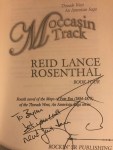
One thing that I have contemplated while reading the first four books in the series is the thought that many of the choices made by the characters were what was best for them, not what might be considered to be the “right” choice. Many times we don’t allow ourselves to make decisions based on “what’s best for me.” I wonder if we shouldn’t try to put ourselves in the frame of mind more often. Wouldn’t this allow us to be our authentic selves and follow our dreams?
The Second Generation

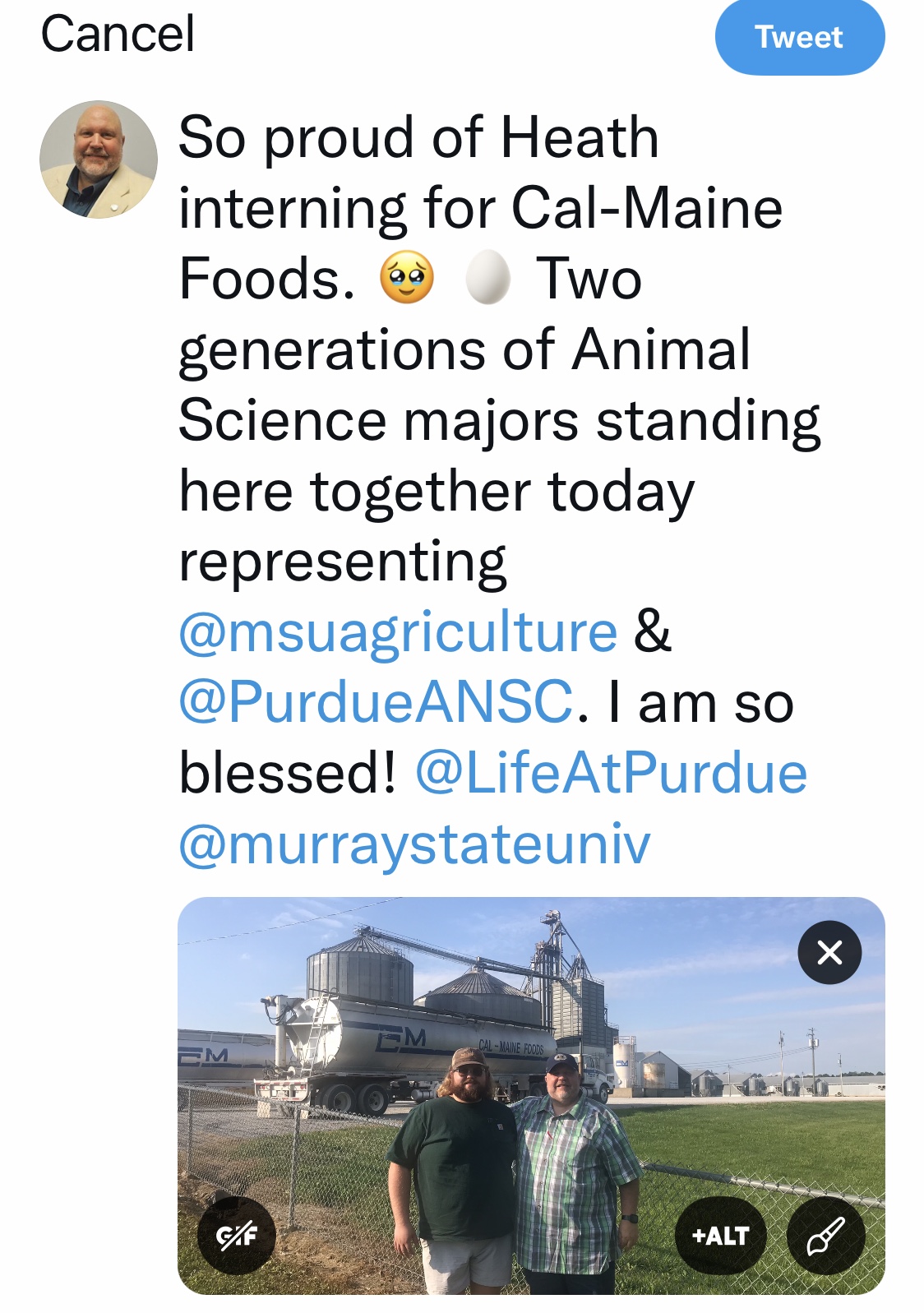
Everyone should feel satisfied and proud of the career they want to pursue. Our goal has always been for our son to make peace with his post-secondary education and career goals and, first and foremost, make himself proud. There has been quite a lot of research done studying the impact parents have on their children’s educational and career goals. I am really glad and proud of the work I have done in the policy arena to have career exploration be something that happens much earlier than the end of high school. Our young scholars need to be preparing for the next chapter of life—whether that’s higher education, industry training, directly into the workforce or another path much earlier. I also believe that parents have an influence, either positive or negative, on this. I began reflecting on this yesterday when standing outside my son’s summer internship at Cal-Maine Foods. I could not go in for bio-security reasons, but I was so proud that there stood two generations of Animal Science majors at two different universities – Purdue University and Murray State University. Check out our picture and here is the tweet I did in the moment:
I asked Heath if he ever felt any pressure from me to be an animal science major. He answered an emphatic “no.” He did say that I had set an example because of how proud I was of having gone to Purdue and received degrees in both Animal Science and Agricultural Education. He also knows the story well of how I ended up being an agriculture science teacher and working in education my entire career. If you don’t know that story, click here. Heath also talked about all the experiences growing up on a working farm gave him. Home is where thinking ahead, dreaming big and setting goals can become normalized activities and allow all those skills to be available to our children when they come to the forks in the road. The earlier the conversations start, the better prepared they’ll be to make the best choice when that moment arrives. It’s not about applying pressure, but about being a model of making life choices that match passions and purpose.
Living Full-Out

There was a lot to digest in the four pages of Chapter 46, “Don’t Wait to Live” in Mindset Mondays with DTKby David Taylor-Klaus (DTK). If I was forced to rank the weekly chapter lessons thus far, this would be one of my favorites. DTK told us that “People regretted dying with their songs still inside them” (p. 318). He went on to say, “…the only thing keeping us from living full-out is stuff we make up” (p. 319). I’m hoping both of those comments make you ponder and reflect as much as they did me. The ideas of happiness and regret are things I blog about often and discuss in leadership development workshops. In fact, I just dug into “anticipatory regret” and “existential regret” in What Will You Regret When You Are 80 Years Old? And, one of my favorite posts on happiness is Finding Happiness Right Where We Are.

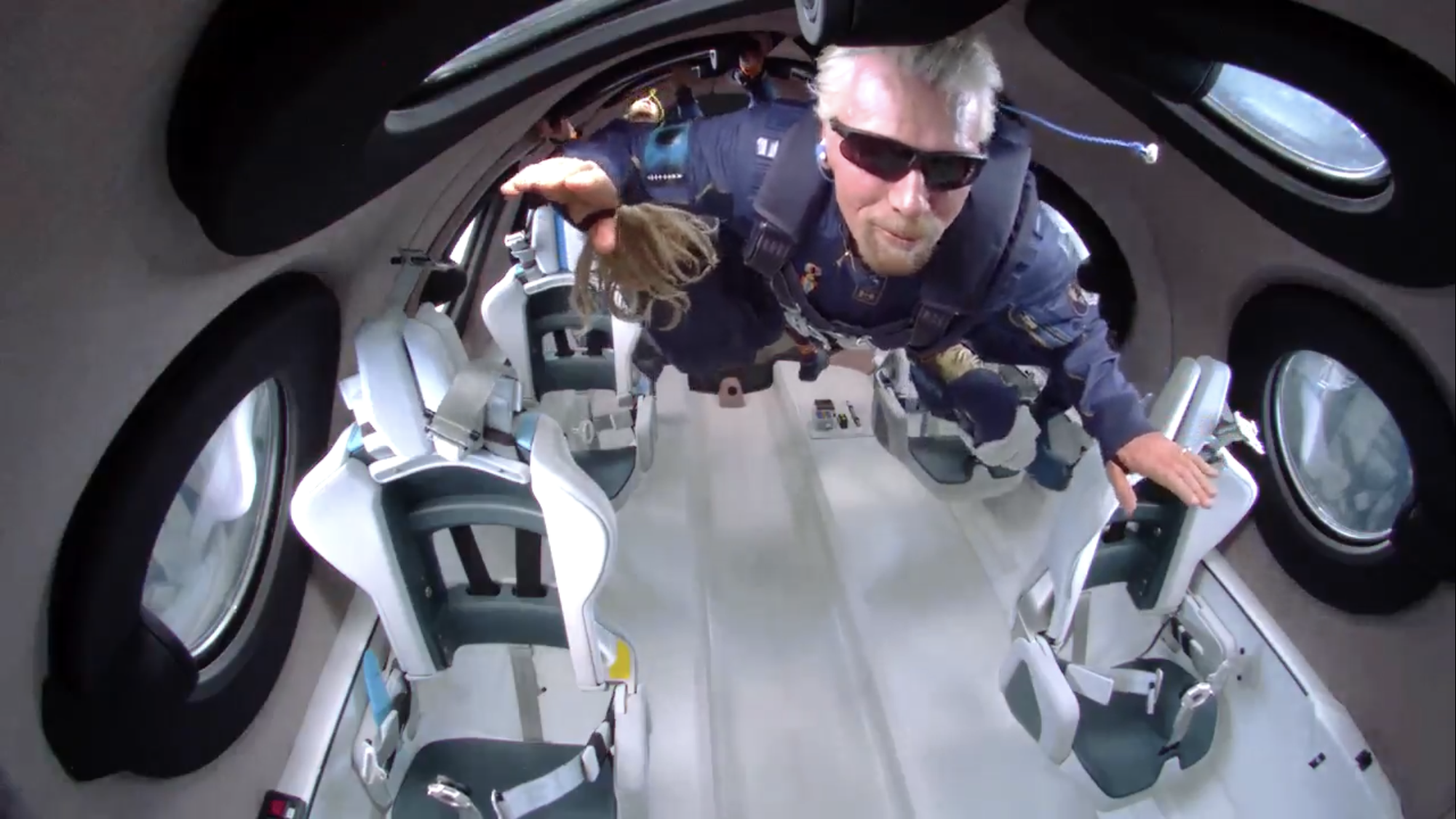
After I read chapter 46 yesterday, I was reading about and watching video of Richard Branson taking his ride into suborbital space aboard a rocket he helped fund. He was the first to do this. On LinkedIn he said, “There are no words to describe the feeling. This is space travel. This is a dream turned reality.” As a student of the ultimate role model dreamer and innovator, Richard Branson, I am pretty sure the only song that will be left in him when he dies is whatever wild and crazy idea(s) he is working on at the time. I’m pretty sure there will be no regrets – except maybe to have done even more. He is the role model for showing us how to turn dreams into reality. This first fully crewed flight of Virgin Galactic’s VSS Unity space plane was a major milestone in the commercial space industry.
Yesterday, I tweeted, “Congratulations @richardbranson and @virgingalactic! Thanks for always modeling being a trailblazer for us.” This flight was such a huge example of “living full-out.” The stuff we do on a daily basis may not be as huge as going to outer space, but just as important to those we serve and ourselves. I’ll close with this drop the mic moment and quote from Branson while in outer space that says it all, “I was once a child with a dream looking up to the stars. Now I’m an adult in a spaceship looking down to our beautiful Earth. To the next generation of dreamers: if we can do this, just imagine what you can do.” 🎤
Living Every Day Like It Is Someday

Yesterday evening after the last person had logged off from a very fun and engaging leadership development I facilitated, I sat down to decompress and flipped on the television. I landed on B Positive and the scene was Drew (Thomas Middleditch) on a date and they were asking each other what they would do right now if it was someday. In other words, if you could do anything today that you have put off till someday, what would you do? Wow, what a question. I really pondered on this. What would your answer be?
We need to believe in our dreams and take action. Also, it is important to surround ourselves with beauty, with the life we aspire to have, the people we care about, the places you want to visit, and not put off the things we want to do someday. We should refuse to live in fear, refuse to not feel love, to not show tolerance, and to not help people in need. I refuse not to give and refuse to be someone other than the person I am. Let’s all work to make our dreams come true, no matter how simple they are. Live every day like it is someday.
Keep Something On The To-Do List
 “The thing about life is you always need to keep something on the to-do list.” Alan Shore said this to Denny Crane while sitting on the balcony having cigars and Scotch at the end of an episode of Boston Legal. In this age of instant gratification it was a great reminder that we need things to look forward to and to be working toward. It’s important to enjoy working toward our dreams. Having long term items on our to-do lists gives us time to explore.
 The scene in Boston Legal itself holds the lesson of friendship, relationships, and getting to know those we encounter along the way. These people may be peers or mentors, and we need to make the most of our time together.
Additionally, we need to be open to new things and always give ourselves room to change course if necessary. If we are open to new possibilities, we will be rewarded handsomely. Unexpected discoveries are bound to come our way, especially if we keep things on our list we want to do.
Are you working toward a dream on your to-do list? What are you doing every day to help you enjoy working toward that dream?
 Byron's Babbles
leave a comment