The Seven Deadly Sins

Those that follow my blog know that I love the band, Deadlands. They created an incredible EP titled, SEVEN. The EP is about the seven deadly sins. There are seven songs that exquisitely deal with the seven sins. They inspired me to take a deep dive into each of the deadly sins and study Kasey Karlsen’s take on the sins through her lyrics. She is very talented at creating the stories of the sins and the lessons we can learn. I blogged about each of the sins based on the songs.
This was such a great study that I wanted to provide a place for you all to access them in one place. Here they are:
- Pride – The Unpopular Fault
- Greed Is An Exception
- Gluttony – Our Self-Inflicted Catacombs
- Breaking the Chains of Sloth: Building Momentum and Staying Disciplined for Long-Term Success
- Beyond Lust: The Illusive Dream of Perfection and the Tragic Beauty of Chasing Illusions
- Understanding Envy: The Deep Longing to Mirror Others’ Achievements and Qualities
- Under the Weight of Wrath: Building Foundations in a House of Cards
We need to be aware of how susceptible we are to the dark power of our own disordered desires. Deadlands giving us this collection as a reminder of sin as self-destructive habit that shapes our lives is very powerful. As humans we must recognize the struggle between good and evil.
This all reminds me of what it says in Proverbs:
For your ways are in full view of the Lord, and he examines all your paths.
The evil deeds of the wicked ensnare them; the cords of their sins hold them fast.
For lack of discipline they will die, led astray by their own great folly.
(5:21–23 NIV)
The 23rd verse here is very powerful. Kasey’s lyrics in the seven songs remind us to be disciplined and not let our folly keep us from being a positive influence on others.
Under the Weight of Wrath: Building Foundations in a House of Cards

This is my seventh post addressing the seven deadly sins. I was inspired to take this journey of learning by the great band, Deadlands. The lyrics that Kasey Karlsen wrote for each of the sins are amazing. In this last song, “House of Cards”, dealing with the deadly sin of wrath, I also have to give a shout out to CJ Arey, who writes the music. When I listen to the notes, I actually hear wrath. When I listen to the song and study the lyrics, I hear a focus is on the fragile nature of constructed facades and the importance of authenticity and resilience. It emphasizes vulnerability and the fleeting stability of appearances. If you think about it, wrath makes us very fragile – probably why it is one of the seven deadly sins.
The themes of anger or frustration come through loud and clear as part of the broader idea that superficial structures can easily break down when faced with intense emotions. When I think about the fragile structure of a house of cards that is insubstantial or easily destroyed, I am drawn to the phrase in the song, “I see right through your paper soul (paper soul)”. To me this suggests that Kasey and CJ perceive the villain in the song as being superficial, fragile, or insubstantial—like a paper soul. It implies that beneath their exterior, there’s a lack of genuine depth or authenticity, and that their emotional or spiritual core is easily torn or broken. The repetition of “paper soul” emphasizes its fragility, highlighting that what might appear to be something substantial isn’t truly resilient or real. Thus, if we operate like that we are like the metaphorical house of cards and easily destroyed. Overall, it’s an incredibly poetic way of expressing that a person’s true self or inner essence is transparent and potentially fragile.
The metaphor of a house of cards so beautifully relates to wrath. Wrath, like a house of cards, can appear controlled and manageable on the surface, but underneath, it’s fragile and easily toppled. When we become filled with intense anger, their emotional stability may rest on delicate foundations—just like a carefully balanced stack of cards. A slight provocation or unexpected event can cause it to collapse suddenly, revealing how volatile and unstable wrath truly is. This metaphor highlights the potential for destruction and the importance of managing anger before it causes everything to come crashing down.
Understanding Envy: The Deep Longing to Mirror Others’ Achievements and Qualities
I must say as I begin this post about a sixth of the seven deadly sins that I am in absolute awe of the great band, Deadlands, taking this project on. The lyrics that Kasey Karlsen has written are amazing, spot on, and thought-provoking. As I listened over and over to their song about envy, “Kundalini”, I pondered and studied envy more deeply. I first pondered why envy is a deadly sin and not jealousy or self-interest.
Envy is considered a deadly sin because it involves a deep, resentful longing for what others have, often leading to destructive feelings and actions that can harm both oneself and others. It fuels bitterness, greed, and a desire to undermine or take away what belongs to someone else, ultimately corrupting the individual’s soul and relationships.
Jealousy, on the other hand, is usually seen as a more immediate emotional response—an uneasy feeling of insecurity or fear of losing something or someone. While it can also be harmful if left unchecked, jealousy is generally regarded as a temporary emotion rather than a persistent vice.
The key difference lies in their nature: envy involves a longing rooted in resentment and covetousness, making it a more dangerous and corrosive attitude, whereas jealousy is often a transient feeling that can be managed or understood.
In Deadland’s song, “Kundalini,” the line “I’m my own rival” suggests that our biggest challenge in combating envy is often ourselves. Instead of comparing ourselves to others and feeling envious, we can focus on personal growth and self-improvement. Recognizing that our primary competition is our own potential encourages us to set internal goals, celebrate our progress, and cultivate gratitude for what we have. By shifting the focus inward, we reduce the power of envy and foster a healthier, more confident mindset. Ultimately, being your own rival means striving to be better than your past self, rather than constantly measuring against others.
The lyrics “Don’t care if it’s blasphemy; I’ll take your legacy; Rip the scales from my face, put myself in your place” are a powerful expression of our envy and desire to transcend our limitations by directly experiencing what another has. These lines remind us of the deep yearning to embody or possess what belongs to someone else—whether their achievements, identity, power, or inner qualities—by any means necessary, even if it means crossing moral lines. It captures a sense of intense desire to bridge the gap between oneself and the admired individual, driven by envy and aspiration.
Beyond Lust: The Illusive Dream of Perfection and the Tragic Beauty of Chasing Illusions

I love C. S. Lewis’s description of lust in The Great Divorce where he said, “Lust is a poor, weak, whimpering, whispering thing compared with that richness and energy of desire which will arise when lust has been killed.” Generally, we think of lust primarily pertaining to an intense desire for sexual pleasure, whereas the other deadly sin of greed involves an insatiable craving for material wealth, and the deadly sin of envy is characterized by longing for what others possess. Each of these vices targets different aspects of human fulfillment—physical, material, or social—though they all stem from a similar underlying struggle with self-control and moderation.
I do believe lust goes beyond just sexual pleasure. An example of this can be found in Prince Caspian (The Chronicles of Narnia) where the Telmarines, who have overtaken Narnia, often display a lust for power and status, which could be seen as a form of luxuria, an overreach or excessive desire beyond reasonable bounds. Lewis’s focus in the story tends to emphasize virtues like humility, bravery, and faith instead of indulgence or lust. Lust encompasses a strong yearning for any pleasurable experience or material gain. In many contexts, lust can refer to an insatiable desire for wealth, power, or other worldly pleasures beyond what is necessary or moderate.
As I write this fifth post inspired by Deadlands’ great collection of songs dealing with the seven deadly sins I am pondering the lines, “Infatuated with the fantasy; A vital sign that I refuse to see.” These lines from Deadlands’ great song, “Limbo,” actually remind me of Daisy Buchanan, the central character in F. Scott Fitzgerald’s novel The Great Gatsby. Daisy is portrayed as a beautiful, charming, yet somewhat superficial woman who comes to symbolize elegance, wealth, and the elusive nature of the American Dream.
Daisy is beautiful and desirable but ultimately hollow and unfulfilled, reflecting the novel’s critique of the pursuit of happiness through material success. Similar to what Kasey Karlsen wrote and sings in “Limbo”, when she says “Taste of illusion that I can’t ignore,” Fitzgerald’s Daisy character highlights themes of illusion versus reality. Both the song and the novel explore how longing for an elusive perfection can compel individuals to pursue illusions at the expense of reality. This is lust at its worst.
Breaking the Chains of Sloth: Building Momentum and Staying Disciplined for Long-Term Success

I have previously written three posts specific to three of the seven deadly sins, inspired by the creative music of Deadlands. Here they are:
Now I am digging in deeper about a fourth deadly sin inspired by Deadlands awesome song, “Wither”, that addresses the deadly sin of sloth. “Wither” might be one of my favorites on their new EP, SEVEN.
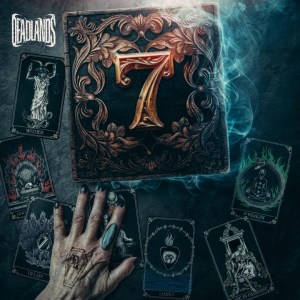
As a student of C. S. Lewis I love that Kasey Karlsen has chosen to do what we used to call a progressive rock, or also called prog rock, type thing with their EP, SEVEN. I loved the rock band Rush growing up who also did this type of elaborate story-telling, particularly with science fiction, with conceptual lyrics, and advanced composition techniques. C. S. Lewis was masterful at incorporating the seven deadly sins into his writing and now Kasey has mastered it as well.
Sloth, is one of the most interesting of the capital sins. It takes so many different forms. Dorothy L. Sayers, friend of C. S. Lewis and Marion E. Wade Center author, might have defined sloth the best saying:
“It is the sin which believes in nothing, cares for nothing, seeks to know nothing, interferes with nothing, enjoys nothing, loves nothing, hates nothing, finds purpose in nothing. lives for nothing, and only remains alive because there is nothing it would die for.” ~ Dorothy L. Sayers
Kasey Karlsen’s lyrics depict this definition very well. I interpret the line “I won’t indulge in your impotence” from Deadlands’ song “Wither” metaphorically. It suggests that Kasey refuses to accept or enable another’s weakness, helplessness, or inability to act. Essentially, it conveys a stance of accountability and resilience—rejecting excuses or passivity, and instead urging strength or resolve. The phrase might also imply a rejection of enabling someone’s shortcomings or failures, emphasizing that they must confront their struggles rather than be coddled or excused for them.
C.S. Lewis wrote about this form of sloth in his iconic book The Screwtape Letters, where he discussed sloth as one of the capital sins, emphasizing that it isn’t just laziness or physical tiredness, but also spiritual apathy or indifference towards one’s duty and growth – this same impotence as Kasey describes it. He explored how sloth can manifest as a reluctance to do good or make an effort in one’s spiritual life, often disguised as complacency or comfort with the status quo. Lewis considers sloth a subtle but serious obstacle to spiritual development, warning that it can lead to a sort of despair or loss of purpose if left unchecked.
Another line, “Indifference seals your chamber” suggests that apathy or lack of concern can trap or confine someone mentally, emotionally, or perhaps even physically. I interpret “Chamber” here as a personal space or inner world, and “seals” to imply closing it off or sealing it shut. Together, it conveys the idea that indifference—either from oneself or others—can create barriers, preventing growth, understanding, or change. It highlights how neglect or emotional detachment can imprison a person within their own feelings or circumstances.
This indifference is not the physical laziness form of sloth, but the gradual wearing away of devotion. Jill, in C. S. Lewis’s The Silver Chair (The Chronicles of Narnia), fails because of sloth. She fails to remember the four signs given to her by Aslan. Aslan told her:
But, first, remember, remember, remember the signs. Say them to yourself when you wake in the morning and when you lie down at night, and when you wake in the middle of the night. And whatever strange things may happen to you, let nothing turn your mind from following the signs. And secondly, I give you a warning. Here on the mountain I have spoken to you clearly: I will not often do so down in Narnia. Here on the mountain, the air is clear and your mind is clear; as you drop down into Narnia, the air will thicken. Take great care that it does not confuse your mind. And the signs which you have learned here will not look at all as you expect them to look, when you meet them there. That is why it is so important to know them by heart and pay no attention to appearances. Remember the signs and believe the signs. Nothing else matters. And now, daughter of Eve, farewell—” ~ Aslan to Jill in C. S. Lewis’s The Silver Chair (Chronicles of Narnia), p. 20
When arriving in Narnia, Jill gets caught up in all the happenings and very quickly loses sight of the importance of what she was to remember and do. Sound familiar? We all do it. All of us, like Jill, become weary with the daily grind. Jill, because of sloth, was failing to persevere, but Aslan helped her find her way.
Finally, Kasey’s line “You’ll pay the price of arrogance” masterfully connects to sloth in a very symbolic way. While arrogance is typically associated with pride and overconfidence, it often leads to complacency or a lack of action—traits linked to sloth. In the context of the song, Kasey, in my mind, has suggested that arrogance may cause someone to neglect their responsibilities or ignore warnings, ultimately resulting in negative consequences. It highlights how overconfidence or stubbornness can foster complacency, allowing problems to grow or worsen due to an unwillingness to act or change. Essentially, the song draws a parallel between arrogance and laziness or inertia, implying that such attitudes can be self-destructive if not checked.
Remember, overcoming sloth is about building momentum and maintaining discipline. Small consistent efforts often lead to significant long-term results.
Our Self-Inflicted Catacombs
The lyrics from Deadlands’ song “More” off their awesome EP, SEVEN, offer a powerful reflection on the destructive nature of the deadly sin of gluttony and excess. The line “Corrode your soul for something selfishly indulged” leaped out at me as Kasey Karlsen sang about pursuing fleeting pleasures or material gains at the expense of one’s integrity, health, or well-being. It also speaks to how gluttony can be spiritually corrosive. Kasey and CJ remind us that chasing superficial rewards, highs , and satisfaction most often lead to inner decay.
The subsequent line, “With all this time you are biding; Your digging deeper into self-inflicted catacombs,” emphasizes how prolonging such gluttonous pursuits can trap us in a metaphorical tomb of our own making. I love the metaphor of catacombs used in the song – it is genius! It highlights the danger of wasting time on self-indulgence rather than focusing on more meaningful, lasting values.
The catacomb metaphor in the song is a powerful symbol for exploring themes of introspection, hidden truths, and the depths of our subconscious. Just as catacombs are underground chambers that house skeletons, secrets, and remnants of the past, they invite us to delve beneath the surface of everyday life and confront aspects of ourselves that are often buried or overlooked.
Just as navigating through a labyrinthine catacomb can be challenging, understanding ourselves often involves traversing complex emotional landscapes, learning patience and resilience along the way. The darkness and mystery of a catacomb symbolize the parts of our psyche that are not immediately visible. Exploring these can lead to greater self-awareness, healing, and growth. By contemplating the metaphor of the catacomb, we learn the value of looking inward with honesty and curiosity, embracing the unknown within us, and seeking lasting fulfillment beyond superficial layers.
From these lines, we can learn the importance of self-awareness and moderation. Deadlands is encouraging us to consider whether our pursuits truly serve our well-being or if they are leading us away from genuine fulfillment. Ultimately, the song urges us to prioritize what nourishes our soul and growth over superficial gratifications that might cause long-term harm.
Greed Is An Exception

I love the band, Deadlands, and I can’t wait to meet them on August 2nd. I also love their new EP, SEVEN. This EP is about the 7 deadly sins. I’ve already blogged about their song about pride, “Villain,” in Pride – The Unpopular Fault. Now, I’m writing about greed, inspired by their great song, “Die In Paradise.”
There are a couple of thought provoking lines that jumped out at me in the lyrics. The first was, “Thе more I gain then the morе I crave.” This line highlights a common paradox about greed: the more we acquire, the more insatiable our desires become. This suggests that chasing after material possessions or external gains often leads to a never-ending cycle of longing, which can be ultimately unfulfilling.
In contrast, qualities like contentment, gratitude, and meaningful relationships tend to foster genuine happiness and inner peace. Recognizing this contrast can encourage us to focus on pursuits that nurture our well-being and personal growth rather than fleeting, hollow gains.
Another line that really stood out was, “All but avarice never blooms.” I interpreted this as suggesting that almost everything in life can flourish or have significance—except greed (avarice). In other words, greed is an exception—it doesn’t truly grow or thrive in a meaningful way. The line might be emphasizing that greed is ultimately hollow or unproductive, contrasting it with other qualities or pursuits that can flourish and bring fulfillment.
I love how these metalcore artists have broken down the seven deadly sins for us! Keep an eye out for future posts on these SEVEN songs.
 Byron's Babbles
leave a comment