Good Leader Traits
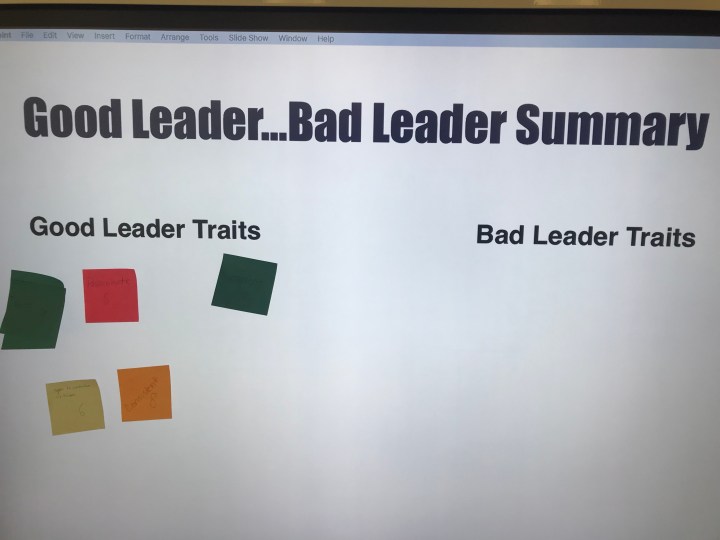
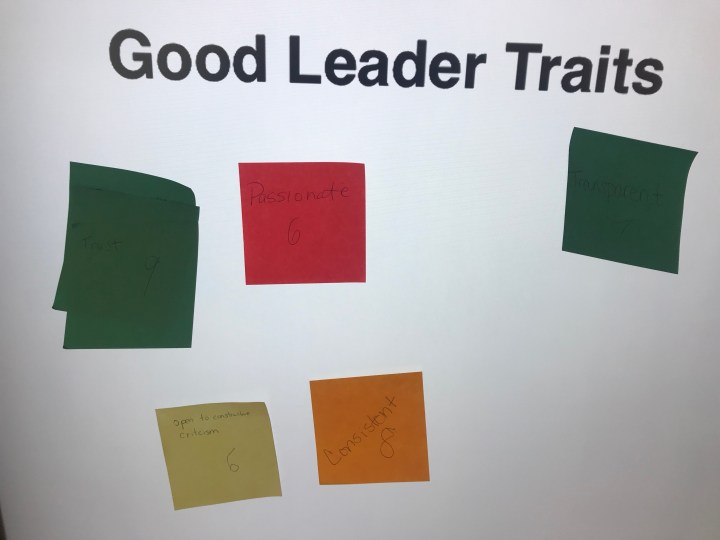 This past Friday in a session I did for our Noble Education Initiative Impact Indy Program we developed a top five list of great leadership traits. To get to that end, we developed a bad leadership trait list and then moved into the good list. Then we voted our way to the top five, great list. I would like to provide you with our top five in this post with some of the commentary about each one discussed during the session.
 Here they are:
- Trust – No big surprise here. Trust tops most lists characterizing great leaders. It’s at the root of every good relationship, including that of leader and employee. When your team trusts you, and they perceive that what you’re doing is honestly in their and the organization’s best interest, you are more likely to have an engaged team.
- Consistent – Consistency was a multifaceted item on this list. First, as a leader, you want to communicate a consistent focus on just a few critical issues (at most three to five) for each employee or team. And then you want to relentlessly follow up and focus only on those few issues. Less is more. Second, the great leader will have consistent moods, behavior, and decision-making so that her team knows where she is coming from. Finally, there must consistency in the message and actions delivered. The simple adage of “do what you say” goes a long way as most customers, families, students, or other stakeholders are accustomed to broken promises and poor service. With consistent delivery and consistent service, we can put all our focus on promoting a positive and consistent brand image with those we serve, including our customers.
- Transparent – Employees learn more about one another and can grow to work toward solving problems faster when their leaders are transparent. Transparency also allows relationships to mature faster, as openness can potentially avoid misunderstandings that can fuel unnecessary tension. If we are transparent, we can actually strengthen our role as a leader because those we serve begin to trust (see, there is our #1, trust, showing up again) us as person and thus will respect us more as a leader.
- Open To Constructive Criticism – If you are not being criticized, you are not leading and guiding the organization to grow, innovate and explore endless possibilities. We all have areas we need to improve in. Additionally, we must use criticism as an avenue to learning. Criticism can provide valuable insight for making course corrections. Don’t be offended by criticism, use it to your advantage.
- Passionate – Passion inspires others to join and identify with the organization’s vision. When we are passionate about something, it shows all over us. We can’t help but think about it, work at it, and be excited about it. Most importantly, passion is as contagious as a cold. Ever notice how your own enthusiasm escalates when you are around passionate people?
Pretty awesome list wouldn’t you say? What’s on your top five? Would you change any of these, or re-order the list? I would love to have you add your comments to this post.
Pathways to Success after High School
 A high school diploma no longer is the finish line—it’s now the starting line. Job growth and trends over the past 10 years have shown about 95 percent of jobs require some education after high school.
Recognizing that Indiana must offer more than a one-size-fits-all standardized test, the Indiana General Assembly took action to provide meaningful pathways for Hoosiers’ success. In the 2017 legislative session, lawmakers directed the Indiana State Board of Education to modify Indiana’s graduation requirements, ensuring students are better prepared to enter a new economy. The goal was simple: offer pathways that provide relevancy for students and better prepare them for life after high school.
Later that year, the State Board approved what is now known as Indiana’s Graduation Pathways. During this process, the State Board collaborated with national and state experts while engaging students, parents and educators on how to effectively deliver lasting value to all students through their education journey.
To complete a pathway, a student must take several actions, including fulfilling Indiana’s course requirements and completing an employability experience by applying classwork to real-world situations. This could include completion of an independent research project, participating in meaningful civic engagement or having a part-time job, apprenticeship or internship. Students must also choose a benchmark that best suits their career goals, such as taking the SAT or ACT to attend college, completing the ASVAB to join the military or earning a state-and-industry recognized credential or certification to join the workforce. Selecting and completing a pathway ensures students are better prepared to transition from high school to college, the workforce or the military.
While Graduation Pathways won’t be a requirement until the class of 2023 – this year’s eighth graders – some Indiana schools are implementing Graduation Pathways right now. In these school districts, parents and educators can have conversations with their students about an individualized graduation plan that provides students a relevant education, prepares them for the global economy fuels a desire for lifelong learning. Parents should have conversations with their local school officials to determine the implementation timeline at their child’s school.
Using Graduation Pathways allows Hoosier students to transition from high school into life’s next steps. Together, we’ll raise the bar for our state’s future workforce, so that today’s students will graduate with the relevant skills needed to compete in a global economy.
“The Rock” In The Atlantic Ocean
 Yesterday while exploring the rocks along the Atlantic Coast of Maine I found a beautiful rock that once I took out of the ocean 🌊 wasn’t so beautiful any more. That experience prompted this VLOG Post:
Independence Day Leadership Lessons From Maine & Joshua Lawrence Chamberlain
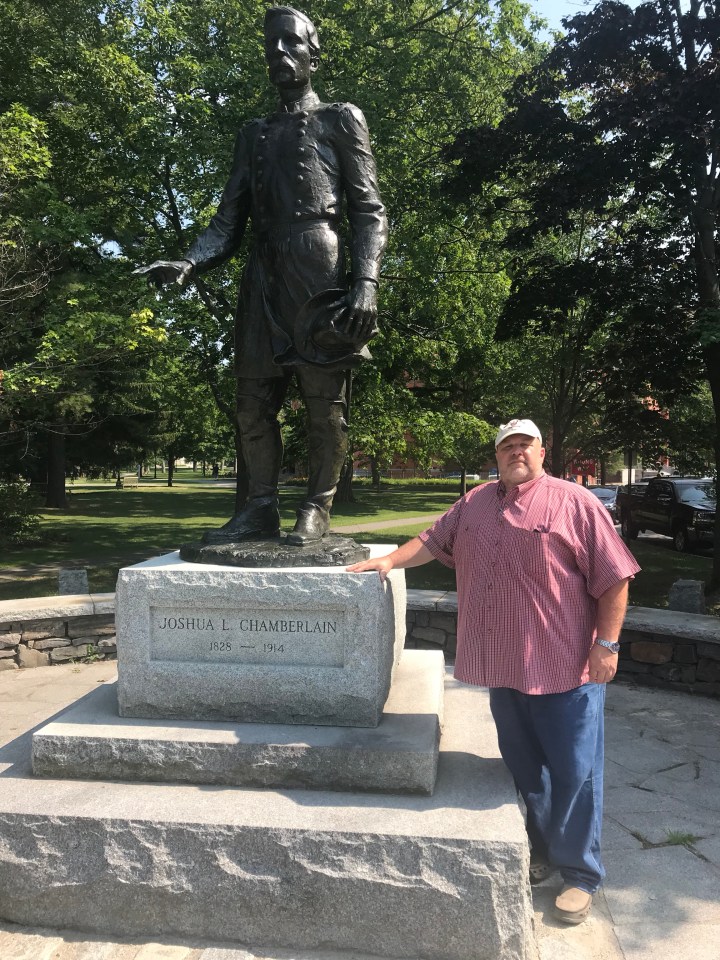 On this 2018 Fourth Of July morning I am reminded of the great leadership that has been necessary for the United States to become the great country it is. My family and I are vacationing in Maine right now so, of course, I had to do some studying of influential leaders from Maine. Boy did I come across a great one: Joshua Lawrence Chamberlain. Now I know that Independence Day is observed to honor our Declaration of Independence from the tyranny of Great Britain and those who provided the leadership during this important time of our country’s founding, but since I am in Maine I am going to honor and remember Chamberlain too.
Raised from a modest life in the small town of Brewer Maine, Joshua Chamberlain chose the professions of ministry and academia filling in the post of Professor of Rhetoric at Bowdoin College during the tumultuous 1850s. As the Civil War broke out, Chamberlain felt the impulse to serve based on his belief in preserving the union and his moral conviction against the institution of slavery. In early 1862, Chamberlain expressed his desire to serve to the Governor of Maine, who offered him the rank of Colonel in the Maine volunteers. He turned that rank down because he did not believe he had the experience necessary for the rank. This is lesson one learned from him – be modest and know what skill level you have and what you still have to learn. Believing he needed to gain experience and knowledge of the military profession, Chamberlain’s uncommon act of humility set a tone for the remainder of his service.
But the cause for which we fought was higher; our thought wider… That thought was our power. ~ Joshua Lawrence Chamberlain
Joshua Lawrence Chamberlain went on to have a very successful military career and ended that career as a Brigadier General, but two Civil War stories are worth telling in this blog post. Here they are:
Battle of Gettysburg, July 2, 1863, Little Round Top
Colonel Joshua L. Chamberlain, who he now commanded, ordered the 20th Maine Regiment to execute a daring counterattack against the 15th Alabama Regiment of the Confederate Army on July 2nd 1863 during the Battle of Gettysburg. At the extreme left flank of the Union Army, the 20th Maine fought off repeated assaults for the past several hours against the determined Confederate Soldiers. Even though the 20th regiment was outnumbered and low on ammunition, Chamberlain’s bold decision and courageous leadership led his men of Maine down the slopes of Little Round Top at Gettysburg, Pennsylvania and stopped the Confederate assault against the Union Army’s left flank. He showed tremendous insight and leadership in making this bold move. Colonel Chamberlain was inspirational to his men and as a leader, a true influencer.
Confederate surrender at Appomattox Courthouse, April, 1865
Joshua Lawrence Chamberlain taught us what it meant to be a man of character and compassion when he was personally asked by General Ulysses S. Grant to preside at the Confederate surrender at Appomattox Courthouse over the surrender detail. It was not the fact that he presided that is noteworthy here, it is the awesome act and example of leadership he performed. As the 20,000 Confederate Soldiers paraded by to turn over their arms and battle flags, Chamberlain gave the Union Army detail the command of “carry arms” to salute Confederate’s service and gallantry in battle. Many, then and now, credit this leadership gesture as the beginning for the country’s healing process toward reconciliation.
This act took courage and would bring him accolades and plagued him politically for the rest of his life. The southerners deeply respected him for this show of compassion and respect. Conversely, however, many northerners, including those in his home state of Maine, did not see it that way. They wanted to continue the humiliation of the Confederacy. Chamberlain did what was right and faced the consequences.
Congressional Medal of Honor
Joshua Lawrence Chamberlain was awarded the Medal Of Honor for his service At Gettysburg. He saw combat at Fredericksburg, Cold Harbor, Petersburg, Five Forks, and the Appomattox Campaign.
Chamberlain Leadership Lessons
Chamberlain always positioned himself in the middle of his brigade’s formation. He led shoulder to shoulder with his men. This built trust and gave him the ability to truly know what was going on. Chamberlain reassured his soldiers through his cool and calm presence during the heat of combat. He garnered the trust of his men through his actions in combat. The other thing that really impressed me as I studied this hero was his commitment to studying his new military profession, and his commitment to developing his subordinates. We need to pay attention to these lesson learned and apply them to our daily lives as leaders.
 Learn More About Joshua Lawrence Chamberlain
There are so many more leadership lessons to learn about this great man that went on to be President of Bowdoin College in Brunswick, Maine and four term (one year terms at that time in Maine). Let me suggest two ways that I did to learn more:
- Visit Bowdoin College in Brunswick, Maine and visit the Joshua Lawrence Chamberlain Museum. It is awesome! I learned a great deal from the tour and curators there. The museum is the restored home (the only home he and his wife, Fanny, ever owned). There is family history, Civil War history, history of his time as Bowdoin College President, and history of his Governorship. It is awesome!
- Read the great book by Alice Rains Trulock, In The Hands Of Providence: Joshua L. Chamberlain & The Civil War. This book is awesome and I gave it five stars. Is a very well written well told story of this great leader. This book inspired me to dig deeper and explore more to understand how this man became the great leader he did, at a crucial time in our nation’s history.
I am thankful on this Independence Day, 2018 for Joshua Lawrence Chamberlain. What leaders are you thankful for on this day of celebration of our great country, The United States Of America?
What’s Your Elevated Story?
 One of the most common questions we get when meeting new people is, “So, what do you do?” Most of us have a standard answer about our profession, but there are some people who have jobs that you might not even know existed. More importantly, everyone’s job is important and in some way improves the lives of others. Think about every job that affects your household; there are a lot.
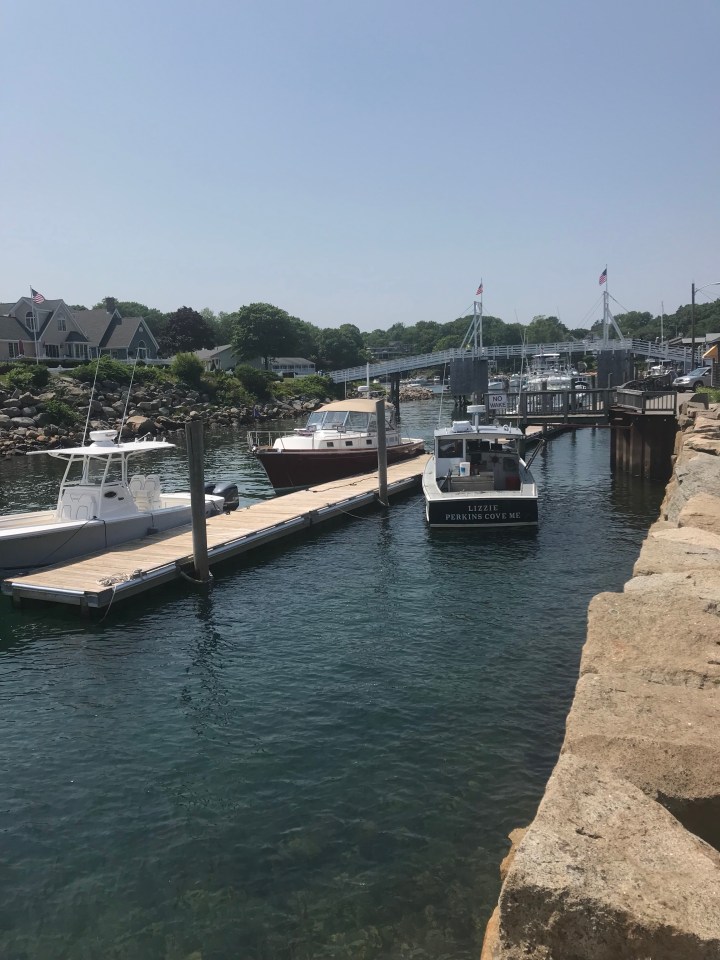
Perkins Cove
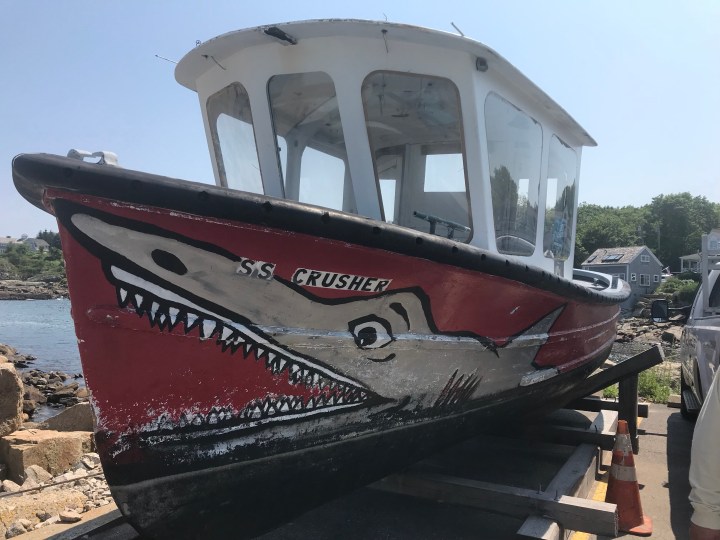
I was reminded of this yesterday when in Perkins Cove, Ogunquit, Maine. This is a lobstering port and a beautiful place with shops and restaurants. While exploring we came across a boat named the SS Crusher that had been dry docked (see picture). It was a cool looking boat and I wondered what was up with it. Then, I found that a children’s book, The Pride Of Perkins Cove, had been written about it by Brenda Yorke Goodale about the boat.
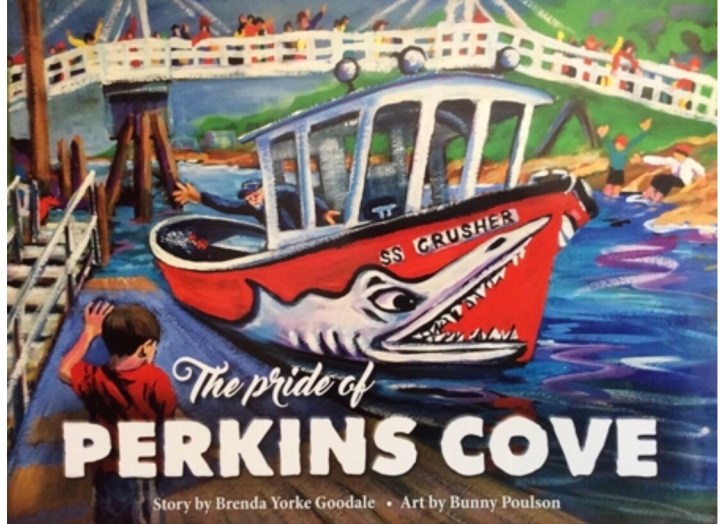
So, of course I had to dig deeper and found that the boat and it’s harbormaster have very important jobs. When it gets cold, and it gets cold in Maine; Perkins Cove freezes. Because the Cove is a working port, it has to stay open, so Harbormaster Fred Mayo spends hours every day breaking the ice. The town’s special boat, the SS Crusher, is built for the task of “crushing” through the ice. Before yesterday I did not even know what a lobstering port looked liked, let alone that freezing was a problem.
If we asked Fred Mayo what he does, he might give the same kind of answer we all would: “I’m a harbormaster.” But, wow, is it so much more. In fact, here, according to Wikipedia, is truly the world of a harbormaster: “A harbormaster is an official responsible for enforcing the regulations of a particular harbor or port, in order to ensure the safety of navigation, the security of the harbor and the correct operation of the port facilities.” Think about all the other colorful details that a harbormaster like Fred Mayo could add. I’ll bet there are some great stories of ice crushing in Perkins Cove. Here are a couple of pictures of Fred Mayo and the SS Crusher doing their job:


A few weeks ago I read a great book by Shawn Achor entitled Big Potential: How Transforming The Pursuit Of Success Raises Our Achievement, Happiness, and Well-Being. In the book, Achor points out that we usually just give a very quit and boring answer of what we do for our job. He argued, however, that we need to quit this and give what he calls the “elevated speech;” not to be mistaken with the elevator speech. The “elevated speech” should be us telling what we really do and why what we do is so important. The example I like to give here is the answer that we hear so many times from teachers: “Oh, I’m just a teacher.” I’ll admit I’m guilty of having done this. But, are you kidding me, “just a teacher?” I think not! Actually, I hope not!
 Let’s take a look at teaching as a very significant profession, or “job.” Here is my elevated version: “Teachers have been given a great gift – the power to change lives, each day I must be inspirational. I am a significant human being helping other human beings to realize their full potential and go on and make a positive difference in their world.” What do you think?
Achor posited that our beliefs create our world. He argued that if we elevate the story of what we do, we will get a new spring in our step and renewed inspiration for what we do each day. He’s right because Gallup (2017) told us that 60% of employees say the ability to do what they do best in a role is “very important” to them. Here’s the challenge, though, in 2016, only 33% of U.S. employees were
engaged – involved in, enthusiastic about and committed to their work and workplace (Gallup, 2017). This translates to only 4 in 10 U.S. employees strongly agreeing that in the last year, they have had opportunities to learn and grow (Gallup,2017). This is a huge engagement issue. Gallup (2017) results suggested that by moving that ratio to eight in 10 employees, organizations could realize 44% less absenteeism, 41% fewer safety incidents, 24% higher retention, and 16% higher productivity. I guess it is time to elevate those we serve.
Just like the story of the SS Crusher, we all have unique gifts, jobs to do, and make a significant difference in the world. Let’s get engaged and elevated! What’s your elevated story?
Reference
Gallup (2017). State of the American Workplace. Gallup, Inc. Washington D.C
What Can We Create Together?
 Every year, the Ernest family takes the first week of July as an opportunity to get away and spend time together. We have found this to be a great week because it is moratorium week for Indiana High School athletics; in other words, Heath (my son) does not have football 🏈 practice all week. Another thing I love is that when we travel we get to celebrate the Fourth of July in different places around the country. And…with the holiday, many others are off work too, and it seems the draw to do work related things is less.
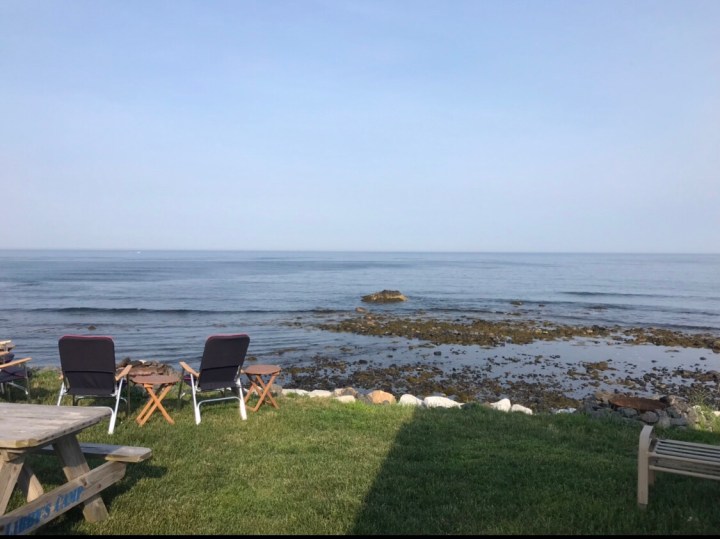
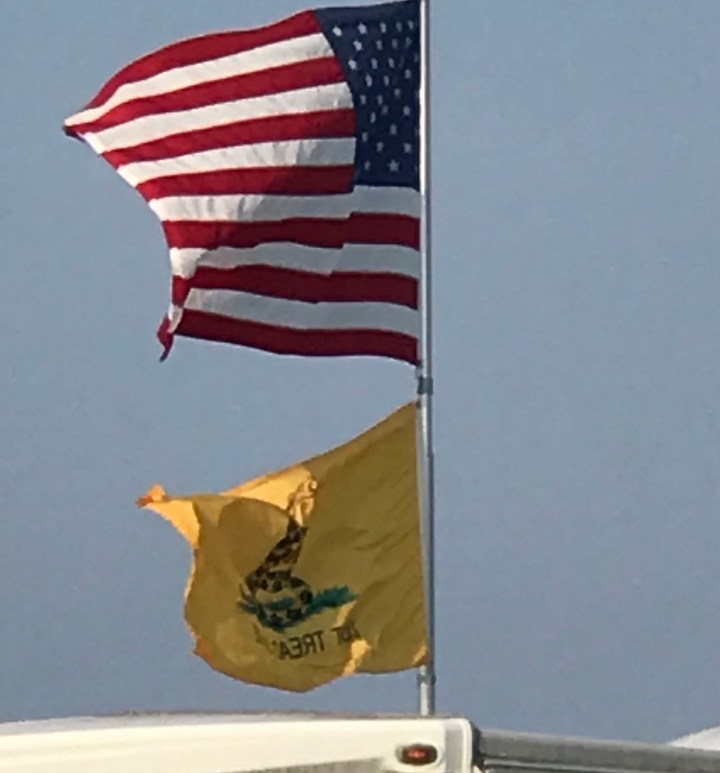
This year, we are spending our week working out of York, Maine. This trip is giving us the opportunity to pick up visiting in four states (Maine, New Hampshire, Connecticut, and Vermont) that he had not been to yet in his quest to get all 50 before he graduates from high school. He will just have Alaska, Utah, Idaho, and New Mexico left after this trip. Not bad for a 17 year old. Yesterday, as we were setting up our camper, my son and I noticed a neighboring camper flying the American flag 🇺🇸 and The Gadsden (“Don’t Tread On Me Flag”). Heath and I had a discussion about the flag, Christopher Gadsden (who designed the flag), what it meant during the American Revolution, and what it means to us now. Please don’t go down the route of thinking I am on some anti-government weird movement. I’m just reflecting on our past,studying history, and what it means to our future.
“There is nothing new in the world except the history you do not know.” ~ President Harry S. Truman
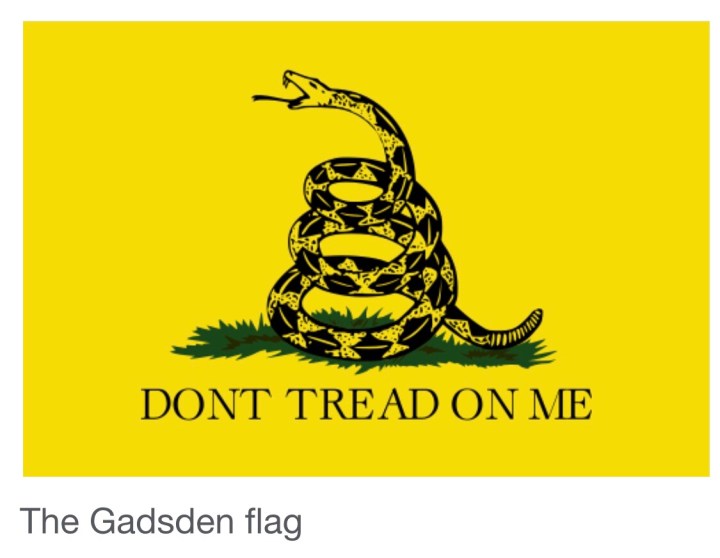 The Gadsden Flag
Many people during revolutionary war times thought the rattlesnake was a good example of America’s virtues. They argued that it is unique to America; individually its rattles produce no sound, but united they can be heard by all; and while it does not attack unless provoked, it is deadly to step upon one. I have to think 🤔 this was how our forefathers were thinking. Even though we later had some expansionist behaviors as we put the whole United States project together, there continued to be to mentality we would not go beyond our geographic boarders.
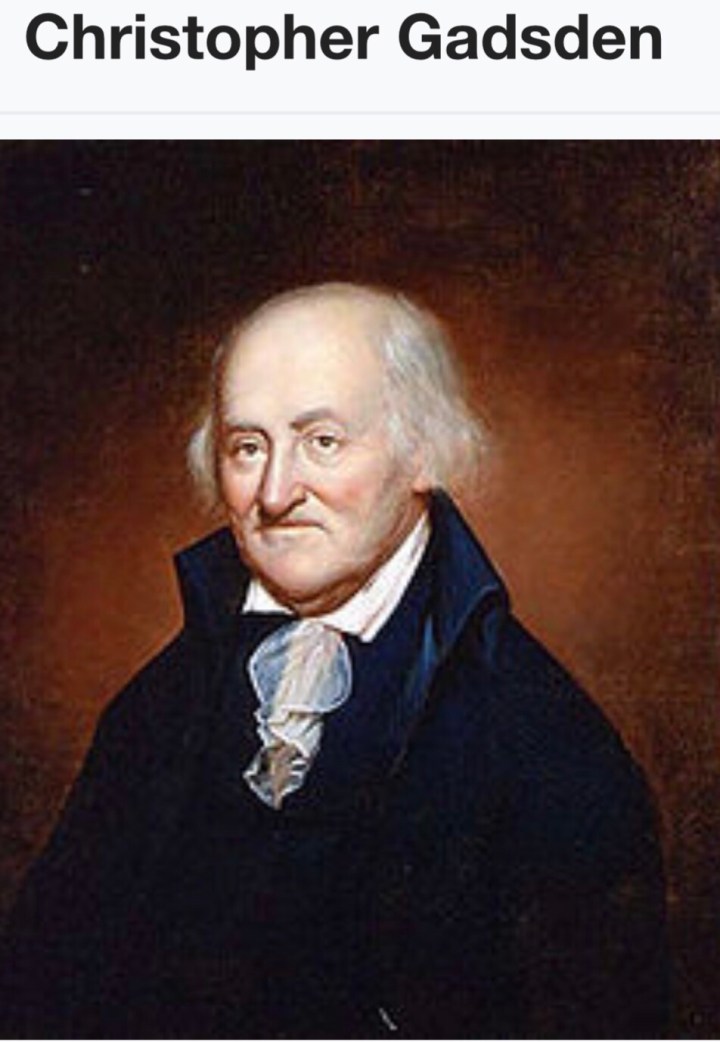 Colonel Christopher Gadsden
He was from South Carolina and really liked a yellow banner he had seen with a coiled rattle snake drawn on it, and the rest is history, so to speak. Gadsden made a copy of this flag and submitted the design to the Provincial Congress in South Carolina.
During The American Revolution
At the time of the American Revolutionary we were in a time period where intense, but controlled individualism was the dominating disposition of most people. Remember, most of the colonists had come here to escape some type of oppression. An important fact, by the way, I believe we need to remember today! This was a time when self-directing responsible individuals again and again decided for themselves what they should do, and did it without needing anyone else to give them an assignment or supervise them in carrying it out.
Does The Gadsden Flag Have Meaning Today?
YES! I want to just stop there, because I believe we must make that meaning for ourselves, using our founding fathers as the guides. It reminds me, we need to be mindful of the idea of government overreach. For me this means on a local and state level, as well as at the federal level.
And…as we know, this is not an easy thing to balance. What I see as support, you may see as overreach, and visa versus. Or, I’m reminded of pre Civil War times when decisions were made pointing to states rights, which I believe very deeply in, but states rights were being used as a political shield to not doing the right thing – abolishing slavery once and for all for the whole country. I believe this conundrum itself is part of the genius our democratic design. It allows us to debate and have discourse about how to proceed. My only wish on this week of celebrating the independence of our great country is that we take more of a stance of civilized discourse and come together as a nation of communities to develop great solutions to our challenges. What can we create together?
A KISS of Stardom!
 This week I had the opportunity to do something that I had never done before. I became Gene Simmons as a part of a team in a Battle Of The Bands Lip Sync Contest. This was part of our Carolina Schools Big Potential Leadership Conference put on by Noble Education Initiative, Inc. What an experience. Although each of the group’s members is iconic, perhaps the most memorable of them all is front man Gene Simmons, who is famous for his demonic character that breathes fire, spits blood, and engages in all sorts of outrageous behavior on stage. Here’s the deal: when we hit the stage, after an hour and a half of getting in costume and having makeup put on, I became Gene Simmons. I even spit blood. And, I didn’t lip sync. I sang every word of “Rock And Roll All Night.” Then, I spit blood (we got the fake blood capsules at a party supply place and I put the all in my mouth – what a mess) and did “God Of Thunder.” The crowd was going wild – literally. I’ve got to tell you, I did not want it to end. It was addictive.
So, what did I learn?
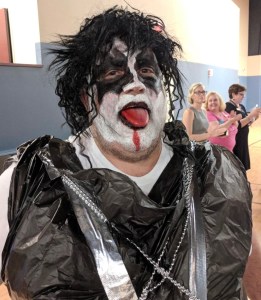 Shared Vision and Enthusiasm – Everyone, regardless of her or his age, knows KISS, the band. They are the band that would wear 6-inch heels, has blue/black hair, paints their faces, and one member, Gene Simmons, who would spit blood and blow fire. Amazingly, it’s hard to find anyone who doesn’t know that. Furthermore, when my colleagues and I started our rendition of “Rock and Roll All Night” it amazed me that everyone knew the words and sang along. It wasn’t just singing, though, it was singing with enthusiasm. We could tell, the song meant something to this group. Everyone was connecting in some way to it. As leaders, that is our job to make connections. Whether that means partnerships, or connecting everyone in the organization to a shared vision.
Engagement – I did a session yesterday morning on student engagement. While I was facilitating that session I was thinking about my rock band front man experience. My job both as a facilitator and front-man was to move, affect and engage an audience. This is also true in a classroom. We must move our students toward proficiency of skill, standards, and competencies, as well as affect change in their lives, while engaging them.
 The Band Is A Team – While I acted out the part of the demonic and crazed front man part of our our band, I realized it was the other three members of our band that made it all possible. Others in the band literally got my costume ready and did my makeup. They were supporting my antics on stage and supporting me acting crazy. The lesson here is that we can never be as good by ourselves as we can be as part of a team.
We All Need A Brand or To Be A Part of A Brand – The 2016 Gallup survey information tells us that we all want to be part of a successful brand or part of an organization that is doing good in the world. KISS holds all the records for record sales for any rock band ever – including Elvis and the Beatles. Their empire is worth over 1 billion dollars and there are over 3000 branded KISS products on the market today. KISS is a rock BRAND not a rock Band. What is your brand?
Have A No Limits Attitude and Approach To Life – There truly are no limits to what you can achieve. Success is a mind set. We all need to have a growth mindset. Either you think you can achieve it, or you don’t. Never let someone else tell you what you can and cannot achieve. Control those thoughts yourself.
 Upon reflection, I got chills thinking about a few things:
- Without KISS, I wouldn’t be who I am today.
- What would the world and I be like if there were no KISS?
- What band would have been my mentor to have a no-holds-barred attitude toward going after all my dreams?
- Who would have taught me it doesn’t matter what the critics are saying because you cannot please everyone; I learned, from KISS, to go after what I believe will create change in the world?
- Without Gene Simmons I don’t have the example of a humanitarian. Simmons received the MEND Humanitarian award, for his support of Mending Kids International, which provides surgical care to children in developing countries. During his acceptance speech he said, “I don’t have the right NOT to give back and neither do you. Some mother somewhere is crying her heart out because her child can’t have what we have in this country and we can change that.” Did you catch that? “I don’t have the right NOT to give back…” I heard you loud and clear, Gene!

 As you can see, Gene Simmons and KISS has had quite an affect on me since the band began when I was 10 years old. I am so glad they have been a part of my life. I am also glad I had the opportunity this week to experience a very, very, very, very small part of what it feels like to be Gene Simmons on stage.
King For A Day!
 Those that know me well, know that something I love to do during meetings or interacting with others is to declare a participant(s) “King For A Day.” I love to do this because by saying, “If you were king for a day, what would you do?” I have fully empowered that person to tell me what she or he is thinking. Furthermore, I am going to get to hear one person’s creative ideas given in a way that also involves implementation. Some people kid me and say I am wanting to change our democracy to a monarchy; not at all. What I am really doing is giving a voice to those who have knowledge and skills in the area being discussed. Many times I will make multiple people “King For A Day.” Let me tell you, it is fun to do ad provides a very safe place to lay out plans and ideas.
Sometimes, when I have have ideas I will say, “If I could be king for a day…” People laugh, and it has become a trademark of mine during meetings, but it is a great chance and way to throw out an idea(s) for critical review. I truly want the criticism and critical review. I honestly want to understand why my idea might or might not work, or better yet, what might make it a great idea. I have some that even kid me and call me the “Emperor,” when I walk in the room,
Really, by making individuals “King For A Day” I am creating a very democratic environment. My reformist idol, Martin Luther, would be proud of me because I am actually giving others and all a voice. And…I am letting whoever is designated as “king” to fully develop and lay out an idea/plan. More importantly, this gives individuals the opportunity to oppose ideas that have been proposed. We need to give those in our gathered communities the opportunity to emphasize contrary and less popular opinions.
 In Lesson #24, entitled “Assign Someone To Play The Fool” of the book, 52 Leadership Gems: Practical and Quick Insights For Leading Others by John Parker Stewart, I learned that it is also valuable to assign someone the role of being “the fool.” In the European middle ages the only person that could criticize the king was the “Court Jester,” or also called “The Fool.” In the King’s court, the Jester/Fool played the important role of providing the king with valuable insight. Opposing ideas are essential for innovation and wise decisions. We need to make sure we are creating environments where voices are openly heard from all sides. In other words allowing some “foolish” behavior.
I am going to start allowing someone to be the “Fool,” or maybe I better position it as “Court Jester,” for a day as well as assigning “Kings For A Day.” How about you? Do you rely on others for input? Do you express your views? Are you willing to let someone. be “King” or “Jester/Fool” for a day?
The Critical Need for Relevant Learning
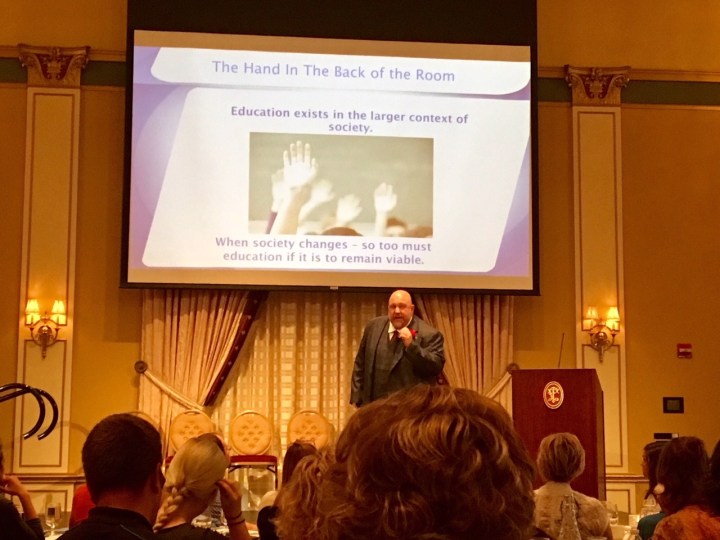 This past Friday I had the opportunity to attend and keynote a tremendous event put on by the Horizon Education Alliance. The event was called “Pathway Showcase” and was held in the Crystal Ballroom at the Lerner Theatre, which by the way is an awesome facility in Elkhart, Indiana. More than 200 local educators, business and state government leaders were there to see project based learning (PBL) projects that were created in partnerships between students, teachers, and business leaders. These projects were created in order to teach our students in a relevant context – a subject near and dear to my heart. There were more than 40 of these projects that took place this past year. I continue to be so impressed with the work of Horizon Education Alliance to bring the Elkhart County community together to collaborate for the betterment of education for our students.
During my keynote I talked about how we need to connect school work to real life. I told attendees that education exists in the larger context of society. Students need to know why they are learning what we are teaching and how the learning fits into his/her real world context. When society changes, so too must education, if it is to remain viable. We need to be teaching our students to use adaptation to analyze, synthesize, and evaluate to apply the learning to real world predictable and unpredictable situations. If we can achieve this level of relevant learning our students will be motivated and have the ability to creatively innovate and problem solve.
I was so inspired to spend time talking with the students, teachers, and industry leaders about their projects. What I found were students working in teams to experience and explore relevant, real-world problems, questions, issues, and challenges; then creating presentations and products to share what they have learned. What I found were engaged students who were great communicators and very passionate about the projects created for their learning.
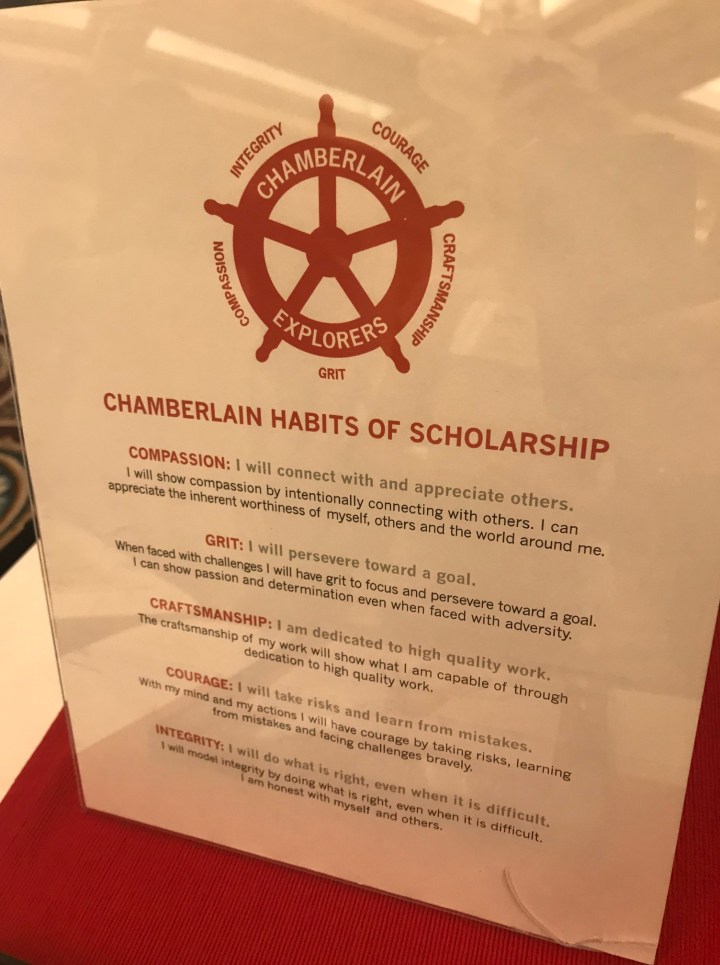
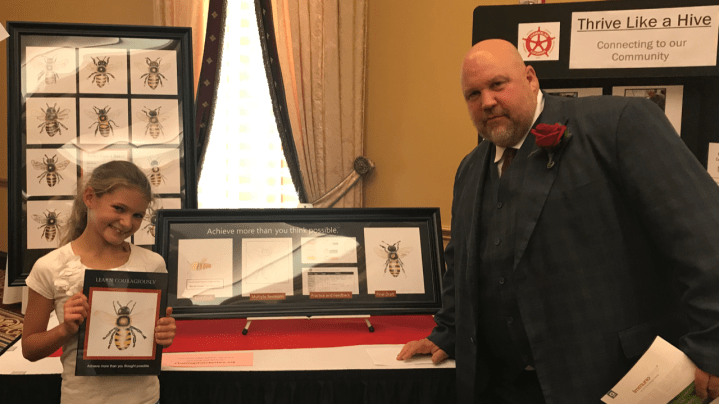 All the projects were awesome, but a couple really spoke to me. Chamberlain Elementary School students walked me through how they had learned to create by developing a first draft, multiple revisions, practicing and receiving feedback, and then finishing the final draft. These Chamberlain Explorers were learning to iterate. The students would not let me leave without sharing the Chamberlain Habits of Scholarship. See photo below for the habits:
 I also had the opportunity to meet students from Elkhart Memorial High School who had been doing real world/real time research on soybean phytopathology with scientists from Agdia, Inc. As a former Agriculture Science teacher I could not have been prouder of these students. We cannot make it much more relevant for our students than having them do actual research on real problems with actual scientists. This adult interaction is also a very important part of facilitating relevant learning.
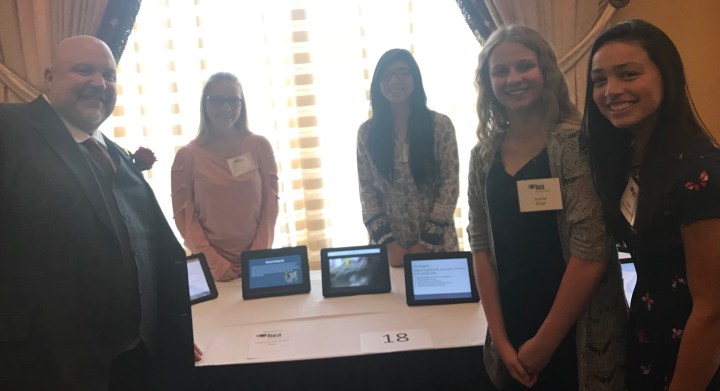 At the end of the event I really got emotional and realized that the world is going to be o.k. as long as we continue to teach our students relevant skills in engaging ways. Here are my final thoughts on how to make learning relevant and meaningful for our students:
To learn collaboration – work in teams
To learn critical thinking – take on complex problems
To learn oral communication – present
To learn written communications – write
Thank you to all the schools in Elkhart County and to Horizon Education Alliance for inspiring me and what you are doing for students!
Making Your Conversations Count!
 Conversations Worth Having: Using Appreciative Inquiry to Fuel Productive and Meaningful Engagement by Jackie Stavros
My rating: 5 of 5 stars
Anyone involved in leadership or in education needs to read this book. I love the fact that it has education examples with actual stories from teacher and student interactions. This books helps the reader to better understand how appreciation and inquiry enhance relationships as well as productivity and performance. After reading this book I realize how important it is to bring an appreciative dimension to conversations and add value. We have all been involved in conversations where someone is bringing the depreciative dimension and devaluing the conversation. In this book we are given the guide to be generative in our conversations. Our community, whether an organization, school, classroom, or business is defined by the conversations we have. If we want our conversations to be meaningful in shaping and defining the future of those we serve then we need to use appreciative inquiry and make those conversations generate greatness. Find out how in this book!
Dr. Byron L. Ernest
 Byron's Babbles
leave a comment