Pag-unawa

At the end of March and the first week of April I am going to be in Manila Philippines for the FLUXX 2026 Asia Conference. It will be my first time in the Philippines and I will be delivering the opening keynote. To prepare, as I do for all my work globally, I am studying the Filipino culture. What I am learning is how the culture of the Philippines lends itself to some amazing leadership attributes. For example, the Filipino word “Pag-unawa” translates to “understanding” or “comprehension.” As a leadership attribute, it plays a vital role in fostering effective and empathetic leadership within the Philippine cultural context. Here’s how “Pag-unawa” can be a powerful tool:
- Empathy and Compassion:
Leaders who practice “Pag-unawa” genuinely care about the concerns, feelings, and circumstances of their team members. This empathy builds trust and loyalty, which are highly valued in Filipino culture. - Respect for Hierarchy and Relationships:
In the Philippines, relationships and respect for elders or authority figures are important. “Pag-unawa” encourages leaders to understand the cultural nuances and social dynamics, allowing them to navigate hierarchies respectfully. - Promoting Collaboration:
When leaders demonstrate understanding, they foster a collaborative environment where everyone feels heard and valued. This aligns with the Filipino value of “pakikisama” (smooth interpersonal relationships) and “kapwa” (shared identity). - Conflict Resolution:
An understanding leader can address conflicts diplomatically by appreciating different perspectives and finding harmonious solutions, which is essential in maintaining peace, unity, and an environment of trust. - Cultural Sensitivity:
“Pag-unawa” encourages leaders to appreciate cultural traditions, practices, and values, enabling them to connect more deeply with their community or team. - Developing Unity and Loyalty:
Leaders who show genuine understanding can inspire loyalty and collective effort, reinforcing “bayanihan,” or communal spirit, prevalent in Filipino society.
“Pag-unawa” promotes a compassionate, respectful, and culturally sensitive approach that resonates well within the Philippines’ social fabric. I’m glad I’ve learned this Filipino way of creating an inclusive environment where people feel understood, valued, and motivated to contribute their best.
Being Compassionate and Competent At The Same Time

This week as I was doing some follow up work for a leader I am coaching and mentoring I had a person describe her as being both compassionate and competent at the same time. Describing this up and coming leader in this way affirmed what I am seeing and was a spot on observation. Then I got to thinking what a perfect combination of leadership traits these are for serving those we lead. A leader who is compassionate and competent at the same time has several advantages. Firstly, their compassion allows them to understand and empathize with the needs and feelings of their team members. This helps build strong relationships based on trust and loyalty, which in turn fosters a positive work environment.
Secondly, their competence ensures that they have the skills and knowledge necessary to effectively lead and make informed decisions. This allows them to inspire confidence in their team members and gain their respect. In my leadership development program we have dubbed this “Not being a moron.” This is not to be funny, but remind us the importance of recognizing what we don’t know, being authentic about those things, and where possible continue to grow and develop.
Additionally, a compassionate and competent leader can also effectively motivate and inspire their team. They understand the importance of recognizing and appreciating their team members’ contributions, and they provide support, guidance, and development opportunities to help their team members succeed.
Overall, a leader who is both compassionate and competent can create a harmonious and productive work environment, leading to higher employee satisfaction, increased productivity, and better overall performance for the organization.
Princess Diana, Mother Theresa, & Florence Nightingale: Their Similarities and Their Differences

Today I had the opportunity to dig deeper into the life of Florence Nightingale. I flew into London, England this morning for my Scholar in Residence program with the C. S. Lewis Foundation at the C. S. Lewis Study Centre at The Kilns. Before heading to Oxford, I spent time at the Florence Nightingale Museum. My interest in studying more about Florence Nightingale was inspired by the Audible Original Wild Swan: A Story of Florence Nightingale by Patti Callahan Henry. I already blogged about this once in Dreaming of Being Truly Useful.

There was an artifact in the museum that really jumped out at me. The postcard featured Princess Diana, Mother Teresa, and Florence Nightingale together that an artist had rendered. The museum provided two thought provoking prompt questions that I will provide some thoughts on:
1. Why do you think the artist chose to draw all three women together on the same postcard?
I believe the artist wanted to highlight the impact these women had on society and their respective fields. Each of them made significant contributions in their own ways and brought attention to important social issues. By depicting them together in a painting, an artist could be emphasizing the power of their collective influence and the lasting legacy they left behind.
An additional reason could be to celebrate these women as icons of compassion, kindness, and service. Princess Diana, Mother Teresa, and Florence Nightingale are all known for their selfless dedication to helping others and making a positive difference in people’s lives. Drawing them together could serve as a symbol of inspiration and remind viewers of the importance of empathy and generosity.
2. What are their similarities and differences?
First, they were all extraordinary women who left a significant impact on society through their work and contributions.
Secondly, they dedicated their lives to helping others and making the world a better place. Princess Diana was known for her charity work, especially in the areas of HIV/AIDS awareness and landmine removal. Mother Teresa was a renowned humanitarian and the founder of the Missionaries of Charity, an organization that provides care for the sick and needy. Florence Nightingale was a nurse who revolutionized healthcare practices during the Crimean War and is considered the founder of modern nursing.
Finally, all three women faced challenges and overcame obstacles in their personal lives. Their resilience and determination made them even more inspiring figures.
Overall, these remarkable women shared a commitment to service and compassion that continues to inspire people around the world.
Conversely, Princess Diana, Mother Teresa, and Florence Nightingale were different in several ways. Princess Diana, also known as Princess Diana of Wales, was a member of the British royal family. She gained worldwide recognition for her philanthropic work focused on issues such as HIV/AIDS awareness, landmines, mental health, and children’s hospitals. Princess Diana was known for her charm, grace, and sense of style. She used her platform to raise awareness about various causes and brought attention to those in need.
Mother Teresa, also known as Saint Teresa of Calcutta, was an Albanian-Indian Roman Catholic nun and missionary. She dedicated her life to serving the poor and destitute in India. Mother Teresa founded the Missionaries of Charity, a religious organization that provides humanitarian aid and runs homes for people with leprosy, tuberculosis, and HIV/AIDS. She received the Nobel Peace Prize in 1979 for her charitable work.
Florence Nightingale, on the other hand, was an English social reformer and the founder of modern nursing. She became famous for her pioneering work in nursing during the Crimean War. Nightingale elevated nursing to a respected profession and emphasized the importance of hygiene and sanitation in healthcare. Her efforts significantly improved patient care and laid the foundation for modern nursing practices.
While all three women were admired for their compassion and dedication to helping others, they made a difference in different areas and had unique contributions to society.
We Don’t Have To Lose

The iconic band Linkin Park has a song, “Fighting Myself”, that really got me thinking. The lyrics in the song say, “Fighting myself, I always lose.” It seems that many times when we try to overcome our own inner struggles or battles, we end up fighting ourselves. Then we often end up being defeated or unsuccessful. We need to cultivate the self-discipline of not fighting ourselves and keep pushing through obstacles. We also need to help cultivate this in those we serve. Providing a psychologically safe place, empathy, and compassion can go a long way.
It’s hard to not fight with ourselves. Sometimes, through self-reflection, self-awareness, and seeking support, we can overcome and find solutions to our inner struggles. It’s important to remember that everyone’s experiences are different, and what works for one person may not work for another. Ultimately, it’s about finding healthy ways to confront, understand, and address our inner challenges.
Learning Compassionate Accountability
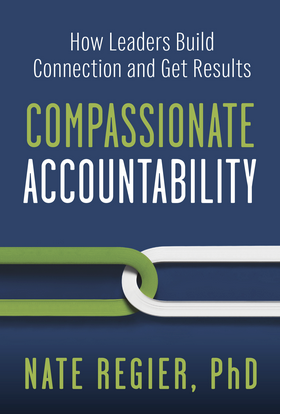
Compassionate Accountability: How Leaders Build Connection and Get Results by Nate Regier
My rating: 5 of 5 stars
In the leadership development work I do, we talk about empathy not being enough. For empathy to work there must be action. That action is compassion. In this book we learn that compassion is a leadership skill we can learn and improve. Most importantly, we learn, “compassion without accountability gets you nowhere, and accountability without compassion gets you alienated.” This book gives us a plan for honing our skills in compassionate accountability.
View all my reviews
Our Best & Our Worst

“What makes you best at your job also makes you the worst at your job.” ~ Sergeant Hank Voight (Jason Beghe) to Detective Hailey Upton (Tracy Spiridakos) on Chicago P.D. I love Chicago P.D. and statements like that make me love it more. This statement was after Hailey had gone against Voight’s orders while in search of a murderer who had kidnapped a little girl. Hailey is a lot like Voight in that she is very good at her job and sometimes blurs the lines. But blurring those lines kept the little girl alive. Hailey was particularly passionate about this case because it reminded her of being abused as a child.
The thing I love about Voight as a character is the relationship he develops with those on his Intelligence Unit. Also, how he serves as a father figure. He always knows when to have a conversation, who to have the conversation with, and what to say. He even tells them: “It’s my job to protect you.” I am certainly not condoning all he does on the show, but I can say there are things to learn. He cares, he listens, he wants the entire teams’ input, and he really knows how to spot talent and develop it. I’m not sure I’ve ever experienced a real leader do it this well. I had a principal once during my teaching career who came close and I can tell you it was amazing. I was blessed to have that role model and have always strived to be like him.
Back to Voight’s comment: “What makes you best at your job also makes you the worst at your job.” In this case he was making sure Hailey understood to not let her passion for something take her over completely. Hailey had been so empathetic and compassionate that she was forgetting the boundaries. We must be conscious of what the situation requires rather than what our strengths are. If we are in a group of people focused on the details and the risks, the most valuable perspective we could bring is the opposite perspective. Sometimes we need to bring what is lacking to the table, not more of the same. We need to be flexible and bring a higher perspective.
Another thing you will see if you watch Voight closely is how he picks pairs to go out into certain situations or question people. Voight understands that having the right people isn’t enough. Sometimes you can have the right people yet have the wrong strengths to be effective or make good decisions. Great leaders not only play to their own strengths, but play to the strengths of others. Let’s not forget that every strength or virtue we have is kind of our own personal super power, and like any kind of power, can be distorted or overused.
The Leadership Tornado

This week I got to witness one of nature’s fascinating events – a “Canada Goose tornado.” Yes. That’s what it is called! I first heard the noise of hundreds of Canada Geese honking a mile overhead, then I saw it – what looked like a large tornado in the sky, ever changing and in constant motion, but hovering in one place. Then every few moments a group of 20-25 would break off and head south in their famous “v” pattern. This went on for probably 10-15 minutes until every goose became a part of a group. The sheer noise of the event was incredible. Geese are definitely communicators. The honking noises are called “contact calls” which help them stay together. It was quite an event and I tried to get a good picture, and have shared what I got as the featured picture of this post.
It’s always been interesting to me how successful geese are with no hierarchy. They mate for life and usually keep the family unit together returning to the same breeding ground each year. There’s no ‘leader’ for the entire migratory flock, they take it in turns, when one goose gets tired, it falls back and another moves in front. Are you catching this? Everyone is a leader. Everyone provides leadership at the right moment, when it is needed. When the lead goose tires, it rotates back into the formation and another goose flies to the point position. They fly in “v”s as this creates the best uplift draft for each goose by being placed at the wingtip of the bird in front which minimises wind drag and thus saves energy. By flying in a “v” formation, the whole flock adds 71% greater flying range than if each bird flew alone. The reduced drag produced by the wing tip vortex of the bird in front can bring about a 50% energy savings.
It is also interesting to note that if a goose falls out of formation for any reason (gets sick or wounded) two geese drop out of formation and accompany it to help and protect. These two stay with it until it is able to fly again. When that day arrives the three will group up with another formation or catch up and join their original gaggle. It is amazing the example geese give us for empathy and compassion. They truly take care of each other. It would serve us well on this Thanksgiving Day to reflect on this.
Additionally, with our son home from college for Thanksgiving, it is good to have the migrating family unit back together – I’m thankful for that, today. I’m also thankful that I saw the “goose tornado” this week to remind me that leaders rotate, empower, delegate, and even step down when it’s in the best interest of the team. How often do we see this taking place among organizational leaders? The best teams are well trained and developed in order to achieve true empowerment. Is your “v” formation flying with energy saving efficiency?
Seeking Opportunities To Observe & Update Our 🌎Worldview🌍
 We create our own beliefs, they don’t happen to us. We choose what and how we believe. As we grow up, we see the world and ourselves in a particular way. This “way” is based on environmental influences, our parents/families, and our peers. Whether we like it or not, we are responsible for developing our own belief system.
“To argue with someone else’s experience is futile. To add their experience to your own is possibly useful.”
One of my favorite quotes by an unknown author is, “To argue with someone else’s experience is futile. To add their experience to your own is possibly useful.” To me this is what empathy is about – understanding how another person’s experiences have shaped them. If we take time to truly study the experiences of others, those experiences can help give us information free of confirmation bias.
One Machiavelli principle I prescribe to is that we should always “declare” what we believe. This does not, however, mean that those beliefs can’t evolve and change. Thus, why declaring is important. In fact, sometimes we must grapple with contradictory evidence. As our society becomes more and more global, we have more and more of our own experiences and the experiences of others to process. This contemplation of dealing with opposing views and possibly believing parts of both has always intrigued me. F. Scott Fitzgerald taught us, “The rest of a first-rate intelligence is the ability to hold two opposed ideas in mind at the same time and still retain the ability to function.” I see this as an ability of great empathy, openness, humility, and leadership.
“It’s not what you don’t know that gets you into trouble, it’s what you know for sure that ain’t so.” ~ Mark Twain
This trait of openness was reinforced in an awesome book I’m reading right now, Creative Confidence: Unleashing The Creative Potential Within Us All by Tom Kelley and David Kelley. In the book we are taught that building on the ideas of others requires humility. We must first acknowledge to ourselves the we don’t have all the answers. The upside to this is that it takes the pressure off of us to know we don’t have to generate all the ideas on our own.
 Mark Twain taught us that, “It’s not what you don’t know that gets you into trouble, it’s what you know for sure that ain’t so.” We need to be diligent to not be fooled by what we “know for sure” about ourselves, our customers, our students, those we serve, our communities, or the world. We must seek out opportunities to observe and update our worldview.
Codifier Of Compassion
 I am reading the final pages of what is right now the fourth in the great series, The Years of Lyndon Johnson, by Robert Caro. Caro is working the fifth and final and I sure hope he finishes it. These books that are really about power – how power is obtained, how power is used, and how power is abused. The fourth book, The Passage of Power, begins right before President Kennedy’s assassination and takes us through the first few months of Johnson’s Presidency. This includes passing a civil rights bill, getting budget approval, and a tax cut bill passed.
Robert Caro is an incredibly talented writer and I was moved by a statement in the book about Johnson. Here it is:
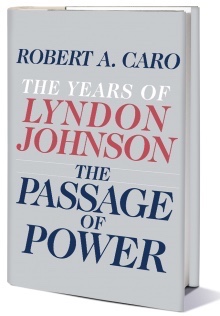
“He was to become the lawmaker for the poor and the downtrodden and the oppressed. He was to be the bearer of at least a measure of social justice to those whom social justice had so long been denied. The restorer of at least a measure of dignity to those who so desperately needed to be given some dignity. The redeemer of the promises made by them to America. “It is time to write it in the books of law.” By the time Lyndon Johnson left office he had done a lot of writing in those books, had become, above all presidents save Lincoln, the codifier of compassion, the president who wrote mercy and justice in the statute books by which America was governed.” ~ Robert A. Caro in The Passage of Power
He was comparing Johnson to Lincoln as a “codifier of compassion.” To codify means to make something a part of an organized system. In other words it becomes more than talk.
 Because of the childhood poverty, his relationship with his father, and his teaching position, was able to have all three types of empathy I teach about in leadership professional growth gatherings. He was first able to show Cognitive Empathy; the ability to understand another person’s perspective. Because Johnson grew up in poverty, he was able to feel what another person feels, or what is called Emotional Empathy.
Thirdly, because of his experience as a teacher at Welhausen School in Cotulla, Texas, a small town on the border of Texas and Mexico, he practiced Empathic Concern: the ability to sense what another person needs from you. Johnson’s classes were made up of the children of Mexican-American farmers. Johnson didn’t speak Spanish and many of his students didn’t speak English. Despite this limitation, Johnson quickly and enthusiastically began teaching and encouraging the children to speak English by holding speech and debate tournaments.
Johnson was very strict with his students and left a lasting impression on them. In addition, Johnson organized a literary society, an athletic club, and organized field trips to neighboring towns so his students could compete in sporting events, speech, and spelling contests. With his first paycheck, Johnson bought playground equipment. In a letter home to his mother, Johnson wrote about his work with the students and asked her for help in sending toothpaste for the children and borrowing materials for his debate team.
Clearly Johnson’s upbringing gave him tremendous ability for empathy, but notice he added action to this. Thus, becoming compassion. Empathy is just a profound feeling, but add to that merciful and helpful action and you get compassion and supportive companionship. Compassion is empathy put into action, or as is the point of this post, codified.
Johnson’s past experiences had set him up perfectly to be a “codifier of compassion.” He knew what had to be done and did it. So many leaders talk empathy very well, but that is all it is – talk. We must walk the talk and codify that empathy with the actions of compassion.
“Getting It Right” Before “Being Right”
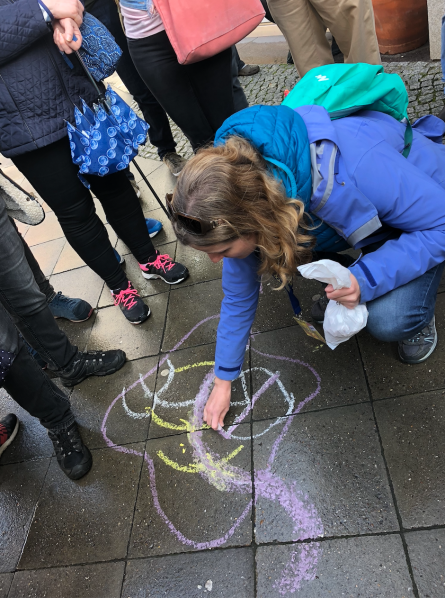 “Pride goeth before destruction, and an haughty spirit before a fall” (Proverbs 16:18 KJV). A good daily growth exercise to read a chapter of Proverbs every day each month. There is a lot of wisdom to be gained from King Solomon. The difference between “getting it right” and “being right” with this statement, is not to suggest that we are more often than not wrong in our thinking. Despite the religious origin, people use this nowadays without religious overtones. People can say this simply as a warning not to be too arrogant.
To me “getting it right” before “being right” means having humility and an ability to consider all sides of an issue or question. Being humble does not mean that you diminish your value or take a subordinate position in terms of presenting your ideas or perceptions. It does, however, as a leader, mean than we should listen to others’ ideas before always presenting our own. And acknowledging when those ideas are better than our own. True humility is a sign of wisdom, knowledge, confidence, and strength.
“When given the choice between being right and being kind, choose kind.” ~ Dr. Wayne Dyer
“Getting it right” is a core value I practice to remind myself that making a contribution as part of a bigger team means that you have the humility to accept that others also have something worthwhile to contribute. I truly believe there is no such thing as an “expert.” But, I do talk about the “collective expertise” in the room all the time. We should all strive to be an important part of a “collective vision.” When we give up the need to always be right, we communicate and listen on a deeper level, with more understanding and acceptance, and with less judgment and resistance.
 Byron's Babbles
2 comments