Leading By Metaphor
 I use metaphors all the time. Sometimes I wonder if I use them too much, but this week while reading the very instructive book The Art Of Innovation by Tom Kelley I was reminded that we need to lead and innovate by metaphor. He said, “We should lead by metaphors.” Metaphors are a powerful tool. A metaphor can give us a powerful and clear image of who we want to be, what we want to learn, how we want to learn, and how we want to grow. Our metaphors serve as examples of how we want to contribute to the world.
 Metaphors also serve as reminders of what we do not want to be. I am reminded of the toy lawnmower on my desk that serves as a constant reminder of how when innovating, reforming, or leading change many let protecting their own, or their organization’s, turf get in the way. I literally say things like, “Time to get the lawnmowers out.” or we are going to need a really big lawnmower for this group.” In fact I blogged about this in The Frustrating Truth of Turf. Another metaphor I use a lot is that of going up a hill with bullets flying and turning around and everyone else is headed down the hill. Then my metaphor of just putting on the Kevlar™ and doing what is right comes into play.
If you haven’t noticed I really do talk in metaphores. So, to me you do not just need to pick one, you can pick multiple metaphors for whatever the situation. As a believer in adaptive leadership, these metaphors serve an important purpose. They, as I stated earlier, serve as powerful reminders and serve as great ways to tell a story. People you are working or collaborating with can relate to the metaphor. It makes the issue or topic relevant, and as you know, I am all about putting all learning into a relevant context. For example, when it comes to policy I use the metaphor of Patrick Henry a lot. As one of our founding fathers he stands as a lasting image of America’s struggle for liberty. He inserted himself as a leader in every protest and move against British tyranny and in the movement for colonial rights. Most of all, though, he believed in states rights, local autonomy, and very limited government.
As a believer in intent based leadership Patrick Henry serves as an important reminder that decisions should be made as close to where the data is created – local control. You can compare this to classroom teachers in a school or governments. How do we remove obstacles and let what needs to be done, done? Which then always brings a metaphor of that people use to describe my desires, “What you want would create the wild west.” Guilty as charged! But think about how much innovation and change was happening in the wild west.
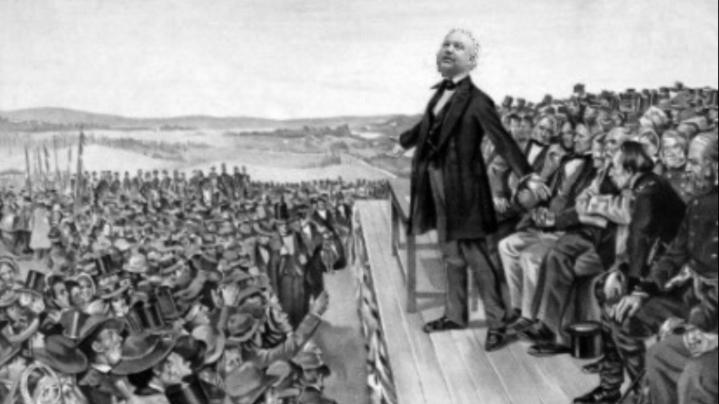
Another metaphor I have used before is that of Abraham Lincoln bringing the nation back together. In fact I use that so much that friends photo-shopped a picture that I have included in this post. It serves as an important reminder to me of how important it is to bring everyone together for a common cause and respect everyone, just as Abraham Lincoln did following the Civil War by showing respect for the confederate south. I need this metaphorical example because this unification is not always easy and I am not always the best at it. We all have a tendency to go tribal.
Kelley told us in The Art Of Innovation we should choose a metaphor for every project or everything we do. Again, they serve as such powerful reminders for us. Just like the airplane wing hanging in one of the office areas of IDEO. What metaphors do you use?
Leading Toward Morale
 As a student of IDEO, a global design company, I was intrigued by a comment that Tom Kelley made in the great book, The Art Of Innovation: “Morale cannot be planned or created.” This is so true. I have actually watched leaders try to plan organizations out of poor morales. It never works. Either the things that foster great morale are happening, or they aren’t.
 Leading has to be so much more than just telling people what to do. It’s about building a rapport and fostering real relationship with those that are a part of the organization. Rapport in turn creates trust and then things can get things done. Unfortunately, many leaders either don’t care about morale, or have the belief that giving a pep talk every so often, having a get together or party every so often, or sending someone a gift card will build morale. While these are nice things, they have nothing to do with morale.
So what is morale? Dictionary.com defines it as: “emotional or mental condition with respect to cheerfulness, confidence, zeal, etc., especially in the face of opposition; hardship, etc.: the morale of the troops.” (Retrieved 5/22/2019 from https://www.dictionary.com/browse/morale) Employee morale describes the overall outlook, attitude, satisfaction, and confidence that employees feel at work. We can’t give an employee positive morale. As a leader, though, we do control large components of the environment in which employees work each day. Consequently, we are a powerful contributor to whether a team member’s morale is positive or negative.
When our team members believe they are part of the goals that are bigger than themselves, or their job, this contributes significantly to positive employee morale. We want to feel as if we are part of something important and contributing to success for the greater good is a real morale booster. A deep focus on serving the needs of customers, students, and families, also promotes positive staff morale. Think about this: when employees have confidence in the capability of their organization’s or school’s leadership, they tend to have positive morale.
So if we can’t plan for or create morale, what are we to do? We must create an environment of shared vision for where the school or organization is headed and is positive about the direction. In this environment employees will exhibit high morale. I we genuinely planning to make changes based on feedback, our authenticity will be apparent.
It requires a great team to steer the organization or school toward progress, and if that great team involves happy employees with high morale, the journey will be successful.
Leadership Is Empowerment
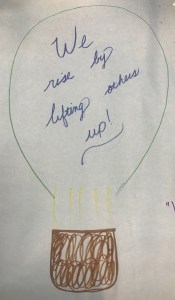 By being generous and loving, we become better leaders. Our kindness inspires others to follow in our footsteps. Humans require community in order to survive. As individuals we are week, but together we are strong. We need to strive for greatness, but we need to lift others as we rise. The goal is not to tower over our fellow humans, but rather to lift them up to where we are. If we all want to succeed ourselves, we cannot do it alone.
Leadership is empowerment. It’s lifting others up, helping them advance, and making them a part of something bigger than themselves. In short, it’s helping people to be a little closer to who they’re meant to be. Our leadership ability won’t be measured by our own advancement, but how well we advance the lives of others.
How does your leadership success measure up?
Leadership Influence Formula
 The ability to influence others is crucial to a person’s success as a leader. Let’s face it, leadership is influence. All of the successful and effective leaders I have encountered developed the way they communicate and influence. After activities involving identifying Mount Rushmorean leadership influencers in their life yesterday, our 3D Leadership participants in Georgia set out to develop the top 5 list of leadership influence. This very creative group went a step further and invented a leadership influence formula.
This happened because of a lively discussion while trying to narrow the list down to five. This had taken place using one of my typical strategies of having participants fly airplanes with their personal top three influencer traits. They then glided their airplane to someone else and so on. We then compiled the list and got down to eight. As you can imagine, it got lively at this point.
 The beauty of our 3D Leadership Program is that our participants come from all positions. We have teachers, facilities professionals, principals, and many others represented. This gives us the unique ability to have all vantage points represented in a discussion. This affords us what Dr. Nicky Howe and Alicia Curtis call “diversity of thought” in their great book, Difference Makers: A Leader’s Guide To Championing Diversity On Boards. They contend that what really matters are not the visible differences between people but their unique perspectives on the world.
What I believe we are creating through our cohorts of 3D Leadership participants is an organizational culture that is committed to fostering open-ended, inclusive dialogue. It is about recognizing that every person is a rich tapestry woven together from a million threads. Participants’ age, background, experiences, abilities, job responsibilities, gender, race, family story, and many other things all matter. There is a fallacy that people who look alike have the same views. Nothing could be further from the truth, though.
 Bottom line is, this “diversity of thought” enabled us to develop a pretty cool leadership influence formula. Here it is: Innovative + Integrity + Compassion/Caring + Listen + Inspire = Leading By Example. Pretty powerful, don’t you think? As we decided, even you wanted to switch some traits out, if you were doing all the parts of this formula, you would be getting along pretty well.
Do you follow the additive value of this formula? If you follow these traits you will stack things in your favor to quickly become a key person of influence.
Are You Setting Precedent?
 This week while reading On Grand Strategy by John Lewis Gaddis I came across a phrase from Queen Elizabeth I. She was reported to have said: “It is much better to set precedent than to have to live by it.” I loved this. To me it meant that she understood the importance of being an innovative leader and the power leaders have for setting the course for the future. One precedent she set was to rule by good counsel and trusted advisors. Many times I hear people in meetings saying that we don’t want to set precedent. Well, I say if it is a good thing then we probably should set a precedent. We basically have three choices: sit back and accept the status quo, let someone else lead, or we can lead by setting new precedents.
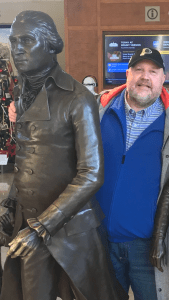
 A great example of the latter was George Washington. Washington was well aware that he had been given the power to shape the American presidency. He believed that the precedents he set must make the presidency powerful enough to function effectively in the national government, but at the same time these practices could not show any tendency toward monarchy or dictatorship. He was said to have commented frequently that, “I walk on untrodden ground.” There are many things that Washington set the precedent for during his presidency that are still in place today. A few include:
- Being called “President”
- Presented the State Of Union as a speech (Thomas Jefferson broke the tradition, but Woodrow Wilson started again)
- The White House protocol still used today of mornings and daytime for business and afternoons and evenings to entertain visitors
- Because of Washington’s love for being at Mount Vernon, he set the precedent of presidents retreating to their homes or other places.
- He set the precedent of a maximum of eight years in office (FDR broke that precedent, but in 1951 we made the constitutional amendment for a two term limit)
Never forget, great leadership is about standing for something bigger than yourself, and setting a precedent where it is needed. After all, an organization’s culture, or country’s culture for that matter, is a reflection of its leaders. Which means it all starts with you.
As Leaders, We Create The Weather
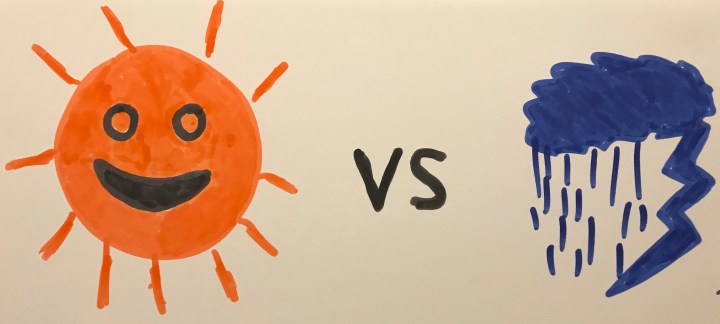 How do you show up? Think about this: do you show up sunny and bright or stormy and cloudy? Bottom line: if you show up as sunshine it will be a shiny happy day for the team. If you show up as a thunderstorm, however, it will be a rough ride. Either way, unlike the weather outside, you have the ability to influence the weather of your organization.
If you don’t believe this think about if you have ever worked with someone who you need to ask others what kind of mood he or she is in before talking to him or her. If you’ve experienced this then you have experienced leaders controlling the weather.
Therefore, we need to be intentional about the weather systems we create. Think about about the extremes: blizzards, hurricanes, extreme heat, or tornadoes. Then think about that sunny day with a calm breeze and moderate temperatures. Which of these weather patterns would you want to be creating?
Your teams and organizations will take their cues from you and whatever weather pattern you are projecting. If your outlook is sunny and bright, the organization is sunny and bright. If your outlook is full of storm clouds, the weather in the organization will be pretty much the same.
Next time you are with your team or people, imagine you are the weather map behind the meteorologist on television and she is about to give the weather report. If you take this moment of being mindful, it will help you to calm any storm fronts and bring sunshine and calm breezes to your organization.
Don’t forget, you are your organization’s meteorologist. As leaders, we create the weather. What kind of impacts do your weather systems have on your organization?
What’s In Your Leadership Toy Box?
 A week ago I facilitated one of our 3D Leadership gatherings in Florida. We used a Leadership Toy Box through line and had the participants pick a toy at the beginning and describe what leadership traits the toy possessed and how they could use the toy for great leadership. From that discussion we came up with a great list of leadership traits to focus on:
 Flexible
- Big
- Supportive
- Balanced
- Resourceful
- Wise risk taking
- Celebrate
- Confident
- Results driven
- Perspective
- Approachable
- Resilient
- Humble
- Synergistic

- Listens
- Caring
- Vulnerable
- Encouraging
- Purposeful
- Empathetic
Pretty incredible list, don’t you think? If you aspire to lead, but fill effective leadership roles whose vision will inspire, these are the leadership skills to answer. There are many other leadership traits that could be listed here, but these are certainly traits that, if mastered, would make a pretty effective leader.
The trait that came up the most in all our discussions was flexibility. Flexible leaders are those who can modify their style or approach to leadership in response to uncertain or unpredictable circumstances. Flexible leaders have the ability to change their plans to match the reality of the situation. This flexibility can be helpful when pushing through change. Dr. Ron Heifetz, Harvard University, was the first to define the distinctive theory of adaptive leadership. Adaptive leadership is about mobilizing others to make progress addressing the gap between the way things currently are and the desired state you are striving toward. Additionally, adaptive leadership is a way of reading the situation and understanding what is needed to work with others.
To fully get our minds wrapped around this we need to recognize there are two types of opportunities (challenges): technical and adaptive. With a technical opportunity there is an exact answer that is already known. Adaptive opportunities involve a human component and multiple viewpoints, opinions, attitudes, or diverse set of stakeholders. I believe if a leader takes the 20 items from above and applies them to an adaptive challenge she would be well served and in a position to lead effectively. This is why I am such a believer in creating an open environment for learning about leadership. It enabled the discussions, which started with toys, to get to learning about 20 skills for developing as a leader. What traits/skills would you add to the list?
Collaboration
 The following is an excerpt from The 9 Dimensions of Conscious Success.
Collaboration
By David Nielson
There is a notion that Edison was a master inventor who wore a lab coat and sat in his lab all day working alone and coming up with amazing inventions. This is far from the truth; in addition to being a great inventor, he was also a master collaborator.
Edison brought in hundreds of collaborators to help create prototypes and commercialize his inventions—people such as investors, engineers, and others to help him develop and promote the products. This led to creating more than 200 companies. In 1890, Edition established the Edison Electric Company, bringing together his various businesses.
When Edison heard that Alexander Graham Bell was going to commercialize his phonograph and cylinders, Edison knew it would make his technology yesterday’s news. He did not tackle this problem alone; he gathered a team, and for three days they worked on a technology that would jump over Bell’s—and they succeeded.
The thing about entrepreneurs is they are fantastic at creating ideas, but they sometimes fall short by not following through and implementing the ideas. That is one of the reasons why they have to learn to collaborate with others.
“Many ideas grow better when transplanted into another mind than in the one where they sprang up.” ~ Oliver Wendell Holmes Sr.,
The Poet at the Breakfast Table
There are many other examples in history. Consider the teams that worked on putting a man on the moon. It took hundreds of a variety of people and talents to build the craft. They needed all sorts of engineers to figure out the trajectory, communications, and more to take a team into space, fly them to the moon, land and then walk on the moon, return to the craft, fly back to Earth, and finally safely land. It required tremendous collaboration to make that happen.
A great movie, Hidden Figures, emphasizes the critical role of three women doing very important math and technical work to support astronaut John Glenn’s flight, without which the flight would not have been possible. Again, great collaboration to accomplish
a common goal—a common purpose.

About David Nielson
David Nielson brings over four decades of corporate, Fortune 500, and private consulting experience in organizational change management, leadership development, and training. David has helped guide large-scale change initiatives and business strategy driven by ERP, mergers, restructuring, and the need for cultural change. He’s been a featured and frequent speaker at PMI, Project World, Chief Executive Network, Management Resources Association, TEC, IABC, Training Director’s Forum, and the Alliance of Organizational Systems Designers.
David has worked around the world delivering training and consulting Services. In all those years, those countries, those clients; David has observed, learned and collected great experiences and teaching points. David decided to work on a way to “give back.” His latest book, The 9 Dimensions of Conscious Success helps readers identify their definition of purpose professionally and personally to achieve conscious success.
Get Some Sleep
 The following is an excerpt from The 9 Dimensions of Conscious Success.
Get Some Sleep
By David Nielson
One time I was working with a company with change-management issues. I thought I was doing a solid job for the company until one of the senior executives approached me in the hall and said, “Listen, David, I only have a minute, but I needed to ask you a favor. I need your help convincing the senior leaders about the value of the work you are doing, the value of change management for the company, and why we are investing in it. I’m sorry I don’t have more time to discuss it, but I’m rushing off to a meeting right now. We can talk about it more later.”
She rushed off to her meeting before I could really respond, and I didn’t see her the rest of the day. A deadly seed of doubt had been planted within me. I went back to my hotel room that night deflated. I thought, They don’t think I’m doing a good job…that what I’m offering the company doesn’t have value. I knew better, but I took it personally. I was afraid my time with them was coming to an abrupt end.
The doubt triggered my insecurities, and because I had low self-awareness, I was not in touch with what was happening and what the potential impact was going to be. I tossed and turned all night, extremely stressed about what was going to happen— and what I could do about it.
The next morning, I had a presentation to give to a group. I knew the material backward and forward, and all of my materials were prepared. I was tired, stressed, and insecure and did not have the awareness to predict what would happen next.
I gave the presentation and received a lukewarm response. I was asked questions that I did not answer very well. I was totally off my game. In fact, one of my colleagues noticed and asked me what was wrong after the meeting. My low self-awareness had a negative impact, not only on my presentation but also on my purpose of delivering excellent material, content, and support to the company.
I had to clear the air, so I found the senior executive who had approached me.
“Listen, I need more clarification on what you need from me to help you relay the value of what I’m doing.”
“David, we all think you’re doing a fantastic job. We all can see the changes within the organization. The trouble I’m having is clearly articulating those changes to the rest of the team. I just need your help in the proper language and examples of your work.”
Oh! I had gone straight to the dark side. As my wife puts it, I had a “disaster fantasy.” Sometimes parents have these dark thoughts if they don’t see their child for a period of time and immediately go to thinking something terrible has happened to the child.
Having a strong self-awareness will filter out these disaster fantasies because we are more aware of our feelings, thoughts, and triggers. When we begin to feel something is amiss, with self-awareness we can begin to ask questions, seek clarification, and assume the best based on our skill sets and abilities.
**********************************
 About David Nielson
David Nielson brings over four decades of corporate, Fortune 500, and private consulting experience in organizational change management, leadership development, and training. David has helped guide large-scale change initiatives and business strategy driven by ERP, mergers, restructuring, and the need for cultural change. He’s been a featured and frequent speaker at PMI, Project World, Chief Executive Network, Management Resources Association, TEC, IABC, Training Director’s Forum, and the Alliance of Organizational Systems Designers.
David has worked around the world delivering training and consulting Services. In all those years, those countries, those clients; David has observed, learned and collected great experiences and teaching points. David decided to work on a way to “give back.” His latest book, The 9 Dimensions of Conscious Success helps readers identify their definition of purpose professionally and personally to achieve conscious success.
Reflections From My Son On Martin Luther King, Jr.
 Quotations From Martin Luther King, Jr.
Last weekend my son was doing homework and asked if he could discuss his answers to an assignment with me. Of course I was a willing participant. It turned out to be a great discussion and chance for me to learn just how values driven and principled my son had become.
It was a great English class assignment where the students were given nine quotes from Martin Luther King, Jr. and asked to react with what he/she believed the meaning of the quote was or how to use the quote to make the world a better place. I thought it was a great assignment for reflection. I was so blown away by our discussion that I asked my son if I could share his answers on my blog. He said yes! So, on this day that we honor Martin Luther King, Jr., here are some quotes and some reaction from my son, Heath:
“The ultimate measure of a man is not where he stands in moments of comfort, but where he stands at times of challenge and controversy.” ~ Martin Luther King, Jr.
This shows how a person should stick to his or her core values and principles when in a time of challenge. This quote is as good today as back in his time.
“We must learn to live together as brothers or perish together as fools.” ~ Martin Luther King, Jr.
This explains how we need to get along and not fight within. We need to be united and not be separate.Because if we don’t, we will all go down as fools. This is also a good quote to relate to today in our current political environment.
“A man who won’t die for something is not fit to live.” ~ Martin Luther King, Jr.
This just shows that we need to be willing to go all in on our thoughts and beliefs. As Patrick Henry said, “Give me liberty or give me death.“ The quote is saying they you need to be committed to what you believe in and be ready to die for it.
“Faith is taking the first step even when you don’t see the whole staircase.” ~ Martin Luther King, Jr.
This shows that you have to be comfortable even when you aren’t comfortable. You have to be able to take a chance even though you don’t know how the end result will be.
“Like an unchecked cancer, hate corrodes the personality and eats away its vital unity. Hate destroys a man’s sense of values and his objectivity. It causes him to describe the beautiful as ugly and the ugly as beautiful, and to confuse the true with the false, and the false with the true.” ~ Martin Luther King, Jr.
We need to practice civilized disdain, where we understand each other’s differences and respect the different opinions of each other. This will allow us to work together and reach consensus.
“Nothing in the world is more dangerous than sincere ignorance and conscientious stupidity.” ~ Martin Luther King, Jr.
Do your research to know what all sides believe in and knowing the details of the issue.
“Injustice anywhere is a threat to justice everywhere.” ~ Martin Luther King, Jr.
Even if we see an injustice of someone or something that doesn’t affect us personally we still need to be concerned and help those who are being hurt.
“I have a dream that one day…the sons of former slaves and the sons of former slave owners will be able to sit down together at the table of brotherhood.” ~ Martin Luther King, Jr.
He wanted all cultures and races to come together and understand each other and respect each other.
“I have a dream that my four little children will one day live in a nation where they will not be judged by the color of their skin but by the content of their character. I have a dream today!” ~ Martin Luther King, Jr.
It doesn’t matter where you come from or what zip code you live in we all are fellow human beings. He wanted people to not judged by the race or color but by how good of a person you are and their skills and talents.
Hopefully you’ll take some time to reflect like we did. Today, we honor Martin Luther King, Jr., the de facto spokesman of the Civil Rights Movement, for his key role in directing our nation closer to its goal of equality for all.
 Byron's Babbles
2 comments