Leading Like St Nicholas

Merry Christmas! Yesterday I was reading a great piece in History Facts entitled Was St. Nicholas a Real Person. It was a great article and reminded me how important myths and these sub-creations were to what has become part of our culture. I realize I have broached a topic that there are many different thoughts and beliefs about, when it comes to myths and Santa Claus, but hear me out. First, we know there was a real St. Nicholas of Myra that was born around 280 CE and died around 343 CE (that date is disputed). What we do know is that he was a benevolent man and that much of the mystical wonder of Santa Claus was probably myth being created using the example of the real St. Nicholas.
J. R. R. Tolkien believed that myths and fairy tales were essential forms of art because they tapped into deep truths about human experience and the nature of existence. He viewed them as “sub-creations,” meaning that they allowed authors to create their own worlds and realities, reflecting the divine creativity inherent in the act of creation itself. For Tolkien, these narratives served not only as entertainment but also as a means of exploring profound themes like heroism, sacrifice, and the struggle between good and evil. He believed that through these stories, we could better understand our own lives and moral choices, making them invaluable to the human experience.
These sub-creations allowed us to capture the traits of the real St. Nicholas, known for his generosity and kindness, particularly towards children and the less fortunate. Here are a few leadership lessons and themes we can learn St. Nicholas:
- Generosity and Kindness: St. Nicholas was known for his acts of giving without seeking recognition. He secretly provided dowries for poor girls to protect them from being sold into servitude, emphasizing the importance of helping those in need.
- Compassion for Children: He had a particular affinity for children, which is reflected in modern Christmas traditions that focus on gift-giving to kids. His legacy inspires the idea that the holiday season is a time for joy and generosity toward younger generations.
- Miracles and Charity: Stories of St. Nicholas performing miracles, such as reviving three children who had been killed, highlight his role as a protector. This theme of miraculous acts evolved into the magical aspects associated with Santa Claus today.
- Cultural Adaptation: The figure of St. Nicholas has been adapted and transformed through various cultures over centuries, leading to the creation of Santa Claus. His image became more jolly and festive, embodying the spirit of Christmas.
- Symbol of Hope: St. Nicholas represents hope and the spirit of giving, reminding us that even small acts of kindness can have a profound impact on others.
These lessons emphasize the values of love, compassion, and community that should be central to our everyday life and not just during the holiday season.
Christmas Playfulness
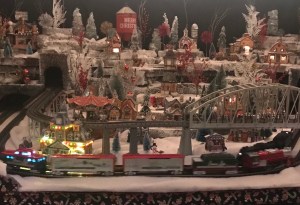
How are you doing with your playfulness? On this Christmas morning I am thinking about how we learn through our bodies. The somatic side of learning if you will. Watching kids play with toys on Christmas is amazing. Wait a minute; watching adults play with their kid’s toys on Christmas is amazing. With play we get participation and full engagement. Play inspires curiosity. Curiosity in turn opens the door for exploration, experimentation, and more learning. What if we intentionally focused on learning, leading, and living through play? For adults and children alike, play makes use of all our different senses – visual, auditory, and kinesthetic. Our bodies store so much of our information and when we become active, our learning becomes sticky.
I love to use playing as a part of the leadership development work I do. Play fosters our curiosity and strengthens our childlike spirit to transform the way we show up as a conscious leader. Play reduces resistance and pushback because people are relaxed. When we let our guard down, all learning happens more easily. Playing also brings low-stress social interaction. Playing is how we connect. Play stimulates our imagination, helping us adapt and solve problems. Play gives us an opportunity to refresh, rejuvenate, and revitalize. When was the last time you played?
Silent Nights of Peace

Most people don’t remember the first time they heard or sang Silent Night. We just know it has always been a part of our Christmas music selection list. My wife and I actually had my Aunt Virginia (professional organist) play Silent Night at our wedding 36 years ago this past December 21st. It wasn’t until I went to the Silent Night Chapel at Bronner’s Christmas Wonderland a couple of weeks ago that I began to take a deep dive into understanding the significance of the most widely known Christmas Carol of all time. Bronner’s Silent Night Chapel is an exact 1:1 replica of the original chapel in Oberndorf/Salzburg, Austria, which marks the site where Silent Night was first sung on Christmas Eve in 1818.
After the Napoleonic wars had taken their toll in 1816, a young priest in Austria, Joseph Mohr, took a walk and was overwhelmed by all the stars in the sky and the quietness of a city finally at peace. He went back and wrote the words. Then, on Christmas Eve, 1818, the now-famous carol was first performed as Stille Nacht Heilige Nacht. Joseph Mohr, the young priest who wrote the lyrics, played the guitar and sang along with Franz Xaver Gruber, the choir director who had written the melody.

So why is the a replica of the Silent Night Memorial Chapel significant? Dedicated in 1937, the Chapel in Oberndorf, Austria, was built on the alter site of the original St. Nicholas Church. During a visit to the site, Wally Bronner was inspired to build an exact replica on the south end of his store’s 27 acre complex near the south entrance to Frankenmuth, Michigan. Hundreds of thousands of visitors walk in the replica chapel every year. Just as this visit inspired me to understand even more deeply the meaning of the words of Silent Night, I am sure every person entering that chapel finds some inspiration or peace.
So why was it important for me to take a deep dive into Silent Night and come to a place of understanding of the inspiration for Mohr to write these immortal lyrics? Today, Silent Night is perhaps the most famous Christmas carol in history. It has been translated into most languages, and the Bing Crosby version is the third-bestselling single in history. It took the cultural landmark at Bronner’s CHRISTMAS Wonderland to trigger my learning. The song itself was even declared to be an intangible cultural heritage by UNESCO in 2011.
May we have peace on earth and our nights be starlit, blessed, and silent.
Do You Feel Like I Do On Christmas 2020?

Here it is, Christmas morning on Day 288 of the Global Pandemic in 2020. It’s easy to get caught up in all that is chaotic in the world right now, but I also want to pause and reflect on this day of the celebration of birth. This is the day that many of us celebrate the birth of Jesus. This day has, and will continue to serve as a day of birth to many new interests for kids. Think about that Lego set or rocket model that spurs an interest in engineering or being an astronaut for a little girl. Or, the electric keyboard that encourages the musical aspirations of a little boy.
I realize there are more significant influences on a child’s career choice than toys or the things they play with on Christmas morning as kids. But, children need access to a healthy play diet. It’s why I believe programs that make sure children get a toy at Christmas are so important. Playing boosts a child’s belief. No child plays with Legos and learns how to build houses, but she might learn how to overlap bricks to create a stable structure. Or, her brother and her might decide how to change the design of the picture on the box as they build. It’s more about confidence and familiarity than an actual skill set.

Toys and playing can compliment attributes in our children such as having their own mind, standing up for their own beliefs, showing initiative, having goals, and finding passion and purpose. I was reminded of all this while reading Peter Frampton’s incredible book, Do You Feel Like I Do? A Memoir, this week. Early in the book he told the story of his dad playing Father Christmas. Their tradition must have been to put the presents at the foot of the bed and his dad was making noise with the wrapping paper. Peter woke up and busted his dad. Of course, no kid’s going back to sleep, so he began to play with acoustic guitar Father Christmas had brought him. I loved the last part of the story in the book when Peter Frampton said, “But I didn’t know how to tune the bottom two strings. Dad said, ‘It’s three in the morning; can’t you go back to bed?’ ‘No, no, come on!’ So he came in and tuned the two bottom strings for me. And from 3:30 in the morning on Christmas when I was eight years old, I haven’t stopped playing since” (p. 11). Was that where the career of an awesome and very talented rock star was created? Probably not completely, but it certainly played a part in his development, or Peter would not have told the story. For one thing, think of the morale boost for a kid to get a musical instrument from his parents. Wow, my mom and dad believe I have talent!
Of course, all of this from the father of the boy who got a milking machine from Santa. In my defense, that was what he asked Santa for. But, that little boy grew up, and is now studying Animal Science at Murray State University and has a respectable herd of Jersey dairy show cattle. Did it all happen because of the milking machine that we assembled on the living room floor and then carried to the barn that Christmas morning? No, but Heath has never forgotten that Santa invested in his interest of dairy cows. Thus, the intersection of purpose and passion were beginning to be defined for Heath.
Now, let’s not overthink this. The most important thing is to make sure our kids have the chance to play. If they have specific interests, great, but it doesn’t have to be a guitar or milking machine. Let’s let kids play with a wide variety of toys and give them the opportunity to discover their interests, passion, and purpose.
 Byron's Babbles
leave a comment