Leading Like A Chess Board
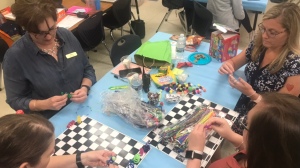
In The Problem of Pain, C. S. Lewis said, “The ability of the chess player to play chess is dependent upon the rigidity of the squares and the board.” The leader is the board and the squares. This was a great metaphor that compared the role of a leader to that of the chessboard and the squares on it. The rigidity of the squares represents the consistency and predictability that a leader should exhibit. Just as the squares on a chessboard remain fixed, a leader’s actions and decisions should be reliable and consistent. This allows team members to trust in their leader’s guidance and feel secure in their roles.
In chess, the squares on the board provide a structure and foundation for the game. Similarly, a leader provides structure and a framework within an organization or group. They create an environment where their team members can operate and collaborate effectively. The rigidity of the squares in a chessboard can symbolize the structure and order that a leader brings to an organization or group. Just as each square has a specific position and role on the chessboard, a leader sets clear expectations and assigns roles and responsibilities to each team member. This helps create a sense of order and accountability within the organization.
The rigidity of the squares refers to the stability and consistency of the leader’s approach and decision-making. Just like a stable and well-structured board is essential for playing chess, a leader’s consistency and clarity in their actions and decisions are crucial for their team’s success.
All of this highlights the importance of a leader’s role in providing structure, stability, and consistency to enable their team members to perform at their best.
Play Chess, Not Checkers
 Good Leaders Play Checkers.
Great Leaders Play Chess!
Great leaders recognize that each piece on the chess board is different. You cannot play the game (lead), much less win the game, if you do not appreciate, leverage, and deploy each of the pieces in their own unique and individual way.
So today, I facilitated a professional development session for Georgia and Florida principals that I title “Play Chess, Not Checkers.” I started off by asking two questions:
- What are the differences between checkers and chess?
- What must you be able to do to win at chess?
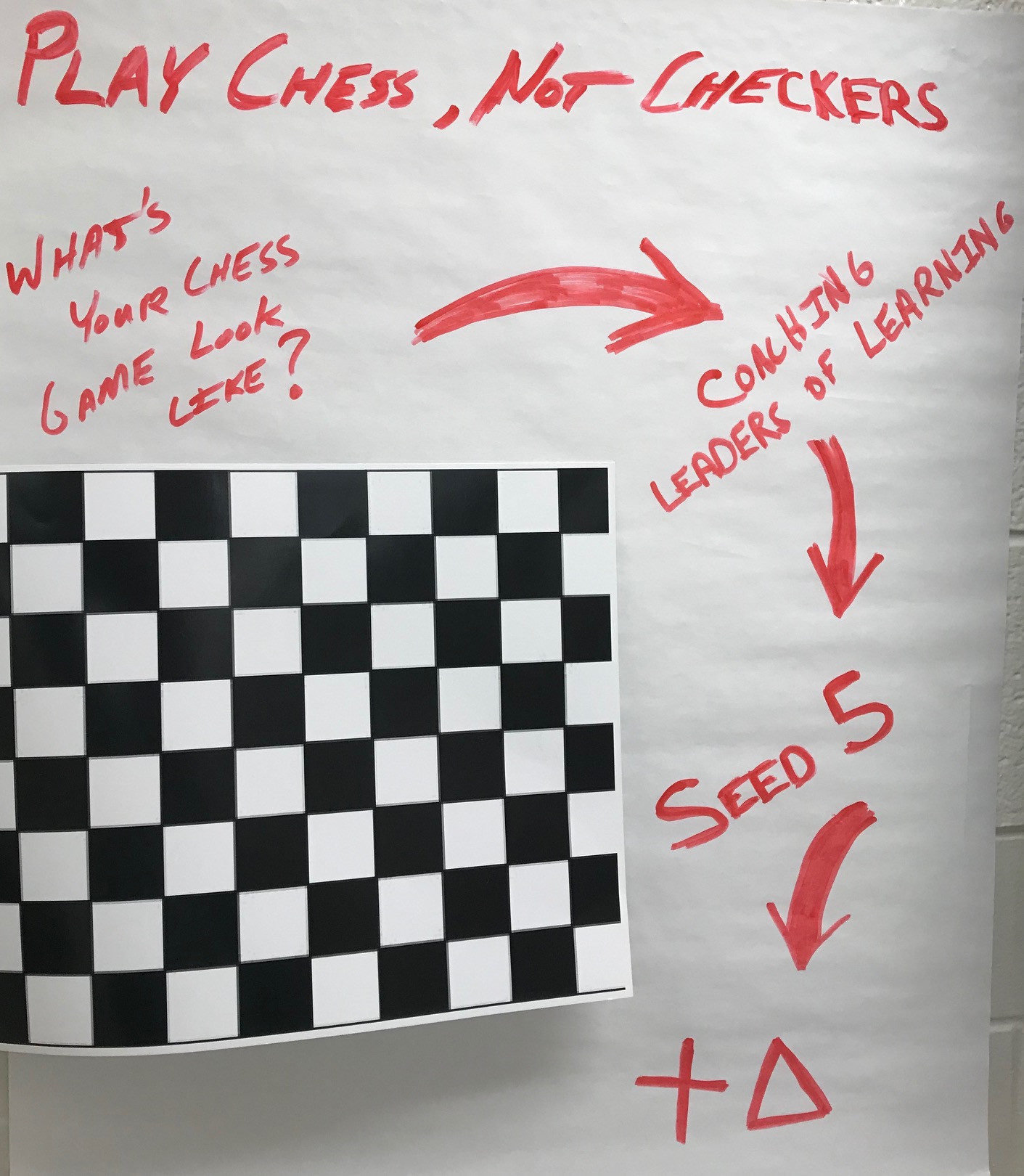
Since a picture is worth a thousand words, here is a picture of the notes we took during discussion:
Here are some quotes from the day that stood out:
“What can I attack now, and what can wait.”
“Do You have the skills to pivot?”
“We need big vision protectors.”
“The wrong player changes the entire game.”
“What happens when you hire a leader who runs it like a checker game, instead of chess?”
For this next quote I need to put up the graphic I drew:


This was such a great discussion. And, of course, we could not move on without having them create their own model the ideal leadership chess game. Check out this video of their creation:
As you can see this was a very inspirational and meaningful discussion. We gave a lot of thought to how we lead and the environment we create by using the context of playing chess. How about you? Do you lead like a chess or checkers player?
 Byron's Babbles
leave a comment