Leading Like Admiral William McRaven

I was so impressed by Admiral William H. McRaven’s keynote yesterday morning at ExcelinEd’s National Summit on Education. He began by saying, “If you are not a person of character, you will struggle in leadership and will really struggle leading in a crisis.” With this comment he really grabbed my attention. I was also reminded of how Angela Duckworth had defined character the day before in her great keynote: “Character is all the things you habitually do, think, say, and feel that are good for others and good for you.” Having encountered leaders in my career that lacked character, all this really resonated with me. To me, character is the “walk” part of “walk the talk.” Character encapsulates how we act and what we do. Whereas, “talk” is the values part of “walk the talk.” Those leaders I mentioned earlier talked a big game of values, but then we never saw the actions, or character. We cannot just say we will do the right thing, we have to actually know what the right thing is and do the right thing. Character is all about our habits. Thus why Admiral McRaven said the leader without character would struggle, especially in a crisis when our character really shows.
“The truth will always, always, always, come out.” ~ Admiral William H. McRaven

Admiral McRaven also shared leadership lessons from his great book, Conquering Crisis: Ten Lessons To Learn Before You Need Them. He outlined five key leadership components:
- Assess: we need procedures for getting facts and evaluating the quality of the information. We need a group of trusted advisors – what McRaven called a Council of Colonels. This is an advisory group that will speak the truth to power.
- Report: I love what the Admiral said here: “Always tell the truth, the whole truth, and nothing but the truth.” Also he told us to, “Use truth and transparency to show you understand the problem.” This helps us to personify the crisis.
- Contain: one point Admiral McRaven made here that really stood out to me here was to, “slow the pace of the crisis with one strong decisive move directed at the fastest-moving concern.” This involves us, as leaders taking control of the crisis and dictating the tempo.
- Shape: we need to actively influence situations and control the narrative. The Admiral told us to, “weaponize the truth.” He urged us to, as leaders, mold the circumstances and perception of the crisis so our organizations come out stronger on the other side, rather than just surviving it.
- Manage: This point said it all: “Reinforce your actions with a resource heavy approach to dictate the tempo and shape the outcome.” In other words, as I stated in the beginning paragraph of this post: “walk the talk”.

I love that in a conversation after his keynote with Jeb Bush, Admiral McRaven discussed the need for leaders to be humble and have the humility to listen and learn first. He discussed having a great team around him so he finish this sentence: “I need to understand…” I’ll conclude this post by saying that Admiral McRaven is one of America’s great and iconic leaders. His record shows him to be a man of character who has walked the talk and walked the walk.
Redemption and Maturity: The Transformative Power of Personal Growth

Last week while facilitating a student focus group on character development for a client, I encountered two descriptions of “character” that I had not ever heard previously. Those descriptions were “redemption” and “maturing.” These words really caused me to pause and think about what redemption and maturing have to do with character. My reflection caused me to believe that redemption and maturing have everything to do with character.
Redemption and maturing are deeply intertwined themes that reveal the transformative journey of character among us all. As we confront our flaws and face consequences, we often undergo profound growth, reshaping their identity and worldview. Exploring these developments offers us valuable insights into human resilience, hope, and the capacity for our own positive change.
When the student described character as “redemption,” I believe he was referring to a journey or transformation where he overcame past mistakes, flaws, or wrongdoings and achieved growth, forgiveness, or moral redemption. It implied that character development involves experiences and significant change—perhaps becoming better, more compassionate, or morally upright—after facing challenges or realizing personal errors. Essentially, “redemption” highlights themes of salvation, second chances, and personal evolution within our individual story.
“Maturing” adds an important layer to the concept of redemption related to character. While redemption focuses on an our moral or emotional salvation—overcoming past mistakes and seeking forgiveness—maturing emphasizes our personal growth, increased wisdom, and emotional development over time. When I heard character development described as maturing, I immediately thought of character as a continuum – it’s ongoing.
When I consider character development and maturing in the context of redemption, it suggests that our journey should not be just about fixing our wrongs, but also about evolving into a wiser, more self-aware individual. This maturation often leads to more genuine change, as the we internalize our experiences and become better equipped to handle future challenges with greater understanding and empathy.
I am grateful for the remarkable teenagers who inspired this discussion with their insightful perspectives on redemption, maturing and personal growth.
“Easy To Say, Harder To Live By”
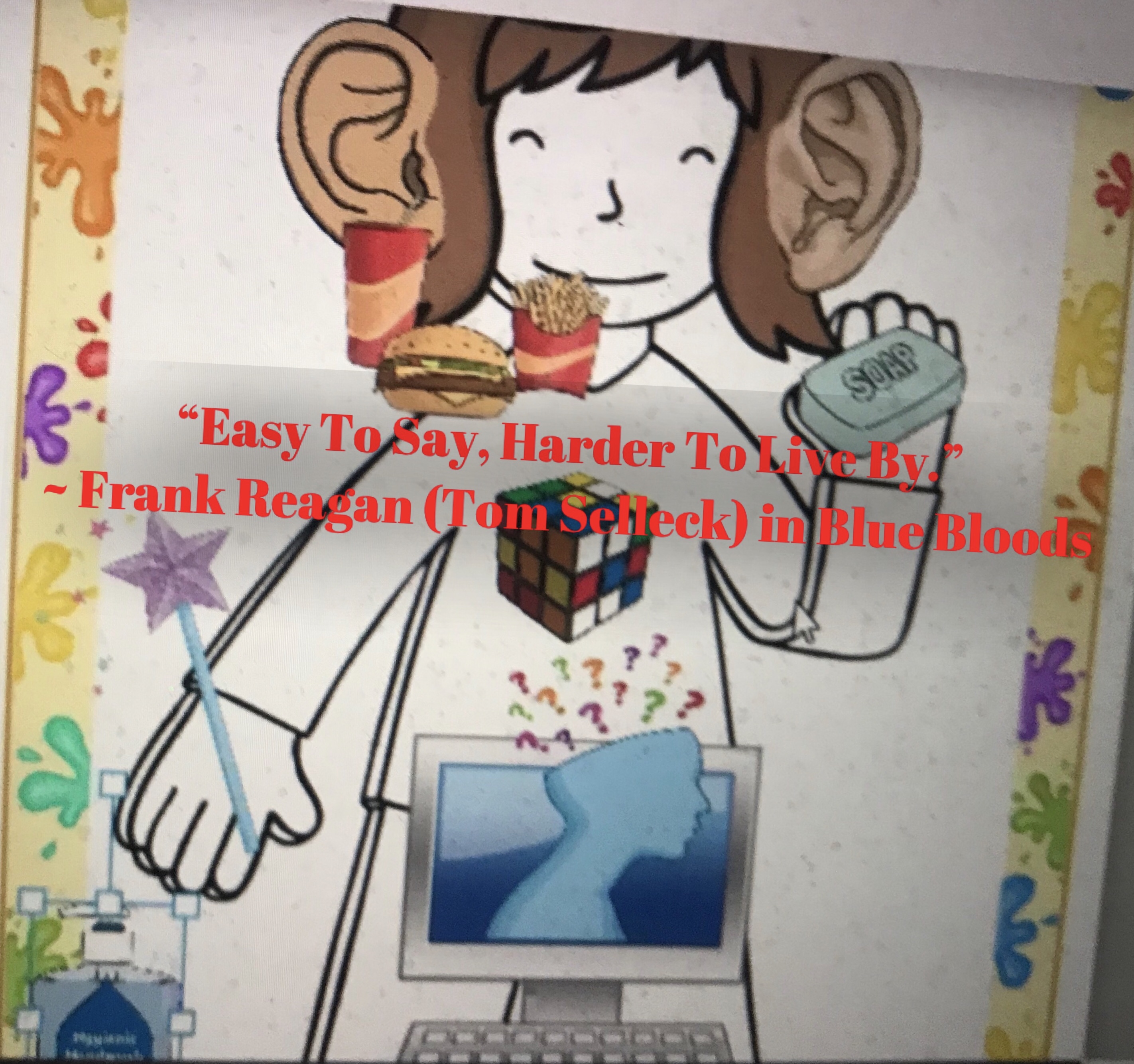
“What have I become during the pandemic?”
I had another Frank Reagan (Tom Selleck) Blue Bloods quote that made me do some reflecting. He said, “Easy to say, harder to live by.” We all have heard people say, or said things ourselves that are very easy to say, but much tougher to actually do. I wrote about another quote from Frank Reagan in “Life Isn’t Fair, But You Can Be.” It’s easy to set set ambitious goals or say you will do the right thing, but it is a much harder thing to do the work to achieve them.
We talked about this last night during 3D Leadership. The participants made Flat Stanley’s and Flat Sarah’s representing what they have become during the COVID-19 Pandemic. Almost everyone talked about new and exciting things they are doing or have started to do again. Many talked about how at first was easy to get down, but then once they started learning and doing it became exciting to be doing great new things.
Remember, it’s easy to say. Much harder to do. But, it’s the hard stuff that separates the ordinary from the extraordinary.
Being Perfectly Imperfect
 I am always amazed at the twists and turns our 3D Leadership gathering discussions take. It is amazing because there is always so much learning that takes place. Last week’s gathering which was virtual with individuals from Florida, Georgia, Tennessee, South Carolina, and North Carolina was no exception. I already blogged about one twist in learning we took in Leading Like Yoda. We also spent a great deal of time discussing how leaders are built by learning from their imperfections.
“Leaders are built by learning from their imperfections.” ~ 3D Leadership Participants on April 2, 2020
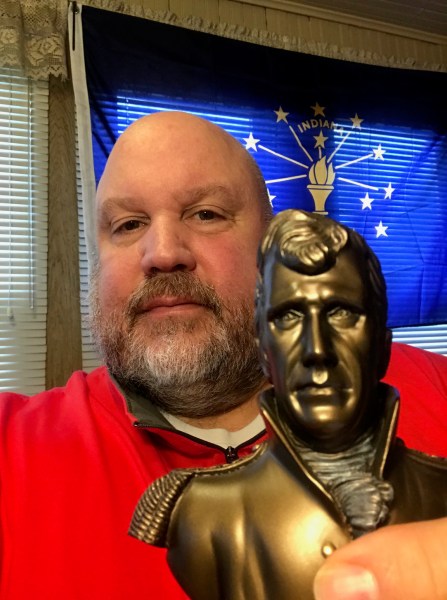
My Andrew Jackson Bronze
The question that prompted the discussion was about whether those leaders that most influenced us were perfect or did they have imperfections? The group immediately started responding with the fact that the leaders were imperfect and that recognizing those imperfections was the ultimate in transparency and authenticity. I even held up my bronze of Andrew Jackson and talked about all the great things he was and did as a leader, but there were so many things he did that were very wrong. He serves as a reminder of how we need to be humble and remember that all humans are imperfect and flawed creatures. I was moved that our discussion led us to talk about how it was those imperfections that attracted us to leaders. Particularly if those Rushmorean leaders were working hard to improve their imperfections.
“The long road to character begins with understanding that all humans are flawed creatures.” ~ David Brooks in The Road to Character
 Today we are even faced with the bigger issue that David Brooks argued in his great book The Road to Character: society has made a shift, from a focus on humility and reservedness to a focus on individual desire. I call this desire “ambition.” Many times ambition begins to rule our purpose. This becomes very dangerous and takes us from a moralistic world view to one of being self-centered. We must check our moral compass, according to Brooks, and strive to become/stay virtuous. The core of what makes a human “human” are displaying the traits of kindness, bravery, honesty, and devotion. Brooks argued that people, and I would argue our children/students, are beginning to obsess over themselves and live only for their own desires.
 One thing that we discussed in our 3D Leadership gathering that Brooks also discussed in The Road to Character was how many of us have shifted our lives to revolve around how we achieve, and no longer why. The effect is profound. Again, we can see well documented cases of this ambition taking over our purpose. I have blogged about a couple of such cases in When Purpose & Passion Turn Into Ambition and Passion At Ambition’s Command. But how do we change this? By embracing the flaws inherent in all of us. One of our participants called us “Perfectly Imperfect.” I loved that, and if we work off of that to learn from and correct or mistakes and failures every day, it would be a great start.
Doing things like being honest about our flaws can help us overcome self-centeredness and embrace deeper social values, like love and connection to others. As Yoda said, “Much to learn you still have.” If we are going to thrive and maybe be that next person on someone else’s personal Mount Rushmore then we must free ourselves from pride. We must embrace the assistance of others admit our own flaws. Through that we will become more authentic and transparent, thus being a better inspiration and role model for others; while being happier, more fulfilled, and worthy.
 Byron's Babbles
leave a comment