Narnia Door To Leadership

Today I had a Narnian experience. I went to the Narnia Door located in St Mary’s Passage in Oxford, England. I’ve got to say that making that walk with the Lamp just ahead was just like I would imagine Narnia. And the door! From the wood used to make the door, to the lion carving on the door, to the two sculptures of fauns that look like Mr. Tumnus, I could see why there are many who believe this was the inspiration of C. S. Lewis for Narnia. It is cool that this is one of those myth versus history things because no one knows for sure. Me; I believe there might just be some truth to it. Think about it: Lewis was on the Oxford campus from 1925-1954. He had to see that door!



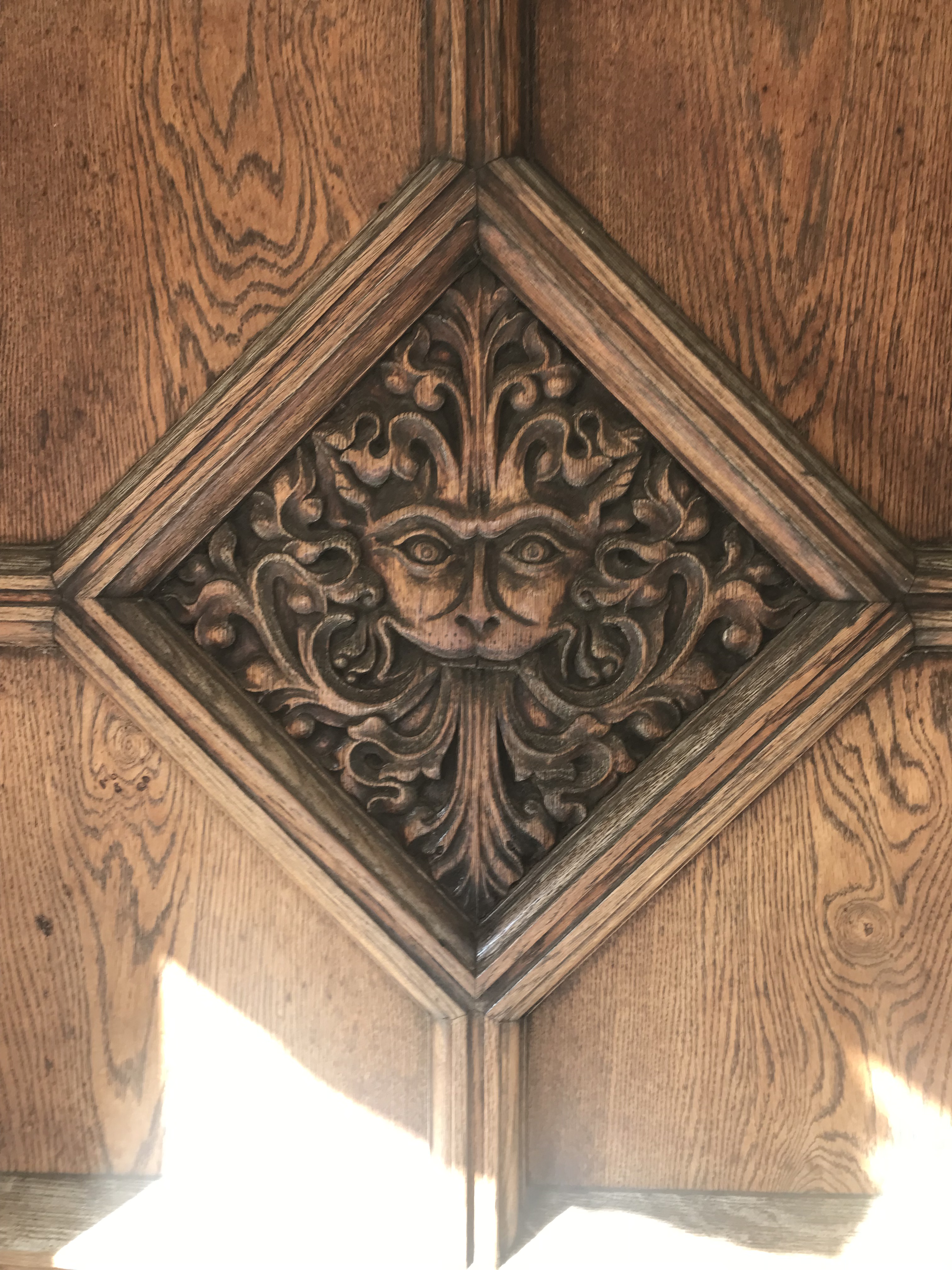

Let’s get back to the genius of Narnia. As I walked back and forth on St Mary’s Passage to the Lamp and back to the door, over and over, I was thinking about the kids – Peter, Susan, Edmund and Lucy Pevensie (check out my pictures). What it would have been like to have been them going through the wardrobe to the Lamp and beyond. Then I began to think about all the leadership lessons that Lewis had built into this fairy tale. The one that always stands out to me most is when Aslan empowered Peter (another leadership lesson) to lead the Narnian army. His reaction was that he could not do it because he had never led an army before. As a believer that everyone is a leader, we often find ourselves in situations where we don’t have all the experience we might want or all the answers. Reality is, this will always be the case. I just told a group of mentor principals last week that my first year as a principal I would have people come and ask me questions that I had no idea what they were even talking about. Fortunately I had great people around me and we were able to figure out all the answers together. And, I want to note: we NEVER used the philosophy of “fake it till you make it.” That DOES NOT WORK! Don’t try it. As we know, Peter channeled his courage and was successful.
Through my involvement with the University of Oxford I just became a member of 2U’s edX Career Engagement Network and they posted this yesterday:
Re: Imposter Syndrome – An estimated 70% of the population has experienced imposter syndrome at some point in their career. You don’t need to meet 100% of the requirements to apply for the job.
I love what they say here: you don’t need 100% of the requirements to apply. In fact I’m not sure there is ever a person that has 100% of the requirements. I know I never have; particularly when I founded my own business or, as I mentioned earlier, became a principal for the first time. I find teachers bringing up imposter syndrome. Amazingly, it is always some of the best teachers I’ve witnessed in the classroom. Unfortunately, many times the feelings of imposter syndrome come from expectations put on us by others who really don’t understand the job to start with. Bottom-line: we need to allow ourselves to be challenged and grow.
The Life Beyond Our Own Air Is Not Evil

I have another post inspired by Out of the Silent Planet by C. S. Lewis. I read this book while living at The Kilns this week as a Scholar in Residence. Dr. Debbie Higgens, Director of the C. S. Lewis Study Centre at The Kilns, handed me the book when I was first getting settled in after learning I had not read The Space Trilogy by C. S. Lewis that includes Out of the Silent Planet, Perelandra, and That Hideous Strength. At the time I wondered how this was going to fit the research work and writing I was doing about leadership, but I have to say it was an exciting guide to this week’s work. There have been so many phrases in the book that went right along with my studies. One such line in the book made me think about my overall pilgrimage to The Kilns. Here I was in a foreign country, by myself, in a house living with people I had never met until a few hours ago. A little scary, but glorious all the same. Then, in Out of the Silent Planet I read, “The tellers of tales in our world make us think that if there is any life beyond our own air, it is evil.” You ever thought about how true this is?

Our mythology has taught us that any life form, or anything outside of our own atmosphere would be bad or evil. Now, Neil Armstrong and company helped to subside this, but we still do this, even when thinking and speaking of of other countries. Before leaving to come here I had people asking me if I was nervous or scared to be living with people I did not know at The Kilns. This was curious to me – they are humans just like me – once I said “hello” they would not be strangers anymore. Just another reason why building relationships is so important. One of our challenges to inclusion is the myth of how different anywhere and anyone beyond our own air is. Not that everyone believes other places to be evil, but it is close to that in some instances. Our differences scare us when they should excite us.
I get there being an uneasiness when first meeting someone from a different country, but when truly getting to know them the uneasiness goes away very quickly. When arriving at The Kilns I literally put my bags in my room and was ushered to the dining room for tea. I had never done a formal tea before so I needed to be taught. My hosts were gracious in explaining things like how to put jam and clotted cream (in that order – trust me it is a big deal in the English air space) on my biscuit. It was a glorious time that I will never forget. In fact it is one of the highlights of my experience. I really got to know those I would be living with. My point is, I know people who that would have completely stressed out. Somewhere we have gotten wired in our systems just what Ransom said in Out of the Silent Planet, “The teller of tales in our own world make us think that if there is any life beyond our own air, it is evil.” I know he was referring to outer space in this book, but the “beyond our own air” can apply in some cases to the next neighborhood over.
We need to work hard to break this myth, particularly in our young people, by giving them experiences in others’ air. As adults we need to also take the opportunity to get in other human air space and get to know more of our fellow humans. Let’s get out there and experience life beyond our own air.
First Bubblings


As you know, I am at The Kilns in Oxford, England right now as a Scholar in Residence for the C. S. Lewis Foundation. It has been an amazing week and right now I am having my morning coffee sitting where Jack (C. S. Lewis) would have been sitting in the Common Room. I came out here intending to finish reading Out of the Silent Planet but instead looked over at the bookshelf beside me and pulled out Boxen: Childhood Chronicles before Narnia. Douglas Gresham wrote the Introduction and in it said, “So there was a sort of emotional and intellectual gap in Jack and Warnie’s literary experience” (p. 8 in Boxen). Gresham was referring to the books available in the house which were too old (advanced) for them. Their parents had no taste for faery (English spelling) tales. So, they bridged that gap. Imagine that C. S. Lewis was only eight years old when he described power and the rise and fall of nations in ‘History of Mouse-Land’ (p. 30 in Boxen).
Interestingly, Jack and Warnie did not write Boxen for anyone but themselves, but it could be a leadership book. Here’s what I mean (descriptors in parenthesis are from me):
- King Hacom used his power well and used counsel (collaborative/open minded).
- King Bublish I was conceited and full of pride (humble).
- King Benjamin was popular and knew everyone (Relationship builder).
- Governor Leppi I was a great scholar, but cruel, foolish, stubborn, and weak (pretty self explanatory).
As I reflect this morning, my mind is going in several different directions. Douglas Gresham called Boxen the “tangible and readable first bubblings forth of the springs of literature that were, years later to be the source of a great river from Jack and a healthy tributary from Warnie…” (p. 10). We talk a lot about making sure we are teaching creativity to our children and that we are making space for creativity in adults, but we need to make sure we give everyone the opportunity for “bubblings” no matter what state of life. I, in my sixth decade now am bubbling over from all the new thoughts in my head. Oh, to be sitting here having coffee with and talking to Jack!
Our Collective Identity

Mythology has come up a lot in the book I am reading while sitting where C. S. Lewis sat in the Common Room at The Kilns. The book is Out of the Silent Planet. I had not read Lewis’ acclaimed three volume Space Trilogy and was handed the books shortly after I arrived here for my Scholar in Residence Program. Wow, this is some incredibly thought provoking writing. One such quote from the book is, speaking of the character of Ransom, “It even occurred to him that the distinction between history and mythology might be itself meaningless outside the earth” (p. 169). The distinction between history and mythology lies in their nature and purpose. History is the study of past events based on evidence and facts, aiming to provide an accurate account of what happened. It often relies on primary sources such as eyewitness accounts, documents, and archaeological findings. The primary goal of history is to understand and interpret the past.

A place where the distinction of history and mythology gets blurred is the ideas of legends and heroes: American mythologies also include legends and heroes such as George Washington, Abraham Lincoln, and Martin Luther King Jr. These figures are celebrated for their contributions to American history and are often seen as symbols of national identity and values. I believe, however, these historical humans should be studied as human beings and not heroes or legendary myths.
On the other hand, mythology refers to a collection of stories, beliefs, and traditions that are often passed down orally or through written texts. Mythology may include elements of history but also incorporates supernatural, symbolic, and legendary elements. It serves various purposes such as explaining natural phenomena, teaching moral lessons, or outlining cultural values and beliefs.
The concept of the American Dream is a powerful myth in American culture. It represents the idea that individuals can achieve success, prosperity, and upward mobility through hard work, perseverance, and determination.
While history strives for accuracy and relies on verifiable evidence, mythology is more focused on conveying deeper truths and exploring the human experience through storytelling. Mythological narratives can be influenced by cultural, religious, and societal factors, making them subject to interpretation and evolution over time.
Mythologies and history are a part of all cultures around the world and play a significant role in shaping our values, rituals, and understanding of the world. They provide insights into a culture’s history, worldview, and collective identity.
Leading Like A Chess Board
In The Problem of Pain, C. S. Lewis said, “The ability of the chess player to play chess is dependent upon the rigidity of the squares and the board.” The leader is the board and the squares. This was a great metaphor that compared the role of a leader to that of the chessboard and the squares on it. The rigidity of the squares represents the consistency and predictability that a leader should exhibit. Just as the squares on a chessboard remain fixed, a leader’s actions and decisions should be reliable and consistent. This allows team members to trust in their leader’s guidance and feel secure in their roles.
In chess, the squares on the board provide a structure and foundation for the game. Similarly, a leader provides structure and a framework within an organization or group. They create an environment where their team members can operate and collaborate effectively. The rigidity of the squares in a chessboard can symbolize the structure and order that a leader brings to an organization or group. Just as each square has a specific position and role on the chessboard, a leader sets clear expectations and assigns roles and responsibilities to each team member. This helps create a sense of order and accountability within the organization.
The rigidity of the squares refers to the stability and consistency of the leader’s approach and decision-making. Just like a stable and well-structured board is essential for playing chess, a leader’s consistency and clarity in their actions and decisions are crucial for their team’s success.
All of this highlights the importance of a leader’s role in providing structure, stability, and consistency to enable their team members to perform at their best.
Learning By Falling

I am just about finished reading The Pilgrim’s Regress by C. S. Lewis. It is a fascinating book that has had me thinking and reflecting the entire time I have been reading it. Today while reading one of the characters, History, told John that the person who tries to learn to skate without falling down ends up falling down as much, or more, as anyone else learning to skate, but never really learns how to skate in the end. Genius, right? This goes right along with it being hard to win if you are playing not to lose. We must understand that falling is a part of skating, so we need to stop worrying so much about it happening and just skate.

No one wants to fall while skating and possibly get hurt, but the fact is, the more times we fall, the better we get at recovering, and the less painful it becomes. We need to focus more on what we want to happen, the successful outcome. No matter what we are learning to do, we need to visualize ourselves succeeding, over and over again. When learning skating, or anything new we need to be skating without pressure, without winning or losing. To learn to skate, or again do anything, we must get up after a fall. We can’t learn without falling sometimes – or often.
Go Ahead And Love Yourself

The great band Beartooth has an awesome new album coming out entitled, The Surface. One of the songs on the album they have released already is “Might Love Myself” and is incredible. In a press release about the album, Beartooth’s Caleb Shomo said, “This album is the story of my beginnings in the new world I’ve created for myself. One focused on health, self love, positivity, understanding, hard work, and most of all second chances. At the end of the day, life is short for all of us. We can’t escape the end, so why not make friends with it and live in a world focused on living a personally fulfilling life.” In fact I just blogged about our need to prioritize our own needs, desires, and interests in Selfish Or Self-Centered. I believe C. S. Lewis would have greatly appreciated the lyrics of this song. I know I do!
In “Might Love Myself,” Caleb sings, “I’m exactly who I wanna be.” That is a great place to be. Loving ourself means having a deep appreciation and acceptance for who we are as an individual. It involves recognizing our worth, embracing our strengths and weaknesses, and treating ourselves with kindness and compassion. It also means prioritizing self-care – our own well-being. Loving ourselves involves us taking care of our physical, emotional, and mental health. Ultimately, to love myself means believing in my own values and my deserving of happiness and fulfillment. Do you love yourself?
Selfish Or Self-Centered

As C. S. Lewis put it in Surprised By Joy: The Shape Of My Early Life, “The distinction is not unimportant.” He was referring to the distinction between being selfish or being self-centered. He preferred being selfish over self-centered. In fact I believe he was really on to what we now talk about being self care. Being selfish and being self-centered are not interchangeable. Lewis discussed that to find joy we need to have some selfishness. We need to prioritize our own needs, desires, and interests. These are the things I talk about when discussing self-care. This includes setting up the boundaries in a working relationship. The self-centered leader wants us to give up our personal priorities to make themselves look good. Is it selfish to not take emails after 5:00? Probably, but probably good for your well-being and your family’s well-being. Does it mean you are selfish if you may have to give up some of the above and beyond things you do as a great school principal during the next year to spend time finishing your dissertation for your PhD? Yes, but there is no way that milestone in your life will be met otherwise. These are completely acceptable forms of selfishness.

Conversely, being self-centered means having an excessive focus on oneself, often accompanied by a lack of interest or concern for others. This is the person that always needs to be in the limelight. It involves being preoccupied with one’s own thoughts, concerns, and desires, disregarding the needs and perspectives of others. Lewis explained that the self-centered person can never find joy. A self-centered person wants to hear about themselves. This person will constantly steer conversations towards themselves or dominate social situations without regard for others’ interests or feelings. The self-centered person is also unwilling to share or compromise.
I’m glad that in Surprised By Joy: The Shape Of My Early Life C. S. Lewis caused me to contemplate this difference between being selfish and being self-centered. The selfish person can have a healthy focus on himself versus the self-centered person’s complete disregard for others’ well-being and perspectives. This distinction is not unimportant. We must care for ourselves and make sure we are prioritizing our own needs and desires.
Watch Out For Getting Our Tongue Into Our Cheek

In his essay, “On Three Ways of Writing for Children,” Of Other Worlds in the book On Writing (and Writers), C. S. Lewis spoke of a complement an author had gotten. He said, his tongue “never once got into his cheek” (p. 79). He was pointing outhe author didn’t use sarcasm or irony in their writing. Their words were sincere and straightforward, without any hidden meanings or humor.

When speaking about writing for children he he said, But only such good as involves treating them with respect. We must not imagine that we are Providence or Destiny p. 80). I believe I this holds true for all ages. Sometimes when we try to use sarcasm whether in writing or in-person oratory it can be taken wrong. I am not one that prescribed to no humor or sarcasm, as anyone who knows me will attest. But I do know we have to watch that. One, in-person we must know our audience. When in-person with a group we know well or have a relationship with, it can be effective. In written works where we can only predict who our audience will be we have to be very careful – it can be taken wrongly and not even in the context we mean it. This also holds true for groups we are in-person with. I know I have to really watch this and wanted to share.
Testing Our Beliefs

In A Grief Observed, C. S. Lewis said, “Only a real risk tests the reality of a belief.” This really jumped off the page at me. Lewis used the metaphor of easily believing a rope could support and save you until you actually needed the rope to support your weight – then doubt sets in. This was a reminder to me that in order to truly understand the validity or truthfulness of a belief, one must be willing to take risks and put that belief to the test. It suggests that simply believing something without any real-world experience or evidence is not enough to determine its truth. Only by facing the consequences of a belief can we truly evaluate the reality or accuracy of a belief.

Another thing I learned from Lewis in this book is that it is okay to question our beliefs. Ultimately, this can make our beliefs stronger. Lewis’ questioning of his own faith and beliefs at the time of losing his wife did not mean he was going to change his beliefs. This curiosity about our own beliefs can be healthy in helping us understand how we came to have a certain belief. It can also help us to understand others’ beliefs. By educating ourselves on issues we can better understand our our beliefs and the origins of those beliefs.
 Byron's Babbles
leave a comment