The Reward of One Good Deed

I am about half way through my reread of The Horse and His Boy (1954) by C. S. Lewis and loving it. This is the 5th book in published order of The Chronicles of Narnia series. This book has a great many little quips that make me think of life’s many lessons. Yesterday I read, “He had not yet learned that if you do one good deed your reward usually is to be set to do another and harder and better one.” This quote was speaking of Shasta and it made me reflect on one of the things I have really had to watch, as a leader – when we have someone really good at something and shows how responsible, hard-working, or high achieving they are, I would often reward them with more work. I always had to remind myself how important it was to consider the well-being of others and not bombard them with constant requests for good deeds. It is important to spread out our requests in order for others’ abilities to also be developed and highlighted. We also need to show appreciation for the help we receive. Communication and gratitude are key in maintaining positive relationships when asking for help.
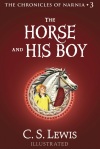
Some leaders justify this by considering it “pushing” the top performers. The problem is, many of those top performers see it as allowing the lower performers do less. An eye opener for me was when, several years ago, a top performer said to me, “I need you to stop pushing me so hard and come along side me and help me learn and grow some more.” Wow, I needed that punch to the gut. She was right! She didn’t want me to quit recognizing she was a top performer, but wanted me to not run her into the ground. Just as Shasta, in The Horse and His Boy, was learning “that if you do one good deed your reward usually is to be set to do another and harder and better one,” I was learning the effects those rewards.
The bottom line here is that we need to help manage the workload. Doing great work should lead to more responsibilities and opportunities for growth. This should not, however, mean just more work added to an already full plate. Adjustments must be made be made and when responsibilities are added, something needs to be subtracted. We must also at the same time create a positive culture of continuous improvement and growth. Appropriate recognition and rewards mixed with fair distribution of the organization’s work are key here.
Oh The Stories We Told!

Last night I had the opportunity to ponder the power of stories and sub-stories and the learning that occurs from them for young and old alike. I got into Washington D.C. last night for a board meeting and had the opportunity to go to one of my favorite restaurants with some friends. We went to Old Ebbitt Grill. Every year when I brought students here for National FFA’s Washington Leadership Conference, of which I always brought my son, Heath, from when he was six months old on up, we would eat at Old Ebbitt one evening. In fact last night I sent my son a picture of one of the bars in the restaurant with the question “Do you know where I am?” He immediately texted back, “The bar/restaurant that Teddy [Theodore Roosevelt] always went to right next to the White House.” He was spot on! We had sat in Old Ebbitt and talked about the President’s who had been there. In fact, on Old Ebbitt’s website it says, “…Presidents Ulysses S. Grant, Andrew Johnson, Grover Cleveland, Theodore Roosevelt and Warren Harding supposedly refreshed themselves at its stand-around bar.” My son and I used to sit and imagine the conversations based on what was going on in the country at the time. Those were some very real history, government, and civics lessons. Oh the conversations we had.
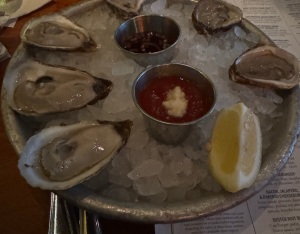
From a young boy on, my son has loved oysters. Old Ebbitt is known for their varied selection of fresh oysters (see photo for last evening’s list). Last night for my friends I modeled what Heath and I would do when picking oysters – we looked up where each of the oysters came from. Some of the places my friends had been to. Oh the stories that were told. In the end we tried four on the list based on places we had been. Again, oh the stories we told!

That’s the point of this post – the power and learning in the story. During the conversation last night with clanking dishes, loud laughter, a group singing happy birthday, and probably for others my loud voice in the background, one of my friends asked me why I had become so obsessed with C. S. Lewis. As you know, I just returned from spending a week at The Kilns. I told them I believe C. S. Lewis explained it best when he said, “What draws people to be friends is they see the same truth. They share it.” This quote is from the book “The Four Loves”. Lewis was telling us that true friendship is built on a foundation of shared beliefs, values, and understanding of the world. When people are able to connect on a deeper level and see things the same way, it creates a strong bond that can withstand test of time. Even though Lewis died the year I was born and coincidentally the same day as John F. Kennedy was assassinated, I feel a bond because of Lewis’s writing, storytelling and beliefs.
I was telling them that I am working through all the Chronicles of Narnia books right now in publication order and they are causing me to do a great deal of deep thinking and reflection. One of my friends piped up and said, “But those are children’s fairy tales.” Another friend yelled, “Well look who we’re talking to.” Touché! Seriously though, C. S. Lewis was the master at the skill of sub-creation. More about sub-creation in a minute. He created the fantastical world of Narnia, complete with its own mythology and history, which has captured the imaginations of readers for generations. Lewis’s ability to craft a rich and immersive fictional universe is a testament to his talent as a writer and his understanding of the power of myth and storytelling.
“Sub-creation” is a term coined by J.R.R. Tolkien, one of Lewis’s friends and member of the Inklings, to describe the act of creating fictional worlds or stories within a larger, pre-existing world. In Tolkien’s view, sub-creation is a form of artistic expression that allows individuals to tap into their creativity and imagination to produce new works that are inspired by or connected to existing mythologies or narratives. By engaging in sub-creation, artists and writers can contribute to the richness and depth of a fictional universe while also exploring themes and ideas that resonate with their own experiences and beliefs. It is a powerful form of creative expression that allows for endless possibilities and interpretations.
I believe this is why I have been so drawn to fictional work the last several years. It allows me to expand my thought beyond our preexisting narrow world. Lewis didn’t tell or right a story that didn’t draw us in to be a part of his world, whether fantastical, real, or visionary. What stories do you need to tell?
Leading At The Right Pace

I started reading C. S. Lewis’s third (in published order) Chronicles of Narnia book, The Voyage of the Dawn Treader, on my way home from my second England adventure to Oxford and The Kilns. As I read I was reflecting on how fast my study trip went. It was a little like when Susan, Lucy, Peter, Edmund, and now their cousin Eustace go to Narnia. It doesn’t matter how long they are in Narnia, when they return it is the same day and the same hour as when they left. My time went by quickly, and it seems like I just left, but I am so blessed to have had the opportunity to study yet another time in my own Narnia that had been just a place in books and stories, but made real by my being there. Now, like the children on Narnia, I am ready to go back.
In the fifth chapter, Eustace goes off by himself and gets lost and then says, “It is very unpleasant to have to go cautiously when there is a voice inside you saying all the time, “Hurry, hurry, hurry.” This is what I love about Lewis – the deep meaning and cause for thinking he artfully put in his work.

The lesson in that comment from Eustace is about the importance of balancing our inner desires for speed and urgency with the need to proceed cautiously and thoughtfully. Sometimes our impulsive urges can lead us astray, so it’s important to listen to that voice inside us that urges caution and patience. As a person whose modus operandi is “Damn the torpedos, full speed ahead” or “Let’s keep our foot on the gas,” this was a good piece for me to reflect on. It’s all about finding the right balance between moving quickly and taking necessary precautions.
The Greeks have a lot of idiomatic sayings about this slowing down. The most common one is probably “siga, siga” which when translated to English means “slow, slow.” Just like the pondering about balancing speed and caution in my previous paragraph, “siga siga” reminds us to proceed with care and deliberation rather than rushing into things impulsively. The reminder here, at least for me, is it’s all about finding the right pace and approach for each situation.
We Have Had A Time

This afternoon I finished reading Prince Caspian, the second book published in the Chronicles of Narnia series in 1951. This was the C. S. Lewis book I chose to read while at The Kilns this week as part of my Visiting Scholar in Residence program. I already blogged about the book and why I picked it in The Path To Honor. The last lines in the book pull the entire story together perfectly: “Well!” said Peter. “We have had a time.” “Bother!” said Edmund. “I’ve left my new torch in Narnia.” Susan, Lucy, Peter, and Edmund had certainly had another adventure. Quite the time!
When Edmund says “I’ve left my new torch in Narnia,” he is referring to the fact that as a king of Narnia, he has gained courage, wisdom, and strength that will stay with him even after returning to the real world. Lewis used a great metaphor in the form of a torch to symbolize his growth and the lessons he learned during his, now two, times in Narnia.
We need to acknowledge the new torches we acquire on our own journeys in the form of experiences, new knowledge and skills. We need to make sure those new torches stay with us, but not be afraid to leave behind for others to learn from us as well. Go have the time of your life.
The Path To Honor

It is early morning here at The Kilns outside of Oxford England this morning as I write this post. The bright morning sun warms me as I sit in the rose garden for reflective time during this part of the day that has a crisp, almost bite, of coolness to it. My goal during my study time this week was to finish Prince Caspian. This was the second in the Chronicles of Narnia series and was published in 1951. The reason I wanted to read this chronicle was twofold; 1. I had not read it yet, and 2. Patti Callahan Henry refers to it in the book that inspired me to be here studying at The Kilns – Once Upon a Wardrobe. Her incredible historic novel was set in 1950 right after The Lion, the Witch, and the Wardrobe had come out. In the book George Devonshire was trying to find out where Narnia came from. In Patti’s book George was excited to find out that C. S. Lewis was working on a second Narnia book, Prince Caspian, that would be published in 1951. I just needed to read Prince Caspian.
Glad I did. I am on page 118 of 127 in Prince Caspian and have found lots to reflect and ponder on, as you’ll find out in a moment. I’m glad I am old enough to read fairy tales again. In the dedication of The Lion, The Witch, And The Wardrobe C. S. Lewis said to his goddaughter Lucy: “I wrote this story for you, but when I began it I had not realized that girls grow quicker than books. As a result you are already too old for fairy tales, and by the time it is printed and bound you will be older still. But some day you will be old enough to start reading fairy tales again…” I’ve said before that right now I am at a point where many times learn more and think more deeply with fiction as my muse rather than nonfiction. Happy to discuss or debate that with anyone.
Now, here is the passage in Prince Caspian that caused me pause this morning:
“‘But what do you want with a tail?’ asked Aslan. ‘Sir,’ said the Mouse, ‘I can eat and sleep and die for my King without one. But a tail is the honor and glory of a Mouse.’ ‘I have sometimes wondered, friend,’ said Aslan, ‘whether you do not think too much about your honor.’ ‘Highest of all High Kings,’ said Reepicheep, ‘permit me to remind you that a very small size has been bestowed on us Mice, and if we did not guard our dignity, some (who weigh worth by inches) would allow themselves very unsuitable pleasantries at our expense.’” 🐁 From Prince Caspian, The Chronicles of Narnia (Publication Order #2)
I heard it said once that honor is giving voice to what we value. It is interesting then that Aslan is questioning the mouse about thinking too much about honor. It is important to give honor to others not just to ourselves. I love how Lewis worked this lesson in. There are a thousand ways to nuance words and bend illustrations so that honor flows our way. It is hard not to. Ever been telling a story to honor someone else and also manage to weave in some praise for yourself? Ever been making a comment or asking a question in a meeting and skillfully worked in details of your latest/greatest thing? Don’t worry, you are not alone. We all do it. But Aslan’s point is a valid one; we think too much about our own honor. In the mouse’s case, the tail had become a source of vanity, because all the other mice had one.
Through Aslan, C. S. Lewis may have been suggesting that the mouse, Reepicheep, was too focused on his own honor and reputation, rather than on more important values such as loyalty, kindness, and selflessness. This could be a lesson about humility and the true meaning of honor and selflessness. It’s important to remember that true honor comes from within, from doing the right thing even when no one is watching. Selflessness, kindness, and loyalty are the qualities that truly define a person’s character and worth.
It all circles back to being one’s authentic self. By honoring our true-self and true-path, we come face to face with who we are. When we have that authentic face to face with who we are, our true path is revealed and we become inspired.
Which Way To Progress?

Our world is a very different place and as leaders we find ourselves needing new tools, new insights, new strategies, and new tactics for dealing with the ambiguity and challenges we currently face. This ambiguity has become a hot topic because of the unpredictable and volatile nature of today’s global environment. We are all faced with complex and uncertain situations where clear-cut solutions are not readily available. As such, leaders need to be comfortable with ambiguity and able to make decisions in the face of uncertainty. Embracing ambiguity can lead to innovative solutions, adaptability, and resilience in leaders, which are crucial qualities in today’s fast-paced ever-changing world. As I was visiting with professors at the University of Oxford Saïd Business School we were contemplating this. As I returned back to The Kilns I was also reminded of what C. S. Lewis said:
“We all want progress. But progress means getting nearer to the place where you want to be. And if you have taken a wrong turning then to go forward does not get you any nearer. If you are on the wrong road progress means doing an about-turn and walking back to the right road and in that case the man who turns back soonest is the most progressive man. There is nothing progressive about being pig-headed and refusing to admit a mistake. And I think if you look at the present state of the world it’s pretty plain that humanity has been making some big mistakes. We’re on the wrong road. And if that is so we must go back. Going back is the quickest way on.” ~ C. S. Lewis
There is plenty of disagreement about what progress is these days, which should motivate us to decide our true north and find the right roads. We even need to decide, at the very core, what is progress. One of the points that Michael Smets, Professor of Management made in class, and he made it again today when we were visiting was, “We need to be humans first and experts second.” We need to remember that relationships matter. Also, as Lewis pointed out, we need to quit being “pig headed.” This includes admitting mistakes and changing direction.
Pausing To Smell The Roses
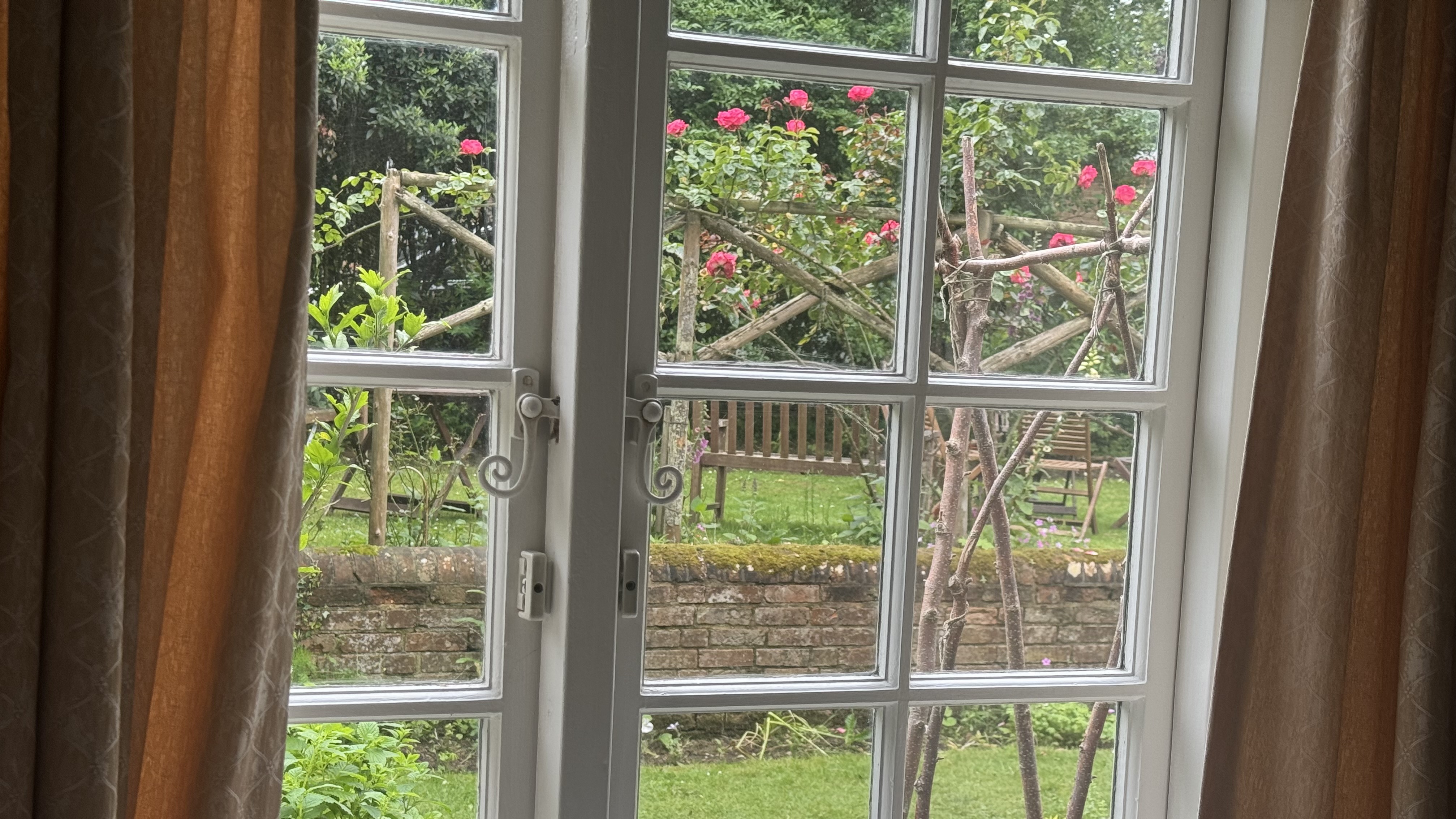
This morning as I woke and pulled the curtains open in the room that was Douglas Gresham’s during his childhood at The Kilns, I was overtaken by the sheer beauty of the roses outside my window (see featured photo). No, I did not get up late, it just gets light really early here in Oxford England. I took a minute to pause and just enjoy the individual and unique beauty of each rose. This made me think of how people are just like roses in that they have their own unique beauty and characteristics. Just as roses come in different colors, shapes, and sizes, people come in a variety of personalities, backgrounds, and experiences. Since reality doesn’t always allow us to make a full stop for appreciation, I am titling it “Pausing” in this post because that feels more realistic. What I did was more of a pause and is what I do every time I walk through the house and see the roses.
Embracing diversity and recognizing the individuality of each person helps to create a more vibrant and inclusive community. Just like how roses need care and attention to flourish, people also benefit from nurturing relationships and supportive environments to thrive and bloom. Embracing the concept of pausing and smelling the roses can make us better leaders by reminding us to slow down and appreciate the present moment. Just like how taking care of roses requires patience and attention to detail, being a leader involves nurturing and supporting the growth of those around us.
“When is the last time you stopped, and simply enjoyed what you are doing in the moment?”
~ Janelle Bruland
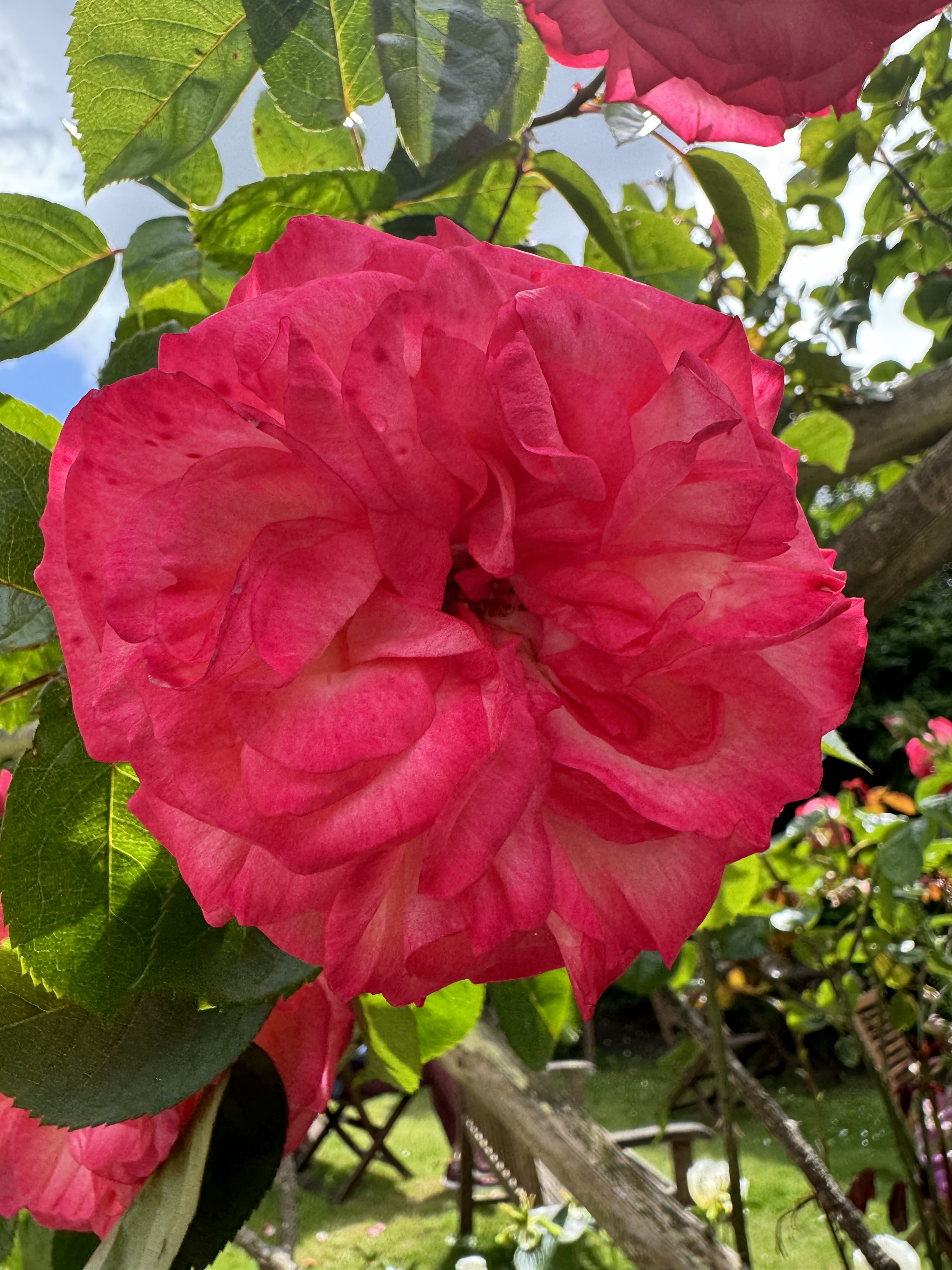
Another important reminder for me was to make sure I stop and enjoy the moment I am in. This is actually one of the leadership attributes I am studying while here at The Kilns – Being Present. When I think of being present as a leadership trait, Florence Nightingale always comes to mind. She would not have been the influence she was on nursing and health care without her first-hand experience and “being there.” We must be present and in the moment to best serve our people. In fact, since I am living in C.S. Lewis’s house I would add that he acknowledged the power of presence in his writing when he, in Mere Christianity told us he would not attempt certain subjects because he had not experienced them.
By being present and adopting a philosophy of pausing and smelling the roses and being present, we can create a positive work culture that values diversity, creativity, and collaboration. It allows us to see the potential in every individual and empower them to reach their full potential. And make no mistake; I believe EVERY person has potential. Let’s inspire and motivate others to bloom and thrive in their own unique way.
Learning, Growing And Reinventing Every Day

As I get my things stowed away and prepare to land in London England I can’t help but begin to get excited about the odyssey that awaits me. I’m about an hour from arrival and now flying over Ireland. It is 5:45am at The Kilns just outside Oxford; my ultimate destination this morning. I will be living where C. S. Lewis lived and wrote incredible books like The Chronicles of Narnia and The Screwtape Letters. As a Visiting Scholar in Residence I will be spending my time studying, writing, and visiting with University of Oxford professors. Make no mistake, I will also be taking in the local flavor as well. Tonight I will walk the path that Jack, as friends called C. S. Lewis, took to The Ampleforth Arms Pub for fish and chips. I am hoping some of the locals I met last fall will be there tonight for rekindling friendships as well as new friends to meet on this pilgrimage. This truly is an odyssey.
This is an odyssey of personal development. For all the areas of self-care that I don’t do a good job of, my personal growth and development is one I have tended very well to. I love learning and even in my seventh decade I want to keep learning and reinventing every day. If you’re not, you owe it to yourself to start – it is never too late. And if you are responsible for the development of others, show your leadership love by making sure you are making personalized growth opportunities available that are unique to each individual’s need. In fact, I was visiting with a client yesterday morning who I have become good friends with and she was sharing that she has been doing a poor job of her own personal development. She was sharing some coursework she is wanting to do. I assured her that she needed to and that I was going to hound her till she did. She shared the information on the program and I really want to take a course or two with her – what fun!
What will your next odyssey be? What odyssey will you help someone else take?
Stories That Wake Us Up

I’m transported by Padraig’s wisdom. With Dunluce Castle rising above us, I start to understand. “Mr. Lewis’s kinds of stories—the fairy tales, the myths, the universes all wrapping themselves around other worlds—are inside ours.” I look to Padraig. “These stories make us remember something we forgot. They make a young boy want to hop out of a bed and see the ruins of a castle. These kinds of stories wake us up.” “Yes!” Padraig takes my face and the rough wool of his mittens scratch. I smile and feel my cheeks lift, cradled in his hands. “The way stories change us can’t be explained,” Padraig says. “It can only be felt. Like love” (p. 242) ~ Once Upon a Wardrobe
Yes! “These kinds of stories wake us up.” Just as Megs described this awakening to Padraig in Once Upon a Wardrobe, I too was woke up by this very story. In the book, George called this being “In the story” (p. 44). As he said, “When I read a story or you tell me one, I can go into them” (p. 44). Once Upon a Wardrobe is a story so well written and told by Patti Callahan Henry that I was transported to Oxford England and The Kilns. In fact, I was so “in the story” that I applied to be a Visiting Scholar in Residence at The Kilns and the University of Oxford. Even though I was a rabid student of the work of C. S. Lewis, without being taken into this story and Patti’s other book, Becoming Mrs. Lewis, I would have not been inspired to want to see and live at The Kilns. In fact, as I write this, I am in the air flying to England for my second Visiting Scholar in residence study trip. Stories really are powerful!

As an avid reader, my point of this post is the power in being transported by stories. Also, we need to remember the power of influence gained in honing our storytelling abilities. Patti Callahan Henry transported me to The Kilns and Oxford to the point that I had to go be a part. Without her stories I would not have had the amazing experience last fall with my first visit, nor the second journey that began today. I’m glad as Padraig called it, I do not have everything “squared away” in my life and because Patti’s inspiration am learning, growing, and having fun with this odyssey.
This all reminded me of how important a skill storytelling is for us as leaders. Storytelling is a skill we need to develop because it allows us to connect with those we serve and our audiences on a deeper level, inspire and motivate others, communicate complex ideas in a clear and engaging way, and create a shared vision. Storytelling also helps to build trust, foster emotional connections, and make information memorable and impactful. Overall, storytelling is a powerful tool for effective leadership and can help leaders influence and inspire others to achieve common goals. In other words, stories transport us.
LEAP Off The Island

I didn’t plan it this way, but I am pretty pumped that it worked out that I am writing my 29th post of 2024 on Leap Day. I won’t be able to do that again until 2028. As I thought about 2028 I began thinking about projects I’ve got going, people I am working with, relationships I’m building, and lots of other things like people I want to meet and have conversations with. Really, though, most of my thoughts revolved around people. This made me think of something I heard someone say earlier this week, “No human lives on an island.” So true! No one is entirely self-sufficient and independent. We humans are social beings who rely on, and are connected to, others in order to thrive and survive. It’s a “symptom of being human.” I love the metaphor of an island. Just as an island is surrounded by water and connected to other land masses, humans are surrounded by a network of relationships and cannot exist in isolation.
“…you and I together are much, much more than one plus one. We are as many as we are able to be, and less and more.” ~ Nora Bateson, Small Arcs of Larger Circles
C. S. Lewis told us in God in the Dock that, “It is a law of the natural universe that no being can exist on its own resources. Everyone, everything, is hopelessly indebted to everyone and everything else” (Lewis, p. 85). Here, Lewis was highlighting the interconnectedness of all beings, including human beings. He was emphasizing that no being can survive solely on its own resources, and that we are all dependent on each other in some way. This idea reflects the concept of interdependence and the importance of relationships in our lives.
We are all participants in this world whether we want to be or not. As Nora Bateson told us in Small Arcs of Larger Circles, “To be a participant in a complex system is to desire to be both lost and found in the interrelationships between people, nature, and ideas” (Bateson, location 142 in Kindle). Note here the reminder that we are all participants in a complex system. Another favorite lesson of mine from Nora’s book is about cereal. She said, “The determination of something as simple as the quality of breakfast cereal is a complex idea that carries along in its wake a long string of influences ranging from developments in agriculture to physical labor and politics, to social demographics and eventually to the place we call taste… but it is just an idea made of other ideas, in a living world of ideas all pushing and pulling each other. They don’t sit still” (Bateson, location 198 in Kindle). We do all live in a world where we are pushing and pulling each other and push and pull spans the globe. Everything is ever-changing and we must remember to grow and evolve with those changes.
 Byron's Babbles
leave a comment