To Visit New Worlds We Need To Change Our Minds

I am just about finished with The Life Impossible by Matt Haig and with every page I continue to be inspired and transported to new ways of thinking. In my most recent reading, the lines, “You see, if you want to visit a new world you don’t need a spacecraft. All you need to do is change your mind… And my mind was absolutely changed” jumped out at me.
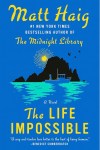
In those lines Haig has the character, Grace Winters, conveying the idea that profound change and exploration don’t always require physical journeys or external tools. Instead, he emphasized the power of mindset and perspective. By changing the way we think about our experiences and challenges, we can open ourselves up to new possibilities and understandings. This reflects a broader theme in his work about mental health, resilience, and the importance of looking at life through different lenses to find joy and meaning, even in difficult times. It encourages readers to realize that personal transformation can lead to a new way of experiencing the world around them.
This theme of visiting new worlds also reminded me of an analogy C. S. Lewis used in a paper entitled “De Audiendis Poetis” (1966). He compared travelling to a foreign country and reading old books. Lewis argued “There are more ways than one of reading old books… There are two ways of enjoying the past, as there are two ways of enjoying a foreign country. One man carries his Englishry abroad with him and brings it home unchanged. Wherever he goes he consorts with the other English tourists. By a good hotel he means one that is like an English hotel. He complains of the bad tea where he might have had excellent coffee… In the same way there is a man who carries his modernity with him through all his reading of past literatures and preserves it intact…” He continued, “But there is another sort of travelling and another sort of reading. You can eat the local food and drink the local wines, you can share the foreign life, you can begin to see the foreign country as it looks, not to the tourist, but to its inhabitants. You can come home modified, thinking and feeling as you did not think and feel before. So with the old literature. You can go beyond the first impression that a poem makes on your modern sensibility. By study of things outside the poem, by comparing it with other poems, by steeping yourself in the vanished period, you can then re-enter the poem with eyes more like those of the natives; now perhaps seeing that the associations you gave to the old words were false, that the real implications were different from what you supposed…” (Lewis, 1966, pp. 1-4).
As you read, Lewis discussed two types of foreign travelers: those who visit a place and absorb its culture and nuances, and those who remain detached and merely observe from the outside. This concept can be related to Matt Haig’s discussions about traveling and experiencing life.
In this way, I believe both Lewis and Haig suggested that genuine transformation, whether through travel or life experiences, comes from full engagement. Just as a meaningful journey is marked by understanding and immersion, rather than mere observation, so too can our lives be enriched by embracing change and finding meaning in moments of difficulty.
Reference
“De Audiendis Poetis” in C.S. Lewis, Studies in Medieval and Renaissance Literature (Cambridge University Press, 1966), pp. 1-4.
Pride – The Unpopular Fault

This week I was prompted to reflect on C. S. Lewis’s profound insights about pride. In Mere Christianity he described pride as the “great sin” and emphasized that it is the root of all other sins. Lewis argued that pride distorts our perception of ourselves and others, leading to a false sense of superiority. Lewis also told us there is no fault that makes us more unpopular. He believed that true humility is recognizing our place in relation to others, which can help combat the destructive nature of pride.
In his view, pride often leads to isolation because it separates us from God and from each other, while humility fosters connection and community. Lewis said, “It is the comparison that makes you proud: the pleasure of being above the rest. Once the element of competition has gone, pride has gone” (p. 122). He viewed pride as a vice, with humility being its opposite.
Lewis argued that pride leads to every other vice. Interestingly what prompted my reflection on pride was the great metalcore band Deadlands. I heard Kasey Karlsen, the band’s lyricist and vocalist, explain the meaning behind there new song “Villain.” She said the song is about pride. It’s about responding to pride’s manipulative grip. The song explores how pride can influence an our actions and decisions, often blurring the line between heroism and villainy.
Characters in the song may grapple with their sense of self and how their pride impacts their relationships with others. This internal struggle can lead to moments of vulnerability and reflection, prompting listeners to consider how their own pride shapes their identities and choices. “Villain,” to me, encourages listeners to reflect on our own dualities and the societal narratives that shape our understanding of morality.
I love bands and songs that prompt me to ponder subjects deeply. It is my understanding that the band will be doing songs on the seven great sins. Can’t wait to hear their authentic artistry on the subject.
Greatness By Touching Both Extremities At Once
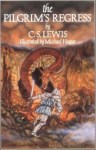
One of the things I really love about The Pilgrim’s Regress by C. S. Lewis is how he put quotes from great philosophers at the beginning of each book – the book is divided into 10 books. Making the connection between those quotes and the content of each book has enhanced my reading. At the beginning of Book Six Lewis quotes Blaise Pascal: “I do not admire the excess of some one virtue unless I am shewn at the same time the excess of the opposite virtue. A man does not prove his greatness by standing at an extremity, but by touching both extremities at once and filling all that lies between them.” It was the second sentence, in bold, of the quote that triggered my deep thought.
Pascal’s quote suggests that true greatness lies in the ability to understand and embrace a wide range of perspectives and experiences, rather than simply aligning oneself with one extreme viewpoint. By “touching both extremities,” he implies that a person can acknowledge conflicting ideas, emotions, or beliefs while also finding common ground and understanding what lies in between.
This approach fosters empathy, wisdom, and a more comprehensive understanding of the human experience. It encourages us to appreciate complexity rather than oversimplifying situations. Leaders who consider opposing ideas or extremes can make more informed and balanced decisions. This involves weighing the pros and cons of various options and acknowledging the complexities involved.
Embracing contrasting ideas can stimulate creativity and innovation. Leaders who promote a culture of open dialogue are more likely to inspire their teams to think outside the box and challenge the status quo. Using Pascal’s concept of “touching both extremities” can greatly enhance leadership development by encouraging us to embrace diverse perspectives and experiences.
The Tension Between Abstract Philosophy And Lived Experiences

I am continuing my reread of C. S. Lewis’s The Pilgrim’s Regress. C. S. Lewis taught us we should reread books and I am so enjoying reading this book a second time. I keep discovering new things to ponder this second time around. In my first blog post during this reread it was Mr. Vertue that triggered deeper thought in “Finding Happiness In The Journey.” This time it was Mr. Sensible saying “Philosophy should be our mistress, not our master” in the allegory. The character Mr. Sensible represents rational thought and human reason, emphasizing the importance of understanding through experience rather than purely abstract concepts. This highlights the tension between philosophical reasoning and the richness of personal faith.
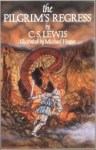
This phrase also highlights the importance of seeking deeper understanding and truth in one’s journey through life. In A Pilgrim’s Regress, Lewis explores themes of longing, desire, and search for meaning, drawing parallels between the protagonist’s quest and broader philosophical inquiries. By incorporating the phrase, “Philosophy should be our mistress, not our master,” Lewis emphasized that while philosophy can guide us, it should not overshadow personal experience and authentic living. Instead, he suggested that philosophical thought should complement our understanding of faith, morality, and purpose.
Ultimately, instead of being bound by rigid philosophical doctrines, we should use philosophical ideas as tools for exploration and understanding, allowing them to inform our decisions without becoming overly reliant on them. It emphasizes the importance philosophy should guide and inspire us, rather than control or overwhelm us. When philosophy is viewed as a mistress, it can provide valuable insights and perspectives that enrich our lives and inform our decisions. However, if it becomes master, it can lead to rigid thinking and dogmatism, restricting our ability to experience life fully and of maintaining agency and flexibility in our thinking, rather than allowing any single philosophy to dominate our perspective.
Finding Happiness In The Journey

Having just finished John Bunyan’s The Pilgrim’s Progress, I decided to reread C. S. Lewis’s The Pilgrim’s Regress. In The Pilgrim’s Regress, Lewis had Mr. Vertue say, “To travel hopefully is better than to arrive.” Sometimes this is so true. Ever gone somewhere or been working on a project where arriving wasn’t near as great or satisfying as you thought it would be? In other words, the journey was the best part. Mr. Vertue likely referring to the idea that the journey or process of pursuing a goal or dream is often more fulfilling and rewarding than actually achieving it. It highlights the importance of enjoying the journey and not just focusing on the end result.
We can apply this concept to our everyday lives by focusing on the process and journey of achieving our goals, rather than just fixating on the end result. Enjoying the journey, learning from the experiences, and appreciating the growth and development along the way can bring more fulfillment and satisfaction in life. It’s about finding joy and purpose in the journey itself, not just the destination.
We often set high expectations for the end result and too much emphasis on achieving that specific goal. We may overlook the smaller victories, personal growth, and meaningful experiences that occur along the way. That’s why we need to have benchmarks along the way and celebrate the micro-successes. By focusing on the journey and being present in each moment, we can find more fulfillment happiness in the process of working towards our goals.
A Story Without A Beginning That Will Never Have An End: Lessons From Phantastes

“Look at him! Look at him! He has begun a story without a beginning, and it will never have any end. He! he! he! Look at him!” This was said by the thistles about Anodos in Phantastes by George MacDonald. This really made me think about whether our stories really ever have a beginning or ending. And does the beginning or ending really matter. This can be interpreted in different ways depending on the context. Yes, this quote is in a faerie tale, but if you think about it there is no true beginning or ending to any of our stories. Just try it – for every beginning you choose, you can go back just a little further. This symbolizes the endless possibilities we have. This is curious to me because Anodos, whose name means either “pathless” or “upward path” in Ancient Greek flits from possibility to possibility in Phantastes. Anodos is in more of a series of episodes in the book than a single narrative. If you think about it, that is more in parallel with our own lives.

This caused me to dive in further on my study of MacDonald. He didn’t strive for us all to make the same meaning out of his writings and faerie tales. In The Fantastic Imagination, he told us, “A fairytale, like a butterfly or a bee, helps itself on all sides, sips at every wholesome flower, and spoils not one. The true fairytale is, to my mind, very like the sonata. We all know that a sonata means something; and where there is the faculty of talking with suitable vagueness, and choosing metaphor sufficiently loose, mind may approach mind, in the interpretation of a sonata, with the result of a more or less contenting consciousness of sympathy” (p. 12). In the same work MacDonald also explained that “A genuine work of art must mean many things; the truer its art, the more things it will mean” (p. 12.) That is the beauty of the great literary works – they can awaken different meanings for each of us. My meaning is just as right as yours.

I also really liked the metaphor of the butterfly or bee. We need to be like them and “sip from every wholesome flower,” taking advantage of every moment. We need to make sure we are not treating our moments as obstacles to overcome, but as precious moments to be sipped from, and “spoiling not one.” How many moments (flowers) do we miss because they don’t fit the plan, don’t fit the timeline, don’t fit with the so called beginning or end of a story?
“It is there not so much to convey a meaning as to wake a meaning.” ~ George MacDonald

Having just finished rereading The Chronicles of Narnia in published order, I really got to thinking about how C. S. Lewis did not start the story with the beginning of Narnia. That did not come till later. And in the end there really wasn’t an end. There is definitely symbolism there. This made me think of how we always get locked into thinking we need to live in some preset chronological order. Life really happens in more of a lattice-like way. For example, if predicting my own path, most would not have predicted the past two years of deep study of C. S. Lewis and being a Scholar in Residence at The Kilns. Had you told me three years ago I would be doing that I would have laughed. But because of the writing of author Patti Callahan Henry a “wholesome flower” was placed in my reach and another piece to my life’s lattice. Did it fit some “plan?” No. But I am sure glad I am adding this section to the lattice and “sipping from every wholesome flower” that has been made available. Don’t be afraid to jump of the horizontal and chronological timeline that we many times lock ourselves into. Sometimes we need to be more like Anodos and go where there is no path.
Exploring the Interconnectedness of Nature and Perception: A Deeper Look at Symbolism in Literature
I love exploring the layers of meaning in literature and pondering what lessons I can take away from them. I am reading George MacDonald’s Phantastes: A Faerie Romance for Men and Women right now. After spending last month at The Kilns outside Oxford England continuing my study of C. S. Lewis as a Scholar in Residence, I needed to spend some time digging in on the man who Lewis considered to be one of his biggest influences, both personally and in a literary sense. C. S. Lewis spoke of reading Phantastes and it changing his life. Just as one can tell the influence different artists have had on rock bands, I believe I can sense the influence MacDonald had on Lewis’s writing. One of the first things that has jumped out at me is the attention to detail and use of imagery and symbolism.
Let me give you an example from Chapter 2 in Phantastes: Anodos (the book’s central character) said, “And, stranger still, where this carpet, which I had myself designed to imitate a field of grass and daisies, bordered the course of the little stream, the grass-blades and daisies seemed to wave in a tiny breeze that followed the water’s flow; while under the rivulet they bent and swayed with every motion of the changeful current, as if they were about to dissolve with it, and, forsaking their fixed form, become fluent as the waters.” MacDonald’s attention to detail truly made the fixed forms fluent in my mind. The fact that MacDonald also sets it up that Anodose designed the carpet himself to resemble the field of flowers told us that Anodos had been seeking the life he was finding in this faerie tale.
“An almost perfect relationship with his father was the earthly root of all his wisdom. From his own father, he said, he first learned that Fatherhood must be at the core of the universe.” C. S. Lewis speaking of George MacDonald
I believe MacDonald was trying to convey a deeper message about the interconnectedness of nature and our perceptions of reality in that passage. The imagery of the grass and daisies appearing to move with the flow of the stream could symbolize how our beliefs and perceptions can influence our experiences and interactions with the world around us.
Our beliefs and perceptions are heavily influenced by our experiences and interactions with the world around us. These experiences shape our understanding of the world, impacting we interpret events, people, and situations. Our interactions with others also play a significant role in shaping our beliefs perceptions, as we learn from their perspectives and incorporate them into our own worldview. Ultimately, our beliefs and perceptions are constantly evolving as we continue to engage with the world around us.
Breaking Free from Limiting Beliefs: Lessons from The Last Battle

This morning I finished rereading the last book in The Chronicles of Narnia series. I read the series in publication order this time because I wanted more of the feel that C. S. Lewis had in writing the series. I know there are lots of opinions out there, with many of those opinions coming from those with greater literary acumen than my own, but I believe the best way to read the Chronicles are in publication order. The beauty of The Chronicles of Narnia, and all works of fiction for that matter, is the reader gets to know and understand all the characters by the end of the last chronicle. This is what I have come to love from reading fiction – we can ponder and reflect by knowing all about each character. Very rarely do we get everything in non-fiction. As you know, I read a lot of non-fiction, so this is not a lobby against non-fiction; just a nod for why I mix fiction into my reading. I love how fiction makes me think deeply.

In fact in the dedication of The Lion, The Witch, And The Wardrobe to his goddaughter Lucy Barfield, C.S. Lewis shared, “I wrote this story for you, but when I began it I had not realized that girls grow quicker than books. As a result you are already too old for fairy tales, and by the time it is printed and bound you will be older still. But some day you will be old enough to start reading fairy tales again…”
“To be concerned about being grown up, to admire the grown up because it is grown up, to blush at the suspicion of being childish; these things are the marks of childhood and adolescence…But to carry on into middle life or even into early manhood this concern about being grown up is a mark of really arrested development. When I was ten, I read fairy tales in secret and would have been ashamed if I had been found doing so. Now that I am fifty I read them openly. When I became a man I put away childish things, including the fear of childishness and the desire to be very grown up.” ~ 1952 essay “On Three Ways of Writing For Children” by C. S. Lewis

In a quote at the end of The Last Battle, by C.S. Lewis, says, “You see,” said Aslan. “They will not let us help them. They have chosen cunning instead of belief. Their prison is only in their own minds, yet they are in that prison; and so afraid of being taken in that they cannot be taken out” (p. 88-89). This quote is referring to the Calormenes who have chosen not to believe in Aslan and instead rely on their own cunning and deceit. Aslan is pointing out that their lack of belief and trust in something greater than themselves is what keeps them trapped in their own fears and limitations. By choosing to remain closed off to help and guidance, they are essentially imprisoning themselves in their own minds. It serves as a reminder that sometimes we need to have faith and trust in something beyond ourselves in order to break free from our own mental barriers. That something may be our community, family, friends, or our spiritual support.
We can prevent our minds from becoming the prison that Aslan describes in The Last Battle by practicing mindfulness and self-awareness. By being present in the moment acknowledging our thoughts and emotions without judgment, we can start to break free from thought patterns and limiting beliefs. It’s also important to seek support from others and be open to receiving help and guidance when needed. Remember, it’s okay to not have all the answers and to rely on others for support.
Leading Through the Storm: The Lighthouse Metaphor for Effective Leadership

Another lesson from C. S. Lewis jumped out at me this morning as I continued my rereading of Mere Christianity. Lewis said, “Christ told us to judge by results. A tree is known by its fruit; or, as we say, the proof of the pudding is in the eating. When we Christians behave badly, or fail to behave well, we are making Christianity unbelievable to the outside world” (p. 207). Yes, he was speaking about Christianity and the fact that people not acting in concordance with what they say keeps others from believing Christianity, but I believe there is a lesson for everyone here. Our actions and results matter! Leaders can apply this lesson by focusing on the outcomes of their actions and decisions. They should strive to lead by example and demonstrate the values they preach. By showing integrity, compassion, and responsibility in their leadership, they can earn trust and credibility from their followers and society as a whole. In other words, walking the talk.
Another metaphor that could be used is the idea of a lighthouse. Just as a lighthouse guides ships safely to shore in the midst of a storm, leaders should guide their followers through challenging times with wisdom, strength, and direction. The light from a l serves as a beacon of hope and stability, just as a’s actions and decisions can provide reassurance and guidance to those who look up to them.
Actually, we need to consider the lighthouse metaphor lacking today from a results standpoint. Just like leaders must continue to grow and develop in both technical and emotional intelligence, there have been advances making the use of lighthouses obsolete in some cases. If we want more accurate information to that of a few feet given by a light we would need a Global Positioning System (GPS) plotter with a heads-up display able to work in any light level or any weather conditions, and overlay navigation marks onto a real-world view. But let’s not forget that sometimes GPS systems may fail for certain reasons. So having a more analog system like lighthouses can serve as a backup.
The need for new navigation and GPS systems reflects the ever-evolving technological advancements help individuals navigate through complex situations with precision and efficiency. Similarly, leaders who embrace the latest tools and strategies are able to adapt to changing environments and lead their teams effectively in a fast-paced world.
On the other hand, the lighthouse represents a more traditional and reliable form of guidance that has stood the test of time. Old school leaders, like the lighthouse, rely on their experience, wisdom, and core values to provide steady and unwavering direction to their followers. While they may not always have the flashiest or most innovative approaches, their commitment to timeless principles ensures stability and trust in times of uncertainty. Bottom line is all of these examples go back to and reinforce the idea that we should be judged by our results.
The Intersection of Democracy and Happiness: Government’s Role in Promoting Well-Being
I am rereading Mere Christianity by C. S. Lewis right now and I came across a statement this morning that I really hadn’t pondered in all my earlier readings of the book. Lewis said, “…the State has a lot of different objects—military, political, economic, and what not. But in a way things are much simpler than that. The State exists simply to promote and to protect the ordinary happiness of human beings in this life. A husband and wife chatting over a fire, a couple of friends having a game of darts in a pub, a man reading a book in his own room or digging in his own garden—that is what the State is there for. And unless they are helping to increase and prolong and protect such moments, all the laws, parliaments, armies, courts, police, economics, etc., are simply a waste of time” (p. 199). The purpose of this post is not to get into a political debate, but just to remind us how simple it all really is.
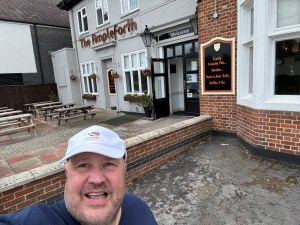
Having spent some time in an English pub where darts were being played, just a short walk from The Kilns (where C. S. Lewis lived and I was living for the week), earlier this past month I could completely relate to the happiness Lewis was describing. Lewis highlighted the idea that the purpose of the State (government) is to promote and protect the everyday happiness and well-being of its citizens in their personal lives. It emphasizes the importance of simple, meaningful moments of connection and enjoyment in our day-to-day activities. Sometimes we need to be reminded of this.
I believe the idea of promoting and protecting the everyday happiness and well-being of citizens aligns well with our principles here in my own country, the United States, of democracy. In a democratic society, the government is meant to serve the people and their rights and freedoms are upheld. This includes promoting the overall well-being and happiness of its citizens. Democracy emphasizes the importance of individual happiness and fulfillment within a society as a whole. This was a pretty good reminder for me as we enter the week of celebrating Independence Day.
 Byron's Babbles
leave a comment