The Vision In A Dream

Yesterday, in Scarcity, I discussed my rereading of The Great Divorce by C. S. Lewis. The Great Divorce is an allegory that is an incredible example of Lewis’s imagination and deep thoughts about Heaven and Hell. Interestingly, Lewis puts himself in the book as narrator of the bus trip from Hell to Heaven. For this post I want to hone in on who Lewis picked to be his spiritual guide, or “Solid People”, as they are called in the book – George MacDonald.

MacDonald had a huge effect on Lewis from age 16 when he read Phantastes so was a fitting character for Lewis to pick. Lewis later said, “Picking up a copy of Phantastes one day at a train-station bookstall, I began to read. A few hours later, I knew that I had crossed a great frontier.” Lewis also said that, MacDonald’s Phantastes “baptized his imagination.” Having read Phantastes myself, I get it – amazing!
Lewis was born toward the end of MacDonald’s life, but the two’s path’s never crossed. Yet, here is a man, George MacDonald, who had a profound impact on Lewis’s faith as well as influencing him as a writer. In The Great Divorce, the narrator says, “…I tried, trembling to tell this man all that his writings had done for me” (p. 66). This is quite the reminder that we never know who we might be influencing. Lewis, who died the year I was born, has had a profound influence on me. If I could pick a spiritual guide in heaven, it would be C. S. Lewis.

As you can imagine, in The Great Divorce the narrator is asking MacDonald many questions. I believe through his answers Lewis is trying to help us understand there will be things we don’t know the answers to and we need to be okay with that. I loved it when MacDonald said, “Ye saw the choices a bit more clearly than ye could see them on Earth: the lens was clearer. But it was still seen through the lens. Do not ask of a vision in a dream more than a vision in a dream can give” (p. 144). That last sentence is powerful and emphasizes the limitations of our understanding and perceptions, especially in spiritual contexts, but also in our hopes and dreams for the here and now. We must remember that our dreams can provide insights or reflections on deeper truths, but they are not reality itself.
Scarcity

As part of my Continuing Scholars Program at the Marion E. Wade Center, I am rereading for the third or fourth time The Great Divorce by C. S. Lewis. The Great Divorce was inspired by Lewis’s reflections on the nature of heaven and hell, as well as his Christian beliefs regarding life after death. These reflections according to the preface came from Lewis having read William Blake’s The Marriage of Heaven and Hell. This book is so C. S. Lewis! He didn’t write the book to go against Blake, but to make sense of Blake’s views. At the beginning of the Preface Lewis wrote, “If I have written of their [heaven and hell] Divorce, this is not because I think myself a fit antagonist for so great a genius, nor even because I feel at all sure that I know what he meant” (p. VII). I love this because even as self-assured Lewis was he is being vulnerable with us. He is making sense of heaven hell with his readers. I like this vulnerability because it makes it okay for me at times to be able to say to myself, “I’m not sure I have a clue what he meant here.” But then I dig in and try to figure it out.

The philosophical allegory follows a bus ride from a dreary, grey town (representing hell) to a vibrant, beautiful landscape (representing heaven). As various characters disembark from the bus, they encounter people who have already made their choice to embrace or reject the divine. Through these encounters, Lewis explores themes such as free will, the nature of sin, redemption, and the human struggle with accepting divine grace.
One character in the book, Mr. Intelligent, said, “It’s scarcity that enables a society to exist.” This really intrigued me and caused me to ponder Lewis’s exploration of the themes of choice, desire, and the nature of reality in this book and others he wrote. Through Mr. Intelligent’s assertion, he seems to be highlighting the consequences of a materialistic worldview—emphasizing that an overemphasis on scarcity can lead to a disconnection from deeper spiritual truths and moral responsibilities.
Through Mr. Intelligent, Lewis introduces us to the idea that society relies on certain limitations or sacrifices to function. The notion of scarcity, in this context, suggests that when resources are limited, people must make choices and prioritize values, which can lead to the establishment of social structures, relationships, and communities.
We are invited, as readers, to reflect on our own choices and the consequences of those choices. Ultimately, Lewis was emphasizing that the path to spiritual fulfillment and joy lies in the acceptance of God’s love and truth.
Seeing The Monster

Yesterday evening I had the treat of attending the Ken & Jean Hanson Lectureship with Aubrey Buster, Ph.D. – “Here be Dragons”: C.S. Lewis and the Construction of the Monstrous. It was absolutely amazing and I jotted down several points for further pondering. One of the points Dr. Buster made was that monsters are that which is contrary to order. She was suggesting that monsters represent chaos, fear, or disruption in society and the natural world. They often symbolize things that challenge our understanding of normalcy, morality, or the established social order.

C.S. Lewis often used monsters and mythical creatures in his literary works to serve various narrative functions. These figures can represent internal struggles, moral dilemmas, and the battle between good and evil. In literature and mythology, monsters can embody societal fears or serve as a reflection of the human psyche, representing the unknown or repressed aspects of ourselves. Another point Dr. Buster made was that we must see the monster correctly to respond correctly.
As I reflected this morning I caught that I had even created a bit of a monster in Dr. Buster. I found myself feeling inferior to her vast knowledge. Then I needed to see the monster I had created correctly and realize that she should be talking way over my head when it comes to apocalyptic monsters. Not something I have ever studied in depth. That’s why I was attending the lecture – to learn! I was letting my envy create a monster. I’m sure I could begin to rattle off subjects of my studies that Dr. Buster might not be up to speed on. The real monster in this story was me terrorizing myself. To be clear, Dr. Buster is incredible and not a monster!
Essentially, these monsters are figures that disrupt the harmony of life, prompting us to confront our fears and question our assumptions about what is considered “normal.” I loved the discussion of C.S. Lewis’s monsters in Narnia that invite readers to reflect on their own fears and challenges, making the journey through Narnia a metaphor for personal and spiritual growth.
For instance, the White Witch embodies tyranny and oppression, serving as a formidable antagonist who challenges the protagonists’ courage and faith. Her presence forces characters like Aslan, Peter, and Lucy to confront their fears and make difficult choices, ultimately leading to personal growth and revelation. As Dr. Buster taught us, there are no new monsters, just those developed from envy, lust, greed and power.
Embracing Kindness: Lessons from C.S. Lewis on Navigating Disagreements

On Wednesday of this week I had the honor of collaborating with the National Association of State Boards of Education (NASBE) to facilitate a team building program for the Nebraska State Board of Education. This was a very engaged group of leaders and we had some incredible discussions. One of our norms for the day was to always assume positive intentions. We discussed how as individuals on a board we may have different ideologies and ideas, but that all ultimately wanted to improve education for all students. Education is so complex and we sometimes have different opinions on how to best get the work done.

These discussions reminded me of the work of C. S. Lewis in The Weight of Glory when he spoke of separating the person from the person’s opinion. In that essay, Lewis emphasized the importance of understanding and valuing individuals beyond their viewpoints or beliefs. He suggested that it is crucial to recognize the inherent dignity of each person, regardless of whether we agree with their opinions or not. This perspective encourages compassion and empathy in discussions and interactions.
I pondered what advice Lewis might give to the group I was working with related to making the separation of the person from the person’s opinions. Lewis understood the complexities of human nature and the challenges people face in separating individuals from their beliefs. He might have suggested that it is important to recognize the humanity in each person, even when their views differ significantly from our own. He could have emphasized the idea that everyone is on a personal journey shaped by their experiences, and that seeking to understand the reasons behind someone’s beliefs can foster empathy.
Lewis often highlighted the importance of love and compassion in his work, so he might have encouraged that individual to approach disagreements with a spirit of kindness, reminding them that no one is entirely defined by their opinions. Instead, he would likely advocate for engaging in thoughtful dialogue and striving to see the good in others, which could help bridge divides and promote understanding.
Attracted To Novelties

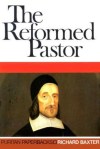
One of the people who had an influence on C.S. Lewis was Richard Baxter. I am now reading Baxter’s The Reformed Pastor (1656). It is a fascinating work and I can see why Lewis read his work. Baxter quotes Seneca several times in the book. Seneca’s statement, “We are attracted to novelties rather than to great things,” emphasizes the human tendency to seek out new and shiny experiences, often at the expense of appreciating deeper, more meaningful aspects of life. He was highlighting how people can be easily distracted by superficial or fleeting interests instead of focusing on enduring values or profound truths.
In essence, Seneca suggests that while novelty can be enticing, it’s essential to recognize and prioritize what truly matters—wisdom, virtue, and personal growth—over transient pleasures or trends. This perspective encourages us to cultivate mindfulness and discernment in our pursuits, ensuring that we are not merely chasing after what’s new but also engaging with what has lasting significance. This discernment between chasing the new and staying true to what matters is a tricky balance. It is good to be reminded of the importance of this balance. If we are honest, we are enticed by novelty.
“Humans Were Made To Work Together”

Earlier today, in Leading By The Courage To See, I blogged about developing our courage by listening and seeing. This had been inspired by my reading in The Upside of Disruption: The Path To Leading and Thriving In The Unknown by Terence Mauri and the fourth book in The Five Towers series, The Yellow Tower, by J. B. Simmons. Still quoting out of the same paragraph as yesterday in The Yellow Tower, I want to tackle the line, “Humans were made to work together.” I believe this was emphasizing emphasizing the importance of collaboration and community in human life. It suggests that we thrive when we support and rely on one another, highlighting our social nature.

In The Upside of Disruption, Mauri also pointed out that the heart of successfully evolving and innovating is collaboration (humans working together). He stressed that great ideas rarely come from individuals isolated from everyone else. As John Hendrix says, “Our work gets better in community.” Just like C. S. Lewis and J. R. R. Tolkien needed each other and the rest of the Inklings, we need teams working together and collaborations to create new and exciting innovations.

The lesson here is that teamwork, connections, partnerships, collaborations, and shared experiences enrich our lives, organizations, and communities. Working together leads to greater innovation, problem-solving, and a sense of belonging.
Genius Needs Community

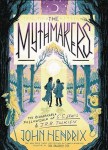
I love it when books I am reading become interrelated without there being an intentional connection of my reading them at the same time. I had read the incredible book The Mythmakers: The Remarkable Fellowship of C.S. Lewis and J.R.R. Tolkien by award winning author, John Hendrix, while reading The Five Towers Series by J. B. Simmons. Interestingly, as is obvious by the title, The Mythmakers is about the relationship between C. S. Lewis and J. R. R. Tolkien and Simmons was heavily influenced by Lewis and Tolkien. Simmons was inspired by hearing The Chronicles of Narnia read to him as a child.

I had the opportunity to be with John Hendrix this week to hear the process behind the creation of his The Mythmakers graphic novel at the Marion E. Wade Center at Wheaton College. Which, by the way, Mythmakers is like nothing you’ve ever read before – it’s brilliant. One of the points Hendrix drove home at the end of his presentation was, “Our work gets better in community.” As he pointed out, without the fellowship of Lewis and Tolkien we don’t get to read about Narnia or Middle-earth. Hendrix stressed that we all need community and our own Inklings.
Then, the next day as I was reading in The Yellow Tower, by J. B. Simmons, Cipher (the protagonist) was told “Genius requires company to truly thrive. I’m sure you have figured out by now that your friends here are no coincidence.” This reemphasized the importance of collaboration and community in the creative process that Hendrix had explained the night before. Then I had the thought that it really was no coincidence that the unlikely friendship of Tolkien and Lewis happened. Think about the unlikely coincidental meeting of others in your own life.

Here are some key takeaways that I had from this idea of genius requiring company:
- Collaboration Enhances Innovation: Genius isn’t just an individual trait; it flourishes when ideas are exchanged and developed through interaction with others. This suggests that diverse perspectives can lead to greater creativity and breakthroughs.
- Support Systems: Genius needing company implied that even the most brilliant minds need support from peers, mentors, or a community to nurture ideas and refine talents. This highlighted the value of relationships and networks in personal and professional growth. I really want to for form my own Inklings!
- Shared Knowledge: Engaging with others allows for the sharing of knowledge and experiences, which can inspire and challenge us to think differently and expand our horizons.
- Encouragement and Motivation: Surrounding ourselves with creative and innovative individuals can provide the encouragement needed to pursue ambitious goals. This support can be crucial in overcoming obstacles and self-doubt.
- Collective Growth: Genius is portrayed as not just an isolated talent but part of a larger tapestry of human endeavor.
This all reinforces the idea that societal progress relies on collaborative efforts rather than individual brilliance alone. The world needs community!
Using Tolkien’s Leaf By Niggle As A Guide To Living With Significance

This past week I did research at The Marion E. Wade Center at Wheaton College for a book project related to my Scholar In Residence Program at The Kilns. I had the opportunity to sit down and visit with Dr. Jim Beitler, Director of the Wade Center, the Marion E. Wade Chair of Christian Thought, and a Professor of English at Wheaton College. I have gotten to know Dr. Beitler through the Wade Center’s Continuing Scholars Program. He is an amazing individual and I much appreciated his making himself available to me.

When we were done visiting I asked Dr. Beitler to pick something for me to read while here at the Wade Center this week. He almost immediately asked if I had read Leaf By Niggle by J. R. R. Tolkien. I said “No.” He gave me a brief description and later that day I read it. Wow! I really believe Dr. Beitler had gained enough background from our discussion and what I had sent him as background to the project I am working on that he knew I needed to read Leaf By Niggle. This short story was just what I needed to get in the right frame of mind for a few days of research, studying, and writing. Dr. Beitler had served as an Inkling for me. I hope at some point I can be an Inkling for him.

Before digging in any further, let’s examine Tolkien’s genius in picking Niggle for the protagonist’s name. According to Merriam-Webster “niggle” is a verb meaning “1. a. Trifle; b. to spend too much effort on minor details; 2. to find fault constantly in a petty way.” As a noun Merriam-Webster defines “niggle” as: “a trifling doubt, objection, or complaint.” Hopefully, you are not one that finds yourself “niggling” but I am sure we can all relate to falling into this trap at some point.
Leaf By Niggle by J.R.R. Tolkien impacted me with several profound lessons, primarily centered around the themes of purpose, creativity, and the nature of life. Here are some of my key takeaways:
- The Importance of Purpose: The story reflects on the journey of life and the importance of having a purpose. Niggle is an artist who feels compelled to create but is often sidetracked by trivial concerns. I was also reminded that we must control our passion. His journey emphasizes that having a focus and dedication to one’s work can bring fulfillment, even amidst distractions.
- Embracing Imperfection: Niggle’s struggles with completing his painting serve as a metaphor for the larger struggle of life. It highlights that perfection may be unattainable, and it’s important to embrace the process of creation rather than fixate solely on the outcome. The innovation Niggle was creating with his art was serving as a disruptor to society on a great level.
- Selflessness and Service: As Niggle is forced to help his neighbor, he learns the value of selflessness and caring for others. This transformation illustrates how acts of compassion can lead to personal growth and fulfillment.
- The Afterlife and Legacy: The conclusion of the story suggests a vision of the afterlife where one’s true contributions and efforts are recognized. It serves as a reminder that our actions and creations have lasting significance, and they may continue to grow and flourish beyond our immediate understanding.
This last point (#4) about legacy and lasting significance is an important one. I know I wish I would have learned much earlier in life that being significant is much more important than successful. Maybe there needs to be the success (money, accomplishments, position, awards), in order to be in a position of being respected, renowned, and listened to. But we must then know when to examine what we are becoming or have become to become significant in leaving our legacy.
We should not wait for the “journey,” in Niggles case, what I believe was a metaphor for purgatory, but a continual self examination of our lives and the legacy we are leaving. Socrates taught that, “An unexamined life is not worth living.” We need to realize that from the start we are creating significance and a legacy. I believe Tolkien was describing his own writing journey of The Lord of The Rings through Niggle in this story. In contrast to C. S. Lewis who could put his images to paper very quickly, Tolkien was much slower, agonizing over every detail, trying to make it perfect. Neither author, at the time, could have any idea of the legacy they would leave.
Overall, Leaf By Niggle invites reflection on the meaning of creativity, the value of kindness, and the impact we leave behind, encouraging readers to find balance in their pursuits while remaining open to the needs of others.
We’ve Got To Develop

“Your résumé is not long enough, but let’s make one tonight.” I don’t know whether this was actually said to a backup quarterback this past weekend, but I heard talk of it. Regardless, I love the thought of this. How many times have individuals been told they just don’t have the experience. I hear this a lot in education. New teachers are told, “we want to hire someone with experience.” I get it; I did it. But as I grew as a leader I realized it was my responsibility to help those just getting started, build their résumé’s.
After one of the postseason major league games this past week, Alex Rodriguez commented, “You’ve got to develop.” This is so true. He was speaking of coaches and players coming up through the ranks and being given the opportunity to grow and develop. Baseball is a great example to look to for this development. The real genius of baseball is the variety of player development systems.
This “farm system” makes use of technology, physical and emotional development, and coaching. It’s really a residency program that is available throughout the career of a player. One of the best examples is when a player is injured, many times they are sent to the Triple A team while rehabbing. I wrote about the great value of this type of system in Leadership Farm Team Pipeline.
It would be great if we did, but we don’t have to be that elaborate. It is all about providing support. Just like the support I offer when mentoring/coaching teachers coming from industry. Who, by the way, become some of the greatest teachers I work with – they are teaching the students about things they have actually done and academic standards they have actually used. Let me tell you, that engages students.
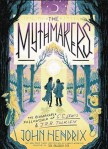
As I was reading The MythMakers: The Remarkable Fellowship of C. S. Lewis and J. R. R. Tolkien this week I was also reminded of the development power of friendship, relationships, and gathering of colleagues for discussion, support and criticism. Author, John Hendrix, said it this way “When the circle of the Inklings was familiar and the fellowship intimate, it suited Tolkien and Lewis well. As leaders of this unruly academic rabble, they were perfect compliments. And their remarkable connection was always the guiding star.” We all need these connections for our own personal growth and development. I
In all likelihood, without The Inklings and the Lewis – Tolkien friendship we might not have ever had The Hobbit, Out of the Silent Planet, The Lord of the Rings, or pondered where Narnia came from. Tolkien, even knowing Lewis’s résumé wasn’t long enough introduced him to his publisher with glowing reviews. Now that’s a literary “farm team.”
We can all use our own form of “farm team” and résumé building. That can come in many forms, but we all need to think about those who need our friendship and support.
Navigating the Landscape of Fairness: Balancing Universal Principles and Individual Experiences

I posted on social media this morning that I had an author to add to my favorite author list. It is J. B. Simmons. He is the author of The Five Towers series. I am finishing up the first in the series, The Blue Tower, right now. INCREDIBLE! I have learned that Simmons’ fantasy writing, that includes history and faith, is influenced by C. S. Lewis and J. R. R. Tolkien. I have pages of notes from reading The Blue Tower. One of the quotes from the book that I pondered on, studied, and now blog about was, “Fair…” Abram sighs. “Fair is a misused word. You can only know fairness if you know everything, which none of us do” (p. 123). Simmons uses Abram’s statement to convey a profound truth about the nature of fairness. The idea is that fairness is a complex concept that requires a comprehensive understanding of all circumstances and perspectives involved in a situation. Since no individual possesses complete knowledge of every aspect or the experiences of others, true fairness can be elusive.
“As we mingle with others, let us be diligent in labor, just in our dealings, courteous to everyone, and, above all, honest and fair in the game of life.” ~ Official Closing Ceremonies of an FFA Meeting

This statement prompts a reflection on how we often judge situations based on our limited viewpoints. It suggests that the more we acknowledge our limitations in perspective, the more compassionate and understanding we can be towards others. It encourages readers to consider the nuances of human experience and the importance of empathy in our judgments.
I have to admit, I have always taken a more objective view of fairness. C. S. Lewis addressed the concept of fairness in The Abolition of Man, where he discussed the importance of objective morality and natural law. He emphasized that fairness and justice are rooted in these universal principles rather than subjective human opinions.
Additionally, in Mere Christianity, Lewis explored the idea of fairness in the context of Christian ethics, discussing how moral behavior relates to our obligations to others and the idea of treating people with respect and dignity. Which, without spoiling the book for you, is part of what The Tower Series is about – showing individuals how they have made mistakes and mistreated others. Both J. B. Simmons and C.S. Lewis offer us valuable insights into fairness from different angles.
The view of fairness in The Blue Tower as subjective emphasized the importance of individual experiences and cultural context in determining what is fair. This approach encourages us to consider the unique circumstances of each person or community when making decisions.
On the other hand, Lewis’ perspective, which roots fairness in universal principles, suggested that there are objective standards of right and wrong that apply to all people, regardless of context. This can provide a solid foundation for ethical behavior, ensuring that we uphold certain values consistently.
Bringing these two views together can create a more nuanced approach to fairness. By acknowledging the subjective aspects of fairness—understanding that people’s perceptions and experiences shape their understanding of what is fair—we can be more empathetic and considerate in our dealings with others. At the same time, grounding our actions in universal principles ensures that we maintain a consistent moral framework.
This all highlights the need for creating spaces for open conversations about fairness, where different viewpoints can be expressed and reconciled.
 Byron's Babbles
leave a comment