Finding Our Real Self
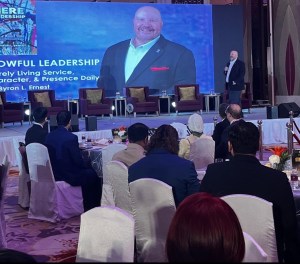
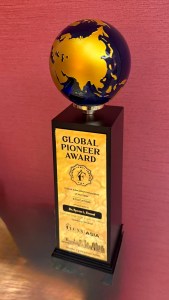
I have spent this week on the global stage, literally. For the 2026 FLUXX Asia Leadership Conference in Manila, Philippines I served as the opening keynote speaker, panel speaker, and received the Global Pioneer Award for Global Education Innovation. When I am in an environment like that with hundreds of great humans from all over the world (70+ countries), it really causes me to pay attention, seek to understand, and appreciate every unique individual. This week I have spent a great deal of time reflecting on principles from C. S. Lewis in Mere Christianity. I already posted “What Sort of Impression are You Making?” this week.
In Mere Christianity, Lewis also said, “Even in literature and art, no man who bothers about originality will ever be original: whereas if you simply try to tell the truth (without caring twopence how often it has been told before) you will, nine times out of ten, become original without ever having noticed it. The principle runs through all life from top to bottom. Give up yourself, and you will find your real self” (p. 226). From this, leaders can learn the importance of humility, selflessness, and authentic service. When we let go of ego, pride, or the desire for personal recognition, they create space to connect genuinely with others, build trust, and foster a collaborative environment.
This perspective encourages us to prioritize the well-being of those we serve and the collective goals over our personal agendas. By doing so, we often discover our true strengths, passions, and purpose, which leads to more genuine leadership. Ultimately, embracing selflessness not only helps us grow personally but also inspires others to do the same, leading to more meaningful and trusting relationships.
The More Challenging Path

As I drove to and home from Wisconsin in the last couple of days, I listened to Mere Christianity by C. S. Lewis. I have read the book many times and it was the inspiration for a great deal of my work in leadership development during my Scholar in Residence Program at The Kilns. One of the statements Lewis made in the book was, “For the longest way round is the shortest way home” (p. 87). While I had highlighted this sentence while reading the book other times, it struck me as more profound as I listened this time.

I believe Lewis was emphasizing that sometimes, taking a more indirect or challenging path—such as deep inner reflection, honest self-examination, and moral growth—actually leads us more efficiently to our true spiritual or moral destination. I also believe this is true for our professional growth as well. Just like personal growth, professional progress often involves overcoming setbacks and persistent effort. Embracing challenges as opportunities to learn helps us build resilience, enabling us to navigate workplace hurdles more effectively.
Rather than seeking instant solutions or shortcuts, embracing the full process of personal and professional development, with its struggles and setbacks, ultimately brings us closer to genuine understanding, virtue, and harmony with ourselves and others. It’s an encouragement to trust that enduring the journey, even if it seems lengthy or difficult at first, will lead us to where we truly want to be—the authentic “home” of our character or spiritual fulfillment.
Imagining The Complex Unique Individual

In a great discussion following Dr. Jim Beitler’s Hansen Lecture, “The Horns of Elfland: On Fairyland Justice” we talked about justice and how the novels from Tolkien and Lewis help us develop an understanding and appreciation of others, particularly through our imagination. We even discussed justice in leadership being about how we imagine the person in front of us. Do we imagine them as just a collection of data or a complex unique individual. This really caused me to reflect about how we imagine those we serve, those we are just meeting and making friends with for the first time, and anyone we come in contact with.
It was suggested to read Elaine Scarry’s “The Difficulty of Imagining Other People.” This essay offers valuable insights for leaders aiming to cultivate a more human-centered approach. Here are some key lessons that we can draw from Scarry’s work:
- Recognize the Challenge of Empathy: Scarry emphasized how difficult it is to truly imagine and understand the experiences of others. Leaders can learn to acknowledge this challenge and intentionally develop empathy by actively listening and seeking diverse perspectives, rather than assuming we fully understand others’ realities.
- Value of Fragility and Vulnerability: The essay highlights the delicate nature of human identity and perception. Leaders who appreciate this fragility are more likely to foster environments of trust, compassion, and psychological safety, encouraging team members to be authentic and vulnerable.
- Importance of Imagination in Leadership: Effective leadership involves imagining the lives and struggles of others beyond immediate interactions. By cultivating our capacity to imagine different realities, leaders can make more compassionate decisions that genuinely serve the needs of their teams and communities.
- Counteracting Objectification: Scarry discussed how difficulty in imagining others can lead to objectification or dehumanization. We need to be conscious of this tendency and work actively to see team members as whole persons with aspirations, fears, and complexities—not just roles or functions.
- Fostering Being More Human-Centered:
Understanding the hurdles in imagining others encourages leaders to create practices that validate diverse experiences, promoting belonging within organizations.
Studying Scarry’s work encourages us to deepen our capacity for empathy, vulnerability, and imaginative understanding—fundamental elements of being truly human-centered. This approach not only enhances ethical leadership but also builds stronger, more resilient, and engaged teams.
Flocking Together: How Community and Camaraderie Boost Creative Success

Those that follow me know that I love Pelicans. They are amazing birds and there are so many leadership lessons we can learn from them. I have blogged previously about them in Pelican Leadership Lessons and Leading From The Optimal Height. I am in Georgia doing some work right now and yesterday was watching these incredible creatures while spending some time on Tybee Island.
Lately, I have been doing a lot of studying the literary discussion group from the 1930s and 1940s at Oxford University that included C. S. Lewis and J. R. R. Tolkien – the Inklings. As the tide came in yesterday morning there were groups of Pelicans putting on a show of their collaboration and holding each other accountable. Both the Inklings and Pelicans served, in my mind, as analogies to each other, and leadership.
The Inklings were known to be a close-knit, supportive community where members shared and critiqued each other’s works regularly, fostering mutual growth. The accountability that came from this included honest feedback, but the strong relationships and camaraderie enabled encouragement, cheerleading, and a collective pursuit of artistic and intellectual excellence—much like a flock of pelicans working together while fishing or migrating.
Pelicans are social birds that travel and hunt in groups, relying on cooperation for survival. They often communicate and coordinate their actions, holding each other accountable to stay organized and effective. Pelicans collaboratively move fish into groups for successful hunting of food. Pelicans, just like the Inklings did, thrive on their relationships to collaborate and work together toward a common goal —literary creation or efficient foraging.
The synergy of the relationships encouraged the support of one another in the Inklings. This support provided accountability; not in the form of punitive pressure, often associated with accountability, but by ensuring progress through collaboration. The Inklings shared purpose can be compared to that of the Pelicans. While the Pelicans shared purpose is survival, we know from research that many of the great literary works from Inkling authors would not have happened without their social group of accountability.
So, let’s be cognizant of the power of cooperative, communicative, and mutually supportive relationships that enhance our efforts through camaraderie and shared accountability.
Art’s Eye for Evil

In the past several years I have reflected a lot on how I get more out of reading fiction books than non-fiction. I don’t say this just from an entertainment factor, but also from a deeper learning perspective. Interestingly, as I have in the last five years been intensively studying C. S. Lewis, GeorgeMacDonald, and Dorothy Sayers, and their appreciation for fiction, I have found fiction to be a major influencer of these author’s work and lives. Learning this has made me feel, not quite so “out there” in my thinking. In reading Dr. Richard Hughes Gibson’s just released and awesome book, The Way of Dante: Going Through Hell, Purgatory, and Heaven with C.S. Lewis, Dorothy L. Sayers, and Charles Williams (2025), the influence of fiction writing was even further affirmed.

Gibson noted, “…the fact that my archival labors revealed daily how thoroughly Dante had infiltrated my trio’s [C. S. Lewis, Dorothy L. Sayers, and Charles Williams] reading and writing lives” (p. xvii). Gibson’s new book interested me on several levels, but this idea of influence really interested me. Then at the beginning of Chapter 6, The Problem of Glory, Gibson asserted that, “EVIL MAY BE A PROBLEM for philosophers and theologians, but it is no problem for artists” (page 123). I loved this because it drove home what I have been saying about narrative artists and the power of fiction for years now – we get to see all the context and all the complexity of the characters. The artist reveals everything we need to know. This doesn’t happen, at least not all the time, with non-fiction.
Dr. Gibson referenced philosopher Agnes Callard saying, “Callard, let me be clear, thinks that art’s eye for evil is a good thing. Amid our busy lives, we look at the world with a purpose, and our purposes become blinders, obscuring our recognition of the ‘irrelevant, the unhelpful, and the downright wicked.’ Artists, by contrast, ‘take a long hard look at what the rest of us can’t bring ourselves to examine; they are our eyes and ears’” (p. 124). This illuminates the distinction between everyday perception and artistic perception. Callard suggested that people generally view the world through a purpose-driven lens, focusing on what matters to us—our goals, needs, and interests. This focus acts like blinders, preventing us from noticing things that don’t directly relate to our intentions, including aspects that might be irrelevant, unhelpful, or even morally troubling.
Gibson’s appreciation is for the artist’s role in providing a deeper, more honest perspective—especially regarding the presence of evil or wickedness—something that society generally tends to shy away from confronting directly. The emphasis, according to Gibson, is the importance of art as a means of truth-telling and of gaining a more comprehensive understanding of reality, beyond our convenient but limited viewpoints.
The Problem of Glory

“Glory, simply put, is a problem” (p. 126). This statement by Dr. Richard Hughes Gibson in his just released book, The Way of Dante: Going Through Hell, Purgatory, and Heaven with C. S. Lewis, Dorothy L. Sayers, and Charles Williams (2025), is such an apt view of glory. We can look at glory as problematic both from a Christian aspect and our everyday lives. Glory is very hard to define and hard to grasp. Gibson pointed out that C.S. Lewis viewed the idea of “glory” as problematic primarily because it can be misunderstood or misused.

In his writings, especially in The Problem of Pain and The Weight of Glory, C. S. Lewis emphasized that true glory is rooted in humility and is ultimately a reflection of God’s greatness, rather than something to be sought for personal pride or recognition. Lewis wrote in is 1941 sermon The Weight of Glory, “Salvation is constantly associated with palms, crowns, white robes, thrones, and splendor like the sun and stars. All this makes no immediate appeal to me at all, and in that respect I fancy I am a typical modern” (p. 35). Lewis went on to say, “Either glory means to me fame, or it means luminosity. As for the first, since to be famous means to be better known than other people, the desire for fame appears to me as a competitive passion and therefore of hell rather than heaven. As for the second, who wishes to become a kind of living electric light bulb?” (p. 36).
Lewis was warning against pursuing glory as a means to elevate oneself above others or to gain superficial honor, as this can lead to pride and spiritual downfall. Instead, he was advocating understanding glory as a gift from God, something bestowed in humility and gratitude, not a human achievement to be flaunted. We would all do well to remember this is our everyday lives today.
Creating Our Own Cages

I am a huge Asking Alexandria fan and their song “Into The Fire” which was released in 2017 has always caused me to do some heavy reflection every time I hear it. After hearing it again while spending some quality time in the tractor cab recently, I even pulled out my highlighted and heavily annotated copies of C. S. Lewis’s The Great Divorce and The Problem of Pain while reflecting on the song. I’ll get to the notes I pulled in from those works in a moment. For now let’s discuss “Into the Fire” as a powerful and emotionally charged song that I believe explores themes of inner struggle, pain, and seeking redemption. That is the beauty of great art and artists like the members of Asking Alexandria; it allows us to make our own interpretations. The lyrics allow the listener a dynamic interaction between artist and listener with meaning not always fixed by the artist.
In my reflection and thoughts, the song conveys a sense of facing darkness and trying to overcome personal demons or difficult circumstances. The metaphor of going “into the fire” suggests enduring hardship or confronting intense emotions in the hope of eventual healing or growth. Sometimes we have to realize we are who we are and that we must go into the fire.
Verse 1 of “Into the Fire” says, “I’m not too sure what I’m supposed to do with this; These hands, this mind, this instability; From a cage I created to a Hell that Heaven made.” Here, the lyrics express confusion and uncertainty about how to handle our own abilities and mental state. “These hands” and “this mind” symbolize our physical actions and thoughts, respectively, suggesting we may feel overwhelmed or unprepared to control or utilize them effectively. The mention of “instability” indicates inner turmoil or emotional instability, highlighting inner conflict.
The line, “From a cage I created to a Hell that Heaven made” reflects a sense of self-imprisonment—we’ve created limitations or barriers (“a cage”) around ourselves, perhaps through fears, doubts, or negative patterns. The phrase “to a Hell that Heaven made” suggests that despite the potential for goodness or salvation (“Heaven”), the circumstances or internal struggles have transformed that potential into suffering (“Hell”). It could imply that one’s own actions or perceptions have turned a positive environment into a painful one.
This all reminded me that C. S. Lewis said, “I willingly believe that the damned are, in one sense, successful, rebels to the end; that the doors of hell are locked on the inside” in The Problem of Pain. Many times we do create our own “cages” that are mentioned in “Into the Fire.” As a Christian, I am reminded we have a choice between Heaven or Hell.
In Mere Christianity C. S. Lewis taught us that pride was the “great sin” that leads to every other vice. The characters in Lewis’s The Great Divorce were reluctant to let go of their sins and attachments, showcasing how pride, resentment, and selfishness can prevent one from achieving redemption. This could be true of the character represented in “Into the Fire.”
My big takeaway from pondering all of this is the reminder of what C. S. Lewis told us in the preface to The Great Divorce: “I think earth, if chosen instead of Heaven, will turn out to have been, all along, only a region in Hell: and earth, if put second to Heaven, to have been from the beginning a part of Heaven itself.” God lets us choose!
Love And Understanding

Through my work at the Marion E. Wade Center I have become a huge fan of George MacDonald. His work had a big influence on C. S. Lewis. I am finding his work to influence me both professionally and spiritually. Right now I and reading and studying George MacDonald’s Lilith: A Romance.
MacDonald’s quote in the book, “to understand is not more wonderful than to love,” reflected a deep philosophical and spiritual insight. Essentially, MacDonald suggested that love has a higher, more profound value than mere understanding. At first I struggle with this, because I am such a believer in seeking to understand others, particularly from a leadership standpoint. Then, however, as I dug deeper into the context and really reflected I came to appreciate that while understanding involves intellect and knowledge—comprehending concepts, facts, or situations—love goes beyond the intellectual. It embodies compassion, connection, and a kind of wisdom that recognizes the intrinsic worth of others.
In the context of Lilith, this statement emphasized that true greatness or wonder lies not just in grasping ideas or truths, but in the capacity to love genuinely and unconditionally. Love can transform and elevate our experience of life, opening us up to deeper meaning and connection that understanding alone may not fully achieve. Therefore, MacDonald elevated love to a more divine or extraordinary realm, suggesting it holds a greater potential for fulfillment and wonder than simply understanding.
The Power of Ping-Ponging Ideas: Enhancing Community Collaboration

Today, during a discussion in the final day of a weeklong training of National FFA Teacher Ambassadors, one of the Ambassadors shared she loved the ping-ponging of ideas we did during the sessions. I was so proud to hear this because I really believe our work gets better in community. There is such power in heuristic learning and sharing. When I think of community and collaboration, I’m reminded of C. S. Lewis’s Inklings who provided J. R. R. Tolkien with encouragement and Lewis the right story.
In any vibrant community, innovation and progress often stem from dynamic conversations and the free exchange of ideas. One particularly effective method to foster this exchange is ping-ponging ideas — a process where thoughts, suggestions, and feedback bounce back and forth among members, much like a lively game of table tennis.
What Is Ping-Ponging Ideas?
Ping-ponging ideas involves collaborative brainstorming where participants actively listen, respond, and build upon each other’s contributions. Instead of linear discussions, this approach encourages a rhythm of giving and receiving, allowing ideas to evolve organically through continuous dialogue.
Why Is It Valuable for Communities?
- Encourages Creativity and Innovation: When ideas are bounced around, they often spark new perspectives and creative solutions that might not emerge in solitary thinking or one-sided discussions.
- Builds Collective Ownership: Engaging everyone in the idea-generation process fosters a sense of ownership and commitment to the community’s initiatives, leading to increased participation and support.
- Strengthens Relationships: Regular exchange of ideas creates connections among members, building trust and understanding that can translate into stronger collaboration.
- Facilitates Inclusive Decision-Making: Ping-ponging ensures diverse voices are heard, helping the community make more well-rounded and inclusive decisions.
- Accelerates Problem-Solving: As ideas bounce around, potential issues are identified early, and innovative solutions are quickly developed through collective input.
How Does Effective Ping-Ponging in Our Communities Make Our Work Better?
- Create Safe Spaces: Encourage open-mindedness where all members feel comfortable sharing their thoughts without judgment.
- Use Structured Formats: Organize brainstorming sessions with clear prompts or questions to guide the idea exchange.
- Leverage Technology: Utilize online platforms that facilitate real-time discussion and idea-sharing, especially for remote or hybrid communities.
- Promote Active Listening: Remind participants to attentively consider each contribution before responding, ensuring meaningful exchanges.
- Follow Up: Keep the momentum by revisiting ideas, giving feedback, and implementing viable suggestions.
Ping-ponging ideas is more than just a metaphor; it’s a powerful technique that nurtures collaboration, sparks innovation, and deepens community bonds. By embracing this dynamic exchange, communities can grow stronger, more creative, and better equipped to face challenges together.
We Are Not Nameless Nor Faceless

Today I heard the great song by Papa Roach, “Born For Greatness.” This song always reminds me of C. S. Lewis’s Till We Have Faces. Both the song and book remind us how important a clear and honest understanding of ourselves is. We are encouraged to live authentically and confidently knowing our uniqueness is our power.
I love the lines in “Born For Greatness,” “So if you’re running, stop running; One life, one chance, start living; Sing it louder just to let the world know; No we’re not nameless, we’re not faceless; We were born for greatness.” We cannot avoid life or opportunities out of fear or hesitation. We need to face things head-on.
We have only one life, so we need to make the most of it and live each day in a meaningful way. We are also reminded to be confident in showing who we are and sharing our voice. Every person has worth and unique qualities. We are not nameless. We are not faceless. As C. S. Lewis said in Till We Have Faces, “How can they meet us face to face till we have faces?” We were ALL born for greatness!
 Byron's Babbles
1 comment