Embracing Constraints: How Limits Ignite Creativity and Deepen Artistic Expression

It is so exciting to be reading G. K. Chesterton, specifically Orthodoxy, right now. I love his use of examples, analogies, and metaphors. When discussing anarchism he argued that we are told to be creative artists without regard to any limits or laws. He refuted this saying, “But it is impossible to be an artist and not care for laws and limits. Art is limitation; the essence of every picture is the frame” (p. 44). Artists often thrive within certain boundaries—whether it’s the conventions of their chosen medium, societal expectations, or personal principles. These limits can serve as frameworks that inspire creativity, challenge artists to innovate within constraints, or help them communicate more effectively.
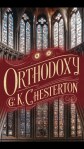
Chesterton’s quote highlights a profound insight into the nature of art: that limitation is not merely an obstacle but a fundamental component of creation. When he said, “the essence of every picture is the frame,” he emphasized that boundaries—like the frame surrounding a painting—shape and define the artwork, giving it structure and focus.
To illustrate what he meant, Chesterton gave us this example:
“If you draw a giraffe, you must draw him with a long neck. If, in your bold creative way, you hold yourself free to draw a giraffe with a short neck, you will really find that you are not free to draw a giraffe” (p. 44).
In this context, laws and limits serve as frameworks within which creativity can flourish. They help artists make deliberate choices about composition, form, and content, guiding their expression while still allowing room for innovation and transcendence. Without boundaries, art could become aimless or overwhelming, lacking coherence or impact.
Chesterton also left room for the idea that true artistic freedom often involves pushing against or transcending these limits. While the frame confines the artwork visually, the artist’s intention might involve breaking traditional boundaries, exploring new techniques, or challenging societal norms—all within or beyond existing limits. This tension between respecting constraints and daring to go beyond them fuels originality and emotional depth.
What Chesterton was suggesting is that limits are not inherently restrictive but are instead essential to all creative processes. They provide the structure necessary for meaningful expression, while the artist’s skill and imagination determine how to work within or surpass those boundaries to produce truly revolutionary art. This same idea of structure is true for us as leaders.
Whether an artist painting a picture or and artistic leader of an organization we need to push against restrictions to explore new ideas, challenge norms, and express our individuality. So, while laws and limits can guide and shape artistic expression, they don’t have to be strictly binding; sometimes, transcendence of boundaries leads to the most revolutionary art. Ultimately, whether we, as artists, should live by restrictions and limits depends on our intentions, style, and the message we wish to convey.
Working In New Ways

“We had to challenge ourselves to work in new ways.” Geddy Lee, the frontman, bassist, and keyboardist for Rush, said this in My Effin’ Life. He believed that in order to stay relevant and growing as musicians, Rush needed to challenge themselves by working in new ways. He felt that pushing boundaries and exploring new techniques and styles was crucial for artistic development and creativity. We need to be thinking this way in all our professions.

As a prog rock band, Rush was writing lyrics that told stories (lyrical conception), were more poetic, doing concept albums often using science fiction themes, and harnessing technology for new sounds. By challenging themselves to work differently, Rush was further defining their brand. Musical genius was really their brand. Growing up a Rush fan I was always excited to hear what the next album would bring.
We can learn from Rush the importance of consistency, authenticity, and staying true to their unique identity while at the same time challenging ourselves to try new things and work in new ways. Rush created a strong brand by consistently delivering high-quality music that was unique to them, without trying to fit into trends genres that didn’t align with their core values. By staying true to their artistic vision and not compromising their sound, Rush built a dedicated fan base and solid reputation over the years. All our organizations can apply this lesson by focusing on what makes them stand out, being consistent in their messaging and product delivery, and staying authentic to our brand values.
The Artwork of Stories & Relationships
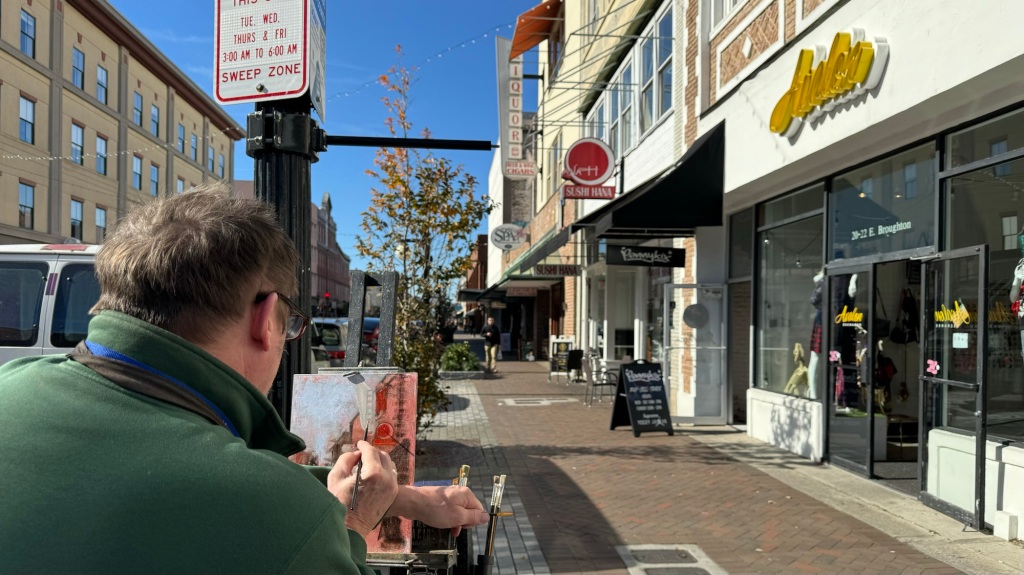
I love the opportunities that chance encounters bring for making new and valuable connections. Last week as we were going into Sushi Hana in Savannah, Georgia for lunch, I noticed an artist painting a streetscape in front of the restaurant. Those of you who know me well, know I can’t resist watching an artist practice their craft. He was just getting started, but I could tell this painting was going to be special (like I really know anything about it). The artist and I exchanged hellos and I told him I liked his work. My family and I went into Sushi Hana’s and ordered and I told them I had to go back out and meet the artist. I met Jeffrey Baumgartner, who coincidentally is from Chicago with Indiana connections. Small world! We immediately connected and he informed me it would take about three hours to complete. I told him I wanted to buy the painting. Then my wife came out and told me I needed to come in and eat. Imagine that!

After lunch I was back out to check the progress of “my” painting. It was coming along nicely and Jeffrey and I talked some more and made a plan for me to call him and 3:00 and see where he was on completing the painting. So, at exactly 3:00 as I stood along the Savannah River, I called my new artist friend back to see how my painting looked. He was just painting his signature on it as I called. Jeffrey told me it looked awesome. So I left my family to explore and climbed those old uneven steps up from River Street with some newfound energy and enthusiasm. Over to Broughton Street to see this exquisite piece of artwork (see photo). It was wonderful and I wanted it.

We agreed on a price then proceeded to talk, laugh, and share stories. Two students from the Savannah College of Art and Design (SCAD) came by who had watched and talked to Jeffrey earlier. He proceeded to give them an art, business, and leadership experience like no college professor could give. This artist was living it. He had driven his van (that he says is a “VanGo,” pun intended) to Savannah, set up in a campground, and was painting a new streetscape every day for a living. If that isn’t a real world and relevant context for teaching I don’t know what is. Not only was he schooling these young and aspiring artists, he was forming relationships. As a believer and teacher of building relationships as the most important leadership trait, I was watching and learning. Jeffrey was a master at it.
As I was complimenting him on his relationship-building prowess he told me that he came from the theater. “It’s all about the story, Byron,” he told me. So true; it is all about the story. I had gotten my painting, made new friends in Jeffrey and the students, and expanding my knowledge in leadership and creating an ideal customer experience. Jeffrey’s ability to connect had made the experience of buying this painting memorable and with a tremendous story.
Being able to build relationships is an important trait to have developed for a painter selling paintings, or any leader for that manner, because it helps in establishing trust and rapport with potential buyers. By building relationships, we can understand the preferences and tastes of our customers, tailor their artworks accordingly, and creating a personalized experience for the buyers. This lesson can also be transferred to all of us as leaders. We are creating experiences for those we serve.
Additionally, building relationships allowed Jeffrey to form a network of loyal clients who most likely will provide repeat business and recommend the artist to others. In Jeffrey’s case, he has a loyal following. This can help in expanding the reach and recognition of the painter’s work.
Moreover, through building relationships, we can also receive feedback and constructive criticism, which can be valuable for growth and improvement. By understanding the needs and desires of our clients and clients and those we serve, can better fulfill their expectations and create artworks that resonate with them.
Overall, being able to build relationships enables a painter to connect with their audience on a deeper level, promote their work effectively, and establish a strong presence in the art market.
It Is What It Is
Those who know me well, know that I sometimes use the phrase “It is what it is.” When I use it I really do mean it. I never use it as an excuse or explanation for inaction. For those who hate the phrase, hear me out. A character, Reuben, in the great historical fiction novel, Threads West An American Saga by Reid Lance Rosenthal often uses that phrase. The context is usually that there is nothing that can be done so an alternative needs to be created. An example was wanting to use a shorter trail, but an avalanche had block the trail. Reuben commented “It is what it is” and began plotting a new way up the mountain. For me, recognizing something for what it is begins to make it possible to get creative with alternatives. I’ve always believed I use and believe the phrase because of being comfortable with the unknown. Sometimes we have to let things exist in their uniqueness. Sometimes there just is not an objective answer.
As a creative/artistic person I am okay with things being ambiguous. If something has the potential to unfold into different actual states than its current state it may very well be ambiguous. By allowing things to be ambiguous we get a richer, more nuanced understanding of them, which may lead to a new insight or invention. “It is what it is” can suggest a world of possibilities.
“It is what it is” is a statement of potential. The statement indicates acceptance of complexity and ambiguity. It can also be an anthem to accepting limitations. Sometimes we can’t control everything. Sometimes things just are what they are. By recognizing that we can add to the statement and say, “It is what it is, but we can…” Sometimes the contexts we are put in are malleable. We cannot control everything in our lives and organizations, but we can make a choice to learn, grow and become a better version of ourself.
Leading Like Columbo

Many of you probably could have guessed that after a week of celebrating 50 years of Columbo that I would do a post about the rumpled and disheveled, but brilliant homicide detective played by Peter Falk. I blogged about him before in Listen and Look, Look and Listen. This past Wednesday, September 15th marked 50 years to the day since the first episode. Cozi TV 📺 did a Columbo marathon yesterday, and I made time last night for an episode I had not seen. The episode I watched was Murder, A Self Portrait. A new book, Shooting Columbo, by David Koenig just released this fall and is on my to read list. And…one more thing…I need to go back and reread Falk’s great book Just One More Thing.
There are many lessons that can be learned from the character, Lieutenant Columbo. For example, the conversation with Oliver Brandt in the Bye-Bye Sky High IQ Murder Case: “You know, sir, it’s a funny thing. All my life, I kept running into smart people. In school, there were lot’s of smarter kids, and when I first joined the force, sir, they had some very clever people there and I could tell right away it wasn’t going to be easy making detective as long as they were around. But I figured if I worked harder than they did, put in more time, read the books, kept my eyes open, maybe I could make it happen. And I did. And I really love my work, sir.” Did you catch that? He decided to work harder than everyone else.
Columbo has zero vanity. Most who know me, know I have little use for vanity. For many, vanity and ambition rule their passion. I loved the line in The Bookshop At Water’s End by Patti Callahan Henry that says, “His ego was dented, not his heart.” This was referring to Piper rejecting the plea of the boyfriend who had dumped her to get back together. In other words he really didn’t love her, he just didn’t like being seen as being rejected himself – vanity. It is the lack of vanity and his best feature of humility that give Columbo the skills to work with famous artists, as in the episode I watched last night or a homeless alcoholic in Negative Reaction. He is an authentic person with no false airs about him.
Status symbols don’t matter to Columbo. Just look at his beat up car. He is happy being who he is and being very good at it. That really is a big part of the success of the character of Columbo – being underestimated. It’s a reminder of how much credence we give to images. There are no delusions of grandeur. He’s absolutely content with what he has. We could all learn a lot from this.
“Everything under the surface,” “I would have had to keep digging,” and “You have to finish the painting” were all quotes that were meaningful at the end of the episode I watched last night and spoke to Columbo’s tenacity and thoroughness. Had Columbo not taken the time to read a book about the murdering artist he would not have known about a special paint, Barsini Red, that made solving the case possible. We must keep digging and know there is always more under the surface.
Imaginative Play Zones

Albert Einstein famously said, “To stimulate creativity, one must develop the childlike inclination for play.” And even Pablo Picasso said, “Every child is an artist. The problem is how to remain an artist once we grow up.” If children are more creative than adults, it’s not because they have a superior imagination. They just don’t suffer from self-doubt and fear to the extent that adults do. In this respect, at least, we could all afford to be more like children. We don’t question kids being more creative than adults; we all intuitively just know it’s true and we view it as a natural state for children.

So why do kids have the aptitude for creativity? Play! And, remember they have not yet developed, or been taught the self doubt and fear part to the extent we adults have, either. In studying the work of Dr. Stephanie Carlson, an expert on childhood brain development at the University of Minnesota, she taught us that kids spend as much as 2/3 of their time in non-reality— in imaginative play. This is why when I am providing development for adults I always try to spend some time channeling their inner child. Adults want to, and effectively, learn like kids. We want the play, time for imagination, and a safe place for trying new things.
As I worked with teachers this past week we discussed creating psychologically safe places for our students to learn and try new things (the things we are teaching are new). But, we must also not forget our adults – we need a psychologically safe place as well. How about we create imaginative play zones?
Life Is Artistic Expression
This week, Chapter 35, “Edit Your Life” in Mindset Mondays with DTK by David Taylor-Klaus (DTK) had everything needed to grab my attention. The chapter had metaphors, talked about creativity and imagination, referred to Albert Einstein, and compared our lives to artistic masterpieces. I believe this chapter resonated so much with me because I use the metaphor all the time of our lives being portraits that are never completed. Every day adds brush strokes, but we are never done. My hope and prayer is that I add brush stokes to my life’s portrait on the day I die. But, it still won’t be complete because I hope there is a legacy that continues to influence. DTK reminded us that we show up to work with our creativity and imaginations. Why don’t apply these to who we are and how we show up in the world? Our lives are our own to define and explore. Why not be imaginative with the masterpiece that is “you”?
“Edit your life frequently and ruthlessly. It’s your masterpiece, after all.”
Nathan Morris
DTK said, “I’m inspired by the idea of living a created life, a life that I chose to edit frequently and ruthlessly. I probably replace “edit” with “iterate” as I reflect on this. Edit makes me think big change and iterate makes me think about small brush strokes I’ve watched artists make that changed the entire painting. While I know some of us need big edits, iterating may be less overwhelming.
And, we haven’t even begun to think about how we have to “adapt” during our life. Think about all the adaptation strokes of the brush you’ve made to your life’s portrait in the last year, plus. A portrait is a hand crafted piece of art. We, too, are hand crafted pieces of art. Let’s all consider life as another form of artistic expression and fall in love with the possibilities.
Leading With Artisanship

It’s funny to me how reading something can make me think of something that I haven’t thought about, at least consciously, for a while. When reading Lesson 10, “Surrender Overthinking” in Mindset Mondays with DTK by David Taylor-Klaus (DTK), I came across this statement:
“I don’t have a fantasy of being an artist…not in terms of painting, or sculpture, or any of the expressive arts. I do want to be an artist in how I serve people, and the work that I do in the world. If I’m overthinking, my art is compromised and my creative energy is spent spinning my wheels, or ‘catastrophizing forward’.”
~ David Taylor-Klause, 2020, Mindset Mondays with DTK, p. 98.
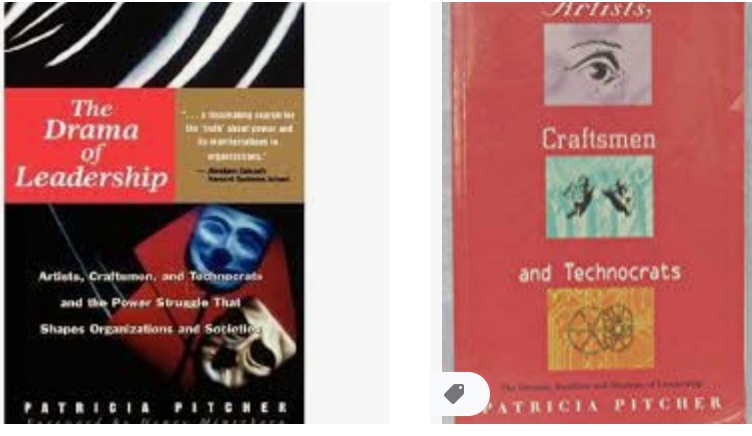
This got me to thinking about the work of Patricia Pitcher. Her work of studying leaders was very influential and I consider her to have been very influential on my leadership development. Her books The Drama of Leadership: Artists, Craftmen, and Technocrats and the Power Struggle That Shapes Organizations and Societies (1997) and Artists, Craftsmen, and Technocrats: The Dreams, Realities, and Illusions of Leadership (1997, 2nd edition) easily make my top five list of influential books. These books make the top of the list because they helped me understand myself as an artistic leader and be comfortable with that. Pitcher saw the artistic leader as an inspiring and visionary risk-taker, guided by an intuitive sense of the future. Now, unlike DTK who has no interest in being an expressive artist, I really want to be a rock star, but I just don’t have any talent. I do find great inspiration from studying rock bands, the inspiration for songs, and the innovative ideas they come up with.
“I am trying to think out a short story. I’ve got the closing sentence of it all arranged and it is good and strong, but I haven’t got any of the rest of the story yet.”
~ Mark Twain
The technocrat, the category which many leaders fit, is the nemesis of the artist. They are organized box checkers who use the term “teamwork” a lot, but operate with a “my way or the doorway” and “paint-by-numbers” mentality. The technocrat will be fearful of making imaginative decision and before any ideas can be thought through is already trying to fit the ideas in a box and understand how to manage it. Boy am I glad I did not end up a technocrat – I dream too much and I’ve got too much imagination for that. As an artist I do tend to overthink things, but usually not looking for problems. This was the point of DTK’s Lesson 10; we should not focus too much on what could go wrong. We need to anticipate obstacles and opportunities, but not let them hinder moving forward.
I learned from Pitcher that as an artist I will, at times, have vague, indefinable, long-term visions that get clarified by action and remaining open to new insights. Artists know where they are going, but sometimes it’s vague and more a trip that destination. This to me would be one way to keep from overthinking things – focus on the journey more than the destination. It’s why I choose to inspire with metaphors rather than with detailed descriptions of the future. Think about this:
“I claim that the visions of the visionary [artist] leader are no different in form or origin than those of an artist. If you ask a great painter what he or she’s going to paint next, it’s a rare one who will have a detailed answer and if he or she does, I doubt he or she satisfies the definition of great.“
~ Patricia Pitcher, 1997, The Drama of Leadership, kindle location 196 of 2456.

Research tells us that the best artists stay radically open as they work on a canvas; there is a continuous interaction between a vague vision and the concrete act of painting. In my conversations with the artists and song writers in rock bands I have found the same thing. For example, a riff gets written and suddenly an entire song is born. It’s why we artist leaders live for the metaphor. I am always looking for intersectional creativity – the intersection of different fields, ideas, people, and cultures. DTK told us to “Take this moment to consider that there are endless possibilities, opportunities, and forces working on your behalf” (p. 98). We need, as Pitcher taught us, to let our intuitive sense of the future take over. So as we take to our leadership canvas, let’s open our minds to creativity, ideas, and opportunities, but not overthink all that could go wrong.
 Byron's Babbles
leave a comment