Remember Who You Are And Be Okay With It
 One of my favorite compliments to give someone is: “Thanks for being YOU!” I believe it is a powerful compliment because it implies that what makes that person such a unique human being comes from deep within. What I am trying to do is give unconditional gratitude. I want the person to remember who they are and be okay with it. When I say, “Thanks for being YOU!” I am not just saying thank you for what the person has done – I am saying thank you for who he or she is. I am telling him or her that I value them as a person.
“Thanks for being YOU!” Even for all the mistakes the person made and the flaws he or she found that they want to change. For the times he or she did and the times he or she could not, for one day they will all add up. Any of us at our best is what serves us all best. We need each of us to be who we are in order to shape the future. We grow into being who we are one day at a time. We need everyone’s contribution. We need your contribution as much as mine. It’s something we build as much as we find, to do either takes a present mind.
Remember, you are not a robot or a Barbie™. Therefore, let’s be who we are and be okay with it. This does not mean that we should not work to improve or learn new things. It means we need to be okay with who we are as we continue to improve and evolve as the person we are. I believe every person is a work of art. Research indicates that our capacity for self-evolution and growth of our personality, mental capacities, relationships and actions are all based on conscious intent. Shaping our being is like making art; the same way an artist develops, evolves and creates a painting; or a composer creates music. We can all make our conscious being and all that emanates from it a work of art. As I always say, “There is no bad art.” So let’s go out there and remember who we are and be okay with it.
Welcome To Your New Addiction

What’s At Your Core (Value)?
Where to begin? There is so much I want to say! Yesterday we had a great gathering of our Florida 3D Leadership group outside Orlando at Renaissance Charter School at Boggy Creek. I love going there and spending time with this group. Yesterday’s topic was core values. We spent the morning setting the stage with some cool activities (Emoji tattoos, making graphic mantras) and discussions around core values and what they wanted to do with their lives and what they wanted their legacy to be.
Then, the coolest thing happened – Lunch!

Our lunch was delivered and catered from Fuzzy’s Taco Shop. First of all, as the truck, bright yellow, pulled up, it caught my eye out the window I had immediately seen the shiny object and was off topic. Check out the picture of the truck and you will understand what I am talking about. So, as they were setting up at one end of the room we were in, I asked one of the workers, Mariah Miller, whether she liked working at Fuzzy’s Taco Shop and if she did, why? Well, let me tell you, she jumped right into our core values discussion and said that she liked it because her boss did not act like a boss and did not want to be called a boss. He wanted to be considered a coworker.

Graphic Recording by Amy Reynolds
Then her coworker (boss), or leader, as he likes to be called came in, not having heard me ask the question. I called him over and asked him what his workers would say his mantra was (this was a core values discussion from the morning). He then basically reinforced everything Mariah had told us. We were amazed by the message that David Morales had for us in what became an outstanding extemporaneous luncheon keynote, literally.
 David explained he had ended up in Florida, via Texas, because he quit his job, and I quote, “because my core values did not match those of the company I was working for at the time.” Of course I am beaming at this point and everyone was looking at me like I had set this up, which I had not. We had discussed how individual and organization core values needed to match. I had said earlier in the day that is was just a fact that if at any point your own core values become much different from the organization you work for, that it was time to quit. He was affirming everything we had talked about earlier in the day, but with the flare of personal experience and a lot of passion.
 He then told us about looking for a job and finding Fuzzy’s Taco Shop. He told us how he cut the deal for Fuzzy’s Taco Shop to cater for the Dallas Cowboys and Texas Rangers. He told us about how he has opened 29 businesses. Finally, he explained how core values build communities of commitment. We had been discussing how core values communicate what is important, influence behavior, and inspire people to action. We had also talked about how core values enhance credible leadership. David Morales from Fuzzy’s Taco Shop had become our exemplar. We did not need to spend very much time with his employees to know he was credible.
…it is clearly necessary to invent organizational structures appropriate to the multicultural age. But such efforts are doomed to failure if they do not grow out of something deeper; out of generally held values.” ~Vaclav Havel

Graphic Recording by Amy Reynolds
Core values are what support the vision, shape the culture and reflect what an organization values. They are the essence of the organization’s identity – the principles, beliefs or philosophy of values. Many organizations focus mostly on the technical competencies but often forget what are the underlying competencies that make their organizations run smoothly — core values. Establishing strong core values provides both internal and external advantages to the organization. Clearly, Fuzzy’s Taco Shop and David Morales have mastered this.
Needless to say, we were amazed at this outstanding example of a company and it’s employees living out shared core values. Would you, your organization, or school have been able to extemporaneously keynoted our lunch today with the same level of authenticity related to core values as David Morales, Mariah Miller, and Fuzzy’s Taco Shop were able to?
Leadership Influence Formula
 The ability to influence others is crucial to a person’s success as a leader. Let’s face it, leadership is influence. All of the successful and effective leaders I have encountered developed the way they communicate and influence. After activities involving identifying Mount Rushmorean leadership influencers in their life yesterday, our 3D Leadership participants in Georgia set out to develop the top 5 list of leadership influence. This very creative group went a step further and invented a leadership influence formula.
This happened because of a lively discussion while trying to narrow the list down to five. This had taken place using one of my typical strategies of having participants fly airplanes with their personal top three influencer traits. They then glided their airplane to someone else and so on. We then compiled the list and got down to eight. As you can imagine, it got lively at this point.
 The beauty of our 3D Leadership Program is that our participants come from all positions. We have teachers, facilities professionals, principals, and many others represented. This gives us the unique ability to have all vantage points represented in a discussion. This affords us what Dr. Nicky Howe and Alicia Curtis call “diversity of thought” in their great book, Difference Makers: A Leader’s Guide To Championing Diversity On Boards. They contend that what really matters are not the visible differences between people but their unique perspectives on the world.
What I believe we are creating through our cohorts of 3D Leadership participants is an organizational culture that is committed to fostering open-ended, inclusive dialogue. It is about recognizing that every person is a rich tapestry woven together from a million threads. Participants’ age, background, experiences, abilities, job responsibilities, gender, race, family story, and many other things all matter. There is a fallacy that people who look alike have the same views. Nothing could be further from the truth, though.
 Bottom line is, this “diversity of thought” enabled us to develop a pretty cool leadership influence formula. Here it is: Innovative + Integrity + Compassion/Caring + Listen + Inspire = Leading By Example. Pretty powerful, don’t you think? As we decided, even you wanted to switch some traits out, if you were doing all the parts of this formula, you would be getting along pretty well.
Do you follow the additive value of this formula? If you follow these traits you will stack things in your favor to quickly become a key person of influence.
Are You Setting Precedent?
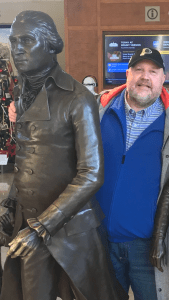 This week while reading On Grand Strategy by John Lewis Gaddis I came across a phrase from Queen Elizabeth I. She was reported to have said: “It is much better to set precedent than to have to live by it.” I loved this. To me it meant that she understood the importance of being an innovative leader and the power leaders have for setting the course for the future. One precedent she set was to rule by good counsel and trusted advisors. Many times I hear people in meetings saying that we don’t want to set precedent. Well, I say if it is a good thing then we probably should set a precedent. We basically have three choices: sit back and accept the status quo, let someone else lead, or we can lead by setting new precedents.
 A great example of the latter was George Washington. Washington was well aware that he had been given the power to shape the American presidency. He believed that the precedents he set must make the presidency powerful enough to function effectively in the national government, but at the same time these practices could not show any tendency toward monarchy or dictatorship. He was said to have commented frequently that, “I walk on untrodden ground.” There are many things that Washington set the precedent for during his presidency that are still in place today. A few include:
- Being called “President”
- Presented the State Of Union as a speech (Thomas Jefferson broke the tradition, but Woodrow Wilson started again)
- The White House protocol still used today of mornings and daytime for business and afternoons and evenings to entertain visitors
- Because of Washington’s love for being at Mount Vernon, he set the precedent of presidents retreating to their homes or other places.
- He set the precedent of a maximum of eight years in office (FDR broke that precedent, but in 1951 we made the constitutional amendment for a two term limit)
Never forget, great leadership is about standing for something bigger than yourself, and setting a precedent where it is needed. After all, an organization’s culture, or country’s culture for that matter, is a reflection of its leaders. Which means it all starts with you.
As Leaders, We Create The Weather
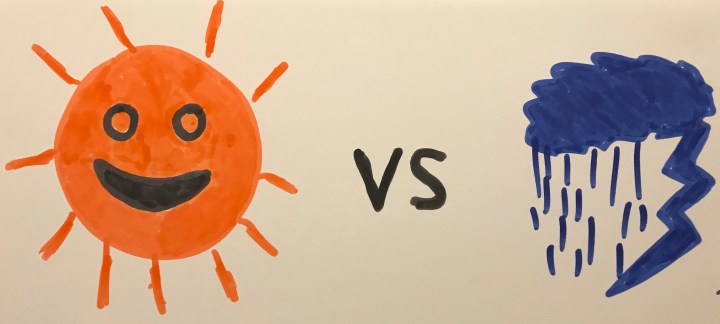 How do you show up? Think about this: do you show up sunny and bright or stormy and cloudy? Bottom line: if you show up as sunshine it will be a shiny happy day for the team. If you show up as a thunderstorm, however, it will be a rough ride. Either way, unlike the weather outside, you have the ability to influence the weather of your organization.
If you don’t believe this think about if you have ever worked with someone who you need to ask others what kind of mood he or she is in before talking to him or her. If you’ve experienced this then you have experienced leaders controlling the weather.
Therefore, we need to be intentional about the weather systems we create. Think about about the extremes: blizzards, hurricanes, extreme heat, or tornadoes. Then think about that sunny day with a calm breeze and moderate temperatures. Which of these weather patterns would you want to be creating?
Your teams and organizations will take their cues from you and whatever weather pattern you are projecting. If your outlook is sunny and bright, the organization is sunny and bright. If your outlook is full of storm clouds, the weather in the organization will be pretty much the same.
Next time you are with your team or people, imagine you are the weather map behind the meteorologist on television and she is about to give the weather report. If you take this moment of being mindful, it will help you to calm any storm fronts and bring sunshine and calm breezes to your organization.
Don’t forget, you are your organization’s meteorologist. As leaders, we create the weather. What kind of impacts do your weather systems have on your organization?
Be You!
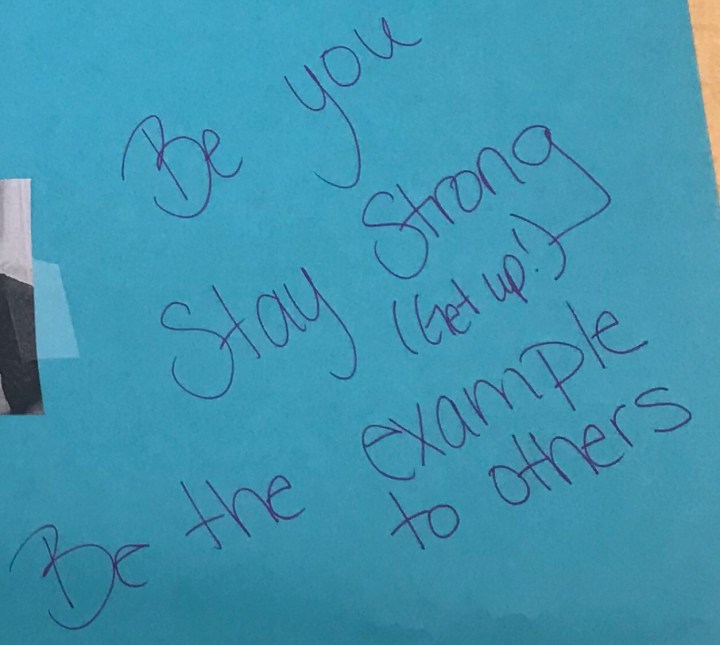 Last night at our Carolinas 3D Leadership gathering I was struck by a phrase that Stephanie Klingler, the Assistant Principal at Cardinal Charter Academy, put on one of the projects we were working on. The project was identifying Mount Rushmorean leaders and the influence other leaders have on us. Her statement was:
“Be You! Stay strong. Get up! Be the example to others.” ~ Stephanie Klingler
Super powerful, don’t you agree? If Leadership is about influence then this is the example we want to be and what we want modeled for us. It’s about being authentic and doing what Machiavelli taught us: to declare. Who we are is how we lead, pure and simple. Being a great leader is really the simple act of being you. It’s about putting your experiences and what you believe into a package that guides how you lead and the example you are. Stephanie’s statement says it all: be you, be strong, be an example, and keep getting up. It is who she is.

Stephanie is on the left with her mobile office for being a leader of learning!
If we want to lead and be a Rushmorean (yes, I made that word up) leader, then we must know ourself. Being ourself means being authentic. It is okay to be you. It’s really the only person we can be. As my friend Sally Hogshead teaches us, you need to be the best you you can be. The fascinating you! The best way to become an effective leader is to find congruence between what you think, say and do. That said, in order to become an effective leader you have to know who you are: your values, your strengths, what you stand for, why you stand for it, and what your ethics are. Then act on them with conviction and without apology. This is what I believe Machiavelli meant when he says we must “declare.”
Are you being YOU?
What’s In Your Leadership Toy Box?
 A week ago I facilitated one of our 3D Leadership gatherings in Florida. We used a Leadership Toy Box through line and had the participants pick a toy at the beginning and describe what leadership traits the toy possessed and how they could use the toy for great leadership. From that discussion we came up with a great list of leadership traits to focus on:
 Flexible
- Big
- Supportive
- Balanced
- Resourceful
- Wise risk taking
- Celebrate
- Confident
- Results driven
- Perspective
- Approachable
- Resilient
- Humble
- Synergistic

- Listens
- Caring
- Vulnerable
- Encouraging
- Purposeful
- Empathetic
Pretty incredible list, don’t you think? If you aspire to lead, but fill effective leadership roles whose vision will inspire, these are the leadership skills to answer. There are many other leadership traits that could be listed here, but these are certainly traits that, if mastered, would make a pretty effective leader.
The trait that came up the most in all our discussions was flexibility. Flexible leaders are those who can modify their style or approach to leadership in response to uncertain or unpredictable circumstances. Flexible leaders have the ability to change their plans to match the reality of the situation. This flexibility can be helpful when pushing through change. Dr. Ron Heifetz, Harvard University, was the first to define the distinctive theory of adaptive leadership. Adaptive leadership is about mobilizing others to make progress addressing the gap between the way things currently are and the desired state you are striving toward. Additionally, adaptive leadership is a way of reading the situation and understanding what is needed to work with others.
To fully get our minds wrapped around this we need to recognize there are two types of opportunities (challenges): technical and adaptive. With a technical opportunity there is an exact answer that is already known. Adaptive opportunities involve a human component and multiple viewpoints, opinions, attitudes, or diverse set of stakeholders. I believe if a leader takes the 20 items from above and applies them to an adaptive challenge she would be well served and in a position to lead effectively. This is why I am such a believer in creating an open environment for learning about leadership. It enabled the discussions, which started with toys, to get to learning about 20 skills for developing as a leader. What traits/skills would you add to the list?
 Byron's Babbles
leave a comment