Leaders Weaving The Web
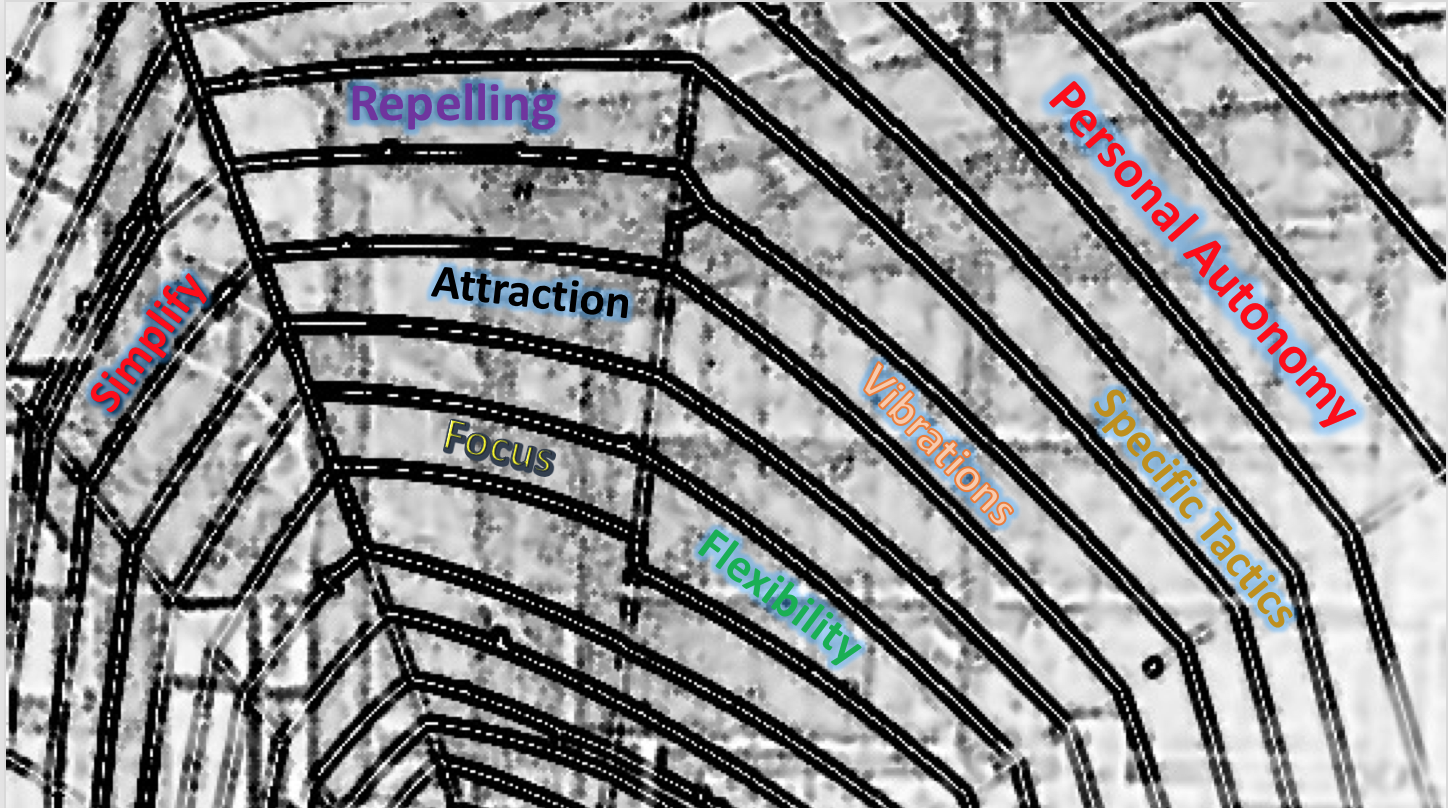
This morning when I went out to do the morning feeding I saw a very beautiful spider web as I went in the barn. It was so awesomely constructed I had to take a picture and then I got the inspiration to use it in a 3D Leadership Gathering I was facilitating for our Florida participants today. I had them relate the spider web to their leadership development during the last 240 days of the Global Pandemic. A great way to describe leadership is to compare the construction and function of a spider web. Just like each strand of web is carefully woven in just the right places for a spider to capture what’s necessary for it to survive, an effective leader also weaves attributes that attract and nurture those the leader serves. Each strand of that web is a specific tactic the leader can use to engage and influence.

We discussed the vibrations that happen when something touches or gets caught in the web. These vibrations go quickly through an organization so communications should be chosen carefully. A leader should have a meaningful feel of what is going on at the ground in the organization, and that he or she should want to be in touch with the whole organization through effective representatives, reports, liaisons, collegiality, and partnerships within the organization. Leaders should constantly work towards enabling their organizations to become intricately woven groups of people in harmonious partnership.
Take Off The Mask & Cut Out Those Frustrations
Ever trip over yourself? David Taylor-Klaus (DTK) reminded us this week in Chapter 7 of Mindset Mondays with DTK to “Get Out of Your Own Way.” We need to integrate the brain and body by using awareness and intention.
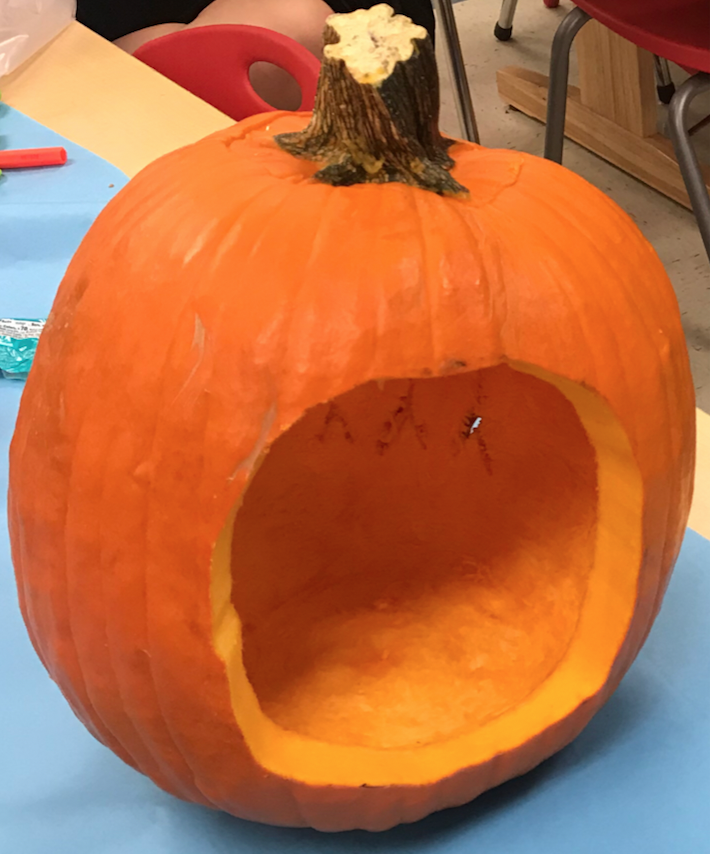
Interestingly, this weekend I did an activity for a leadership training using pumpkins. Participants had to carve their pumpkin using this prompt: “Truths that frustrate you.” This gave participants a chance to ponder where those frustrations come from. Many times those frustrations come from ourselves. We become frustrated when our decisions are not aligned with our core values and purpose.

We need to take time to take an introspective look at ourselves and listen to what both our mind and body are telling us. Then trust what we hear and not sabotage ourselves. Sometimes if we took time to name our frustrations (or carve them into a pumpkin) it gives us the chance to reflect on and even remove the mask that those frustrations form.
As Robbin Jorgensen did in DTK’s story, we can change and cut the frustrations out (pun intended) and remove the mask. Jorgensen’s Women Igniting Change movement is giving women the power to take action around the world. By taking off her own mask she was able to reflect, listen to herself deeply and then trust her own decisions.
What’s keeping you from making the impact you want to make in the world?
Power To Do
Last week while in a very deep discussion during a 3D Leadership session we were talking about leadership and power. We were discussing the five forms of power from French and Raven (1959). Here are those five forms of power:

First of all, the group talked about how great it is that we continue to move from forms of power to levels of what John Maxwell called 5 Levels of Leadership. The group acknowledged how negative most of the five levels of power are, but that those powers exist, how they can be used for positive, and how we should use them for creating positive environments. One of the positive forms of power is “referent.” I have blogged about this power before in The Majestic Leader. Also, here are Maxwell’s 5 Levels of Leadership:

Then someone made a brilliant statement: “The five forms of power have such a limited scope.” I asked what she meant, and she said, “Those are all about ‘power over’ and we should be thing about ‘power to do’.” Again, another brilliant statement! “Power to do!” Now that’s a power we need to develop – Self empowerment.
Therefore, as leaders it’s important to inspire empowerment in others. After all, when people feel powerful, it boosts their self-confidence, which further enhances their work and performance. Inspiring others is often the mark of a great leader, but how do you do that effectively? Being an inspiring leader was the theme of this gathering. To truly empower others we must empower ourselves to be inspirational leaders. How do we do that? Here’s what our teacher leaders said:
- Show up – Inspirational leaders understand the significance of just being there. I actually heard from teachers in this gathering that they wished that the school leaders would just come visit there schools and more importantly, their classrooms. You can’t take care of your peeps if you aren’t with your people and that means going to street level and getting shoulder to shoulder.
- Be present – This is different than showing up; we must really be present by having open ears and listening, asking the right questions, and having humility.
- Withitness – Great leaders position themselves so they can see everything. This is also about being actively engaged.
As leaders of learning we have a key role to play in delivering quality learning. In order to do this it is important to understand the purpose and impact of our role and the impact we have on others. In the case of education, the task of leadership is to make visible the how, why and where of learning. It achieves this by conversations and demonstrations around pupil learning, professional learning and learnings which transcend the boundaries of the school. The challenge for leadership is to nurture the dialogue, to make transparent ways in learning interconnects and infuses behavior. It promotes a continuing restless inquiry into what works best, when, where, for whom and with what outcome. Its vision is of the intelligent school and its practice intersects with the wider world of learning.
Never forget, the way we see leadership, learning and the quality of our schools, businesses, or organizations is ultimately a product of how we see and think about ourselves. Remember, we have the “power to do.”
Leading Like Elastigirl-Hulk
 So, if you could combine two superheroes into one, which ones would you bring together? During our Georgia 3D Leadership gathering this past weekend I had a participant that did just that. One of our activities had attendees pick or create a superhero that best described themselves. One of our participants blew me away with a combination of She-Hulk and Elastigirl (Mrs Incredible). I have included a picture of her creation with this post.
This sort of thing has already been done. In the late 1990s Marvel and DC tried a big crossover event in which their superheroes met, fought, and came out friends. Thus was born the Amalgam Universe. Put simply, two super-cosmic beings arranged to have the Marvel and DC Universes merge with one another, such that their finest heroes also merged to become amalgams of each other (hence the name). Some were merged because they were similar in powers or purpose, some because their names sounded alike. In like fashion, our participant created “Elastigirl-Hulk.”
 Jennifer Walters, an attorney, who is the She-Hulk got her powers after being shot and needing a blood transfusion. Her cousin Bruce Banner (Hulk) gave his blood for the transfusion and the rest is history. Jennifer got a mild version of the radioactive powers. She-Hulk taught us to never accept more than we deserve. Because of her ability to self-transform between Jennifer Walters and She-Hulk, she taught us that work-life balance is achieved by recognizing that work and life are both important. Finally, she taught us to have a sense of humor.
 Now let’s take a look at Elastigirl (Mrs. Incredible). Her superpower is elasticity, allowing her stretch, shape-shift, and be flexible. Elastigirl understood the importance of developing teams to be capable of becoming a strong support system for all members to achieve their own goals and the goals of the organization.
Therefore, combine the flexibility and community building abilities of Elastigirl with the strength, intelligence, and the ability to control between being tough and being gentle and we’ve got quite an incredible (pun intended) woman. What superheroes would you combine?
Leaders Crashing & Flying Higher
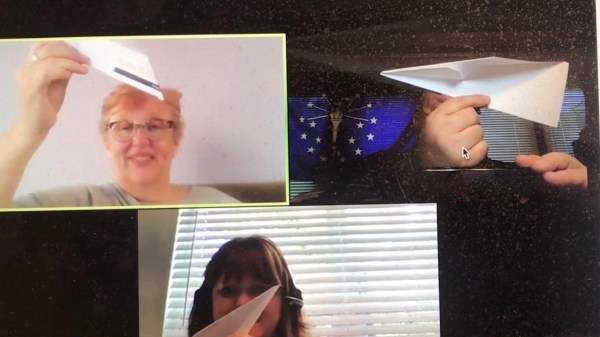 So what traits do great leaders have? That’s such a loaded question – different great leaders demonstrate different traits. If you ask a group of teacher leaders to select the top traits they think are important in a leader, you’ll find as many answers as you have teacher leaders. No one has ever been able to come up with a definitive list of leadership traits that everyone – or even a majority of people contemplating leadership – agrees on. This doesn’t stop me from trying however. During our August 3D Leadership gatherings I always do a discussion/activity called “Good Leader/Bad Leader: Crashing & Flying Higher.” This involves an activity where participants fly paper airplanes to each other with good leadership traits on the left wing and bad leadership traits on the right wing. They then keep adding to the lists as we fly the planes. This is really fun virtually on Zoom. Yes, you can fly paper airplanes virtually! Ultimately, their task is to develop a top five good leadership trait list and a top five bad leadership trait list,
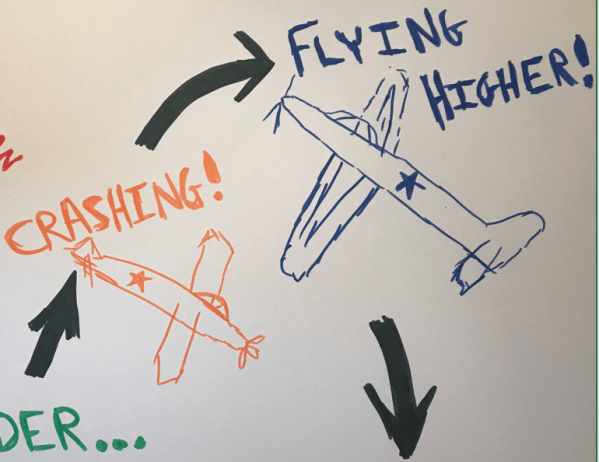 The exercise enables a great discussion and thought provoking debate. What we find is that each person’s list of good and bad traits is heavily dependent on her or his experience with different leaders. I get to do this activity 9 or 10 groups per year and every group’s lists are always at least a little different, but many times are very different. Things like who is leading the school, turnover of leaders, style of leadership of leaders, culture of the school, et cetera. This activity somewhat reinforces the idea that the trait theory of leadership is not the end all be all. “The trait theory of leadership focuses on identifying different personality traits and characteristics that are linked to successful leadership across a variety of situations. This line of research emerged as one of the earliest types of investigations into the nature of effective leadership and is tied to the “great man” theory of leadership first proposed by Thomas Carlyle in the mid-1800s. The idea with trait theory is that if you can identify the personality traits or characteristics a great leader has, you can look for those same traits in other leaders, or even develop those traits in people who want to be leaders.
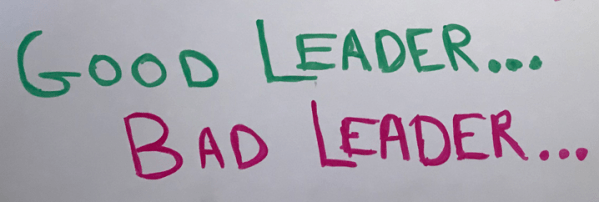 The differences that I see when doing the “Good Leader/Bad Leader: Crashing & Flying Higher” activity suggest that this may due to situational variables in which different leadership skills emerge when opportunities for leadership arise. These situations might include turnaround work, poor leaders in place, war, a political crisis, or in the absence of leadership. As a believer that everyone in an organization is leader, I believe that there must be adaptive leadership for many situations.
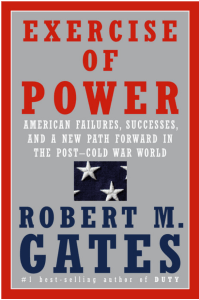 I just finished reading Robert Gates’ great new book, Exercise of Power: American Failures, Successes, and a New Path Forward in the Post-Cold War World. Having served for eight Presidents of the United States, he certainly saw different leadership styles and traits. He explained that most want to put Presidents into ascribing to idealism, realism, or transactional. As he stated, great leaders must be all three. He gives examples of Presidents being all three. In other words, to be effective, leaders must be able to adapt. When I reflect on the top five “good leader” traits that our 3D Leadership group from Tennessee came up with this past Saturday, I believe they are traits that would serve all leaders well. Here is there top five list:
- Listening to understand
- Authentic
- Being consistent
- Straight forward
- Relationship builder
Here of the top five “bad leader” traits causing leaders to crash, from our Tennessee teacher leaders if you are interested:
- Insecure
- Belittling
- Negative
- Leads by intimidation
- Doesn’t walk the talk
Codifier Of Compassion
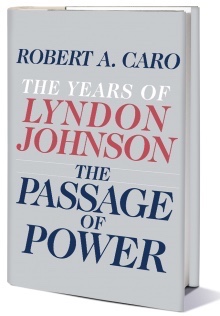
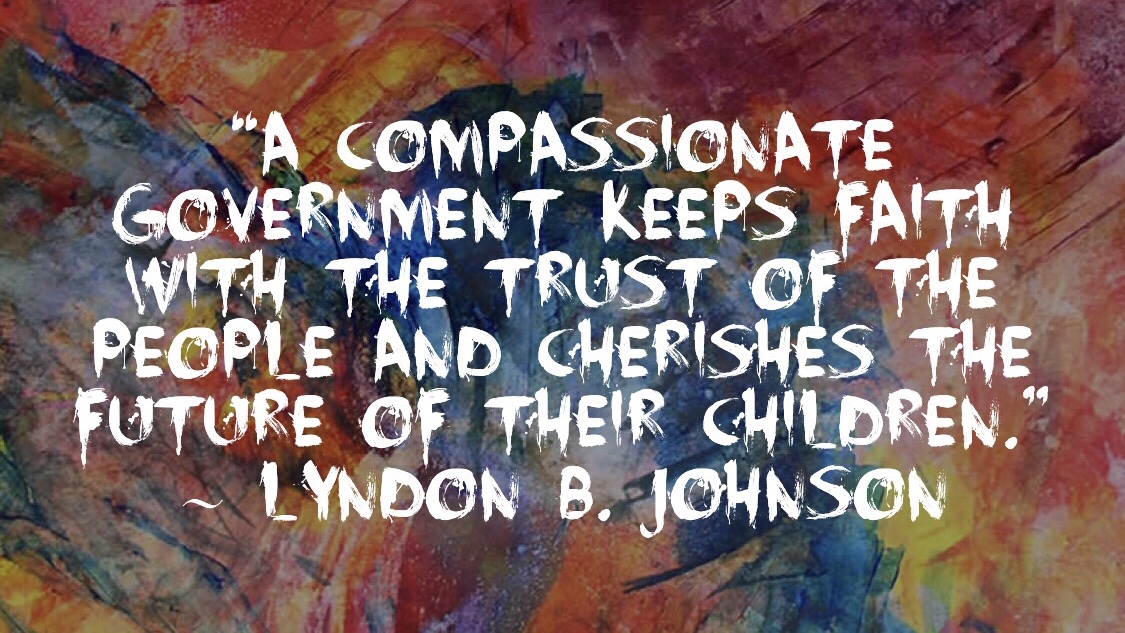 I am reading the final pages of what is right now the fourth in the great series, The Years of Lyndon Johnson, by Robert Caro. Caro is working the fifth and final and I sure hope he finishes it. These books that are really about power – how power is obtained, how power is used, and how power is abused. The fourth book, The Passage of Power, begins right before President Kennedy’s assassination and takes us through the first few months of Johnson’s Presidency. This includes passing a civil rights bill, getting budget approval, and a tax cut bill passed.
Robert Caro is an incredibly talented writer and I was moved by a statement in the book about Johnson. Here it is:
“He was to become the lawmaker for the poor and the downtrodden and the oppressed. He was to be the bearer of at least a measure of social justice to those whom social justice had so long been denied. The restorer of at least a measure of dignity to those who so desperately needed to be given some dignity. The redeemer of the promises made by them to America. “It is time to write it in the books of law.” By the time Lyndon Johnson left office he had done a lot of writing in those books, had become, above all presidents save Lincoln, the codifier of compassion, the president who wrote mercy and justice in the statute books by which America was governed.” ~ Robert A. Caro in The Passage of Power
He was comparing Johnson to Lincoln as a “codifier of compassion.” To codify means to make something a part of an organized system. In other words it becomes more than talk.
 Because of the childhood poverty, his relationship with his father, and his teaching position, was able to have all three types of empathy I teach about in leadership professional growth gatherings. He was first able to show Cognitive Empathy; the ability to understand another person’s perspective. Because Johnson grew up in poverty, he was able to feel what another person feels, or what is called Emotional Empathy.
Thirdly, because of his experience as a teacher at Welhausen School in Cotulla, Texas, a small town on the border of Texas and Mexico, he practiced Empathic Concern: the ability to sense what another person needs from you. Johnson’s classes were made up of the children of Mexican-American farmers. Johnson didn’t speak Spanish and many of his students didn’t speak English. Despite this limitation, Johnson quickly and enthusiastically began teaching and encouraging the children to speak English by holding speech and debate tournaments.
Johnson was very strict with his students and left a lasting impression on them. In addition, Johnson organized a literary society, an athletic club, and organized field trips to neighboring towns so his students could compete in sporting events, speech, and spelling contests. With his first paycheck, Johnson bought playground equipment. In a letter home to his mother, Johnson wrote about his work with the students and asked her for help in sending toothpaste for the children and borrowing materials for his debate team.
Clearly Johnson’s upbringing gave him tremendous ability for empathy, but notice he added action to this. Thus, becoming compassion. Empathy is just a profound feeling, but add to that merciful and helpful action and you get compassion and supportive companionship. Compassion is empathy put into action, or as is the point of this post, codified.
Johnson’s past experiences had set him up perfectly to be a “codifier of compassion.” He knew what had to be done and did it. So many leaders talk empathy very well, but that is all it is – talk. We must walk the talk and codify that empathy with the actions of compassion.
“Easy To Say, Harder To Live By”
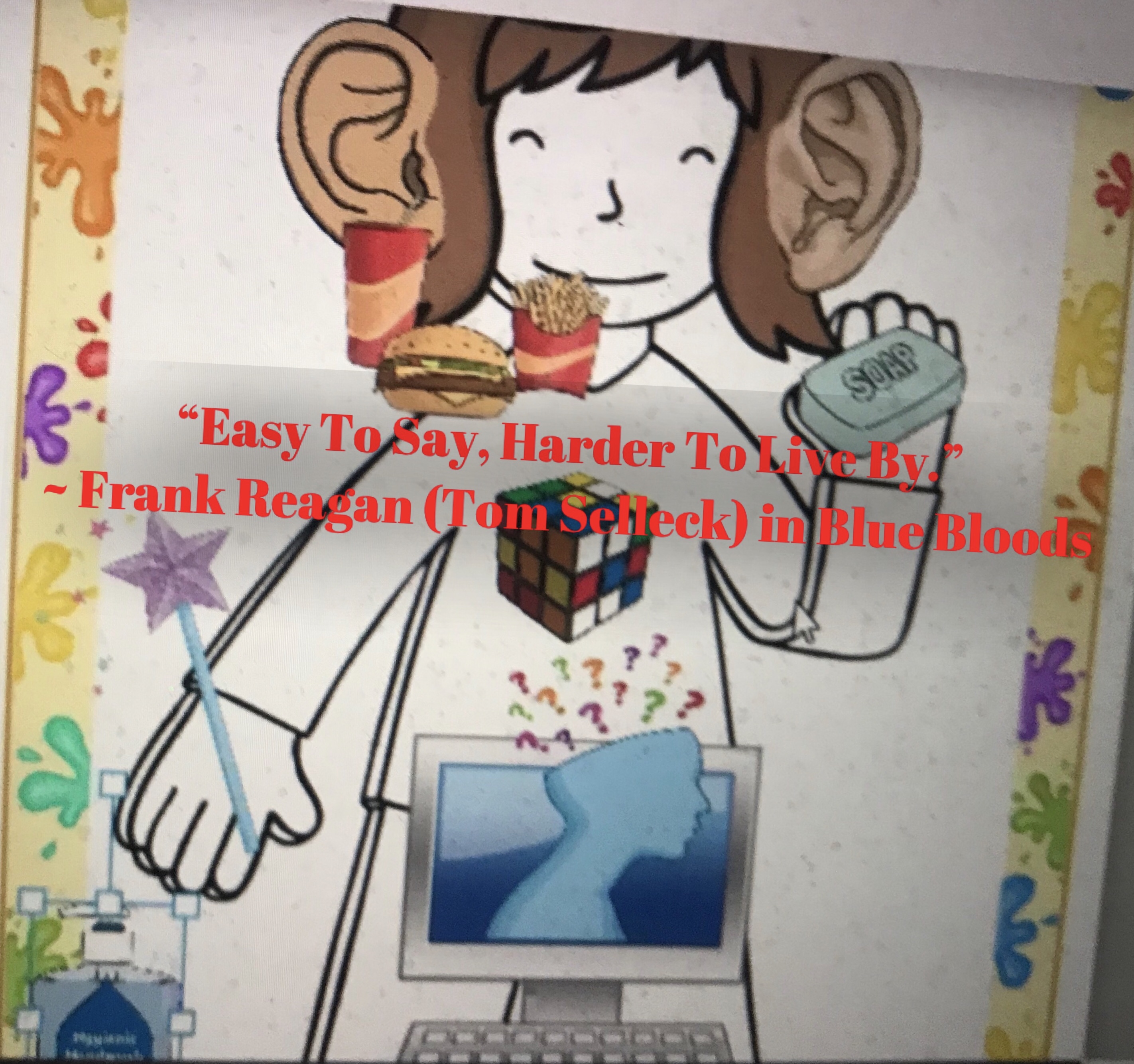
“What have I become during the pandemic?”
I had another Frank Reagan (Tom Selleck) Blue Bloods quote that made me do some reflecting. He said, “Easy to say, harder to live by.” We all have heard people say, or said things ourselves that are very easy to say, but much tougher to actually do. I wrote about another quote from Frank Reagan in “Life Isn’t Fair, But You Can Be.” It’s easy to set set ambitious goals or say you will do the right thing, but it is a much harder thing to do the work to achieve them.
We talked about this last night during 3D Leadership. The participants made Flat Stanley’s and Flat Sarah’s representing what they have become during the COVID-19 Pandemic. Almost everyone talked about new and exciting things they are doing or have started to do again. Many talked about how at first was easy to get down, but then once they started learning and doing it became exciting to be doing great new things.
Remember, it’s easy to say. Much harder to do. But, it’s the hard stuff that separates the ordinary from the extraordinary.
66 Days To A New Habit


First of all it is important to note that as I write this post we are in Day 66 of the COVID-19 global pandemic. I blogged about the day, March 11th, that I am considering our first day of these uncharted times in The Day We Started Down The Path With No Footprints. The other night in one of our 3D Leadership gatherings I had the participants make their own Flat Stanley or Flat Sarah that represented who they had become since March 11th when the WHO (I thought that was a rock band) declared COVID-19 a global pandemic. O.k., the WHO is the World Health Organization.
Participants could either make the their Flat Stanley or Sarah using materials in their homes or using an online resource we gave them. The group did a great job with these and they were very creative. I found it interesting that many of the participants discussed how they had picked up, developed new, or restarted old habits. One participant said, “It takes a month to build a new habit.” She was referring to now doing a better job of exercising. Of course, I had to check and see if there was any research that backed this claim of taking a month to develop a new habit up.
Here’s what I found: Phillippa Lally, a health psychology researcher at University College London, did a study published in the European Journal of Social Psychology, Lally and her research team decided to figure out just how long it actually takes to form a habit. So, what was concluded from the study? On average, it takes more than 2 months before a new behavior becomes automatic — 66 days to be exact. And how long it takes a new habit to form can vary widely depending on the behavior, the person, and the circumstances. In Lally’s study, it took anywhere from 18 days to 254 days for people to form a new habit. But, as was stated, 66 days was the average. Thus, why I chose today to write this post. We are exactly 66 days into this pandemic.
So, why is the length of time it takes to form a habit important? During these challenging times, everyone in the world has been forced to change their routines, be creative, try new ideas, learn new ways of doing things, slow down focus on some of the most important things (in education-the most important content), and connect with people and in the case of education, students, in effective ways we never thought possible. The abrupt shift to remote instruction changed many aspects of our lives. In my case I continue to say I have grown in great and unimaginable ways during this time. In education, I continue to say that we have grown in the aspect of school no longer being a place.
Let me be clear; I realize there are those, and maybe even me still, that the crisis will be catastrophic. This post is not intended to minimize the seriousness of the consequences many people face, or may be facing. I believe that many of us have grown in our ability to be o.k. with feeling bad or being comfortable with uncertainty. Personally, I continue to see this crisis as a challenge to overcome and a conduit for personal growth. The 3D Leadership participant who talked about it having been a good time to use the month to develop new and better habits, I believe, had in mind that we can see the loss of our, pre-pandemic and regular life as a chance to focus on other aspects of your life that have been neglected because we’ve been too busy to address them. We have also identified areas we want to work on or improve in our lives and focus on developing those areas. We need to all use this break from “normal life” to seek balance in our life and pursue aspects of our lives that we did not have time for before the crisis.
We need to use our responses to the crisis as an opportunity to learn and grown and become more positive, adaptable, and resilient which will, no doubt, serve us well when the current crisis passes. We can all create new structures and routines in our lives around school, work, daily activities, and social life. Finally, and most importantly, we can take action. Keep in mind, we’ve already had the 66 average days it takes to make a new habit become automatic. Are you happy with your new habits?
Gaps In Our Consistency
 At one of our most recent gatherings of 3D Leadership, a topic came up that the participants were calling “gaps in our consistency.” When I asked about these gaps they said they were the things that really kept them from being great teachers and the schools which they taught from being as great as they could be. One of the most important tools in effective schools is consistency. Research and practice have proved that school leaders and teachers must be consistent every day in carrying out their duties if they want to improve student performance and conduct. Here is what the teacher leaders said the gaps were:
- Being Reactionary
- Everything done short term/constant change
- Lack of training to make sure initiatives/processes could be implemented
- Relationships must be in place for there to be the trust for everything to be going well
- Besides the why, there needs to be the what and the how
- Teachers need to teach and not be auditors
Really, what any teacher wants is to be able to get to work and feel like what he/she is doing are the right things to be doing. What teachers don’t need are things constantly changing or different expectations or directions. These result in confusion. It is really about being on the same page and staying on the same page. Consistency really can be the protagonist or the villain of great accomplishment. There is a difference between being agile and continually changing focus, priorities, and behavior patterns.
One of the biggest problems that inconsistency brings on an organizational and personal level is a loss of trust. Judgement becomes not trusted, follow through on initiatives is not trusted, and trust that what is being implemented today will even be important as soon as tomorrow. The administration and staff must operate like a single coherent unit. If we are able to build this consistency in any organization we can build what researchers have called a “culture of consistency.” We need to recognize our gaps in consistency; delivering consistently can have a profound impact on our effectiveness.
My Revolving Rushmore
 One of my favorite sessions that I do for 3D Leadership is called Setting Your Leadership Style. I start off by playing the awesome music video of the song by Alter Bridge, Show Me A Leader. Since we are having to do these on Zoom™ instead of in person here are some takeaways from the chat box and discussion:
- Do not compromise values
- Don’t compromise on beliefs
- We need great leaders so hope never dies
- There needs to be one clear message (clarity)
- The only thing to do is next right thing
- Can’t survive without strong leadership
- #FarmKidsRockToo (couldn’t leave this off – it was added for my benefit)
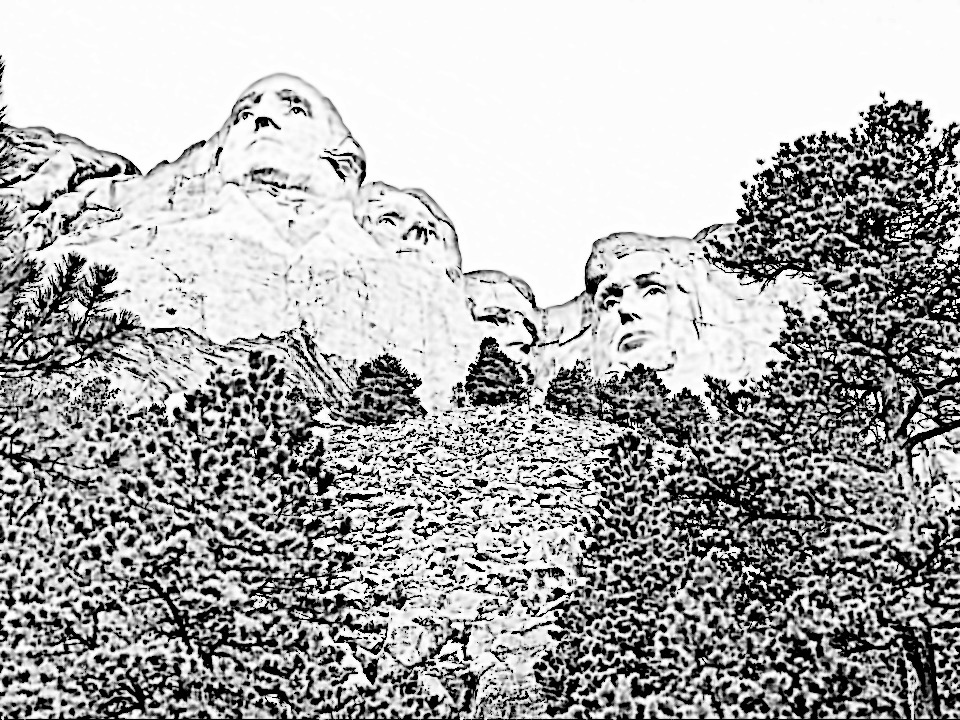
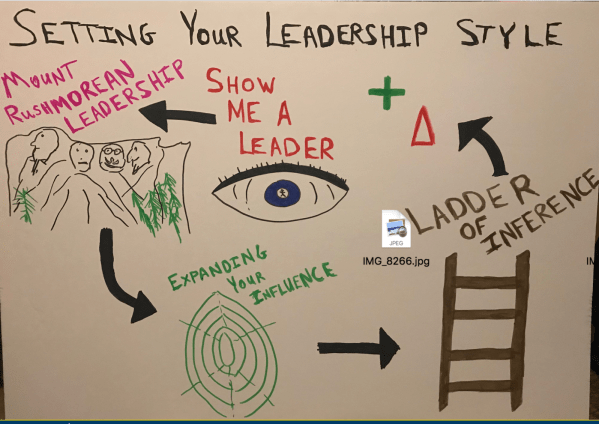 Then comes one of my favorite activities that I call Rushmorean Leadership which was then followed up by an activity called Extending the Influence. The activity calls for teacher leaders to bring pictures to identify four great leaders to put on their own personal Mount Rushmore. Then they bring six additional pictures to extend the influence. Part of the share out was in small groups (the ability to do this on Zoom™ is incredibly intuitive and has lots of options to customize for the facilitator’s needs) and part was done by FlipGrid™.
One of the questions I always like to ask is if the participants’ Mount Rushmore would look the same a year from now or would have looked the same a year ago. There were varied answers to this ranging from yes to no and then everything in between, like maybe one or two different. Then a triad of things were said by participants that really struck me:
- We never know when we will meet the next person that will go on our Mount Rushmore.
- Who will be the next to influence us?
- My revolving Rushmore
This reminded me of the beginning monologue phrase in William Shakespeare’s As You Like It, “All the world’s a stage, And all the men and women merely players; They have their exits and their entrances; And one man in his time plays many parts, His acts being seven ages.” To me, this means that people come into our lives and we enter other peoples lives for a reason, a season, or a lifetime. When we treat every encounter as a chance to impact, influence, or inspire we bring purpose to our lives. Most people that enter our lives are seasonal and they’re with us for a reason. Once that reason is fulfilled life has a way of moving them on. We also need to remember, the influence the great impact that others that we have never met influence us. Think about the influence of the four Presidents on Mount Rushmore and the impact they have on us. Remember, you also are influencing someone you haven’t even met. Thus, we really do have a revolving Rushmore.
 So, why use Mount Rushmore as the through line for this activity? Mount Rushmore is not just big; it is about the ultimate bigness – a monument to monumentalism. Think about the bigness of the role that individuals that you would place on your personal Mount Rushmore have had. Borglum, the sculptor, was obsessed with the bigness of America: the heroic story of a handful of tiny East Coast colonies growing to becoming an entire continent. Think about the four Presidents that were chosen with that bigness and growth in mind. Jefferson wrote the Declaration of Independence and expanded the country’s size with the Louisiana Purchase. Teddy Roosevelt made sure the Panama Canal happened, thus connecting the United States globally.
When I think about the idea of our own revolving Rushmores, I remember the rush of emotions that I felt when seeing Mount Rushmore in person for the first time. That rush contained thoughts of patriotism as well as awe. The awe was about the scope of the project as well as the awe in our ability to create and our human weirdness. Why had we done this? Why does this monument that the sculpting began on in 1927, with a dedication by Calvin Coolidge exist? I believe it is because of the great value we place on those who have had influence on us. Think about the work on Mount Rushmore that spanned some 14 years. A lot happened in our country during that 14 years. Leaders came and went and world/country history changing events happened. There was the Great Depression, World War II, and three different Presidents. President Franklin Delano Roosevelt was there for the Jefferson dedication (there was a separate dedication as each face was finished). And, Mount Rushmore was finished one month and one week before the attack on Pearl Harbor.
Is that a lot of history, or what? The sculpting alone is a monument to our tenacity. The hardness of the granite is a monument to the very strong foundation built by the founders of our country. The granite is so strong and hard it is said to only erode one inch per 10,000 years. When you think about it, our country has had a revolving Rushmore of those that have been on our “stage” and made a huge difference. This is no different than our own lives and the people who have been major players, making entrances and exits, playing many parts. Those great people who enter our “stage” make us who we are and make up our own revolving Rushmore.
 Byron's Babbles
1 comment