Temporary, Quick, or Permanent
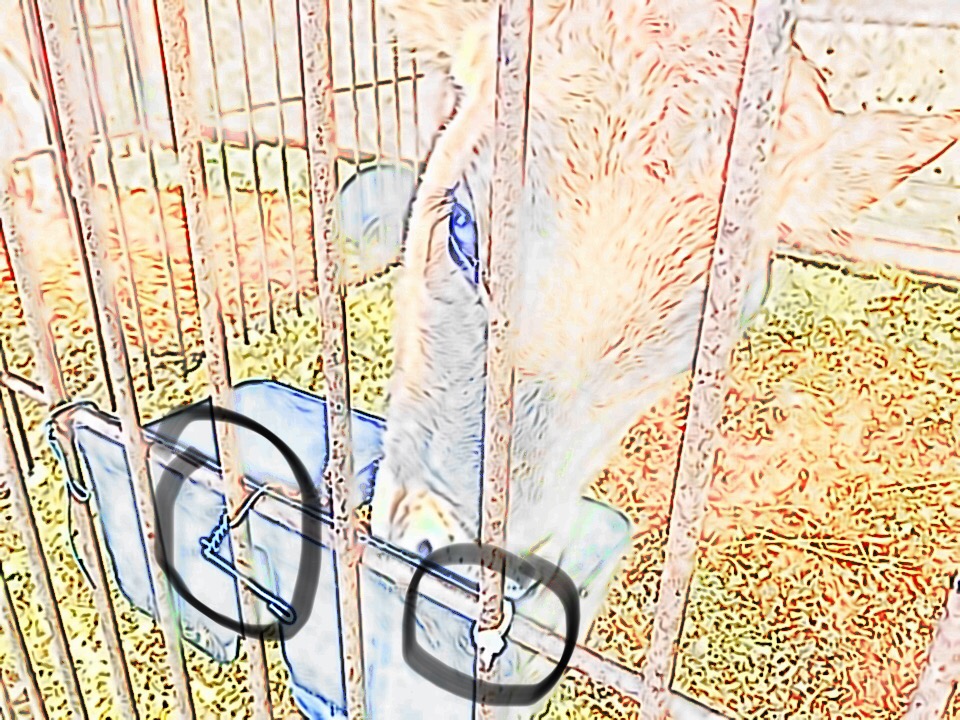
I am writing this post not exactly knowing where it will end up. I’m not sure if I will end with an opinion, advice, or just a collection of thoughts. This post, like many, was inspired in the barn this morning before the sun came up and in an hour before most even think about getting up – it’s such inspirational time for me. A lot of people spend their morning mindfulness time on a yoga mat or in a gym; mine is spent in the barn. I wouldn’t have it any other way. This morning when I got to the barn a feeder that hangs on a gate for one of our baby calves had come loose. It had come loose because I had done a quick fix the other night just using a plastic zip tie. I remembered thinking at the time, “this is not going to last very long, but I don’t feel like getting the wire out and fixing it that way.” In full transparency, I wanted to get inside and watch Game 4 of the World Series.
Well, this morning the plastic ties were broke and I was faced with fixing again. So, I got the wire out and did it “right.” This got me to thinking, “what constitutes right?” Think about all the “fix” decisions that are made whether by company, school, government, community, et cetera. Think about the names we assign “fixes”: makeshift, stopgap, salvage, life hack, workaround, and so on. Call them what you want, but almost every day we need to come up with temporary fixes and move on. I would not necessarily call this a bad thing.
Take for instance if I have one more round in a field mowing hay and something breaks on the mower-conditioner. I might be able to make a temporary fix (using wire or duct tape, of course!) and then make the permanent fix later. Not a bad thing – the job got done. Or, let’s use a school example. The internet goes down during a lesson. The creative teacher has any number of plan B’s that can come into play – learning goes on and the tech people make the fix (notice I did not say permanent fix – it doesn’t seem that problem can every be permanently fixed 😉). Additionally, sometimes there is no solution even developed yet, so a temporary fix must do.
Example of temporary fix to think about: Donut spare tires are not made for extended service, but they will get you home or to a tire store for repair or replacement of the tire you have put the donut on in place of. An innovation because it takes up very little space in your car.
The stopgaps of the temporary fix do allow for time when devising fixes or developing a whole new product. Workarounds show those we serve that we do truly understand there is a need for a solution. The one thing I have experienced first hand here, however, is that companies should not over-promise, particularly related to timeline. Do not tell the customer what they want to hear – be honest and conservative on the timeline. The old saying “under promise and over deliver” applies here.
The other thing I will note here that warrants a new paragraph is that sometimes admitting that there is not a solution available is refreshing. Sometimes there is a solution available from another provider. I do know it is very refreshing to have a vendor say, “We can’t do that, but here is someone who can.” Guess what? I will probably be back with the vendor who tells me that at some point.
Some time a quick fix is needed, if nothing else, to make the customer happy in the moment. Think about about my zip tie fix; I knew it was not permanent and that it would not last, but it got me through a moment that I was not wanting to spend a lot of time repairing something. We are such creatures of instant gratification and sometimes the quick fix just seems to be the way to go.
Lastly, there are many instances that temporary and quick fixes that were very creative, have turned into innovations. Some would argue that most individual attempts to innovate are makeshift, quick fixes. I even recently saw the term “improvised quick fix” used. As a farm kid I know that farmers have been doing this for years. In fact, really paying attention to quick or temporary fixes needed, might be the best way to monitor customer needs for new innovation.
No doubt we should always be looking toward the permanent solution, but we don’t want to forget to really put thought into our temporary and quick fixes. They have value as well. In fact we might just be devising the next great breakthrough idea.
Do Not Look Outside Yourself

Too often we wait on others to do for us, our communities, or the world what we should be doing for ourselves. In other words we need to step up and be the leaders that we have, for so long, been hoping for. Our choices do not, and have never just affected ourselves. I am reminded of what I have heard Gene Simmons say of what drove him during the founding years of KISS; he wanted KISS to be the band he’d never seen. Mission accomplished! We need to become the leader we’ve been hoping for.

In chapter nine this week, entitled “Take the Lead“ in Mindset Mondays with DTK, the Hopi Elder’s Prophecy was referenced. DTK quoted the Hopi elders, “we are the one we’ve been waiting for.” This caught my attention because I spent some time in the late ‘80s learning about the Hopi in Arizona. The Hopi are a Native American tribe located in northeast Arizona. They are believed to have one of the oldest living cultures in the world. They are referred to as “the oldest of people” by other Native American nations. It was incredible to visit and learn in the Hopi lands.
A Hopi Elder’s Prophecy
“You have been telling the people that this is the Eleventh Hour, now you must go back and tell the people that this is the Hour. And there are things to be considered . . .
Where are you living?
What are you doing?
What are your relationships?
Are you in right relation?
Where is your water?
Know your garden.
It is time to speak your Truth.
Create your community.
Be good to each other.
And do not look outside yourself for the leader.”Then he clasped his hands together, smiled, and said, “This could be a good time!”
“There is a river flowing now very fast. It is so great and swift that there are those who will be afraid. They will try to hold on to the shore. They will feel they are torn apart and will suffer greatly.
“Know the river has its destination. The elders say we must let go of the shore, push off into the middle of the river, keep our eyes open, and our heads above water. And I say, see who is in there with you and celebrate. At this time in history, we are to take nothing personally, Least of all ourselves. For the moment that we do, our spiritual growth and journey comes to a halt.
“The time for the lone wolf is over. Gather yourselves! Banish the word struggle from your attitude and your vocabulary. All that we do now must be done in a sacred manner and in celebration.
“We are the ones we’ve been waiting for.”
Hopi Elders’ Prophecy, June 8, 2000
I’m glad I took the time to look up the Hopi Elder’s Prophecy and read and study it in its entirety because I found another stanza that jumped out at me: “And do not look outside yourself for the leader.” This is a call to be the leaders that we have, for so long, been hoping for. Our choices affect so many more than just ourselves. True leaders lead from inspiration and purpose. We need to seek guidance from within, rather than from without. And share with others in the spirit of servant leadership. As DTK told us, “Leadership starts with you. It’s time to take the lead in your own development” (p. 93). If we are to do this we must take DTK’s advice and lead ourselves first so we can grow to then lead others. We can become the one’s we’ve been waiting for.
Knowing The Water

Yesterday I assumed the role of Chair of the National Association of State Boards of Education (NASBE) Board of Directors. The day before, in a meeting, I was introduced with the byline that in 24 hours I would be taking the helm. I’m not sure why, but I shivered a little at this. I even said, “I’m not sure what to think about that.” Then, our NASBE Northeastern Area Director, Dr. Audrey Noble (Delaware State Board of Education member) who is an avid boater/sailor said, “You’ll be fine. The key to success at helm is about knowing the water, and you know it well.” She had made a powerful statement there and had said a lot.
Later, as I reflected on that interaction, I remembered an awesome story that came out of World War II. And, of course, the story involves the great leader and 34th President of the United States, Dwight D. Eisenhower. The story goes that he went to the tent where his soldiers were mapping out a location for the troops to cross a river. Eisenhower pointed at a spot on the map and said, “We will cross here.” One of his troops said, “We cannot cross there, Sir.” Eisenhower asked why not. They told him they were not sure how deep the water was. Eisenhower pointed to his dampened pants leg and said, “It is this deep.” Clearly, he “knew the water.” Eisenhower had taken the time to actually get his feet wet and know where he was sending his troops.

Leadership by example and working shoulder to shoulder with those you serve continue to be the most successful forms of leadership. These concepts can take many different forms, but is expressed well with the phrase that is on a picture that hangs in my den, “Walk The Talk.” Walking the talk is one of my core values. It really speaks to the fact that our character is our legacy. If we say we believe or will act in a certain way, then our actions should prove that. I blogged about this in Walk the Talk!
A helmsman relies on his knowledge of the water he is in, visual references, GPS, other technological tools, and a rudder angle indicator to steer a steady course. Leading in an organization is no different. One must “know the water.”
In The Zoom Where It All Happens

We kicked off our National Association of State Boards of Education (NASBE) Annual Conference week today with our New Member Orientation. This is usually a two day institute that we converted to a half day virtual event. It was awesome with lots of great new state board of education members in attendance. I continue to be amazed at the great learning and relationship building that can happen #learningtogetherapart virtually. As I do many times with events like this, I will attempt to do a blog reflection each day on my learning. As we were getting started today, NASBE’s CEO, Robert Hull, made a play on words from the musical Hamilton and said, “In the Zoom where it all happens.” Of course this was in reference to Aaron Burr’s desire to be in the room “where it all happens.” If we want agency we must be in the room.

This really got me thinking how our ability to expand the number of people we can have have in the [Zoom] room. It is one of the silver linings from what we have learned and our adjustments caused by the COVID-19 Global Pandemic. On Day 222 of the Pandemic we know ways to connect virtual and still have deep conversations and the ability to form relationships. This really gives us even a better way to Lead Collectively, which was one of the topics of our New Member Orientation. We must remember that our voice matters.

Also, when we add our voice to the collective, there is power in our collective voice.
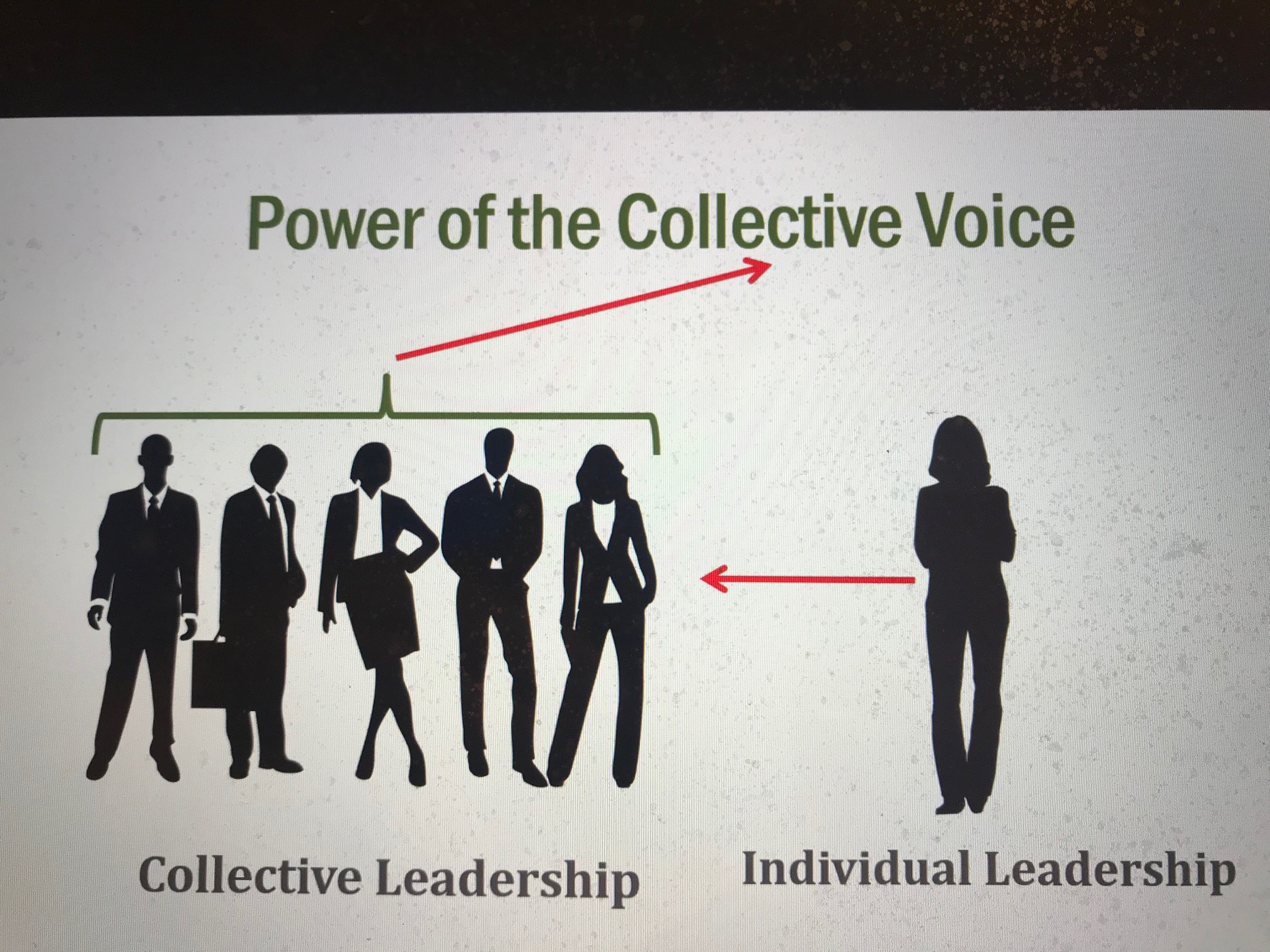
We still have a voice when we become part of a group, organization, or board, but it can become even more influential as part of the collective.

By leading collectively we can make a policy ecosystem that is best for all.

As citizen leaders we take stock of the world around us and help to shape the world for those we care about. A citizen leader is an active participant in her world – not a passive observer. We take on the role of citizen leader because we care deeply about the people and places that stand to benefit by our actions. To be an effective citizen leader we must determine who we are and what we stand for.
Shine Brighter
Today in Chapter 8 of Mindset Mondays With DTK, David Taylor-Klaus (DTK) used Marianne Williamson’s classic poem Our Greatest Fear to point out we should “Play Bigger.” There is the greatest question ever in her poem: “…who are you not to be?” As Williamson makes very clear; we are designed by God to be brilliant, gorgeous, talented, and fabulous. The wonderful part is that “brilliant, gorgeous, talented, fabulous” looks different on each one of us. Therefore, we must go out and BE! We must BE brilliant, gorgeous, talented, fabulous in carrying out our bold purpose in life. Here is the poem:
OUR DEEPEST FEAR
By Marianne Williamson
Our deepest fear is not that we are inadequate.
Our deepest fear is that we are powerful beyond measure. It is our light, not our darkness that most frightens us.
We ask ourselves,
“Who am I to be brilliant, gorgeous, talented, fabulous?” Actually, who are you not to be? You are a child of God.
Your playing small does not serve the world. There’s nothing enlightened about shrinking
so that other people won’t feel insecure around you.
We are all meant to shine, as children do. We were born to make manifest the glory of God that is within us.
It’s not just in some of us; it’s in everyone.
And as we let our own light shine, we unconsciously give other people permission to do the same.
As we’re liberated from our own fear,
our presence automatically liberates others.

My favorite part of the poem is: “We are all meant to shine, as children do. We were born to make manifest the glory of God that is within us. It’s not just in some of us; it’s in everyone.” You heard that, didn’t you? “Everyone,” yes, “everyone.” We all get to shine! Think about those who have inspired you the most. You’ve probably noticed that these are people who are tapped into something bigger than themselves – the ones who leave us craving that same feeling for ourselves. So what is the difference between you and that extraordinary individual? I got news for you – NOTHING. Stop playing small, and shine.
How can you play big and shine even brighter?
Eccentric and Unorthodox and Quirky! Oh My!
Let’s face it, eccentrics are the people who see problems from new and unexpected angles; whose very oddity allows them to conjure innovative solutions. They are the visionaries who make giant imaginative leaps. I’ve actually blogged about this before in Leading With A Touch Of Quirkiness. Ingrid Fetell Lee told us to quit being bound by convention; our quirkiness brings joy to the world. We need to celebrate creativity.
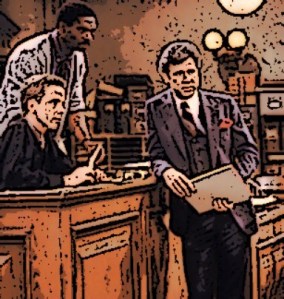
I was reminded of this when flipping through the channels (do we still call them that, or am I aging myself?) after the NLCS game last night and coming across Night Court. Night Court, ran on NBC from 1984 to 1992. Harry Anderson starred as the young, unorthodox, and magic-trick performing Judge Harry Stone presiding over the anything-goes atmosphere of New York Municipal Court’s night shift. I had forgotten about this great show so stayed on the channel and watched some of it. Harry was up on insubordination charges and was described as being eccentric. It was said by the presiding judge that being eccentric is how we become effective and get things done to help others. Long story short, the case was dismissed.
As a person who resembles being eccentric, unorthodox, and quirky at times, this really got me to reflecting on why so many see this as a bad thing and so few dare to be eccentric; when really it isn’t such a bad thing after all David Weeks, psychologist, did some research into the eccentricities of 1,000 subjects. Weeks found eccentrics to be highly creative and that they tend to be optimistic people with a highly developed, mischievous sense of humour, childlike curiosity and a drive to make the world a better place. It would seem to me that we need more of this. Just saying!
Weeks found the study subjects to live slightly longer, suffer less from mental illness, have very few alcohol or drug abusers, and visit the doctor less. Therefore, if we eliminate the struggle to conform we probably suffer less stress. Again, as we learned from Ingrid Fetell Lee, a little quirkiness will help bring joy into our lives. And…into the world.
So, go ahead and don’t be ashamed to be curious, creative, and a little quirky!
Just Pay Attention

My wife and I just finished watching all seven seasons of The Mentalist. I love it when a show reminds us how important it is to continue to hone and develop our leadership skills. This television series is about Patrick Jane, played by Simon Baker, a man who at one time pretended to be a psychic. He made a lot of money doing this, but his arrogance as a fake psychic caused his family to be murdered. This caused him to stop pretending and begin a crusade of calling out the fact that there is no such thing as a psychic. Jane then went to work for the Californian Bureau of Investigation (CBI) and later in the series for the Federal Bureau of Investigation (FBI), helping them solve murder cases.
What Patrick Jane did have, however, was very keen powers of observation and a lot of chutzpah. I know The Mentalist is just a television show, but it was amazing to watch as Patrick Jane explained what he knew about a suspect or a witness, just from observing or talking with them. The key was, he was using all his senses, literally. During the series we saw him use sight, smell, feel, hearing, and smell to understand. Body language, clothes, nervous habits, accents, the things a person surrounds themselves with – they all tell a story, if we really pay attention to what we see, smell, feel, hear, and taste.
Patrick Jane also questions things that seem to be out of place, uses his senses, and looks for what people value. Even more importantly, he empathizes. Jane has incredible emotional intelligence. He expands that emotional intelligence to include others – Patrick Jane communicates better by staying focused on the person he’s with, making eye contact, paying attention to nonverbal cues, watching how others are reacting as he is talking to someone else, and sometimes taking there hand or wrist to feel there pulse. In other words he is just paying attention, or as I call it, reading the room. Staying tuned in emotionally with people makes our ability to build and grow relationships even stronger.
Take Off The Mask & Cut Out Those Frustrations
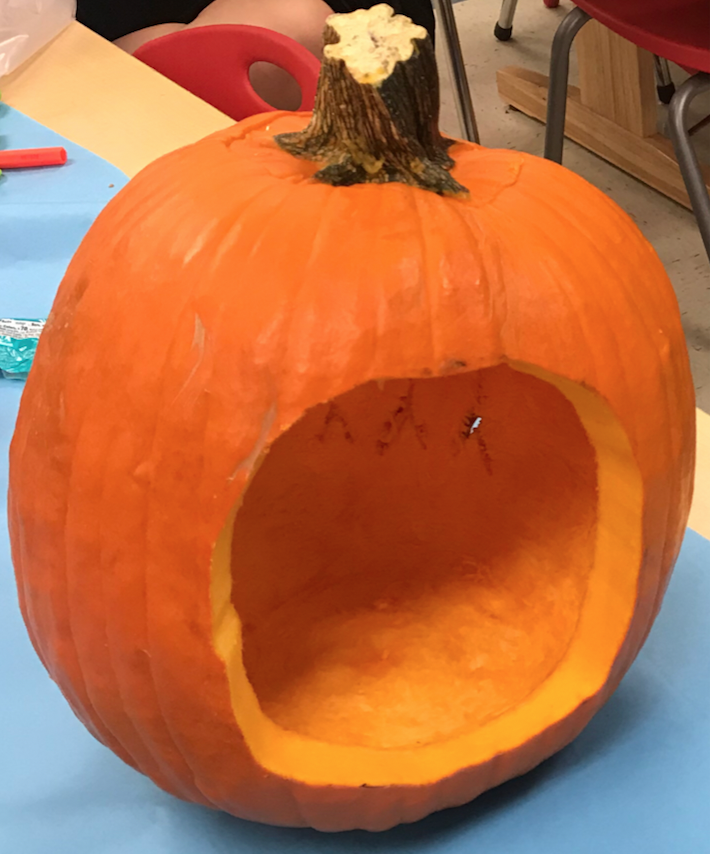
Ever trip over yourself? David Taylor-Klaus (DTK) reminded us this week in Chapter 7 of Mindset Mondays with DTK to “Get Out of Your Own Way.” We need to integrate the brain and body by using awareness and intention.
Interestingly, this weekend I did an activity for a leadership training using pumpkins. Participants had to carve their pumpkin using this prompt: “Truths that frustrate you.” This gave participants a chance to ponder where those frustrations come from. Many times those frustrations come from ourselves. We become frustrated when our decisions are not aligned with our core values and purpose.

We need to take time to take an introspective look at ourselves and listen to what both our mind and body are telling us. Then trust what we hear and not sabotage ourselves. Sometimes if we took time to name our frustrations (or carve them into a pumpkin) it gives us the chance to reflect on and even remove the mask that those frustrations form.
As Robbin Jorgensen did in DTK’s story, we can change and cut the frustrations out (pun intended) and remove the mask. Jorgensen’s Women Igniting Change movement is giving women the power to take action around the world. By taking off her own mask she was able to reflect, listen to herself deeply and then trust her own decisions.
What’s keeping you from making the impact you want to make in the world?
Power To Do
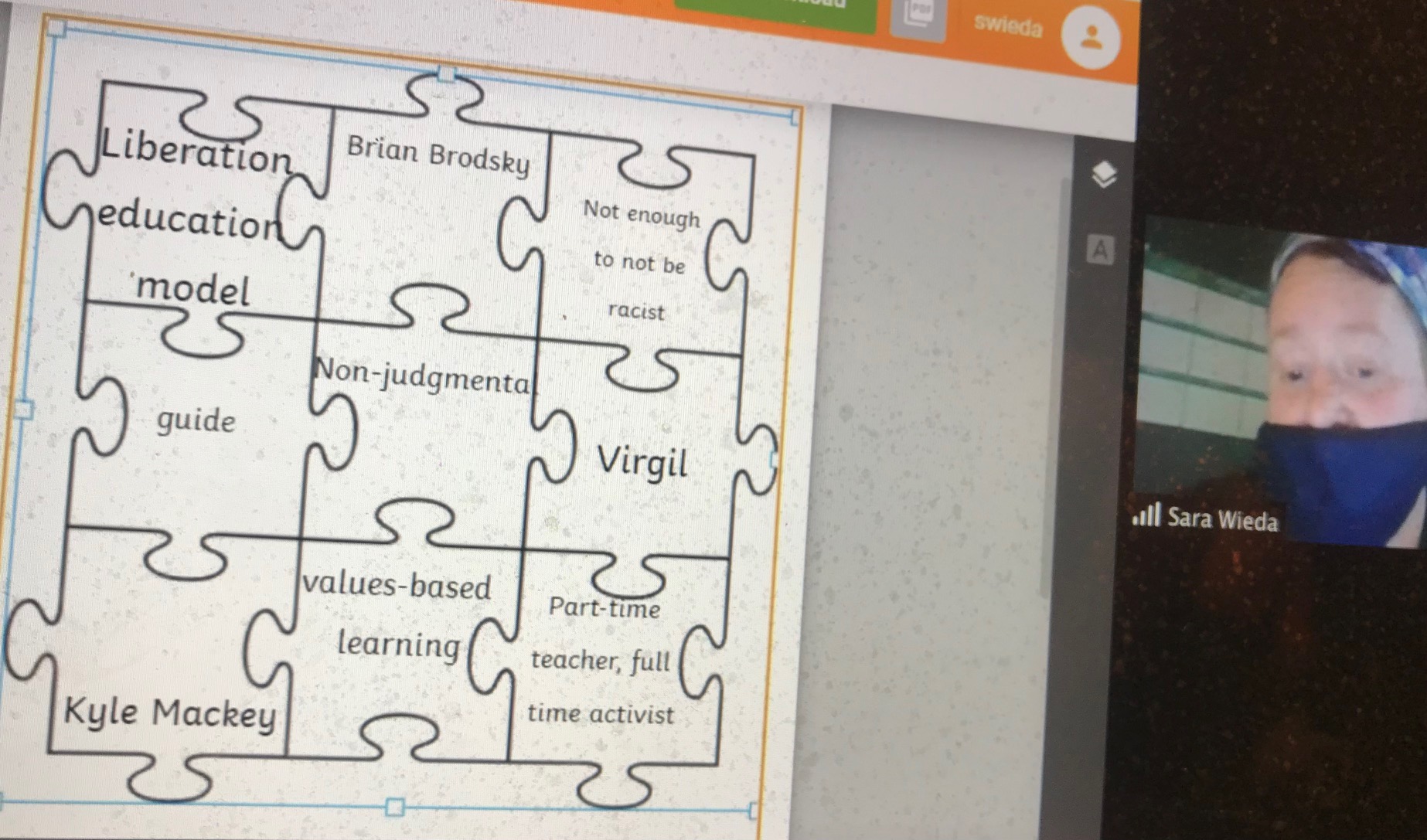
Last week while in a very deep discussion during a 3D Leadership session we were talking about leadership and power. We were discussing the five forms of power from French and Raven (1959). Here are those five forms of power:

First of all, the group talked about how great it is that we continue to move from forms of power to levels of what John Maxwell called 5 Levels of Leadership. The group acknowledged how negative most of the five levels of power are, but that those powers exist, how they can be used for positive, and how we should use them for creating positive environments. One of the positive forms of power is “referent.” I have blogged about this power before in The Majestic Leader. Also, here are Maxwell’s 5 Levels of Leadership:

Then someone made a brilliant statement: “The five forms of power have such a limited scope.” I asked what she meant, and she said, “Those are all about ‘power over’ and we should be thing about ‘power to do’.” Again, another brilliant statement! “Power to do!” Now that’s a power we need to develop – Self empowerment.
Therefore, as leaders it’s important to inspire empowerment in others. After all, when people feel powerful, it boosts their self-confidence, which further enhances their work and performance. Inspiring others is often the mark of a great leader, but how do you do that effectively? Being an inspiring leader was the theme of this gathering. To truly empower others we must empower ourselves to be inspirational leaders. How do we do that? Here’s what our teacher leaders said:
- Show up – Inspirational leaders understand the significance of just being there. I actually heard from teachers in this gathering that they wished that the school leaders would just come visit there schools and more importantly, their classrooms. You can’t take care of your peeps if you aren’t with your people and that means going to street level and getting shoulder to shoulder.
- Be present – This is different than showing up; we must really be present by having open ears and listening, asking the right questions, and having humility.
- Withitness – Great leaders position themselves so they can see everything. This is also about being actively engaged.
As leaders of learning we have a key role to play in delivering quality learning. In order to do this it is important to understand the purpose and impact of our role and the impact we have on others. In the case of education, the task of leadership is to make visible the how, why and where of learning. It achieves this by conversations and demonstrations around pupil learning, professional learning and learnings which transcend the boundaries of the school. The challenge for leadership is to nurture the dialogue, to make transparent ways in learning interconnects and infuses behavior. It promotes a continuing restless inquiry into what works best, when, where, for whom and with what outcome. Its vision is of the intelligent school and its practice intersects with the wider world of learning.
Never forget, the way we see leadership, learning and the quality of our schools, businesses, or organizations is ultimately a product of how we see and think about ourselves. Remember, we have the “power to do.”
Safety Nets Instead Of Safety Barriers

Funny that David Taylor-Klaus (DTK) talked of becoming a grown-up with our fully formed prefrontal cortex, giving us more rational and limiting beliefs. Funny because I had someone (who I have worked with and have a great relationship with), in a loving way, describe me as having the mindset of an eighth grader this past week. Well, I resemble that remark. Grown-up, I am not; and proud of it.
DTK described some of his childhood “rope-in-the-tree” swinging antics that landed him with a broken nose and shattered wrist. His last statement about the story was, “Sadly, my parents forbade any future effort to test my theory.” Probably no one else reading DTK’s book would highlight that sentence but me. But, there is such a fine line between protecting us, which his parents were very well, and beginning to limit our beliefs with, so called, “rationale thinking.”
This is a pretty extreme example, but as an educational leader I think about this a lot. What’s the correct balance of risk-taking and over-protection? What might DTK have learned if after he healed, he had retested his rope swinging theory again? I am not suggesting that we put our children, or ourselves for that matter in harms way, but I am a believer that we cannot live risk-free. What if Thomas Edison had quit risking failure after electric light bulb prototype 9,999?

For me, it’s about the “what if?” I would rather admit failure than having to explain “what if?” DTK in Chapter 6 of Mindset Mondays With DTK told us we must not let ourselves become victims. We have clear choices and clear steps to make a shift in believing in ourselves. We need an “I can” mindset giving us a belief that we are strong and capable. DTK told us, “Who we believe we are matters.” It is so important that we allow for risk with our children and all we serve. Again, I am not advocating putting anyone in harms way, but finding a way to be a safety net. That metaphorical, or maybe even real one, looks like allowing for risk, but allowing for failure so that learning can happen.
To take those risks it is very important that we make sure that we, our children, and those we serve hear “I can” instead of “I can’t.” We need to be safety nets and not safety barriers.
 Byron's Babbles
leave a comment