Embracing Life’s Challenges: The Power of Intentional Engagement and Genuine Experiences

I continue to be inspired by G. K. Chesterton’s collection of The Father Brown Stories. In Chapter 12 “The Fairy Tale of Father Brown” he wrote, “I wonder,” he said, “whether one would have real adventures in a place like this, if one put oneself in the way? It’s a splendid back-scene for them, but I always have a kind of feeling that they would fight you with pasteboard sabres more than real, horrible swords.” I believe Chesterton was reflecting on the nature of adventure and the settings in which it occurs. He suggested that while a picturesque or theatrical backdrop (like a quaint town or a staged scene) can seem like an ideal place for real adventures, such surroundings may actually diminish the authenticity of such experiences. The mention of “pasteboard sabres” implied that many perceived adventures are more like theatrical plays—full of façades and illusions—rather than genuine adventures or dangers.
Chesterton seemed to be emphasizing that true adventure involves real risk and stakes, which might be absent in overly controlled or theatrical environments. It’s a subtle commentary on the contrast between superficial excitement and authentic experience.

The phrase “if one put oneself in the way” suggested intentionally or proactively placing oneself in a position where one might encounter challenges, risks, or obstacles. In the context of the earlier comment about adventures being like theatrical plays, this phrase emphasizes the idea that genuine adventure requires an active choice to face real dangers, rather than merely observing or pretending.
Chesterton, through Father Brown, might have be implying that true courage and authentic experience come from deliberately stepping into situations where there’s actual risk, rather than avoiding danger or engaging only in superficial activities. It’s about taking responsibility for one’s actions and accepting the potential consequences, which elevates an experience from mere spectacle to something meaningful and genuine.
As a person who believes in long life learning, taking risks, and embracing the next journey of innovation and learning, this underscores the importance of intentional engagement with life’s challenges, rather than remaining a passive spectator. It’s a call to embrace real adventure through deliberate effort and willingness to face the stakes involved.
Harnessing Being Receptive, Understanding, & Acting

Yesterday, when discussing a current project with a great leader I have had the opportunity to serve as a mentor for, she shared some positive feedback from a team member she serves. This leader and the team member were having a one-on-one meeting and the team member told her that, as a leader, she practiced three great qualities: being receptive, understanding, and acting. This leader then shared that she had learned those three qualities from me. She told me I had modeled those for her. I tell you this story not to brag but to reinforce the power of modeling the qualities we espouse.
Now, let’s talk about being receptive, understanding, and acting. These are exceptional leadership qualities because they foster trust, collaboration, and effective problem-solving. Receptiveness allows us to listen genuinely and consider diverse perspectives, leading to more informed decisions. This receptiveness may even involve us being open minded to new ideas or ideas contrary to our own.
Understanding helps us empathize with our teams and stakeholders, creating a supportive environment that encourages engagement and loyalty. I have also learned that understanding also leads to appreciation of where the other person is coming from. Appreciation is an important part of understanding that I believe many times gets left out.
Acting promptly on insights and feedback demonstrates decisiveness and commitment, inspiring confidence and driving positive change. Together, these three attributes build a strong, cohesive team and enable us to navigate challenges with empathy and agility.
Container Pioneer: How Innovative Leadership Shaped the Future of Global Trade

Yesterday I had the opportunity to learn first hand about the Port of Savannah and container ship transportation. I posted about that experience in The Modern Container Port. That experience caused me to dig in and learn more about how the whole container shipping industry evolved. I learned that Malcolm McLean was the innovative, systems change leader who invented and patented containerized shipping. Over 90% of global shipping now happens using the TEU (Twenty Foot Equivalent Container Units) containers. That invention and standardization was said to have improved shipping efficiency by 25%. Now that’s innovation!

McLean’s invention of the shipping container and the semi trailers the containers can be mounted on offers a powerful leadership lesson in innovation and systems leadership by exemplifying how vision, boldness, and systemic thinking can revolutionize an entire industry. Here are some key takeaways:
- Challenging the Status Quo: McLean identified inefficiencies in traditional break-bulk cargo handling and questioned existing practices. Great leaders aren’t afraid to challenge conventional methods and look for transformative solutions.
- Innovative Thinking for Large-Scale Impact: His idea to standardize cargo into containers was groundbreaking, demonstrating the importance of thinking big and considering how innovations can positively impact multiple facets of an industry.
- Commitment to Vision: McLean persisted despite initial resistance, showing that dedication and resilience are essential for turning innovative ideas into reality.
- Systemic Change and Leadership: His invention didn’t just improve efficiency; it redefined global trade logistics, illustrating how visionary leadership can effect widespread change through strategic innovation.
- Embracing Risk and Learning: McLean’s journey underscores the importance of taking calculated risks and being open to learning from failures, which are vital traits for innovative leaders.
Malcolm McLean’s story teaches us that effective leadership involves recognizing opportunities for innovation, daring to challenge existing paradigms, use systems thinking to disrupt markets, and having the perseverance to implement game-changing solutions that benefit industries and communities worldwide.
The Modern Container Port
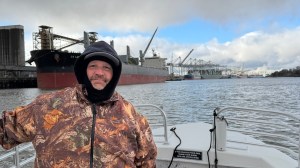
I had an incredible experience today! I had a private tour by Captain Dan of the Port of Savannah in Savannah, Georgia. The Port of Savannah is the largest single container terminal in the Western Hemisphere. Container shipping is measured in TEUs (Twenty Foot Equivalent Container Units). Last year the Port of Savannah saw 5.25 million TEUs moved. I had been really wanting to learn about this incredible port and my dream came true with Captain Dan.
I’m going to let my photos do some talking here:
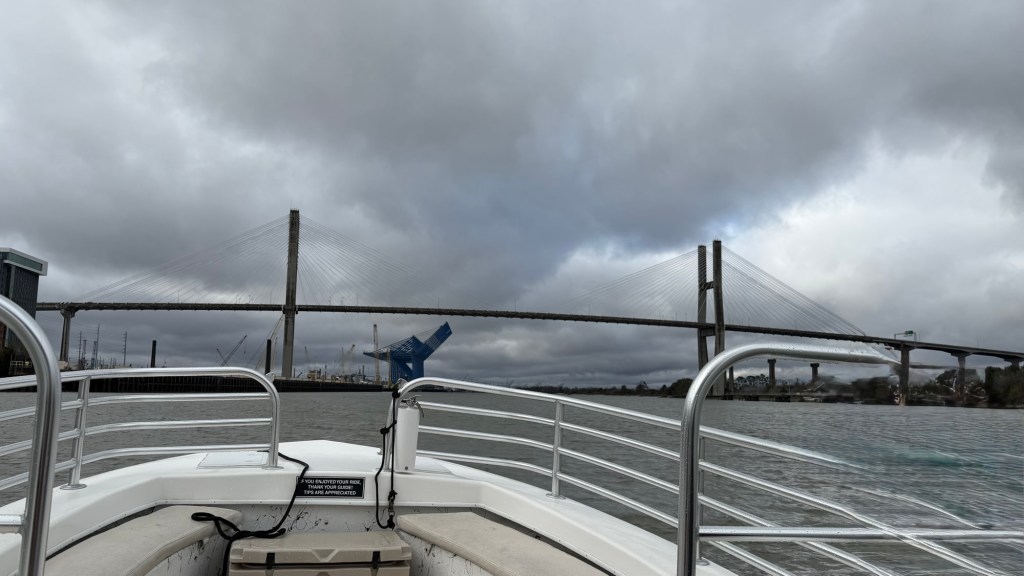
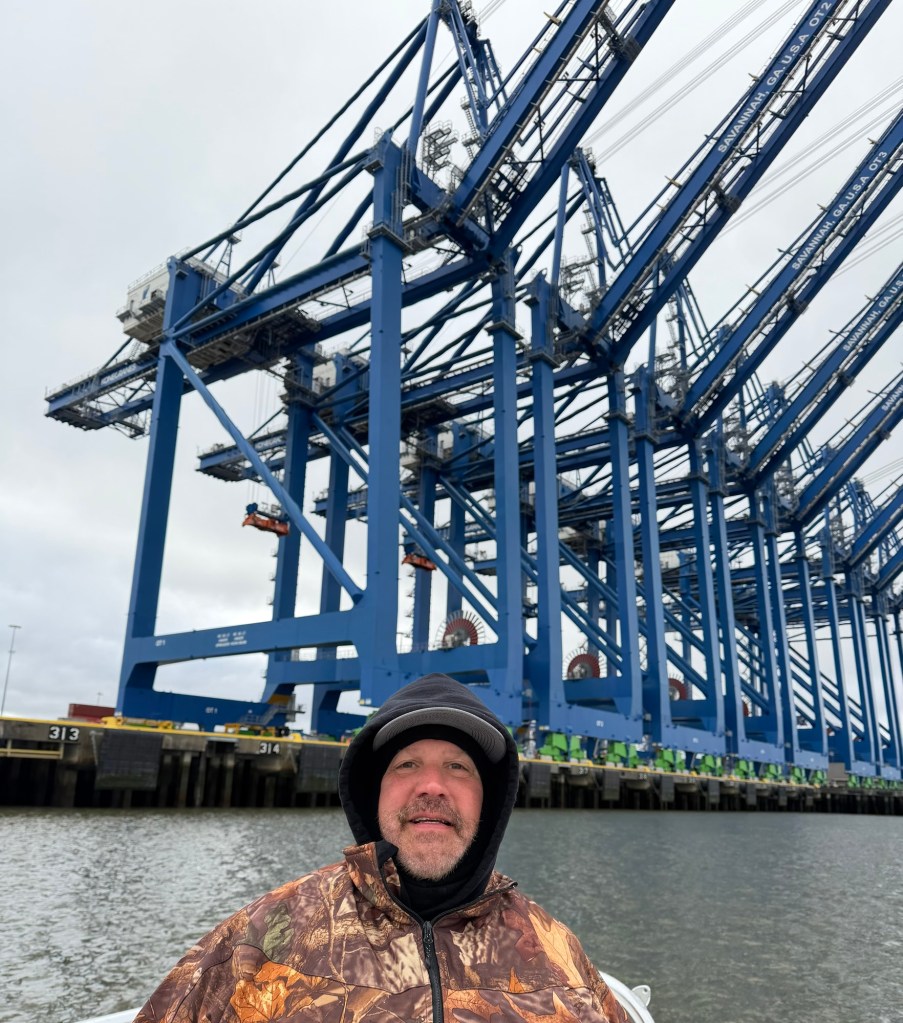





As one of the nation’s busiest ports, Savannah handles a significant volume of containerized cargo, thanks to its deepwater ports, state-of-the-art terminals, and efficient infrastructure. The port’s strategic location, coupled with its expansive railroad and highway connections, makes it an ideal hub for distributing goods across the Southeast and beyond. Major shipping lines regularly call at Savannah, facilitating international trade, particularly with Asia, Europe, and Central America. The port’s ongoing investments in modernizing facilities and expanding capacity reflect its commitment to maintaining its competitive edge, supporting regional economic growth, and enabling seamless global commerce.
I made the comment to Captain Dan that I was excited for this learning today because every year I try to learn something new about the Savannah/Tybee Island, Georgia area when I am here. He said he was the same way in that he made sure he was learning and getting new certifications and qualifications each year. He then quoted Dave Ramsey as saying, “We should learn something new today and dispel the fear of what we don’t understand.” This conversation was a good reminder of how important it is for us to stay curious and keep learning. What new things do you want to learn?
Why Wait?
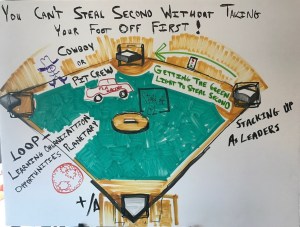
I had a person yesterday morning say to me, “Boy, you sure don’t wait around!” This was in response to a conversation we were having that resulted in needing to ask another person a question and I just picked up my phone and called that person and put them on speaker. One thing I have learned over the years is the more I do things immediately, like making a call, the better things turn out. This is especially true with difficult conversations. My theory is, why wait?
In yesterday’s context the conversation was not a difficult one, just one that it sped things up to get the answer right then. I hate it in meetings when someone says, “Let’s take that offline.” No! Let’s get it handled right now. Basically, I am a “get things done” person. Those that know me know I will a lot of times say, “Let’s do something, even if it’s wrong.” Now I know that is not always the best approach, but think about all the times when you or a group kept talking about something and the window of opportunity closed and passed you by.
A lot of times we put off difficult conversations, but what I have found is that is best just to get them done. I say this because many times the conversations don’t turn out to be as bad as we think they will be. Therefore, it is best to get those conversations done and over with so they are not hanging over our heads and stressing us out. This is what Brian Tracy called “eating the frog.” Tracy taught us that when we have a big challenge to go ahead and get it out of the way first. In other words, don’t wait around; get it done.
Leading Like Dolphins

Yesterday morning I had the opportunity to watch a pod of dolphins playing and fishing right next to the pier on Tybee Island. As I watched and admired I was reminded how dolphins are the perfect balance of intelligence, compassion, and adaptability that define inspiring and effective leadership. Dolphins can serve as a powerful metaphor for leadership because they also exemplify qualities such as intelligence, teamwork, communication, and resilience.
Just as dolphins work together seamlessly in pods, effective leaders foster collaboration and unity within their teams. The dolphins playful curiosity and adaptability symbolize the importance of innovation and open-mindedness in leadership.
Dolphins are highly adaptable in diverse environments and can quickly adjust their strategies. The best leaders are flexible and creative problem-solvers, especially when it comes to navigating changing circumstances. As effective communicators, dolphins use a complex system of sounds and gestures to communicate with each other. As leaders we must foster open, transparent communication within their teams to ensure everyone is aligned and engaged.
Embracing qualities like playfulness and adaptability—much like dolphins—can significantly enhance leadership effectiveness. By fostering a positive environment and valuing strong communication, we can build resilient and motivated teams capable of overcoming any challenge.
Inner Freedom: Shaping How We Perceive and Respond to the World

I wrote about freedom back in 2020 in Remember, Freedom Is Yours Until You Give It Up. Reading in G. K. Chesterton’s Autobiography this morning prompted me to reread my post and realize my words I wrote then are still relevant today. Then I read this from G. K. Chesterton this morning, “From the first vaguely, and of late more and more clearly, I have felt that the world is conceiving liberty as something that merely works outwards. And I have always conceived it as something that works inwards.” This caused me to think deeply about what Chesterton meant by this.

I believe Chesterton was highlighting a distinction between the superficial and deeper understandings of liberty. When he says that the world often sees liberty as something that “merely works outwards,” he’s referring to the common view that freedom is about external circumstances—such as political rights, legal freedoms, or outward expressions.
However, I’ve found from studying Chesterton that he believed that true liberty is more inward and spiritual. He conceived it as an internal state—a form of self-mastery or inner freedom—that influences how we think, feel, and make choices. In essence, he was emphasizing that genuine liberty begins within the individual, shaping how we perceive and respond to the world, rather than just external conditions or constraints.
It always amazes me how a couple of sentences from a great author can make a person think. Chesterton’s saying, “From the first vaguely, and of late more and more clearly, I have felt that the world is conceiving liberty as something that merely works outwards. And I have always conceived it as something that works inwards” did that for me. His perspective encourages looking inward for freedom—cultivating inner independence and moral integrity—rather than solely focusing on external rights or societal structures.
Soaring High: Embracing the Learning Journey to Master Kite Flying and Leadership

I love watching people flying kites on the beach. In particular, I love watching children having fun flying kites on the beach. Yesterday morning I looked on while a youngster had the productive struggle of learning to fly a kite. And, by the way, I am a big believer in productive struggle as a best practice for teaching and learning. The child’s parents were helping, but I’m pretty sure they were learning to fly a kite for the first time too. Of course, all of this led to an analogy.

Just like a child learning to fly a kite, someone stepping into a leadership role often faces uncertainty and challenges initially. The child’s productive struggle—feeling the wind, adjusting the tail, experimenting with different angles—mirrors how a new leader learns through trial and error, gaining confidence and skill over time. And a cool thing happened; all of the sudden the kite caught the wind just right and it was game on. Even from a distance I could tell the young person had that “Oh crap” moment of “It’s flying, now what do I do?” It was so much fun and so inspiring to watch. By the way: I’m pretty sure Orville Wright had that same “Oh Crap! I’m flying! Now what do I do?” moment on December 17, 1903!

Both situations emphasize the importance of patience, perseverance, and a willingness to learn. The child never once gave up when the kite dipped or struggled against the wind; instead, I could tell they were learning to read the conditions and adapt. Similarly, a leader who admits they don’t have all the answers (practices being vulnerable) and remains open to growth can develop resilience, wisdom, and better decision-making skills.

In essence, this analogy reminds us that embracing the discomfort of not knowing everything upfront allowed both the child and us as leaders, to develop competence, confidence, and a deeper understanding of our environments. It’s about valuing the journey of learning and trusting that with effort and openness, mastery—whether in flying a kite or leading others—is achievable.
Reconnecting
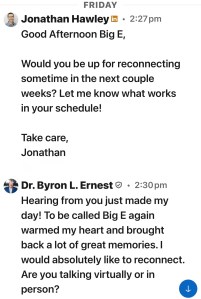
Yesterday I got to do something that I believe every educator reading this post would say are some of the greatest moments as an educator: reconnecting with former students. On Friday of last week I got this message from Jonathan Hawley:
Good Afternoon Big E,
Would you be up for reconnecting sometime in the next couple weeks? Let me know what works in your schedule!
Take care,
Jonathan
That message absolutely made my day. One, because it has been a lot of years since someone called me, “Big E.” Back in the day that was what all my students called me. Of course, I responded immediately that I would love to reconnect (see the featured photo).
Yesterday, we spent nearly an hour reconnecting. It was like no time had passed at all since we were last together. The point of this post is not to retell those stories, because those would be out of context for you. My point is however to reinforce how important building relationships is, particularly for teachers with students, and the tremendous value in reconnecting that Jonathan so wonderfully modeled for me.
As an agriculture science teacher I had the opportunity to really get to know our students and their families. In Jonathan’s case I was able to travel overseas with him not once, but twice. Those relationships then transform into incredible learning. It was so great to hear Jonathan share things he uses yet today that he learned from those experiences.
This reminder of the importance of relationships goes beyond education to all organizations and leadership. I am a believer in taking relationships beyond the surface level. Relationships matter. Relationship that go beyond surface level are built on a solid foundation of trust and mutual understanding. Those deeper connections provide emotional fulfillment and satisfaction that transcends mere service or reciprocity.
Reconnecting with people from our past can be incredibly fulfilling and wonderful because it allows us to rediscover shared memories, regain a sense of belonging, and see how both we and our relationships have evolved over time. It was so awesome to reconnect and get to know the Jonathan of today – a father of three and successful leader and professional.
Moments like yesterday bring an inspiring reminder of the bonds and experiences that shaped us, fostering feelings of nostalgia, gratitude, and renewed connection. This reconnection also offered new perspectives and insights, enriching our understanding of ourselves. For example, it inspired this post and me to think deeply about others I need to reconnect with. How about you? Is there someone you need to reconnect with?
Balancing Ambition and Realism: Strategies for Sustainable Success

The other night I got caught up watching the 2010 classic The A-Team movie. If you haven’t seen it, it is awesome. The line that always causes me to pause and reflect is when Colonel John ‘Hannibal’ Smith, played by Liam Neeson, says, “Overkill is underrated.” As a person who often gets credited for turning ordinary things into big deals or events, I love the comment. Now, I get the fact that in the movie as Hannibal makes the comment that he is dumping an entire box of fireworks into a distraction that probably only needs a couple, but stay with me for the analogy.
Sometimes, going above and beyond or exceeding expectations can be more effective than just meeting minimum standards. In leadership, this reminds us the value of thoroughness, extra effort, and attention to detail—showing commitment and inspiring confidence. It encourages us to deliver more than what’s necessary to achieve excellence and foster trust. I like going into this mode on projects because of the shock and awe effect of it. I’m reminded of going big or going home!
While the idea of “overkill” can often lead to high-quality results and demonstrate dedication, I would be remiss if I didn’t recognize there are situations where it might not be the best approach. There have been times where I have caught myself going into “overkill” mode and was in jeopardy of overextending efforts or using excessive resources on a task that doesn’t require it can lead to inefficiency and waste.
While ambitious dedication is admirable, and I believe a good thing, it’s important to balance effort with practicality and context to ensure that striving for excellence remains sustainable and appropriate.
 Byron's Babbles
leave a comment