Advanced Consulting
 Advanced Consulting: Earning Trust at the Highest Level by William A. Pasmore
My rating: 5 of 5 stars
When it comes time to write my end of the year blog post about the top books I’ve read in the last year, this book will be in the top tier of that list. As a person who does leadership training and coaching/mentoring of leaders, I learned a great deal from spending time studying every page of the this insightful book. My copy of the book looks like what my mom always told me a Bible should look – used. I have the pages dog-eared, highlighted, notes in the margin, and the spine is all broken back, and this book will continued to get used in a reference capacity.
Advanced Consulting starts the reader off with a great story, as great leaders do. Then the reader is reminded that we should not always be looking for the most glaringly obvious things to fix, but the opportunities unaddressed that would slip up. This book drove home the fact that, “Every change is an experiment” (p. 111) and that “More pressure won’t produce progress, less pressure and more understanding may” (p. 109). This kind of candid and authentic information from Bill Pasmore helps us to understand why he argued there is no perfect knowledge in the real world. That is why this book is so timely right now in these uncertain times with the COVID-19 Pandemic. There are things, like this, that cannot be predicted, and this book gives us incite in how to help leaders to find ways to work interdependently to find solutions.
Lastly, as a curious person and leader, I loved the part of the book where Pasmore admitted, “I learn something I should have already known” (p.143) when accepting a new assignment with a new organization. He reminded us to be genuinely curious and humble. Whether you consult leaders or are a leader (remember, I believe everyone is a leader) you need to read and study the insights of this book.
Easter Isn’t Canceled

Baseball was not canceled during the Pandemic of 1918-1920
Today, I chronicle thoughts, here in my blog, on a new page in the book that is the story of my life. I have been doing some personal growth studying, with the help of the Woodrow Wilson Presidential Library and Museum, on the pandemic of 1918-1920. My motivation this morning is that I am always moved by the personal stories written by people experiencing an event first hand. The most interesting and compelling speak of what was happening, the mood of the country and those around them, and what he or she was feeling at the time. I’m going to attempt a little of that this morning. I also believe if we are not using this as an opportunity for our children and students to write an account of something that will be undoubtedly written about in textbooks, or whatever our kids’ grandchildren will be using, we have missed a chance to process and save the realness of our experiences real-time.
Queen Elizabeth II shared a video message yesterday that was quite moving. Click here to watch it. The genius of her message was how different parts of the message have and will inspire different people in different ways. For me it was when she said, “But Easter isn’t canceled; indeed, we need Easter as much as ever.” No doubt things will be different today for most of us. But, Easter isn’t canceled, and different doesn’t have to mean bad.
 One of my fondest memories growing up was of our Easter morning Easter egg hunt. We’d get up and go find the eggs hidden all over our very large yard that included barn lots. Interestingly, the one thing that I remember most vividly is the blue egg, and it was always a blue egg, put on top of an electric box on the back side of the house. I need to point out that these were real boiled eggs, usually a few duck eggs mixed in because we raised ducks, and my mom and sister colored them – I wasn’t much into coloring Easter eggs (that involved being inside and standing still – some things don’t change with age). My dad was so proud of that hiding spot on the electric box (not sure why). That became a special spot, however, because the first Easter we lived in that house my dad, after I spotted and claimed the egg, had to lift me up to get the egg. The next year I could reach it and every year after that that egg was mine, and my dad would always laugh and say, “You need me to help you get that one?” I’d say, “No!” We’d make eye contact and now having a son of my own I think I know what was going through his mind.
 Easter isn’t canceled because of the COVID-19 Pandemic and my son will have an Easter basket (yes even at age 19) this morning. We will go to church via Zoom and then have the traditional Easter brunch of “One Eyed Connelly’s (that is the family name for a piece of toasted bread with a hole cut in the center and an egg cooked in that hole), sausage links, and cinnamon rolls. I’m sure there will be Easter egg hunts with the nieces and nephews to be joined virtually on some electronic platform or another. And, how cool is it we have those platforms? We are connecting more, socially, than ever before. Physical distancing (as I am calling it because I hate the term social distancing) is not keeping us from socializing.
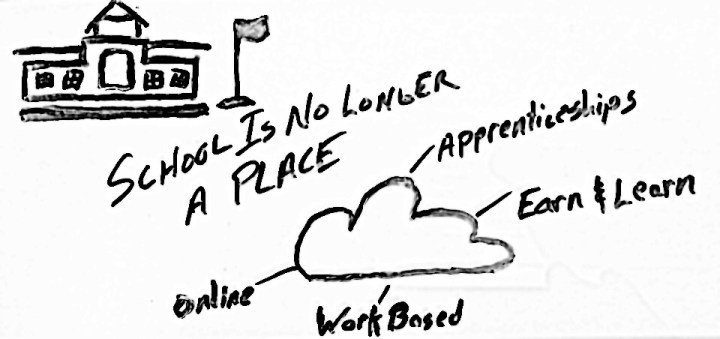 I went to my first virtual Happy Hour last week – very fun. Also, I popped into a teacher’s lunch bunch. She has all her students get their lunch and they all log into Zoom and eat together. Students get social time with their fellow students and teacher. Everyone turned their mic on and it sounded just like a traditional school lunchroom. I hope we use our pandemic experiences to get education in our country to a place where we could say, “School isn’t canceled.” I realize that is a tall order, but we need to contemplate what that would mean. We need to think about the fact school is no longer a place. We need to think about the why behind professional working parents being so frustrated with being adjunct teachers now. Continuing to educate, which I believe we need to be doing, cannot be about providing busy work and crappy worksheets. It needs to be about great content, accessible by all, and delivered in a way the student can easily access. Now becomes the time to decide what education will look like during the next pandemic, other crises, or just moving us into the next decade.
Today, however, Easter isn’t canceled. During the pandemic we are distanced, clouded by the threat of disease, but stubbornly persistent. Realizing this is usually a pastel colored and celebratory day, this might just be a season of clarity about what it means to be a person of faith.
My Revolving Rushmore
 One of my favorite sessions that I do for 3D Leadership is called Setting Your Leadership Style. I start off by playing the awesome music video of the song by Alter Bridge, Show Me A Leader. Since we are having to do these on Zoom™ instead of in person here are some takeaways from the chat box and discussion:
- Do not compromise values
- Don’t compromise on beliefs
- We need great leaders so hope never dies
- There needs to be one clear message (clarity)
- The only thing to do is next right thing
- Can’t survive without strong leadership
- #FarmKidsRockToo (couldn’t leave this off – it was added for my benefit)
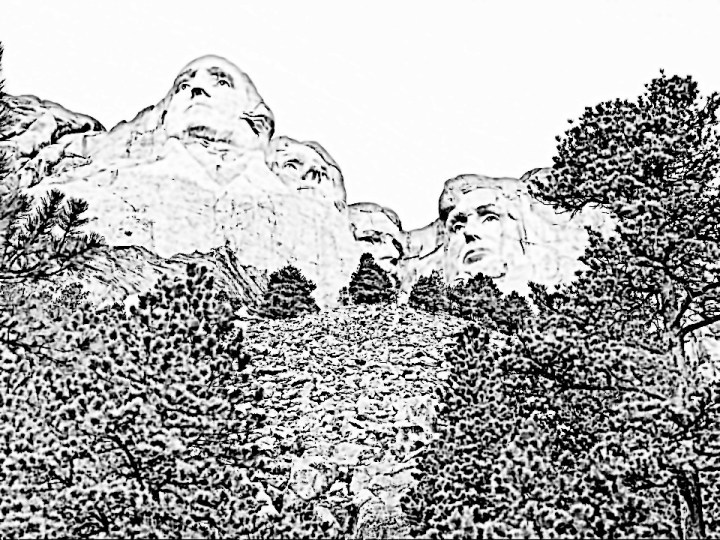
 Then comes one of my favorite activities that I call Rushmorean Leadership which was then followed up by an activity called Extending the Influence. The activity calls for teacher leaders to bring pictures to identify four great leaders to put on their own personal Mount Rushmore. Then they bring six additional pictures to extend the influence. Part of the share out was in small groups (the ability to do this on Zoom™ is incredibly intuitive and has lots of options to customize for the facilitator’s needs) and part was done by FlipGrid™.
One of the questions I always like to ask is if the participants’ Mount Rushmore would look the same a year from now or would have looked the same a year ago. There were varied answers to this ranging from yes to no and then everything in between, like maybe one or two different. Then a triad of things were said by participants that really struck me:
- We never know when we will meet the next person that will go on our Mount Rushmore.
- Who will be the next to influence us?
- My revolving Rushmore
This reminded me of the beginning monologue phrase in William Shakespeare’s As You Like It, “All the world’s a stage, And all the men and women merely players; They have their exits and their entrances; And one man in his time plays many parts, His acts being seven ages.” To me, this means that people come into our lives and we enter other peoples lives for a reason, a season, or a lifetime. When we treat every encounter as a chance to impact, influence, or inspire we bring purpose to our lives. Most people that enter our lives are seasonal and they’re with us for a reason. Once that reason is fulfilled life has a way of moving them on. We also need to remember, the influence the great impact that others that we have never met influence us. Think about the influence of the four Presidents on Mount Rushmore and the impact they have on us. Remember, you also are influencing someone you haven’t even met. Thus, we really do have a revolving Rushmore.
 So, why use Mount Rushmore as the through line for this activity? Mount Rushmore is not just big; it is about the ultimate bigness – a monument to monumentalism. Think about the bigness of the role that individuals that you would place on your personal Mount Rushmore have had. Borglum, the sculptor, was obsessed with the bigness of America: the heroic story of a handful of tiny East Coast colonies growing to becoming an entire continent. Think about the four Presidents that were chosen with that bigness and growth in mind. Jefferson wrote the Declaration of Independence and expanded the country’s size with the Louisiana Purchase. Teddy Roosevelt made sure the Panama Canal happened, thus connecting the United States globally.
When I think about the idea of our own revolving Rushmores, I remember the rush of emotions that I felt when seeing Mount Rushmore in person for the first time. That rush contained thoughts of patriotism as well as awe. The awe was about the scope of the project as well as the awe in our ability to create and our human weirdness. Why had we done this? Why does this monument that the sculpting began on in 1927, with a dedication by Calvin Coolidge exist? I believe it is because of the great value we place on those who have had influence on us. Think about the work on Mount Rushmore that spanned some 14 years. A lot happened in our country during that 14 years. Leaders came and went and world/country history changing events happened. There was the Great Depression, World War II, and three different Presidents. President Franklin Delano Roosevelt was there for the Jefferson dedication (there was a separate dedication as each face was finished). And, Mount Rushmore was finished one month and one week before the attack on Pearl Harbor.
Is that a lot of history, or what? The sculpting alone is a monument to our tenacity. The hardness of the granite is a monument to the very strong foundation built by the founders of our country. The granite is so strong and hard it is said to only erode one inch per 10,000 years. When you think about it, our country has had a revolving Rushmore of those that have been on our “stage” and made a huge difference. This is no different than our own lives and the people who have been major players, making entrances and exits, playing many parts. Those great people who enter our “stage” make us who we are and make up our own revolving Rushmore.
Being Perfectly Imperfect
 I am always amazed at the twists and turns our 3D Leadership gathering discussions take. It is amazing because there is always so much learning that takes place. Last week’s gathering which was virtual with individuals from Florida, Georgia, Tennessee, South Carolina, and North Carolina was no exception. I already blogged about one twist in learning we took in Leading Like Yoda. We also spent a great deal of time discussing how leaders are built by learning from their imperfections.
“Leaders are built by learning from their imperfections.” ~ 3D Leadership Participants on April 2, 2020
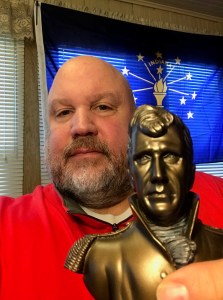
My Andrew Jackson Bronze
The question that prompted the discussion was about whether those leaders that most influenced us were perfect or did they have imperfections? The group immediately started responding with the fact that the leaders were imperfect and that recognizing those imperfections was the ultimate in transparency and authenticity. I even held up my bronze of Andrew Jackson and talked about all the great things he was and did as a leader, but there were so many things he did that were very wrong. He serves as a reminder of how we need to be humble and remember that all humans are imperfect and flawed creatures. I was moved that our discussion led us to talk about how it was those imperfections that attracted us to leaders. Particularly if those Rushmorean leaders were working hard to improve their imperfections.
“The long road to character begins with understanding that all humans are flawed creatures.” ~ David Brooks in The Road to Character
 Today we are even faced with the bigger issue that David Brooks argued in his great book The Road to Character: society has made a shift, from a focus on humility and reservedness to a focus on individual desire. I call this desire “ambition.” Many times ambition begins to rule our purpose. This becomes very dangerous and takes us from a moralistic world view to one of being self-centered. We must check our moral compass, according to Brooks, and strive to become/stay virtuous. The core of what makes a human “human” are displaying the traits of kindness, bravery, honesty, and devotion. Brooks argued that people, and I would argue our children/students, are beginning to obsess over themselves and live only for their own desires.
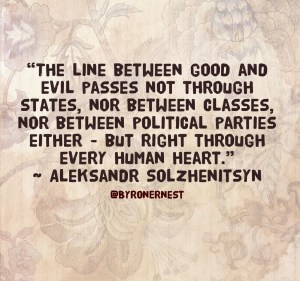 One thing that we discussed in our 3D Leadership gathering that Brooks also discussed in The Road to Character was how many of us have shifted our lives to revolve around how we achieve, and no longer why. The effect is profound. Again, we can see well documented cases of this ambition taking over our purpose. I have blogged about a couple of such cases in When Purpose & Passion Turn Into Ambition and Passion At Ambition’s Command. But how do we change this? By embracing the flaws inherent in all of us. One of our participants called us “Perfectly Imperfect.” I loved that, and if we work off of that to learn from and correct or mistakes and failures every day, it would be a great start.
Doing things like being honest about our flaws can help us overcome self-centeredness and embrace deeper social values, like love and connection to others. As Yoda said, “Much to learn you still have.” If we are going to thrive and maybe be that next person on someone else’s personal Mount Rushmore then we must free ourselves from pride. We must embrace the assistance of others admit our own flaws. Through that we will become more authentic and transparent, thus being a better inspiration and role model for others; while being happier, more fulfilled, and worthy.
Leading Like Yoda
 Last night we created personal Mount Rushmores in our 3D Leadership gathering. I was surprised to have a new leader added to the list – Yoda. Of all the years I’ve been doing this, this is the first time a participant has put Yoda on their personal Mount Rushmore. Moreover, last night there were two people out of the group of 48 that picked Yoda to be on their personal Mount Rushmore.
So of course I had to dig into Yoda as a leader. In the Star Wars universe, Yoda might be the single most important hero. Yoda is wise and insightful and brings many leadership lessons to the forefront to help us all become better at serving those we lead. Of course, several Yoda quotes were thrown out in the course of the gathering, like:
- “Do or do not. There is no try.”
- “[Luke]: I can’t believe it. [Yoda]: That is why you fail.”
- “You must unlearn what you’ve learned.”
- “Much to learn you still have.”
- “Fear leads to anger. Anger leads to hate. Hate leads to suffering.”
One of the things I took away from some really great discussions was that we need to remember that thinking about the future is really important for finding direction, but don’t do it at the expense of what we are currently doing. We need to focus on the task at hand. Spend time in the moment. Be present. It will make us more efficient, and we’ll notice more.
Yoda often taught his pupils through action. We decided last night that leaders are built by learning from their imperfections. Yoda gives us an example of what one participant said she would like to be: “Fair, compassionate, and motivational.” Challenges will push and motivate us. In this time of uncertainty we must focus on continuing to learn so we can help the world triumph. As the group taught me last night, the only thing to do is the next right thing.
March Flowers 🌼
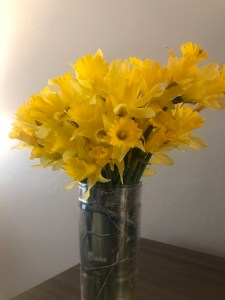 Sometimes we need to look no further than our children for inspiration in times of crisis. This was true this past weekend for me. As I read all of the different statements being put out this week by businesses and organizations, I couldn’t help but think that the simple things we are taught as children should guide every decision: the Golden Rule and what is best for others. Maybe just some good ole empathy and compassion.
We went down to help move my son home from Murray State University this past weekend. It was tough on him to be leaving a place he has grown to love and all his friends. He was visibly upset. There was definitely mental impact at play in him having to move home because of the coronavirus. Even during this trying time, he took time to pick a clump of March flowers (daffodils) for his mother (pictured here). We’d never heard them called March Flowers. Heath told us it was a Kentucky thing. He explained, “Spring is here, new life is blooming in spite of the coronavirus.” That’s my boy, finding some beauty and positivity during a time of crisis. That was a moment I will savor forever.
As I watch groups and businesses contemplate how to get the most out of their employees at this time of global crises I can’t help but think these so called leaders have missed the point. Right now we should be thinking about how best to care for those we serve, period. And, as someone who doesn’t sit around and pontificate about a virus I know nothing about, the best thing to do is have everyone staying at home. I’m surprised how many people have become experts overnight.
In the case of k-12 education we do need to be concerned for the learning of our children. We also need to provide parents with resources to help their students along with our teachers. We need to be cognizant of the mental impact that the crisis we are living through can have. Schools need to make sure resources for parents are available so they can reinforce social-emotional skills at home and know who to contact if they are concerned about an issue impacting learning online or just in day to day life.
Staying positive is the core ingredient in the recipe of successfully coping in a time of crisis. Now is the time to be proactive in creating small moments of happiness in our days. Positive emotions help us to undo the negative effects of stress.
Change Is A Coming!
 There is one thing for sure as I sit and write this post on this Sunday morning; change is a coming. My son is coming home from college till at least April 6th, and learning remotely and online (since I miss him being at home every day, I am excited for him to be home). The students at the schools I serve will be learning remotely. The teachers and school leaders I serve will be learning and creating best practices for remote and online student learning. Also, we must develop best practices for caring for the non-academic needs of our students (eg. food, social emotional, et cetera). I need to consider what limiting social contact means for mean personally. Additionally, I am positive that there will be things on the policy side of my life, as an Indiana State Board of Education member, that will have to be decided. So, as I said, times are changing. The coronavirus (COVID-19) pandemic is bringing change to all the world and all our lives.
As I contemplate all the constant and fluid change going on around me, I continue to remind myself that change is a never-ending process. Change is not a journey or a one-time event. Additionally, as a person who doesn’t like the term expert, or am not even sure there is such a thing, we need to remember that, right now, there are no experts – we’ve never been through this before. So, we have a bunch of people doing the best we can. The changes we are experiencing due to the coronavirus (COVID-19) pandemic need to be continuous and participatory. We must communicate and collaborate. This can’t become about who can tweet what they are doing the fastest to feed their own ambition. Or, who can blast someone else for what they haven’t done.
The problem with thinking of change as a journey is that travel is sequential. We move from one leg of the journey to the next. Change, in contrast, isn’t a series of steps; it is not a map you can follow. There is no Maps App for change, particularly not for coronavirus. As a lover of metaphors, let’s imagine pouring cream (I prefer coconut flavored) into a mug of coffee. Almost immediately as the liquids merge, there is a color change from black to brown to a light tan depending on how much cream we add. Change needs to look more like that. Instead of someone trying to come up with a well-executed plan on their own, it becomes what I call triageformational. Yes, triageformational is a term I coined. I first blogged about it in Triageformational Leadership: New Hybrid Definition of Triage and Transformational Leadership. I believe it applies more now, with our coronavirus situation, than ever before. Here is what I said in that blog post:
“Those that I believe that would make great triageformational leaders place a high value on fostering an environment or community of collaboration. This community is balanced, diverse, and equitable. These leaders build community and culture by truly living out their own core values and the organization’s core values. Just like doing triage in an emergency situation, these leaders are prioritizing what gets done next by matching core values to the situation. This in turn brings about transformation and service oriented leadership.”
We must change the way we change. We cannot have all change initiatives coming from on high. CEOs and other bureaucratic leaders who decree the values they created alone have already failed. Those values must be collaboratively developed. So, how should we change? Well, change must be continuous and participatory, and we must look for those who know more than ourselves.
Win Every Day!
 Win Every Day: Proven Practices for Extraordinary Results by Mark Miller
My rating: 5 of 5 stars
Back in 2012ish my son was obsessed with the term “Win the day!” because growing up he was a rabid Oregon Ducks football fan. At that same time I had just become principal of a state turnaround academy. My son even made me a plaque, declaring “Win The Day!” out of a 2X4 he found in the barn for my office. This is still one of my most valued possessions. You can check out my 2012 blog here: https://byronernest.blog/2012/11/04/w… .

My “Win The Day!” Plaque Made By My Son, Heath
Winning the day can mean many things, but to me it means giving all I have every day and making the most out of the things I can control. That’s why I love the title of Mark Miller’s book that was just released this past week, Win Every Day. The book is based on Miller’s findings that high performing organizations do these four things: 1. Bet on leadership; 2. Act as one; 3. Win the heart; and 4) Excel at execution. I love the fact that Miller uses some sports analogies in the book to make the points. He makes the point that if you execute well you do not need a lot of plays.
As a leader, we owe it to all those we serve to “Win Every Day!” Miller taught us in this great book that our choices are the only things we can control. He told us to “Choose wisely” (p.127). The bottom line according to Miller is that we can be encouraged and even challenged, but if we want to be great, we will have to decide. This book is so appropriate for everyone to read right now as we are dealing with the global outbreak of Coronavirus Disease 2019 (COVID-19). This challenge is top of mind for individuals and organizations across the world. Because of the ever changing and fluid nature of the situation, it would be wise for us all to contemplate how we excel at execution. This is a book that every person in the world should take time to read and reflect on right now. We must WIN EVERY DAY!
Mingling At High Tables

Indiana State Fair
This will be a little different type of post for me, but fits with my belief that the physical environment is just as important to a gathering of any type to the formation of a community as the facilitation or the invites. I love high tables. I love to go to events that have tables. I love to host gatherings that have high tables. There are many advantages to to using high top tables that are many times referred to as bar tables, cocktail tables, pub tables, or bistro tables.
If you want to encourage people to mingle, meet and start conversations with others, then high top tables might be the best choice. The big advantage I see is the ability to have an infinite sized group standing around them. With low tables the group size is very fixed. Think about it; if you are at a gathering with low tables and a table only had four chairs and all four are occupied you go to another table. It is awkward, unless you are asked, to pull up a chair. Even more awkward to stand next to the table and talk with everyone else sitting.
 Besides allowing more people to huddle around them, the high tables create a more intimate space for attendees to gather close for engaging conversations that encourage involvement of all. I love the encouragement of people to converse with each other and huddle closer together.
 I am so obsessed with high tables that for our son’s graduation party, which was held in one of our barns, I made sure we had an area for high tables. We had the barn set up for seating for 100 people, but then had an area for high tables. Amazingly, those tables had a large group around them for the duration of the five hour gathering. It was an interesting dynamic, some around those high tables stayed almost the whole time and others came and went. I couldn’t help but watch those who gravitated to the regular table and chairs would sit, eat, and visit for a while and then gravitate to the high tables. I also noticed my son moving throughout the high tables and enjoying all the conversations. At the time the party ended we still had a large group of guests huddled around those high tables.
Then, we could one of the high table and chairs set to our county fair and Indiana State Fair where we were showing dairy cows. We are know for always having peanuts and snacks out for anyone to share. We were amazed at the amount of friends and new acquaintances the high table brought into our show camp. We had such a great time visiting and became believers in the power of mingling at high tables.
With The Crowd, Not Of It
 I am reading Robert Caro’s second volume in The Years Of Lyndon Johnson – Means Of Ascent. He is such a great author and I love the things in this book that make me ponder, reflect, and give me pause. Right now at about a third of the way through this volume I am learning about a most fascinating man, Coke Stevenson. Or, Mr. Texas as he was known, was Texas’ 35th Governor.
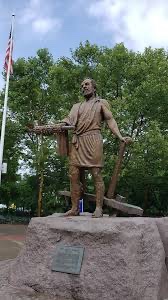
Cincinnatus Statue in Cincinnati
He is my kind of leader. He practiced the learning of one of my heroes, Cincinnatus, of not wanting to lead for power, but to serve. Cincinnatus always returned to the farm. At the conclusion of all his service he just wanted to go back to his ranch, where he milked his own cows and branded his own calves. See why I love this guy?
 Stevenson was beyond reproach in the Austin, Texas bar seen of lobbyists that was known for the three Bs: “beefsteak, bourbon, and blondes” (p. 158). The way Caro described him in this setting really caused me to think: “But although, in Austin, Stevenson was with the crowd at the Driskill Bar, he was not of it; there was a reserve, a dignity, about this tall, broad-shouldered, silent man with that watchful stare that set him apart from the crowd” (p. 159). This was a man that lived his values, instead of talking about them like so many leaders do.
I loved that statement, he was with the crowd, not of it. This was a man modeling, not just going along to get along. He was able to get along on his own terms. That’s a pretty big deal in my book. Following the crowd will cause us to be mediocre at best and live contrary to our core values. It really causes us to live a life of self-betrayal, and resigns is to an average life. It has been said that those who follow the crowd get lost in it.
 Byron's Babbles
1 comment