Becoming

I have always been intrigued by the idea of “becoming.” Then, yesterday I was reflecting on “becoming” again as I listened to Volbeat’s great song “Becoming” while spending some time on the tractor doing some farming. The opening lyrics say, “Every morning is; A new day where we’re born again; And becoming the center of the bliss.” I love this because every day is a chance for a new start and becoming what we are meant to be.
Interestingly, one definition of becoming is suitable, appropriate, or attractive. I wonder if we spend too much time trying to be something that fits some arbitrary norm. We need to beware of being molded into some worldly image other than our own. Acceptance should never win over authenticity.
Volbeat’s song goes on to say, “And becoming the pieces of a mask.” This phrase indicates a transformation into something that conceals true identity. Masks often represent hiding or protecting oneself, so becoming the pieces of a mask could symbolize assembling a new facade or parts of oneself used to hide inner truths. If we mask who we are to fit a mold, we lose credibility and trust from others and belief in ourselves.
For me, the thought of “becoming” signals growth, adaptation, and evolution. Think about it: every moment we are becoming something– something else. It’s all about the other definition of becoming, which is any change involving realization of potentialities. Every day we are growing and evolving. We need to be the owner of this growth and be the author of our “becoming.”
Stop Counting Down and Settle In

Today, I heard a person state that she had found joy when she, “stopped counting down and started settling in.” We’ve all been there. Counting down how long we’ll be in a current position, how long we’ll live somewhere, or how long till a grant runs out. I’ve heard people say, I am just going to stay at ________ for two years, then go ________. This is okay, but those kind of plans keep us from settling in.
So, instead of eagerly waiting for a specific event or moment (like a deadline, arrival, or transition), or “counting down,” we should consider beginning to relax, adapt, and become comfortable with your current situation, or “settle in.” This would encourage us to focus on making the most of where we are right now rather than just looking forward to when something will happen. In some situations it might do us well to shift our mindset from anticipation to acceptance and engagement with the present.
Quiet Leadership

On Friday, I wrote about “Being quiet” as a top five leadership trait chosen by first graders in Leadership is Elementary, my Dear Watson. I loved this because it is so true. Just like the first graders, I have to tell myself this. Then yesterday as I was watching a baseball game, the starting pitcher was described as a “quiet leader.” This pitcher, as a quiet leader, is someone who leads through his actions rather than words. Quiet leaders consistently perform at a high level, demonstrate strong work ethic, and remain composed under pressure.
This baseball player’s calm demeanor and reliability inspires his teammates to stay focused and motivated. By setting a positive example and earning respect through their dedication and integrity, quiet leaders influence the team’s culture and success without the need for loud communication or outward bravado. These leaders embody the qualities of a silent but impactful leader.
A quiet leader exhibits qualities like reliability, humility, integrity, and a strong work ethic. Instead of seeking the spotlight or giving loud speeches, they inspire others by demonstrating excellent performance, staying calm under pressure, and providing support when needed. Their leadership style fosters trust and respect among teammates, creating a positive and cohesive environment. Quiet leaders lead by example, earning influence through consistency and genuine care.
Leadership is Elementary, my Dear Watson
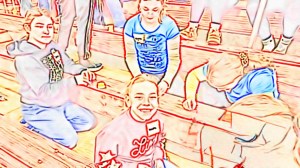
Discussions about leadership are important for elementary age students because these discussions help teach essential skills like responsibility, teamwork, communication, and problem-solving from a young age. By exploring what it means to be a leader, children learn the value of helping others, making positive choices, and taking initiative. These conversations also encourage confidence and empathy, fostering social-emotional development that can benefit them throughout their lives. Additionally, understanding leadership encourages students to see themselves as capable of making a difference, inspiring them to develop their unique strengths and contribute positively to their communities.
Today, I finished up my High Ability Mentor Group work for the school year with 126 first through fourth graders at Hamilton Heights Elementary School. I love working with these students and continue to always be inspired by them. We finished our time together this week with a discussion about leadership. I am always amazed at how in tune these young people are with what good leadership looks like. Leadership is not reserved for adults; leadership opportunities come in various shapes and sizes for all ages.
This week, the students in each grade created a top five leadership traits to develop list. Here are those lists:
First Grade:
- Be nice
- Get smarter
- Listen more
- Be quiet
- Creative
Second Grade:
- Be an example for others to follow
- Less talking
- Be kind
- Be a listener
- Learn and get smarter
Third Grade:
- Be patient
- Influence
- Help others achieve their goals
- Be a better communicator
- Inspire friendships and be aware of others’ feelings
Fourth Grade:
- Take responsibility for my actions
- Earn trust
- Don’t be quiet when I need to talk
- Focus on growing myself
- Building continuous friendships
Pretty impressive lists! Students learning leadership skills not only benefits their development but it also helps their interactions with others. When we help our students see themselves as role models, they naturally become more responsible and thoughtful. Students build leadership skills as they learn how to communicate, negotiate, listen, persevere, solve problems, and cooperate. While becoming leaders themselves, students realize that leadership is not a title but someone who sets an example quietly, whether it be on a sports team, or by doing the right thing when others are not looking.
Ripples Are Beautiful: Embracing the Power of Divergent Viewpoints

In our journey through life and professional conversations alike, we often encounter moments that ripple outward. Those small actions, words, or ideas that create waves far beyond their initial splash. Today, during a gathering of the Silver Creek School Corporation Focused Leader Academy when complementing one participant for her willingness to push back or offer a different viewpoint, I expressed my love for a good argument. I truly believe that divergent viewpoints lead to personal growth and get decisions to a better place. This great teacher leader, Kate Brown, remarked, “Ripples are beautiful.” This simple phrase resonated deeply with me, prompting reflection on how the ripples of differing perspectives shape us and our communities.
The Beauty of Ripples
You know I love a good metaphor! Much like a stone cast into a still pond, every idea or opinion introduces a disturbance that propagates outward, ultimately touching distant shores. These ripples are inherently beautiful because they symbolize connection, influence, and the dynamic interplay of diverse thoughts. The ripples remind us that even small differences can have meaningful impacts, fostering innovation and empathy.
Divergence as a Catalyst for Growth
Embracing divergent viewpoints is akin to throwing multiple stones into the water simultaneously. Each creates its unique ripple, and together, they make the surface lively and unpredictable. Instead of fearing disagreement or differing opinions, we can see them as opportunities. Those ripples serve to challenge our assumptions and deepen our understanding.
Creating a Culture of Beautiful Ripples
When we celebrate varied perspectives in our organizations or communities, we cultivate an environment where ideas flow freely, and innovation blossoms. Just as ripples can intersect and amplify each other, our own metaphorical ripples spur constructive debates that lead to breakthroughs that wouldn’t emerge in echo chambers. Encouraging respectful disagreement and curiosity turns potential conflicts into beautiful patterns of growth.
So, Next time you find yourself in a disagreement or encounter a differing viewpoint, remember that Kate taught us that “ripples are beautiful.” They are signs of a vibrant, evolving mind and community. Embrace the disturbance, cherish the divergence, and watch how these ripples shape a richer, more resilient you.
Being The Painter Or The Paint

Tonight, in the great show, Tracker, the following quote was shared by Reenie (Fiona Rene), “Life goes two ways: you are either the painter or the paint.” This a metaphor that highlights two different approaches to life. This is really the choice between being active in our own lives or passive.
If we’re the painter, it means we actively create, shape, and influence our life’s path through our choices, actions, and decisions. We take control and craft our own destiny.
Conversely, if we’re the paint, it suggests that sometimes, life or circumstances can simply happen to us, and we might be passive, being influenced, or shaped by external forces rather than actively shaping our lives.
Carl Jung emphasized the importance of integrating different aspects of ourselves. Jung acknowledged that at times, we might be more receptive, allowing external influences or our unconscious material to shape us (akin to being “the paint”). At other times, we take active control and shape our identity and life experiences intentionally (like being “the painter”).
Overall, the quote is a reminder encouraging self-awareness about whether we’re taking charge of our lives or letting external factors dictate it, urging us all to consider how much we are creating our own experiences versus being shaped by others.
Being A Follower, Part 2
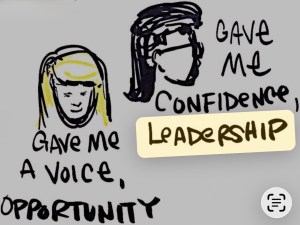
This is Part 2 of my posts inspired by the new release by Evanescence, “Who Will You Follow.” This great song made me think and reflect deeply on what it means to both be a follower and influencer of followers. Being A Follower, Part 1 explored being a follower. There is signify research pointing to the contributions of followers to leadership and organizational success. These studies, such as Uhl-Bien, M., Riggio, R. E., Lowe, K. B., Carsten, M. K. (2014) “Followership theory: A review and research agenda”, conceptualize and demonstrate followers as relevant co-producers or co-constructors of leadership and its outcomes.
Now, let’s talk about the leader’s role in this relationship. In “Who Will You Follow” Amy Lee sings, “What have you done to me?; You drain the life out of me ’til I don’t know myself; When all your faith in reality fades away; Who will you follow then?” Ever worked with a leader who drains the life out of you? Ever felt like there are leaders who drain the life out of us? As a constructionist, I believe there is a co-construction or leadership process approach to followership in which individuals mutually interact and engage in social and relational contexts to construct (or not construct) leadership and followership. These relationships do not necessarily align with formal hierarchical roles. Relationships matter here.
Great leaders understand the importance of humility and recognizing the value of other perspectives, which aligns with qualities of a good follower. In their research, they suggest that leadership and followership are interconnected roles within a dynamic system, where good followers contribute to successful leadership by providing support, constructive feedback, and a shared vision. This perspective fosters a culture of mutual respect and continuous learning, showing that being a follower at times is essential for effective leadership. Who will you follow?


leave a comment