Being Kind

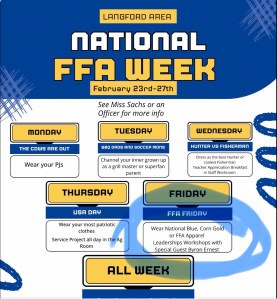
This past week I had the opportunity to be in Langford, South Dakota for National FFA Week. The Langford Area School District FFA Officers had the great idea to provide leadership workshop sessions designed for every grade level in the school. Their amazing agriculture teacher/FFA advisor and National FFA Teacher Ambassador, AnnaMarie Sachs, made the students’ idea a reality. I’m also very proud that the students requested that I be the provider of all these sessions. I’d had the opportunity to work with some of the Langford FFA members at National FFA Convention, so they had experienced my work.

I shared on social media last week that I am always inspired by the leadership dispositions that young people always seem to have for leadership. The Langford students really inspired me. Remember the show Are You Smarter Than A Fifth Grader? Let me tell you, I met some pretty smart fifth graders last week that I wish I could have some adults I know learn from. One fifth grader really impressed me with her Play-Doh creation that was to represent her as a leader. She made the word “Kind,” using a heart to dot the “i” (see photos). Very cool!
I asked her to talk about her creation. She said that she believed she was a leader because she tried to be kind to everyone. She also stated that she believed that if everyone would just practice being kind the world would be a better place. Pretty smart fifth grader, don’t you think? Are you as smart as this fifth grader?
“Be kind whenever possible. It is always possible.” ~ Dalai Lama

As an advocate of loving those we serve as a leadership attribute, this fifth grader made me reflect on what being kind really means. Being kind means genuinely understanding the impact our words and actions have on others. Another word that gets used a lot when defining being kind is “helpful.” I love this because providing help covers so many things. Being kind or helpful is about going that extra mile for others.
Now, taking this discussion a little deeper, I want to describe being kind as a vital leadership attribute because it fosters trust, loyalty, and a positive environment where team members feel valued and respected. Kind leaders are able to build strong relationships, which encourages open communication and collaboration. When leaders show genuine kindness, they inspire others to follow suit, creating a culture of empathy and mutual support. This not only enhances morale but also motivates individuals to perform their best, knowing they are appreciated and understood. Ultimately, kindness in leadership helps cultivate a cohesive and resilient team capable of overcoming challenges together.
 Byron's Babbles
leave a comment