Weighing Our Motives Against Our Actions

I talk a lot about how we should study people and not heroes. What do I mean by this? Many times we put humans in the present or from the past up on pedestals and make them out to be perfect heroes. Interestingly, however, even superheroes are not perfect. These human flaws are what make them relatable. Iron Man’s ego or the Incredible Hulk’s anger and rage just to give a couple. We are all uniquely human and have superpowers and flaws. This why we need to appreciate each person as a whole. I was reminded of this when I dug into Robespierre while reading G. K. Chesterton’s Autobiography.
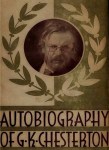
Chesterton often paraphrased or summarized ideas from other authors, such as Hilaire Belloc on Robespierre to illustrate his points. Chesterton put a quote in that said of Robespierre that, “God had given him in his mind a stone tabernacle in which certain great truths were preserved imperishable.” While the quote appears in Chesterton’s Autobiography as a reflection inspired by Belloc’s writings, I could not find as a direct quote from Belloc’s book on Robespierre or any of Belloc’s works. He was using the quote as a comparison to a girl in a debate club he had been a member of.
But the phrase does use vivid imagery—comparing the mind to a “stone tabernacle”—to suggest that Robespierre’s intellect or conscience housed enduring truths, preserved steadfastly amidst chaos. It implies that, despite external appearances or actions, Robespierre’s inner mind contained sacred or profound principles—truths that remained intact and inviolate. Please know that I recognize that Robespierre is a highly complex historical figure, and opinions about him vary widely depending on perspectives and values. Really that complexity is the point here, not the debate over whether he was good or bad. Because, guess what, he was probably both.
Robespierre’s commitment to revolutionary ideals and the pursuit of social justice may be seen as admirable by some. However, his methods, which included political purges and mass executions, raise serious ethical questions. Complex, right?
The point is that Chesterton recognized Robespierre’s adherence to his own “great truths” or what I call core values. We all need to have that “stone tabernacle” that protects our core values. We all have “certain great truths we want to preserve” and live by. What has always been interesting to me is to study others’ core values, or lack thereof, in the context of the time they were living in. Just as it is important to recognize the context of Robespierre’s actions and beliefs, we must also match our own core values and actions against the current context we live in. We need to weigh our actions against our motives.
 Byron's Babbles
leave a comment