Weighing Our Motives Against Our Actions

I talk a lot about how we should study people and not heroes. What do I mean by this? Many times we put humans in the present or from the past up on pedestals and make them out to be perfect heroes. Interestingly, however, even superheroes are not perfect. These human flaws are what make them relatable. Iron Man’s ego or the Incredible Hulk’s anger and rage just to give a couple. We are all uniquely human and have superpowers and flaws. This why we need to appreciate each person as a whole. I was reminded of this when I dug into Robespierre while reading G. K. Chesterton’s Autobiography.
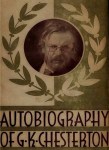
Chesterton often paraphrased or summarized ideas from other authors, such as Hilaire Belloc on Robespierre to illustrate his points. Chesterton put a quote in that said of Robespierre that, “God had given him in his mind a stone tabernacle in which certain great truths were preserved imperishable.” While the quote appears in Chesterton’s Autobiography as a reflection inspired by Belloc’s writings, I could not find as a direct quote from Belloc’s book on Robespierre or any of Belloc’s works. He was using the quote as a comparison to a girl in a debate club he had been a member of.
But the phrase does use vivid imagery—comparing the mind to a “stone tabernacle”—to suggest that Robespierre’s intellect or conscience housed enduring truths, preserved steadfastly amidst chaos. It implies that, despite external appearances or actions, Robespierre’s inner mind contained sacred or profound principles—truths that remained intact and inviolate. Please know that I recognize that Robespierre is a highly complex historical figure, and opinions about him vary widely depending on perspectives and values. Really that complexity is the point here, not the debate over whether he was good or bad. Because, guess what, he was probably both.
Robespierre’s commitment to revolutionary ideals and the pursuit of social justice may be seen as admirable by some. However, his methods, which included political purges and mass executions, raise serious ethical questions. Complex, right?
The point is that Chesterton recognized Robespierre’s adherence to his own “great truths” or what I call core values. We all need to have that “stone tabernacle” that protects our core values. We all have “certain great truths we want to preserve” and live by. What has always been interesting to me is to study others’ core values, or lack thereof, in the context of the time they were living in. Just as it is important to recognize the context of Robespierre’s actions and beliefs, we must also match our own core values and actions against the current context we live in. We need to weigh our actions against our motives.
Don’t Let the Lack of Glitter Fool You: Uncovering True Value Beyond the Shine

Yesterday in some reading I was doing I was reminded of a poem written by Bilbo Baggins about Aragorn. Here is the poem, known as the “Riddle of Strider”:
“All that is gold does not glitter, Not all those who wander are lost; The old that is strong does not wither, Deep roots are not reached by the frost. From the ashes a fire shall be woken, A light from the shadows shall spring; Renewed shall be blade that was broken: The crownless again shall be king.”
The lines are from J.R.R. Tolkien’s The Lord of the Rings and are part of a poem about Aragorn, the rightful heir to the throne of Gondor. Bilbo, speaking in The Fellowship of the Ring, echoed the words again to express hope and encouragement.
This poem has a great deal of meaning in Tolkien’s works and I believe provides tremendous lessons for us as leaders. Here are some thoughts:
- “All that is gold does not glitter, / Not all those who wander are lost;”
True value isn’t always obvious at first glance; people or things might seem ordinary but possess hidden worth. Wanderers—like Aragorn—may be on a noble path even if they’re perceived as lost. - “The old that is strong does not wither, / Deep roots are not reached by the frost.”
True strength and resilience come from deep origins—age and experience lend power that withstands hardships. As a person who does not believe that age and experiences alone bring strength, I believe having lived core values and a true purpose also serve as strong roots in Tolkien’s metaphor. - “From the ashes a fire shall be woken, / A light from the shadows shall spring;”
Even in dark times, renewal is possible; hope and brightness can emerge from despair. - “Renewed shall be blade that was broken: / The crownless again shall be king.”
The broken sword will be restored, symbolizing regeneration and renewal of leadership—in Aragorn’s case, reclaiming his kingship.
This poem reminds us to celebrate perseverance, hidden strength, and the eventual triumph of hope and rightful destiny.
Understanding The Arbitrary Signs

In my post, “Leadership Echolocation: How Big Are Your Ears?” I spoke about the Ladder of Inference. The idea is that we can’t help but try to make meaning of things. It’s how our human minds work. I thought it was genius how G. K. Chesterton worked this into one of the Father Brown Stories. He wrote, “The letter, however, was in cypher; and one very hard to follow, having been invented by children. Does that strike you as paradoxical? Don’t you know that the hardest signs to read are arbitrary ones? And if two children agree that ‘grunk’ means bedtime and ‘splosh’ means Uncle William, it would take an expert much longer to learn this than to expose any system of substituted letters or numbers.” In that passage, Chesterton highlighted an interesting paradox about ciphers and codes. While we often think that a complex or unfamiliar code would be harder to decipher, Chesterton, through Father Brown, argued that codes invented by children—simple, arbitrary signs—are actually more difficult for experts to decode because they lack an obvious logical pattern.

Children can create entirely arbitrary symbols for meanings like “bedtime” or “Uncle William,” these signs don’t follow any predictable rule. An expert trying to uncover the code would have to test many possibilities, which could take longer than simply recognizing that it’s a straightforward substitution system (like replacing letters systematically).
This idea underlines a key point: the perceived complexity of a cipher or language isn’t necessarily related to how many symbols it uses or how intricate it looks, but rather how predictable or patterned those symbols are. Arbitrary signs, despite their simplicity or randomness, can be the most challenging precisely because they defy the brain’s natural tendency to find meaning through patterns.
Now let’s connect this to Chris Argyris’ The Ladder of Inference model which described how individuals move from observable data and experiences to taking interpretive leaps—often jumping to conclusions without fully examining the data. When it comes to symbols or signs, humans tend to attach meaning based on their assumptions, biases, or patterns they recognize, sometimes skipping critical steps in understanding.
In the context of arbitrary or seemingly random symbols, the difficulty lies in the lack of clear data or patterns that can be reliably interpreted—making the “climb” up the ladder more challenging or even leading to false inferences. The symbols’ randomness prevents us from confidently moving through the rungs of the ladder, highlighting how our interpretive processes depend heavily on the clarity and structure of the data we observe.
So, if we’re trying to interpret arbitrary signs without sufficient context, we might prematurely jump to conclusions, which aligns with Argyris’ concept that our inference process can lead us astray if not carefully managed. Recognizing this can help us be more mindful of how we form beliefs and understand symbols that are inherently ambiguous or patternless.
Finding True Significance Through Humility and External Realities

In the chapter, “The Fairy Tale of Father Brown” in The Father Brown Stories, G. K. Chesterton highlighted the Prussian or German military and cultural attitude toward success in that time period. By saying that the character Otto “regarded success not as an incident but as a quality,” Chesterton pointed out that Otto saw success as an inherent and defining characteristic of a person or a nation, rather than something that happens by chance or circumstance.
Chesterton likely wanted us to understand that this mindset might lead to a rigid, prideful, and perhaps overly serious view of achievement—where success becomes a measure of identity and virtue itself. This can imply a sort of stubbornness or inflexibility, emphasizing internal qualities over external circumstances, which may have broader implications about the nature of pride, ambition, and how cultures or individuals perceive their own worth.
As a believer that seeking significance is much more important than success, this caused me to reflect on this story. Seeking significance over success emphasizes the importance of inner fulfillment, meaningful impact, and personal growth, rather than external achievements or recognition. This perspective aligns with valuing integrity, purpose, and authentic connections.
Chesterton’s idea about a sort of stubbornness or inflexibility—particularly when it involves internal qualities like pride or ambition—can sometimes lead to a rigid self-perception that may resist external realities or humility. It highlights how an overemphasis on internal worth might cultivate arrogance or a refusal to adapt, which can hinder genuine growth.
My focus on seeking significance encourages openness, humility, and internal alignment with purpose, fostering growth. Chesterton’s reflection warns of the pitfalls when internal qualities like pride become inflexible, potentially causing one to overlook humility or the value of external realities.
Embracing Life’s Challenges: The Power of Intentional Engagement and Genuine Experiences

I continue to be inspired by G. K. Chesterton’s collection of The Father Brown Stories. In Chapter 12 “The Fairy Tale of Father Brown” he wrote, “I wonder,” he said, “whether one would have real adventures in a place like this, if one put oneself in the way? It’s a splendid back-scene for them, but I always have a kind of feeling that they would fight you with pasteboard sabres more than real, horrible swords.” I believe Chesterton was reflecting on the nature of adventure and the settings in which it occurs. He suggested that while a picturesque or theatrical backdrop (like a quaint town or a staged scene) can seem like an ideal place for real adventures, such surroundings may actually diminish the authenticity of such experiences. The mention of “pasteboard sabres” implied that many perceived adventures are more like theatrical plays—full of façades and illusions—rather than genuine adventures or dangers.
Chesterton seemed to be emphasizing that true adventure involves real risk and stakes, which might be absent in overly controlled or theatrical environments. It’s a subtle commentary on the contrast between superficial excitement and authentic experience.

The phrase “if one put oneself in the way” suggested intentionally or proactively placing oneself in a position where one might encounter challenges, risks, or obstacles. In the context of the earlier comment about adventures being like theatrical plays, this phrase emphasizes the idea that genuine adventure requires an active choice to face real dangers, rather than merely observing or pretending.
Chesterton, through Father Brown, might have be implying that true courage and authentic experience come from deliberately stepping into situations where there’s actual risk, rather than avoiding danger or engaging only in superficial activities. It’s about taking responsibility for one’s actions and accepting the potential consequences, which elevates an experience from mere spectacle to something meaningful and genuine.
As a person who believes in long life learning, taking risks, and embracing the next journey of innovation and learning, this underscores the importance of intentional engagement with life’s challenges, rather than remaining a passive spectator. It’s a call to embrace real adventure through deliberate effort and willingness to face the stakes involved.
Harnessing Being Receptive, Understanding, & Acting

Yesterday, when discussing a current project with a great leader I have had the opportunity to serve as a mentor for, she shared some positive feedback from a team member she serves. This leader and the team member were having a one-on-one meeting and the team member told her that, as a leader, she practiced three great qualities: being receptive, understanding, and acting. This leader then shared that she had learned those three qualities from me. She told me I had modeled those for her. I tell you this story not to brag but to reinforce the power of modeling the qualities we espouse.
Now, let’s talk about being receptive, understanding, and acting. These are exceptional leadership qualities because they foster trust, collaboration, and effective problem-solving. Receptiveness allows us to listen genuinely and consider diverse perspectives, leading to more informed decisions. This receptiveness may even involve us being open minded to new ideas or ideas contrary to our own.
Understanding helps us empathize with our teams and stakeholders, creating a supportive environment that encourages engagement and loyalty. I have also learned that understanding also leads to appreciation of where the other person is coming from. Appreciation is an important part of understanding that I believe many times gets left out.
Acting promptly on insights and feedback demonstrates decisiveness and commitment, inspiring confidence and driving positive change. Together, these three attributes build a strong, cohesive team and enable us to navigate challenges with empathy and agility.
Container Pioneer: How Innovative Leadership Shaped the Future of Global Trade

Yesterday I had the opportunity to learn first hand about the Port of Savannah and container ship transportation. I posted about that experience in The Modern Container Port. That experience caused me to dig in and learn more about how the whole container shipping industry evolved. I learned that Malcolm McLean was the innovative, systems change leader who invented and patented containerized shipping. Over 90% of global shipping now happens using the TEU (Twenty Foot Equivalent Container Units) containers. That invention and standardization was said to have improved shipping efficiency by 25%. Now that’s innovation!

McLean’s invention of the shipping container and the semi trailers the containers can be mounted on offers a powerful leadership lesson in innovation and systems leadership by exemplifying how vision, boldness, and systemic thinking can revolutionize an entire industry. Here are some key takeaways:
- Challenging the Status Quo: McLean identified inefficiencies in traditional break-bulk cargo handling and questioned existing practices. Great leaders aren’t afraid to challenge conventional methods and look for transformative solutions.
- Innovative Thinking for Large-Scale Impact: His idea to standardize cargo into containers was groundbreaking, demonstrating the importance of thinking big and considering how innovations can positively impact multiple facets of an industry.
- Commitment to Vision: McLean persisted despite initial resistance, showing that dedication and resilience are essential for turning innovative ideas into reality.
- Systemic Change and Leadership: His invention didn’t just improve efficiency; it redefined global trade logistics, illustrating how visionary leadership can effect widespread change through strategic innovation.
- Embracing Risk and Learning: McLean’s journey underscores the importance of taking calculated risks and being open to learning from failures, which are vital traits for innovative leaders.
Malcolm McLean’s story teaches us that effective leadership involves recognizing opportunities for innovation, daring to challenge existing paradigms, use systems thinking to disrupt markets, and having the perseverance to implement game-changing solutions that benefit industries and communities worldwide.
The Modern Container Port

I had an incredible experience today! I had a private tour by Captain Dan of the Port of Savannah in Savannah, Georgia. The Port of Savannah is the largest single container terminal in the Western Hemisphere. Container shipping is measured in TEUs (Twenty Foot Equivalent Container Units). Last year the Port of Savannah saw 5.25 million TEUs moved. I had been really wanting to learn about this incredible port and my dream came true with Captain Dan.
I’m going to let my photos do some talking here:







As one of the nation’s busiest ports, Savannah handles a significant volume of containerized cargo, thanks to its deepwater ports, state-of-the-art terminals, and efficient infrastructure. The port’s strategic location, coupled with its expansive railroad and highway connections, makes it an ideal hub for distributing goods across the Southeast and beyond. Major shipping lines regularly call at Savannah, facilitating international trade, particularly with Asia, Europe, and Central America. The port’s ongoing investments in modernizing facilities and expanding capacity reflect its commitment to maintaining its competitive edge, supporting regional economic growth, and enabling seamless global commerce.
I made the comment to Captain Dan that I was excited for this learning today because every year I try to learn something new about the Savannah/Tybee Island, Georgia area when I am here. He said he was the same way in that he made sure he was learning and getting new certifications and qualifications each year. He then quoted Dave Ramsey as saying, “We should learn something new today and dispel the fear of what we don’t understand.” This conversation was a good reminder of how important it is for us to stay curious and keep learning. What new things do you want to learn?
Why Wait?

I had a person yesterday morning say to me, “Boy, you sure don’t wait around!” This was in response to a conversation we were having that resulted in needing to ask another person a question and I just picked up my phone and called that person and put them on speaker. One thing I have learned over the years is the more I do things immediately, like making a call, the better things turn out. This is especially true with difficult conversations. My theory is, why wait?
In yesterday’s context the conversation was not a difficult one, just one that it sped things up to get the answer right then. I hate it in meetings when someone says, “Let’s take that offline.” No! Let’s get it handled right now. Basically, I am a “get things done” person. Those that know me know I will a lot of times say, “Let’s do something, even if it’s wrong.” Now I know that is not always the best approach, but think about all the times when you or a group kept talking about something and the window of opportunity closed and passed you by.
A lot of times we put off difficult conversations, but what I have found is that is best just to get them done. I say this because many times the conversations don’t turn out to be as bad as we think they will be. Therefore, it is best to get those conversations done and over with so they are not hanging over our heads and stressing us out. This is what Brian Tracy called “eating the frog.” Tracy taught us that when we have a big challenge to go ahead and get it out of the way first. In other words, don’t wait around; get it done.
Leading Like Dolphins

Yesterday morning I had the opportunity to watch a pod of dolphins playing and fishing right next to the pier on Tybee Island. As I watched and admired I was reminded how dolphins are the perfect balance of intelligence, compassion, and adaptability that define inspiring and effective leadership. Dolphins can serve as a powerful metaphor for leadership because they also exemplify qualities such as intelligence, teamwork, communication, and resilience.
Just as dolphins work together seamlessly in pods, effective leaders foster collaboration and unity within their teams. The dolphins playful curiosity and adaptability symbolize the importance of innovation and open-mindedness in leadership.
Dolphins are highly adaptable in diverse environments and can quickly adjust their strategies. The best leaders are flexible and creative problem-solvers, especially when it comes to navigating changing circumstances. As effective communicators, dolphins use a complex system of sounds and gestures to communicate with each other. As leaders we must foster open, transparent communication within their teams to ensure everyone is aligned and engaged.
Embracing qualities like playfulness and adaptability—much like dolphins—can significantly enhance leadership effectiveness. By fostering a positive environment and valuing strong communication, we can build resilient and motivated teams capable of overcoming any challenge.
 Byron's Babbles
leave a comment