Always Evaluating Everything

Jerry Jones, owner of the Dallas Cowboy’s was on Netflix Christmas Gameday before the Dallas Cowboys vs Washington Commanders game. Jones made the statement, “We are always evaluating. We evaluate everything,” It was interesting to hear him talk about evaluating and offers several valuable leadership lessons. Here’s where my mind was going:
- Continuous Improvement:
Emphasizing ongoing evaluation encourages a culture of constant growth and refinement. Leaders who regularly assess processes, strategies, and team performance foster an environment where improvement is a continuous goal rather than a one-time thing. - Adaptability and Flexibility:
By stating the Dallas Cowboys evaluate everything, Jones was highlighting the importance of being adaptable. We must stay open to change, recognizing that what worked yesterday might not be effective tomorrow. This mindset allows organizations to pivot and evolve as circumstances shift. - Data-Driven Decision Making:
Constant evaluation often involves analyzing data and feedback. When we prioritize evaluation, we rely on facts and insights rather than assumptions, leading to more informed decisions. - Accountability and Excellence:
Regular assessment signals a commitment to high standards. Organizations that evaluate everything demonstrate accountability at all levels and foster a culture where striving for excellence is embedded in daily operations. - Learning from Failures and Successes:
An environment of ongoing evaluation encourages learning from both successes and failures. This enables us to identify what works, address issues proactively, and celebrate achievements, thereby motivating our teams. - Transparency and Trust:
Open evaluation processes can promote transparency within our organizations, building trust among team members because everyone understands that outcomes are scrutinized fairly and constructively.
Jones’ approach reminds us we must remain vigilant, curious, and dedicated to progress, ensuring our own teams stay competitive, resilient, and aligned with the purpose, vision, and long-term goals of our organizations.
Rising Above The Situation

“It is a peculiarity of man that he can only live by looking to the future—sub specie aeternitatis” (p. 72). This declaration by Viktor Frankl in Man’s Search for Meaning really jumped out at me and is so true. Frankl went on in the book to say, “And this is his salvation in the most difficult moments of his existence, although he sometimes has to force his mind to the task” (p. 72). He then went on to share how he would imagine himself in a warm and comfortable lecture hall lecturing attentive students rather than worrying about all the trivial tasks of being in a concentration camp.

I am one of those people who always loves having things to look forward to. I love having the next trip, next big project, next goal, or next big vision to imagine. This is, I’m sure an over simplification, but it seems to me that these futuristic imaginations can also take up space in our brains that would otherwise be vulnerable to stress and anxiety. Anticipation is a powerful feeling. That giddy excitement we all get when looking forward to something helps us feel more capable of dealing with what’s on our plates.
“…it did not really matter what we expected from life, but rather what life expected from us.” ~ Viktor Frankl
This also made me think about vision boards being such a powerful tool. Frankl was creating a vision board in his mind of being back in a lecture hall doing what he loves to do – which he ultimately accomplished. When we visualize what we want and are looking forward to, we put it into our universe. We are essentially telling ourselves what we want and bringing it into our surroundings.
“Life ultimately means taking the responsibility to find the right answer to its problems and to fulfill the tasks which it constantly sets for each individual.” ~ Viktor Frankl
When we have a clear picture of what we want to achieve and why it matters (our purpose) we’re more likely to stay focused and committed to taking action. Research also tells us to focus on the process and journey, not just the ultimate goal. Frankl was practicing mental rehearsal or visualization, which research now shows can significantly influence beliefs and decision-making, akin to real experiences.
Tears Give The Courage To Suffer

It turns out that crying is good for us. There was a great article in Harvard Health Publishing titled “Is Crying Good for you?” (2021). It is a very insightful article and I highly recommend reading it. In Man’s Search for Meaning Viktor Frankl said, “But there was no need to be ashamed of tears, for tears bore witness that a man had the greatest of courage, the courage to suffer. Only very few realized that” (p. 78). Frankl believed that crying is a natural and healthy emotional response, and there is no need to feel ashamed of it.

Furthermore, Frankl saw tears as a genuine expression of our human sensitivity and vulnerability, which can be an important part of the healing process. He emphasized that acknowledging and expressing our feelings, including crying, allows us to confront and process pain, suffering, or joy authentically. In Frankl’s view, suppressing tears or emotions might hinder personal growth and resilience, whereas embracing them fosters a deeper understanding of oneself and can provide emotional relief.
I have spoken often about how we used to cry when I was leading the turnaround of schools. Almost every day someone was crying. I mention this in Fireside Chats. For those teachers, and myself, it truly had the affect Frankl spoke of. That time spent crying together, allowed us to confront and process pain, suffering, or joy authentically. We needed that emotional outpouring.
A Why To Live For Can Bear Almost Any How

In my post, “Would I Have Done The Same Thing?,” I mentioned that Angela Duckworth suggested either reading for the first time or rereading Viktor Frankl’s seminal book, Man’s Search for Meaning. This book has a treasure trove of great content causing deep reflection and contemplation. Three times in the book so far, Frankl has quoted Nietzsche, who said “He who has a why to live for can bear almost any how.” Frankl argued these words were a motto which holds true for any psychotherapy.

Frankl went on to say, “In the Nazi concentration camps, one could have witnessed that those who knew that there was a task waiting for them to fulfill were most apt to survive” (p. 104). Frankl believed that when we discover our “why,” or our personal meaning, we can withstand suffering, hardship, and adversity because our purpose sustains us emotionally and psychologically. This idea aligned with Frankl’s own psychological approach, known as logotherapy, which centered on the search for meaning as the primary motivational force in human life. Therefore, he saw Nietzsche’s words as a powerful reminder that purpose can serve as a guiding light, helping us navigate life’s challenges with resilience and hope.
Don’t Become a Plaything of Circumstance

Viktor Frankl said, “…but they offer sufficient proof that everything can be taken from a man but one thing: the last of the human freedoms—to choose one’s attitude in any given set of circumstances, to choose one’s own way” in Man’s Search for Meaning. He later discussed the freedom to “become the plaything of circumstance.” Frankl was brilliantly highlighting the idea that if we allow external conditions—like circumstances, events, or other people—to dominate our thoughts and reactions, we risk losing our inner autonomy. True freedom lies in our internal capacity to find meaning and purpose regardless of external hardships.

No matter how difficult or dire our circumstances may be, we retain the fundamental freedom to choose our attitude and response. This emphasizes the power of inner resilience, perspective, and personal responsibility in shaping our experience of hardships. It reminds us that, even when external conditions are beyond our control, our mindset and outlook are within our control—and they can profoundly influence our ability to find meaning, hope, and dignity amidst adversity. Ultimately, Frankl encouraged us to focus on cultivating inner strength and intentionality as a means to navigate life’s challenges with resilience.
Would I Have Done The Same Thing?

Back in November, at ExcelinEd’s National Summit on Education, Angela Duckworth told us we should all either read for the first time or reread Viktor Frankl’s seminal book, Man’s Search for Meaning. Because I always do as I’m told (you can laugh now), I am reading it now. Frankl’s work is a profound memoir and psychological exploration that recounts his experiences as a Holocaust survivor. The book emphasizes the importance of finding purpose in life, even amidst suffering and adversity. Man’s Search for Meaning remains a powerful testament to human resilience and the transformative power of purpose.

I have taken a lot of notes already and am only about half way through the book. As I was reflecting on my notes, I continued to be moved by the statement Frankl made, “No man should judge unless he asks himself in absolute honesty whether in a similar situation he might not have done the same” (p. 48). These are pretty good words to live by. It doesn’t necessarily make what happened right, but it certainly helps give some context. Frankl provided us with an important life lesson with this statement on the importance of humility, empathy, and understanding in judging others.
The statement reminds us that we should be cautious before condemning or judging someone’s actions, especially in extreme circumstances. Instead, we should reflect on our own potential responses in similar situations, recognizing that humans are complex and capable of a range of behaviors depending on circumstances. It also reminded me of the Bible verse in Matthew 7: 1-2, NIV: “Do not judge, or you too will be judged. 2 For in the same way you judge others, you will be judged, and with the measure you use, it will be measured to you.” Continuing in chapter seven, Jesus called us hypocrites for noticing in others what we fail to notice in ourselves.
Ultimately, asking ourselves if we might have done the same thing in a given situation fosters compassion, encourages non-judgmental empathy, and promotes a deeper appreciation for the resilience and moral dilemmas faced by individuals facing unimaginable hardships. It underscores the idea that true understanding comes from self-awareness and honest reflection.
Kaleidoscopic Glory

Back on the eighth of December I had the opportunity to hear Dr. Richard Hughes Gibson speak about his new book, The Way of Dante: Going Through Hell, Purgatory, and Heaven with C. S. Lewis, Dorothy L. Sayers, and Charles Williams, as part of Christmas at the Wade. I read the book as a Marion E. Wade Continuing Scholar. I’ve already blogged about the book in Art’s Eye For Evil and The Problem of Glory. The discussion of glory in the book really intrigued me.
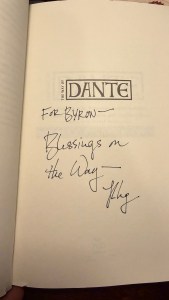
I couldn’t help but dig in deeper on the use of kaleidoscopes as a metaphor for glory by Charles Hefling in his introduction to Charles Williams: Essential Writings in Spirituality and Theology. Gibson quoted Hefling saying, “Glory is like what you see through a kaleidoscope rather than what you see through a fog. It is precise and regular, like a solemn liturgy or an intricate dance” (p. 5). Hefling’s metaphor describes the nature of “glory” as something clear, beautiful, and harmonious.

I love the contrasting images of the kaleidoscope and fog. The kaleidoscope represents clarity, vividness, and intricate patterns. It suggests that glory is precise, well-defined, and composed of beautiful, regular patterns—something to be admired for its symmetry and detail. In contrast, the fog implies obscurity and confusion. By comparing glory to this, Hefling emphasized that true glory is not vague or unclear, but instead offers a sense of order and sharpness.
Hefling likened glory to “a solemn liturgy or an intricate dance,” which are both structured, ritualistic, and harmonious activities. This indicates that glory possesses a sense of reverence, discipline, and deliberate beauty—an ordered and meaningful pattern that evokes awe. Hefling wanted us to understand that glory is a structured, beautiful, and precise experience—much like the beautifully patterned visuals seen through a kaleidoscope.
Leading Like Bison

I had the opportunity to spend this past week in Oklahoma. I loved every minute of it! Including a side trip with my son to explore the Wichita Mountains. The Wichita Mountains are a stunning mountain range located in southwestern Oklahoma. They are known for their rugged granite peaks, scenic beauty, and rich biodiversity. The area is part of the Wichita Mountains Wildlife Refuge, which provides a habitat for many species of plants and animals, including bison, elk, and a herd of Longhorn cattle. The Wichita Mountains, particularly Mount Scott, offered us breathtaking landscapes and views.

I am always amazed with bison and took several photos of them in the wildlife refuge. The bison herd in the Wichita Mountains Wildlife Refuge originally originated from a small population that was established in 1907 when 15 bison were brought from the New York Zoological Park (Bronx Zoo) to re-establish a southern plains herd to the refuge to help restore the species after near-extinction. Over time, these bison herds were carefully managed and expanded through conservation efforts. The current herd is descended from these original animals and other carefully selected stock, making it one of the most significant bison populations in the southwestern United States.
Bison are fascinating animals that can actually teach us quite a bit about leadership. Think about the leadership lessons in the restoration of a species after near-extinction. It reminds us that we do not lead alone. That restoration required coordinated efforts among conservationists, scientists, local communities, and policymakers. In this case, collaboration and managing resources were keys in the successful establishment of this thriving bison herd.
Here are some of the other key lessons I thought about as we were admiring these incredible animals and their examples of leadership:
- Leadership Through Strength and Resilience: Bison are powerful and resilient creatures, capable of withstanding harsh conditions. Effective leaders, like bison, demonstrate strength while remaining adaptable to challenges.
- Protection of the Group: Bison often act as protectors of their herd, especially the calves. Good leaders prioritize the safety and well-being of their team, guiding and defending them when necessary.
- Leading by Example: Bison lead by their actions, often moving in groups and demonstrating confidence. Leaders who embody integrity and consistency inspire trust and loyalty.
- Following Natural Cycles and Environments: Bison are in tune with their environment, migrating and grazing in sync with natural patterns. Leaders who are aware of external factors and adapt accordingly can navigate uncertainties more effectively.
- Strength in Unity: The herd relies on collective effort and cooperation. Similarly, strong leadership fosters teamwork and unity, recognizing that collective strength surpasses individual effort.
Celebrating Creativity: How Street Performances Enrich Communities and Inspire Joy

I spent this week in Nashville, Tennessee at the annual conventions of the National Association of Agricultural Educators (NAAE) and Association for Career and Technical Education (ACTE). It has been an incredible week and I love spending time working with the National FFA Teacher Ambassadors. On Wednesday evening we took the ambassadors to Sixty Vines on Broadway for dinner. While walking down Broadway to the restaurant I spotted three young street performers playing the drums – five gallon buckets. I immediately decided I would ask to join. I was welcomed to the drum (bucket) line. Check out the featured photo.
I had done this before when in New Orleans, Louisiana. Check out Drumming Up Relationships to read about that experience. I love learning these kids’ stories.

Most people walk by and laugh, maybe throw a little change in the bucket (literally), but I always see humans. Those humans are being and they have a story. These young people were utilizing everyday objects creatively to produce music and entertain others, turning simple items into instruments.
Additionally, these young people were learning resilience and determination. Often, street performers face challenges and uncertainties but continue to pursue their passion and livelihood despite obstacles. These young people are really entrepreneurs. Their entrepreneurial spirit, showcases how initiative can lead to earning and recognition.
I worry, however, when I see the kids on the street what everyone else is thinking or what needs they might have. I also worry about those who do not understand their culture looking at them as a public nuisance. I worry about the kids who have talent but no other creative outlet, but the streets. I encourage you not be I just keep walking past but take a moment and talk to the young people. Better yet, sit down with them, pick up a bucket, and channel your inner Phil Collins!
Art’s Eye for Evil

In the past several years I have reflected a lot on how I get more out of reading fiction books than non-fiction. I don’t say this just from an entertainment factor, but also from a deeper learning perspective. Interestingly, as I have in the last five years been intensively studying C. S. Lewis, GeorgeMacDonald, and Dorothy Sayers, and their appreciation for fiction, I have found fiction to be a major influencer of these author’s work and lives. Learning this has made me feel, not quite so “out there” in my thinking. In reading Dr. Richard Hughes Gibson’s just released and awesome book, The Way of Dante: Going Through Hell, Purgatory, and Heaven with C.S. Lewis, Dorothy L. Sayers, and Charles Williams (2025), the influence of fiction writing was even further affirmed.

Gibson noted, “…the fact that my archival labors revealed daily how thoroughly Dante had infiltrated my trio’s [C. S. Lewis, Dorothy L. Sayers, and Charles Williams] reading and writing lives” (p. xvii). Gibson’s new book interested me on several levels, but this idea of influence really interested me. Then at the beginning of Chapter 6, The Problem of Glory, Gibson asserted that, “EVIL MAY BE A PROBLEM for philosophers and theologians, but it is no problem for artists” (page 123). I loved this because it drove home what I have been saying about narrative artists and the power of fiction for years now – we get to see all the context and all the complexity of the characters. The artist reveals everything we need to know. This doesn’t happen, at least not all the time, with non-fiction.
Dr. Gibson referenced philosopher Agnes Callard saying, “Callard, let me be clear, thinks that art’s eye for evil is a good thing. Amid our busy lives, we look at the world with a purpose, and our purposes become blinders, obscuring our recognition of the ‘irrelevant, the unhelpful, and the downright wicked.’ Artists, by contrast, ‘take a long hard look at what the rest of us can’t bring ourselves to examine; they are our eyes and ears’” (p. 124). This illuminates the distinction between everyday perception and artistic perception. Callard suggested that people generally view the world through a purpose-driven lens, focusing on what matters to us—our goals, needs, and interests. This focus acts like blinders, preventing us from noticing things that don’t directly relate to our intentions, including aspects that might be irrelevant, unhelpful, or even morally troubling.
Gibson’s appreciation is for the artist’s role in providing a deeper, more honest perspective—especially regarding the presence of evil or wickedness—something that society generally tends to shy away from confronting directly. The emphasis, according to Gibson, is the importance of art as a means of truth-telling and of gaining a more comprehensive understanding of reality, beyond our convenient but limited viewpoints.
 Byron's Babbles
leave a comment