Leadership Outcast

The lyrics from Dorothy’s great song “Black Sheep” convey a powerful message of resilience, individuality, and unwavering self-acceptance. The first verse in “Black Sheep” goes like this: “Call me an outcast, call me a freak; Watch those bullets ricochet straight off of me; ‘Cause I belong; Where right is wrong; No lost cause like the good book say; Don’t give a damn what people think; I march alone; To a different song.” As a person who relates to being a black sheep at times, I was intrigued to dig in on the lyrics.
The song embraces the identity of an outcast or “freak,” rejecting societal judgments and criticisms symbolized by the “bullets” that bounce off them. I love that line because in my education policy life I have joked at times that it was time to put on the Kevlar jacket.
The lines “I belong where right is wrong” suggest a defiance of conventional norms and an affirmation of personal truth. By stating “No lost cause like the good book say,” they acknowledge the biblical notion that hope and redemption are always possible, reinforcing that even those perceived as outsiders can find their place and purpose.
As a Christian I did a little digging on exactly what the Bible has to say. So, the Bible doesn’t explicitly say “there is no lost cause,” but it does contain themes that suggest hope and redemption are always possible, regardless of how dire a situation may seem. Here are three of those themes:
- Luke 15:4-7 (The Parable of the Lost Sheep), in the NIV version it goes like this:
4 “Suppose one of you has a hundred sheep and loses one of them. Doesn’t he leave the ninety-nine in the open country and go after the lost sheep until he finds it? 5 And when he finds it, he joyfully puts it on his shoulders 6 and goes home. Then he calls his friends and neighbors together and says, ‘Rejoice with me; I have found my lost sheep.’ 7 I tell you that in the same way there will be more rejoicing in heaven over one sinner who repents than over ninety-nine righteous persons who do not need to repent.” Jesus emphasizes that there is joy in heaven over one sinner who repents, indicating that no one is beyond God’s mercy. - In Romans 8:38-39, Paul writes that nothing can separate us from God’s love, reinforcing the idea that hope remains even in difficult circumstances. The NIV version says,
38 “For I am convinced that neither death nor life, neither angels nor demons, neither the present nor the future, nor any powers, 39 neither height nor depth, nor anything else in all creation, will be able to separate us from the love of God that is in Christ Jesus our Lord.” - Jeremiah 29:11 says,
11 “For I know the plans I have for you,” declares the Lord, “plans to prosper you and not to harm you, plans to give you hope and a future.God declares plans to give hope and a future, reassuring believers that hope persists despite setbacks.” Here, God declares plans to give hope and a future, reassuring believers that hope persists despite setbacks.
While the phrase “no lost cause” isn’t directly in the Bible, these passages reflect a core biblical principle that redemption, hope, and restoration are always within reach for those who seek them.
This all reminded me of the great show from the 1970’s, Black Sheep Squadron. I loved that show because it was inspired by a highly effective South Pacific World War II fighter squadron led by Gregory “Pappy” Boyington, played by Robert Conrad. Boyington was an outcast and unconventional, but effective leader who, along with his squadron were known as “black sheep.” Kind of interesting how any time we don’t fit the conventional and societal norms (who gets to pick those, anyway?) we are considered a “freak” or “black sheep.”
Finally, the last line of the first verse of “Black Sheep,” “I march alone; to a different song” emphasizes independence and the courage to follow one’s unique path despite opposition. Overall, the verse celebrates strength, individuality, and the idea that standing firm in oneself aligns with a deeper sense of hope and personal sovereignty.
The Allure Of Power

I just finished The Fellowship of the Ring by J. R. R. Tolkien. This is the book we are focusing on studying as Marion E. Wade Continuing Scholars at Wheaton College this year. It has been fascinating to read this book using a scholarly lens. It has also been interesting, as a person who loves to use fiction works as a learning tool, to study this book knowing that Tolkien did not like, nor use allegory. That said, there are still so many lessons to be pulled from this book. I still have several notes and reflections that may make their way into blog posts.

Today, I want to focus on a leadership lesson in a statement by Boromir at the end of The Fellowship of the Ring: “The fearless, the ruthless, these alone will achieve victory. What could not a warrior do in this hour, a great leader? What could not Aragorn do? Or if he refuses, why not Boromir? The Ring would give me power of Command. How I would drive the hosts of Mordor, and all men would flock to my banner!” I’m specifically pondering the idea of a leader putting all his faith in the power of a ring. The ring can serve as a metaphor for other sources of power or perceived power.
Boromir’s statement highlights a common temptation for leaders: the allure of power as a means to achieve victory. His belief that the Ring could bestow unmatched command reflects both his desire to protect his people and the dangerous misconception that power alone can ensure success.
The leadership lesson here is about the importance of integrity, humility, and understanding the true source of effective leadership. Relying solely on power, even if it promises immediate results, can lead to corruption and failure in the long run. Aragorn exemplifies the opposite approach: leading through wisdom, humility, and trust in a higher purpose rather than wielding power for its own sake. Aragorn, is a member of the Fellowship of the Ring. He resists the corrupting influence of power, showing great moral strength.
Boromir’s temptation serves as a reminder to us that true leadership isn’t just about exerting control or brute force but about inspiring trust, making wise decisions, and understanding the moral dimensions of power.
Leading By Starting

“‘It’s the job that’s never started as takes longest to finish,’ as my old gaffer used to say.” The leadership lesson in this phrase from J.R.R. Tolkien’s The Fellowship of the Ring is that procrastination or hesitation often causes tasks to become more daunting and time-consuming than they need to be.
Effective leaders understand the importance of taking initiative and starting work promptly. By beginning sooner rather than later, we can manage challenges more effectively, maintain momentum, and reduce the risk of projects becoming overwhelming. This quote emphasizes that decisive action and early engagement are key to successful leadership and accomplishing goals efficiently.
Leading On The Path Toward A Clear Goal

As I was reading The Fellowship Of The Ring by J. R. R. Tolkien yesterday I was struck by this description of Gandalf by Tolkien: “To Gandalf the far-off memories of a journey long before were now of little help, but even in the gloom and despite all windings of the road he knew whither he wished to go, and he did not falter, as long as there was a path that led towards his goal.” Tolkien created a great leadership example in Gandalf. He modeled that hope is preserved through small consistent actions.
From Tolkien’s statement about Gandalf, we can learn the importance of perseverance and clarity of purpose. Despite facing darkness and complex obstacles (“gloom” and “windings of the road”), Gandalf remains steadfast because he knows his destination and the path to achieve it. This highlights that having a clear goal and unwavering resolve can help us navigate through life’s uncertainties and challenges without faltering. It reminds us to stay focused on our objectives, trust in our direction, and persist even when the journey becomes difficult.
Creating Our Own Cages

I am a huge Asking Alexandria fan and their song “Into The Fire” which was released in 2017 has always caused me to do some heavy reflection every time I hear it. After hearing it again while spending some quality time in the tractor cab recently, I even pulled out my highlighted and heavily annotated copies of C. S. Lewis’s The Great Divorce and The Problem of Pain while reflecting on the song. I’ll get to the notes I pulled in from those works in a moment. For now let’s discuss “Into the Fire” as a powerful and emotionally charged song that I believe explores themes of inner struggle, pain, and seeking redemption. That is the beauty of great art and artists like the members of Asking Alexandria; it allows us to make our own interpretations. The lyrics allow the listener a dynamic interaction between artist and listener with meaning not always fixed by the artist.
In my reflection and thoughts, the song conveys a sense of facing darkness and trying to overcome personal demons or difficult circumstances. The metaphor of going “into the fire” suggests enduring hardship or confronting intense emotions in the hope of eventual healing or growth. Sometimes we have to realize we are who we are and that we must go into the fire.
Verse 1 of “Into the Fire” says, “I’m not too sure what I’m supposed to do with this; These hands, this mind, this instability; From a cage I created to a Hell that Heaven made.” Here, the lyrics express confusion and uncertainty about how to handle our own abilities and mental state. “These hands” and “this mind” symbolize our physical actions and thoughts, respectively, suggesting we may feel overwhelmed or unprepared to control or utilize them effectively. The mention of “instability” indicates inner turmoil or emotional instability, highlighting inner conflict.
The line, “From a cage I created to a Hell that Heaven made” reflects a sense of self-imprisonment—we’ve created limitations or barriers (“a cage”) around ourselves, perhaps through fears, doubts, or negative patterns. The phrase “to a Hell that Heaven made” suggests that despite the potential for goodness or salvation (“Heaven”), the circumstances or internal struggles have transformed that potential into suffering (“Hell”). It could imply that one’s own actions or perceptions have turned a positive environment into a painful one.
This all reminded me that C. S. Lewis said, “I willingly believe that the damned are, in one sense, successful, rebels to the end; that the doors of hell are locked on the inside” in The Problem of Pain. Many times we do create our own “cages” that are mentioned in “Into the Fire.” As a Christian, I am reminded we have a choice between Heaven or Hell.
In Mere Christianity C. S. Lewis taught us that pride was the “great sin” that leads to every other vice. The characters in Lewis’s The Great Divorce were reluctant to let go of their sins and attachments, showcasing how pride, resentment, and selfishness can prevent one from achieving redemption. This could be true of the character represented in “Into the Fire.”
My big takeaway from pondering all of this is the reminder of what C. S. Lewis told us in the preface to The Great Divorce: “I think earth, if chosen instead of Heaven, will turn out to have been, all along, only a region in Hell: and earth, if put second to Heaven, to have been from the beginning a part of Heaven itself.” God lets us choose!
You Cannot Trust Us To Let You Face Trouble Alone
I loved this from Frodo’s friends as he was preparing for a difficult and dangerous journey in J. R. R. Tolkien’s The Fellowship of the Ring: “‘You can trust us to stick to you through thick and thin – to the bitter end. And you can trust us to keep any secret of yours – closer than you keep it yourself. But you cannot trust us to let you face trouble alone, and go off without a word. We are your friends, Frodo. Anyway: there it is.” This declaration of friendship from Frodo’s fellow Hobbits underscores that real friendship involves loyalty, trust, confidentiality, and a willingness to face hardships together—lessons that are valuable in our everyday relationships.
Frodo’s friends were highlighting key qualities of true friendship. It reminds us that genuine friends are loyal and dependable—they stand by you “through thick and thin,” offering unwavering support and trust. They also respect our privacy, being trusted to keep secrets confidential. Importantly, true friends don’t abandon us in difficult times; instead, they face challenges together with us, ensuring we’re never alone in trouble. Are you being a true friend?
Advice Is A Dangerous Gift

As I continue reading J. R. R. Tolkien’s The Fellowship of the Ring I keep reminding myself that Tolkien did not use nor like allegory. However, I still can’t help myself from being intrigued by scenes in the book and wanting to connect them to some lesson. One such scene was the conversation between Frodo and Gildor. Here is what they said: “‘And it is also said,’ answered Frodo: ‘Go not to the Elves for counsel, for they will say both no and yes.’ ‘Is it indeed?’ laughed Gildor. ‘Elves seldom give unguarded advice, for advice is a dangerous gift, even from the wise to the wise, and all courses may run ill. But what would you? You have not told me all concerning yourself; and how then shall I choose better than you? But if you demand advice, I will for friendship’s sake give it. I think you should now go at once, without delay;…” (p. 84). Frodo’s and Gildor’s words highlight the cautious nature of the Elves when giving advice, emphasizing how even the wise can be guarded.
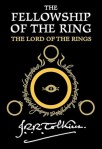
The elves are wise and experienced, but also careful about sharing their knowledge and advice, knowing that words can have unintended consequences or that their insights might be misunderstood or misused. The quote recognizes importance of discretion: Sometimes, it’s better to be cautious about what we share, especially when the information could be sensitive or misunderstood.
There is wisdom in silence. Silence or restraint can be powerful, allowing us to observe and understand before speaking. We need to Recognizing that different people may interpret advice differently, and that sometimes holding back is a sign of wisdom.
Our Deeper Realms Of Reality

It was curious to me that the last sentence in Lilith by George MacDonald was a quote by Novalis. The quote, “Our life is no dream, but it should and will perhaps become one” is attributed to Novalis, but some believe it is a paraphrased quote. Still, it was a pretty ingenious way of ending the book and concluding Lilith with a reflection on the transformative power of imagination, faith, and spiritual awakening. MacDonald was greatly influenced by the work of Novalis.

MacDonald was deeply interested in the idea that our earthly existence, while real and tangible, is also intertwined with the spiritual and the transcendent. By ending with a quote suggesting that life, though currently concrete, might become more like a dream—more fluid, wondrous, and spiritually aligned—he invites readers to consider the possibility of deeper realms of reality beyond the material world. It emphasizes hope and the potential for personal growth and enlightenment, encouraging us to see life not just as a series of fixed events but as something malleable, full of divine possibility.
I wonder if MacDonald may have wanted us to learn that even though our current experience is grounded in reality, there’s a divine or spiritual dimension that we can aspire to access—making life more like a meaningful, dream-like journey towards higher understanding and unity with the divine.
The Sport of Our Dreams

Yesterday’s post, Our Cosmic Holiday, was inspired by Mr. Vane in Lilith by George MacDonald. I just had to do another post inspired by the next sentence, “When a man dreams his own dream, he is the sport of his dream; when Another gives it him, that Other is able to fulfil it.” This suggested to me that when we envision our own desires or aspirations, we are at the mercy of our own subconscious or internal forces—essentially, we are “the sport” of our inner dreams. Think about the times we give ourselves encouragement or the times we get in our own way with self-doubt or overthinking something.
In contrast, when an external force or another person presents or influences our dreams, that external entity holds the power to shape and fulfill those dreams for us. As in all his works, MacDonald was masterful in Lilith with his allegorical approach by allowing the “Another” or “Other” be God or someone else in our worldly life like a mentor or friend. He very aptly reflected the tension between individual agency and external influences—perhaps highlighting how dreams and desires are not always entirely within our own control, especially when influenced by others or larger forces. Remember, that influence can be positive or negative. Also remember, what might seem negative today, turns out to be positive for us in the long run. As my mom used to say, “When God closes a door, he always opens a window – go find it!” Gosh I miss my mom!
This all underscores the interplay between personal longing and the shaping forces outside oneself, which is well explored by MacDonald in the Lilith through the interactions between characters and the broader metaphysical or societal currents. All this underscores the idea that while, we as humans, want control and understanding, much of our experience is shaped by influences beyond our grasp and understanding—whether divine, metaphysical, or societal. Macdonald taught that it was okay to be content with not knowing everything—there would come a day when it would all be revealed.
Our Cosmic Holiday

Today as I was finishing reading Lilith by George MacDonald, Mr. Vane, the protagonist, made a few profound comments. First, he said, “Life was a cosmic holiday.” My interpretation was that he was expressing a perspective that life should be enjoyed and experienced with a sense of wonder and freedom, much like a joyful celebration or vacation. The phrase suggests that life, in its vastness and mystery, can be seen as an extraordinary, almost otherworldly experience—an opportunity to explore, delight in existence, and find happiness amid the chaos and unpredictability of the universe. It reflects a philosophical outlook that emphasizes embracing life’s fleeting moments with joy and a sense of awe, rather than taking everything too seriously.
Another quote that MacDonald wrote for Mr. Vane was, “Man dreams and desires; God broods and wills and quickens.” For me this highlights a profound contrast between human and divine nature. It reminded me just how much we humans are characterized by our dreams, wishes, and aspirations—all things rooted in imagination, longing, and personal desire. In contrast, God’s role involves deep contemplation (“broods”), deliberate intention (“wills”), and the act of bringing life or reality into existence (“quickens”). This caused me to ponder how divine action is thoughtful and creative at a fundamental level, shaping the universe with intentionality and care. Contrast this with we humans sometimes fleeting or restless aspirations.
 Byron's Babbles
leave a comment