To Begin Again: Evolving, Reinventing, Growing, & Improving
I still have a few notes and highlights I want to explore, study, and blog about from my reading of The Story She Left Behind by Patti Callahan Henry. One of the phrases that was used four times throughout the book was, “begin again.” This really resonated with me because of my belief that we are constantly evolving and hopefully growing and improving. I know I am not the same person I was ten years ago, or even a year ago. This made me think back to a conversation I had with Laura Stanifer and Jill Walker while studying one day last month at the Marion E. Wade Center. We were discussing a lecture series I had attended and I made a comment about some things I had learned and formed opinions on since the first lecture in the series in the fall. Laura and Jill commented that I was a different person now than I was in the fall. So true!

Some would push back on me and say we should not change who we are but I would argue we can’t. I would argue we change in some way every day – at least I hope so. It doesn’t mean my core values have changed, but it does mean I am learning and growing every day. Does it mean we are “beginning again?” I am not sure, but I value that idea of being able to begin again.
At the end of the book, Wynnie said, “But also, it’s about finding home. It’s about knowing where you belong and then doing something about that truth. It’s about that sometimes awful and sometimes wonderful journey that can take you in wrong directions, but then being willing to begin again and find your way.” I love this because we all have those sometimes awful moments and those sometimes wonderful moments. Whether our need to begin again and find our way comes from a change in circumstances, an inner yearning to redefine ourselves, or simply the desire to shake things up and keep ourselves relevant, a redefinition can lead to personal growth and enhanced fulfillment in both our personal and professional lives.
“You are not beginning again like a baby – knowing nothing – you are opening to the possibility that there is more to explore, take in, discover, learn, embrace.” ~ Shellen Lubin
As I stated at the beginning of this post, the theme of “begin again” came out in The Story She Left Behind multiple times. I don’t believe Henry wanted us to think about beginning again as fixing something that was broke, but maybe more about reclaiming or reinventing. In this novel, the characters had to make decisions about beginning again for our own journeys.
As the protagonist Clara struggled with her path for beginning again for her and her daughter, Wynnie, she seemed to emphasize renewal, self-discovery, and reinvention rather than fixing something that was broken. Clara’s decisions reflected a courageous step toward reclaiming her identity and embracing new possibilities, which can serve as inspiring lessons for our own journeys. We can view beginning again as an empowering choice to let go of past limitations, redefine our goals, and pursue authenticity. By embracing this mindset, we open ourselves up to growth, healing, and new opportunities, much like Clara does in her story.
Longing: The Hidden Power Behind Growth, Creativity, and Being Alive

In The Story She Left Behind by Patti Callahan Henry, the protagonist, Clara, made the statement, “Longing means being alive.” This really jumped out at me because we all experience longings. I’d never really thought about how experiencing these deep desires or aspirations is a sign of vitality and emotional richness. It reinforced for me that feeling longing—whether for connection, purpose, or meaning—is an essential part of truly experiencing life. Longing reflects our capacity to hope, dream, and strive, which are vital aspects of human existence that keep us engaged, motivated, and emotionally connected to the world around us.
“I’d thought it all imaginary, but this reality was here all along.” ~ Clara

In the novel, Clara went on to say, “For me, longing itself was the answer, the movement toward creativity and meaning and, yes, love.” This was a beautiful insight from Clara. Her perspective suggested to us that longing isn’t just a feeling of desire or yearning; it’s an active force that propels us toward growth, creativity, and meaningful connections. From this, we can learn that embracing our longing rather than suppressing it can be incredibly enriching. By acknowledging what we deeply desire—whether it’s love, purpose, or understanding—we open ourselves to new experiences and personal development.
To enhance our lives, we might try:
- Listening to our longings: Take time to reflect on what truly matters to us.
- Channeling longing into action: Use that energy to pursue passions, build relationships, or explore new paths.
- Practicing patience and curiosity: Understanding that longing can lead us toward growth, even if the destination isn’t immediately clear.
- Creating meaning through pursuit: Recognize that the act of striving itself can bring fulfillment.
In essence, longing isn’t just a craving; it’s a vital motivator that can inspire creativity, deepen love, and help us find purpose. Embracing it fully allows us to live more authentic and meaningful lives. Longing really is being alive!
Embracing Wonder: Honoring the Divine in Art and Nature to Inspire Compassion and Purpose

Yesterday I finished the incredible book The Story She Left Behind by Patti Callahan Henry. I am now working through my notes and highlights I made for further reflection. Patti is one of my favorite authors. I love her historical novels inspired by actual people and events.

This reflection deals with Clara recalling a conversation with her mother when she was a young girl. She and her mother were pressing flowers between tissue paper to preserve them. This is what her mother said:
“‘This,’ Mother said. ‘Art comes from the same place as this flower.’ She’d pressed the flower into my hand. ‘It is all mystery and beauty and all of this, including us, including that flower, comes from the same place.’ ‘All mystery and beauty.’”
With the description of “all mystery and beauty,” Patty was emphasizing that both art and natural beauty originate from a profound, mysterious source within us and the universe. The idea suggested that creativity and nature are interconnected expressions of something deeper—mystery, wonder, and beauty—that transcends explanation. I believe Patti, through her art of writing, was encouraging us to see the world and our creative efforts as rooted in the same divine or mysterious essence, reminding us to appreciate the wonder inherent in both art and nature.
Recognizing the divine or mysterious essence in art and nature can inspire us to act with kindness, responsibility, and purpose—striving to protect and preserve the beauty that elevates our spirits. By regularly appreciating the beauty around us whether it’s a sunset, a painting, or a song we nurture gratitude and a sense of awe. This can lead to a more positive outlook and deeper connection to the world.
Engaging with art and nature encourages us to explore our own creativity. This not only enhances problem-solving skills but also allows us to express ourselves authentically, fostering self-awareness and emotional health. By embracing the wonder inherent in both art and nature, we connect more deeply with ourselves and the world, fostering qualities like compassion, curiosity, and resilience that make us better humans.
Redemption and Maturity: The Transformative Power of Personal Growth

Last week while facilitating a student focus group on character development for a client, I encountered two descriptions of “character” that I had not ever heard previously. Those descriptions were “redemption” and “maturing.” These words really caused me to pause and think about what redemption and maturing have to do with character. My reflection caused me to believe that redemption and maturing have everything to do with character.
Redemption and maturing are deeply intertwined themes that reveal the transformative journey of character among us all. As we confront our flaws and face consequences, we often undergo profound growth, reshaping their identity and worldview. Exploring these developments offers us valuable insights into human resilience, hope, and the capacity for our own positive change.
When the student described character as “redemption,” I believe he was referring to a journey or transformation where he overcame past mistakes, flaws, or wrongdoings and achieved growth, forgiveness, or moral redemption. It implied that character development involves experiences and significant change—perhaps becoming better, more compassionate, or morally upright—after facing challenges or realizing personal errors. Essentially, “redemption” highlights themes of salvation, second chances, and personal evolution within our individual story.
“Maturing” adds an important layer to the concept of redemption related to character. While redemption focuses on an our moral or emotional salvation—overcoming past mistakes and seeking forgiveness—maturing emphasizes our personal growth, increased wisdom, and emotional development over time. When I heard character development described as maturing, I immediately thought of character as a continuum – it’s ongoing.
When I consider character development and maturing in the context of redemption, it suggests that our journey should not be just about fixing our wrongs, but also about evolving into a wiser, more self-aware individual. This maturation often leads to more genuine change, as the we internalize our experiences and become better equipped to handle future challenges with greater understanding and empathy.
I am grateful for the remarkable teenagers who inspired this discussion with their insightful perspectives on redemption, maturing and personal growth.
Leading Like Hummingbirds
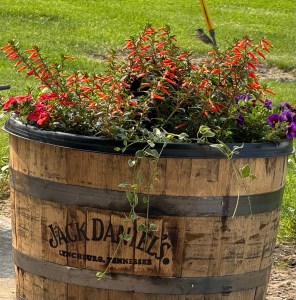
This past Saturday morning, as I do every morning when I finish the morning feeding, I sat on the back porch and watched the cattle head back out to pasture and enjoy the sunrise with my morning coffee. Saturday was special as we now have our flowers all planted which includes a couple of whiskey barrels with flowers specifically for hummingbirds. My bird friends were out in full force this morning (see photos).
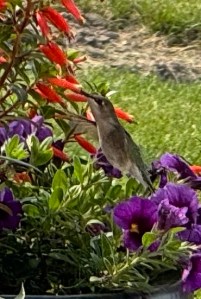
I love watching these incredible creatures. During fall, these hummingbirds embark on their migration journey to Central America, including Mexico and the rainforests of Central America, where they spend the colder months, traveling thousands of miles to find suitable wintering grounds. Then in the spring, they return here to breed and feed on our nectar-rich flowers.
I am amazed at the hummingbirds’ Incredible flight skills. They can hover in place, fly backwards, and even upside down. Their wings beat rapidly—around 50 to 80 times per second—creating the characteristic humming sound. This got me thinking how hummingbirds serve as powerful metaphors for great leadership because they embody qualities such as agility, resilience, and adaptability.

Just as hummingbirds swiftly maneuver through complex environments with grace and precision, effective leaders navigate challenges with agility and confidence. Their ability to hover and change direction instantly symbolizes flexibility and openness to new ideas—traits essential for inspiring innovation and guiding teams through change. Additionally, hummingbirds’ relentless energy and persistence mirror a leader’s dedication and passion in pursuing goals.
Hummingbirds represent vibrant, dynamic leadership that is attuned to its environment and capable of inspiring others to thrive amidst complexity.
 Byron's Babbles
leave a comment