Leading By Knowing What Time It Is

I am continuing to be inspired by the great book, Pete Rose: An American Dilemma, by Kostya Kennedy. I already wrote inspired by Pete Rose in Leading By Being A Beacon & Support Beam. Yesterday, while reading, I was intrigued by Kennedy telling that one of Rose’s team members said that Rose always knew what time it was in each of his teammates’ lives. In other words, he had a deep understanding and awareness of where each team member is personally and professionally. That is a pretty amazing skill for a leader to possess, don’t you think? It means, as leaders, we recognize the different stages, challenges, priorities, and circumstances that each individual is experiencing.
This kind of awareness allows us to offer tailored support, show empathy, and foster stronger relationships. It helps in creating an environment where team members feel seen, valued, and understood, which can boost morale and promote more effective collaboration.
Pete Rose, renowned for his leadership and keen understanding of his team, was known to pay close attention not just to their skills on the field but also to their personal lives and circumstances. He believed that knowing what time it was in each player’s life—whether they were facing personal challenges, celebrating milestones, or dealing with pressure—allowed him to connect with them more deeply. By demonstrating genuine empathy and awareness of their individual situations, Pete fostered a sense of trust and loyalty within his team. This approach helped him motivate players more effectively, as they felt seen and valued beyond just their athletic performance. Such mindful leadership created a supportive environment that contributed to both team cohesion and individual growth.
Leading By Being A Beacon & Support Beam

I am reading the great book, Pete Rose: An American Dilemma, by Kostya Kennedy. Pete Rose was one of my baseball idols growing up. I loved going to Cincinnati Reds games with my dad and watching him play. Baseball is such an interesting sport. Then as a young adult I got to watch him as a player/manager. Rose is an interesting person to read and study about. I was crushed when I learned of his gambling issues and when he was banned from baseball. I try not to ever judge people by their worst moment and I’ve found it best to view everyone as human and not a superhero. The Pete Rose I remember is Pete Rose, the player, team captain, and team manager. Kennedy wrote that Rose’s Golden Rules were: be on time and play hard.
One of his teammates described Pete Rose like this, “He was a beacon and a support beam.” As a beacon, Rose led with purpose, creating a positive impact, and fostering a culture of collaboration and empowerment. Just like a lighthouse guides ships safely to shore, a beacon leader offers support and guidance, helping team members navigate challenges and uncertainties. A beacon leader also provides a clear vision and direction, helping others understand the goals and purpose of their efforts.
As a support beam, Rose was a supportive leader investing in his team’s potential, promoting confidence and capability. As team captain, Rose spent time boosting morale and motivating team members to keep pushing forward. This motivation a s support helped team members align their efforts and stay motivated, even during challenging times.
By being a beacon and strong support beam we can help our teams navigate tough times while maintaining focus and commitment.
Navigating Challenges

This weekend, for the finale summit trip of “THE Leadership Academy” program I facilitate for Hamilton Heights School Corporation, I named one of the activities, Navigating Challenges. The idea was that, just like a captain who must navigate navigate through changing waters, leaders can also learn to adapt to unforeseen challenges. The activity literally involved having a lunch celebration on a riverboat. Little did I know just how great that three hours was going to become.
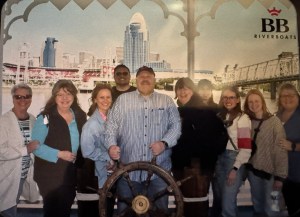
As we boarded the BB Riverboats flagship, the Belle of Cincinnati, the captain greeted us and checked us in. This really impressed us, but it was a Captain’s Lunch Cruise, after all. Here was the leader of the ship personally checking every person in. Those that know me won’t be surprised that I got into a conversation with the captain. The conversation led to us to being invited to visit the captain on the bridge. By now I was giddy – we had been invited to the bridge! I also set a goal of wanting to blow the ship’s horn.

After a wonderful lunch celebrating the group, enjoying the beginning of the cruise and Banjo Bob’s narration and music for a little while we ventured to the bridge. I called up to the captain and he gave us permission to climb to the bridge. Here we were, where it all happens – the navigation and steering of the ship. Our entire group was so eager to learn about everything. Our Captain generously discussed each piece of navigational device and each steering component. We were at the nerve center of the ship.
There on the bridge I viewed the rope used to make the ship’s horn blow. First, I must remind you of a Byron Rule: “The answer is always no, until you ask.” So I asked the Captain if I could blow the horn. He said, “No, there has to be a reason to blow the horn.” The captain then proceeded to give us an incredible lesson. He told us that when facing adverse conditions or an obstacle we must, “deal with it.”

Participants in our group asked questions about how our Captain dealt with it. He told us the key was to adapt and overcome. I asked again if I could blow the horn. He didn’t answer. The Captain proceeded to give us a strong leadership lesson on using our decision-making skills to effectively navigate adverse conditions. Here area few of the notes I jotted down while he was teaching us:
- Assessment of Situations: The captain continuously monitors weather patterns, river conditions, and any potential hazards. Accurate assessment helps in making informed decisions.
- Communication: Clear communication with the crew is essential. The captain must convey instructions, maintain morale, and ensure everyone understands their roles during challenging times.
- Calm Under Pressure: A good captain remains calm and composed, which instills confidence in the passengers and crew. This helps prevent panic and promotes rational decision-making.
- Strategic Planning: The captain develops contingency plans, identifying safe routes or alternative actions to take if conditions worsen.
- Teamwork and Delegation: A captain relies on their crew, delegating tasks efficiently and encouraging collaboration to ensure all hands are on deck.
- Experience and Training: Drawing on previous experiences and training, the captain uses lessons learned from past situations to guide their current actions. The Captain even explained how he would create scenarios for himself to prepare for adverse conditions, obstacles, or equipment failure/malfunction. This impressed us because he was not relying on someone to do this for him.
- Use of Technology: Utilizing navigation tools and technology to gather real-time data helps the captain make better decisions.
- Flexible Decision-Making: The captain must remains adaptable, ready to change tactics as new information emerges or conditions evolve.
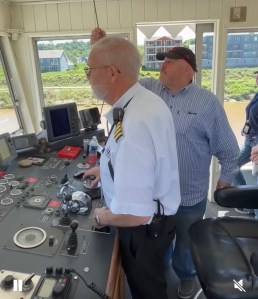
The Captain concluded by saying, “Don’t let it get to you because you have peoples lives at stake.” What a lesson on navigating challenges, changing waters, and adverse conditions to ensure the safety and success of the voyage. Just then he stated that we were coming upon another vessel approaching us from the opposing course. The Captain stated that on his command I could give the horn a five second blast (see photo). I got my wish! Don’t forget, the answer is always no until you ask.
Taking Relationships Beyond Surface Level

I had a person this past week tell me that he appreciated that I always worked hard at taking relationships beyond the surface level. This comment caused me to instantly reflect on the person making the comment and our relationship. We do have a meaningful bond built on genuine care, respect, and emotional investment. We have open, honest, and vulnerable communication. And we feel safe to express our thoughts and feelings to each other.
Contrast this with transactional relationships that tend to focus on specific exchanges or benefits, where each party is primarily concerned with what can be gained from the interaction. One reason I believe I was so grateful to the person making the comment is that I value those deeper connections. Early in my career I was much more transactional with my professional relationships. Looking back, however, those relationships that went beyond surface level are the ones that have impacted me most.
Relationships matter. Relationship that go beyond surface level are built on a solid foundation of trust and mutual understanding. Those deeper connections provide emotional fulfillment and satisfaction that transcends mere service or reciprocity. The deeper the relationship the more authentic and vulnerable we become. In both personal and professional relationships building trust takes time and consistency. Being reliable, honest, and supportive fosters a safe space for relationships to deepen.
It is easy to get caught up in transactional relationships, but it is when we take the steps to deepen the relationship beyond the surface level we find emotional fulfillment and satisfaction that transcends mere service or reciprocity.
Connecting Like Paul Revere

I am loving reading the great book The Ride: Paul Revere and the Night That Saved America by Kostya Kennedy right now. It is providing incredible Revolutionary War history, while at the same time providing a view into the human – Paul Revere. I’ve already blogged once inspired by the book in Leading Like Paul Revere. Why was Revere a successful revolutionary leader? Kennedy wrote, “Revere liked talking to people, he liked making his point known. He liked to feel that his words and actions had consequences, and he liked being an agent of change” (pp. 20)1-202). Let’s see here – if leadership is influence, then Revere had that part figured it.

Kennedy references Malcolm Gladwell’s great book, The Tipping Point. Gladwell referred to Revere as being a “connector.” Kennedy explained that, “Of The most compelling of Gladwell’s conclusions—conclusions that he came to in part by drawing parallels to other instances of messages being conveyed by word of mouth—is that Revere succeeded in large part due to his social manner, the ease with which he interacted with other people” (p. 201). I call this being an aware communicator.

Kennedy brought out a great point about Revere, saying, “Revere not only knew many people along his route, Isaac Hall among them, he also had the demeanor to size up and engage a new person, Martin Herrick as an example, and press upon the person the news” (p. 201). Revere’s abilities allowed him to spread crucial information about the British approaching, bridging various communities and ensuring that others were informed and motivated to take action. His extensive network helped facilitate communication among disparate groups, emphasizing how vital interpersonal connections can be in mobilizing collective action and creating social movements.
Gladwell’s reference to Paul Revere as a “connector” illustrated his role in the American Revolution and the social dynamics that contributed to significant historical changes. Connectors are people who have a wide circle of acquaintances and are skilled at linking different social groups together.
 Byron's Babbles
leave a comment