Beyond Words: Exploring the Limits of Language and the Depths of Human Experience

I love made up and invented words. As you know, Leadery in my company name is an invented word. You can read the story of the word Leadery here. In Patti Callahan Henry’s The Story She Left Behind the protagonist Clara is discussing a word made by her mother with Wynnie. The word was “Adorium.” Here is the conversation:
“Adorium means ‘great love,’ ” she said. “The kind of love I feel for you. The kind of love that obliterates all sense and logic and makes the world appear just as it is—completely and utterly magical. Adorium is knowing that all things are one and we are all things—the love that made you and the love we came from and the love we return to.” She stopped, as if she knew I could not keep up, drowning in the waterfall of her definition. “That’s so much for one word,” I said. “Yes, that’s the very point of it all. Sometimes the words we have aren’t big enough.”

Pretty cool word, Adorium, don’t you think? profound reflection on love—describing it as something that surpasses words, something all-encompassing and mystical. The way she captures love as a unifying force, blending everything into one, reminds me of how sometimes language falls short in expressing the depths of our feelings.
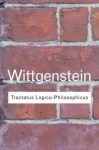
This got me thinking about Ludwig Wittgenstein’s work I studied a couple of years ago on how language relates to reality and the limits of our expression. Take a moment and read my post, The Limits of Language. In his early work, Tractatus Logico-Philosophicus, Wittgenstein believed that language functions as a map of reality—meaning that words can picture facts about the world. He argued that what can be said clearly is limited to propositional language that depicts facts, and anything outside that—such as ethics, aesthetics, or the mystical—is considered “unsayable.” This aligns with the idea that some phenomena, like love or consciousness, transcend language because they are not easily represented through logical propositions.
Later, Wittgenstein came to believe that meaning arises from use, and that the complexity of human experiences—like feelings or the sense of the universe—often falls outside fixed definitions. This perspective highlights that certain aspects of reality are inherently difficult to articulate because they are woven into our forms of life and shared practices, echoing the idea that some phenomena are best understood through intuition, experience, or artistic expression rather than precise words.
This all was very interesting when pondering Patti’s character in The Story She Left Behind creating her own language with created words. This underscores the idea that language has its limits, especially when it comes to capturing the full depth of human experience and the mysteries of existence.
 Byron's Babbles
[…] I wrote about Wittgenstein’s theories in The Limits of Language and Beyond Words: Exploring the Limits of Language and the Depths of Human Experience. […]
LikeLike