Language Is The Window into Culture: How Words Reflect Our Collective Identity

I say this a lot and really do believe it, that language matters – it matters a lot. I was reminded of this twice this week. The first was at a gathering I was leading made up of school leadership and the second time was in the incredible book The Story She Left Behind by Patti Callahan Henry. At the gathering we were discussing work-based learning programs for high school students and one of the school’s pointed to one reason for their success was the that everyone was speaking the same language when when it came to work-based learning. In other words every person in the school knew what the vision was for work-based learning from the student to the parents to the counselors to the teachers to the work-based learning coordinator to the employers to the administrators – well, you get the picture.
This shared shared language (understanding, agreement, or alignment) on the particular topic of work-based learning implied that all the individuals and stakeholder groups are working together toward a common goal and have a coherent and unified approach. This is leading to successful implementation. What that school values can be seen by all involved understanding and communicating a common vision and how carrying out that work, in this case work-based learning, is to be performed.

As I stated earlier, the second reminder that language matters was in The Story She Left Behind. Charlie Jameson and Clara were having a conversation about their parents and said:
“‘He’d [Charlie’s father] tell us that every culture infuses its language with a sense of who they are as a people, as a person, as a community. It shows us what they value, what they love, what they think about, how they label the world.’ ‘Then for my [Clara] mother to make up her own words, she felt that none of the other languages could define her life for her. If it’s true that we make a language from what we are made of, then I can say this—Mother was made of deep emotions, of land and of nature.’”
Charlie was emphasizing that language is more than just a system of words; it reflects the identity, values, and worldview of a culture. When he says that each culture infuses its language with a sense of who they are, he’s pointing out that the way communities speak reveals their beliefs, priorities, and collective experiences. Language encodes what they cherish, how they interpret their surroundings, and what they consider important. In essence, it’s a mirror of their cultural soul, showing us their unique perspective on the world and themselves. Think about your organization as a community. What identity and values is your common language conveying?
Clara’s response to Charlie suggested that our personal identities and experiences shape the way we communicate and understand the world. It implied that our inherent qualities, backgrounds, and histories influence the expressions, words, and meanings we develop—essentially, that who we are internally informs how we find ways to connect and convey our thoughts externally. This highlights the deep connection between our inner selves and the ways we express ourselves to others.
Cultivating Answers

I absolutely loved the following interaction between Clara and Charlie Jameson in The Story She Left Behind by Patti Callahan Henry:
“‘Because I have no answers, and in the absence of answers, I find myself creating some. Tell me you don’t do the same?’ ‘I do. I’ve been creating answers for twenty-five years.’ He smiled; we were in this together—creating answers for unanswerable questions.”

At first when I pondered this interaction I thought of when answers get created when there is a lack of information or clarity. This is a leadership downfall. There can be downsides if answers are created without clear communication or understanding. When clarity is lacking, there’s a risk of misunderstandings, misinterpretations, or providing information that doesn’t fully address the real needs or context. This can lead to confusion, frustration, or even unintended consequences if the responses are acted upon without proper context.
Conversely, when I considered the context of this conversation in the novel I realized it is also an opportunity. When faced with uncertainty or ambiguity, it encourages us to ask more questions, seek clarification, and collaborate to refine the ideas. Embracing humility and openness helps ensure that we remain receptive to feedback and willing to adjust our approach, ultimately leading to more thoughtful and effective solutions. So, while the creation of answers without clarity has potential pitfalls, it also opens the door for deeper dialogue and growth.
While I firmly believe in providing clarity to make sure that wrong answers are not created, I am also taking away from this reflection that embracing uncertainty and acknowledging the limits of our knowledge can foster creativity, humility, and openness. When answers are elusive, it presents an opportunity to explore new ideas, collaborate more deeply, and innovate without being constrained by the need for complete certainty. It encourages a mindset of adaptability and curiosity, understanding that sometimes, imagining solutions or creating pathways is an essential part of progress.
Beyond Words: Exploring the Limits of Language and the Depths of Human Experience

I love made up and invented words. As you know, Leadery in my company name is an invented word. You can read the story of the word Leadery here. In Patti Callahan Henry’s The Story She Left Behind the protagonist Clara is discussing a word made by her mother with Wynnie. The word was “Adorium.” Here is the conversation:
“Adorium means ‘great love,’ ” she said. “The kind of love I feel for you. The kind of love that obliterates all sense and logic and makes the world appear just as it is—completely and utterly magical. Adorium is knowing that all things are one and we are all things—the love that made you and the love we came from and the love we return to.” She stopped, as if she knew I could not keep up, drowning in the waterfall of her definition. “That’s so much for one word,” I said. “Yes, that’s the very point of it all. Sometimes the words we have aren’t big enough.”

Pretty cool word, Adorium, don’t you think? profound reflection on love—describing it as something that surpasses words, something all-encompassing and mystical. The way she captures love as a unifying force, blending everything into one, reminds me of how sometimes language falls short in expressing the depths of our feelings.

This got me thinking about Ludwig Wittgenstein’s work I studied a couple of years ago on how language relates to reality and the limits of our expression. Take a moment and read my post, The Limits of Language. In his early work, Tractatus Logico-Philosophicus, Wittgenstein believed that language functions as a map of reality—meaning that words can picture facts about the world. He argued that what can be said clearly is limited to propositional language that depicts facts, and anything outside that—such as ethics, aesthetics, or the mystical—is considered “unsayable.” This aligns with the idea that some phenomena, like love or consciousness, transcend language because they are not easily represented through logical propositions.
Later, Wittgenstein came to believe that meaning arises from use, and that the complexity of human experiences—like feelings or the sense of the universe—often falls outside fixed definitions. This perspective highlights that certain aspects of reality are inherently difficult to articulate because they are woven into our forms of life and shared practices, echoing the idea that some phenomena are best understood through intuition, experience, or artistic expression rather than precise words.
This all was very interesting when pondering Patti’s character in The Story She Left Behind creating her own language with created words. This underscores the idea that language has its limits, especially when it comes to capturing the full depth of human experience and the mysteries of existence.
Casting A Shadow Despite The Sun Not Shining

In my studies of George MacDonald I have always been intrigued by his use of shadows as metaphors. Last year I wrote Our True Essence about MacDonald’s use of the metaphor of Anodos’ shadow to represent his inner and negative emotions in Phantastes. MacDonald may have been using this imagery to evoke a sense of the unseen forces at play, emphasizing themes of temptation, inner darkness, or the duality of human nature. The shadow serves as a visual cue to remind us that not everything is as straightforward as it appears, and that beneath beauty or allure, there may be complexity or peril.
In MacDonald’s Lilith, which I am reading right now, MacDonald says, “The sun was not shining, yet the bird seemed to cast a shadow, and the shadow seemed part of himself.” Quite the thought provoking metaphor, don’t you think? The image of a bird casting a shadow despite the sun not shining suggested to me that even in moments of darkness or absence of clarity, there are underlying influences or truths at play. The shadow being part of the bird itself can symbolize the idea that our inner darkness, subconscious thoughts, or hidden aspects of ourselves are inseparable from who we are, even when outward appearances seem unaffected.
MacDonald’s incredible metaphor emphasized the themes of duality within human nature—the coexistence of light and darkness—and hints that what is unseen or unacknowledged may still be an integral part of our identity. This reminded me that sometimes our unseen or unacknowledged qualities need to be seen by others. Or, possibly more important, we need to always be on the lookout for those shadows in others that will help us better understand those we serve.
What We Wish For

I continue to be inspired by The Story She Left Behind by Patti Callahan Henry. Patti has knocked it out of the park again with this novel. One of the ways I rate literary works is to consider how deeply the work makes me think. Patti’s work always has me pondering areas that end up helping me personally and professionally. Yesterday, the phrase, “Sometimes we don’t really want what we wish for” jumped out at me. This was part of an interaction between protagonist, Clara Harrington, and her daughter, Wynnie, after arriving in London to retrieve a duffle bag containing important papers written by her late mother. Here is the entire interaction:
“Are you nervous, Mama?” Wynnie asked without turning around. “I am.” I went to stand beside her. “Sometimes we don’t really want what we wish for.” “Wynnie, where did you hear something like that?” “The Middle Place,” she said. “Ah.” I exhaled. “Yes.”

This got me to reflect on the idea that our desires can be complex and may not align with our true needs or circumstances. Ever wished for something and when the wish came true wonder why you made that wish or regret the desire completely? It suggests that what we think we want—such as success, relationships, material gain, or certain experiences—might come with challenges or sacrifices that we hadn’t fully considered. Just because something seems appealing at first glance doesn’t mean it will bring us happiness or fulfillment when we actually attain it. This theme encouraged me, and now I hope you, to reflect on personal aspirations and recognize that sometimes the pursuit of a wish might lead to unexpected consequences.
There Will Always Be Something

I’ve already blogged once about the awesome new book The Story She Left Behind by Patti Callahan Henry in Embracing Fate and Personal Responsibility in Life’s Journey. Today I was inspired by this exchange between the protagonist Clara and Mr. Jameson after Clara told him there were too many things going on to go to England:
Mr. Jameson: “There will always be something.” Clara: “Excuse me?” Mr. Jameson: “Do you know how many things I meant to do with my father, believing there was loads of time to do it? Trips and excursions and just an ordinary day fishing? There wasn’t time. But you must make time” (p. 57).

Isn’t what Mr. Jameson said so true. There always is something. Life is inherently unpredictable and full of unforeseen events or challenges. Life is also very busy. Mr. Jameson was reminding Clara that even when we feel overwhelmed or believe we don’t have enough hours in the day, it’s essential to prioritize and dedicate time to what truly matters. This was a reminder that we must intentionally carve out moments for important tasks, relationships, or goals, rather than waiting for free time to appear on its own. Essentially, it’s about taking control of our schedules and making room for the things that are vital, despite busy or challenging circumstances.
Leading By Turning Around And Pulling

Victoria Eady Butler told us yesterday at The Fifty-Six Society inauguration that her and Nearest Green Distillery’s Leadership philosophy was to “Pull as you climb.” I love this! Read more about my time with Victoria yesterday in You Can’t Script This: Leading Like Victoria Eady Butler.
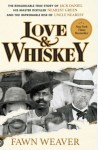
When interviewed in 2023, Fawn Weaver, founder and CEO of Nearest Green Distillery, commented on making a commitment to investing in minority founded, owned and led companies, saying, “When you are an African American woman who has figured out a pathway to success within an industry that has historically been reserved for white males, it becomes your responsibility to turn around and pull as you climb.” If you want to know the whole story I highly recommend reading Fawn’s incredible book, Love & Whiskey.
The leadership philosophy of “turn around and pull as you climb” means that as we advance and achieve success, we actively support and uplift others along their own journeys. Instead of climbing the ladder alone or leaving others behind, leaders who adopt this approach prioritize empowering their team members, sharing opportunities, and fostering collective growth. It emphasizes the importance of mentorship, collaboration, and mutual development, ensuring that progress is shared and that the success of one contributes to the success of many.
You Can’t Script This: Leading Like Victoria Eady Butler

Yesterday, I had an incredible experience at Nearest Green Distillery. I was honored to be there in the inaugural class of the Fifty-Six Society. But first for those who might not know who Nathan “Nearest” Green, or Uncle Nearest is, here is the deal: Uncle Nearest Green had been a slave whose job was distilling whiskey on a farm just outside Lynchburg, Tennessee. He was the first known African American master distiller who taught Jack Daniel the craft of whiskey making. You can find out how I became so inspired by reading In Love With Justice, Part I.

Fawn Weaver discovered discovered that Uncle Nearest was the first African American master distiller, who played a crucial role in the history of whiskey-making in America. Inspired by his story, Weaver felt compelled to honor his legacy and shed light on his contributions, which had long been overlooked. This led Fawn to create the Uncle Nearest Premium Whiskey brand, focusing not only on producing high-quality whiskey but also on telling the story of Nearest Green.
Through her efforts, Weaver has not only revived his memory but has also launched initiatives aimed at promoting diversity and inclusion within the spirits industry, ensuring that Green’s legacy continues to inspire future generations. If you tour Jack Daniel’ Distillery now you will find an exhibit dedicated to Nathan “Nearest” Green.
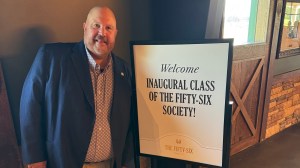
Now let’s fast forward to yesterday. As part of the Fifty-Six Society inauguration I got to spend time with Victoria Eady Butler. Wow, was I impressed. She is the great-great-granddaughter of Nathan “Nearest” Green. Victoria is now the Master Blender for Nearest Green Distillery and the first African American woman to hold this title in the American spirits industry. It was such an honor to spend time with, get to know, and learn from this great leader.

I asked Victoria what it was like to be Uncle Nearest’s great-great-granddaughter. She became very emotional and began a lesson in legacy that I will never forget. She said, “You can’t script this!” speaking of her great-great-grandfather having been the first African American master distiller for Jack Daniel and now her [Victoria] being the first African American woman to be a master distiller for Nearest Green Distillery some 160+ years later. Victoria shared, “What kept me going was the thought of ensuring everyone knew his [Nathan ‘Nearest’ Green] name.” Victoria also explained that being a part of making sure this story was never forgotten and helping to make sure other important stories were never forgotten gave her the courage to persevere in an industry that she and Fawn Weaver were not supposed to succeed in.
As an educator this all really resonated with me. I am a believer that every path matters. And all paths must be available to everyone. We’re not quite there yet, but with great leaders like Victoria Eady Butler and Fawn Weaver in the world as examples we can keep getting closer.
Embracing Fate and Personal Responsibility in Life’s Journey

I just started reading the newest release from one of my favorite authors, Patti Callahan Henry yesterday. The book is The Story She Left Behind. Patti is one of those authors that transports her readers into the story and writes in such a way that makes me reflect deeply on different topics. She has been an incredible inspiration to me both personally and professionally.

I’ve already been inspired to blog about fate. The protagonist in The Story She Left Behind, Clara, is an award-winning artist and during an interview is asked, “Clara, do you think there are things we are meant to do? That there’s such a thing as fate?” “Fate. It’s such a big word, isn’t it?” “Yes.” She met my gaze. “Fate. Destiny,” I (Clara) said. “They’re ours to make.” Clara went on to say, “I believe there are many things we’re put here to do. Don’t ask me by whom, because I don’t have that answer. But I think we come with many fates built into us and we can’t fulfill all of them. We choose.” “Many fates,” she said. “We choose. I like that.” “And yes, maybe my art is one of mine.” I’ve always been curious about about the idea that human lives are part of a larger divine purpose, which can be interpreted as a form of fate. Like Clara, I believe there are many things we are put her to do.
This made we think of George MacDonald who emphasized the importance of free will and personal responsibility within that divine framework, suggesting that while God’s overarching plan guides our lives, humans still have significant agency. His works encourage readers to trust in divine goodness and to understand that what may seem like fate often has deeper meaning in the context of spiritual growth. I don’t believe in a life where we just coast through with all decisions already made.

In George MacDonald’s novel, Lilith, he presented a worldview where divine providence and free will coexist, suggesting that what might appear to be fate is actually part of a larger divine plan guiding souls towards growth and enlightenment. I love the parallel between Cara’s belief that we choose between many fates and MacDonald’s Lilith where fate is depicted less as random or predetermined destiny and more as a divine orchestration that aligns with individual purpose and moral development. I believe we must recognize personal responsibility within a divinely ordered universe.
Charlie Hustle: Leading With Relentless Work Ethic
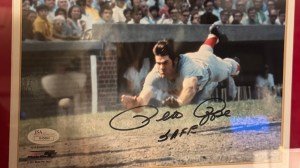
I find it apropos that I recently began doing reading about my childhood baseball hero, Pete Rose, and yesterday he is reinstated to baseball. It’s about time! As excited as I am about that and the prospect of him finally getting into the Baseball Hall of Fame, that’s not what this post is about. It’s about “Charlie Hustle.” Rose’s determination and energetic approach earned him the nickname, symbolizing his never-give-up attitude and dedication to the game. Pete Rose was nicknamed “Charlie Hustle” because of his incredible work ethic, relentless effort, and constant hustle on the baseball field. He was known for his aggressive style of play—always giving 100%, running hard to first base (even when walked), sliding headfirst into bases, and never giving up on plays.
In the book I just finished, Pete Rose: An American Dilemma, by Kostya Kennedy, Wade Boggs was said to have commented that it doesn’t take any ability to hustle and that he had learned the game from Pete Rose. The beauty of it is that hustle and effort are qualities accessible to us all, regardless of natural talent or skill level in whatever we do. Pete was known for getting to the baseball park before everyone and leaving after everyone was long gone.
One of my prized possessions in my office is a signed photograph of Pete sliding head-first into second (see featured photo). He inscribed it “SAFE”. It reminds me every day to hustle and jump head-first into everything I do, giving it my all. We can learn from the example of Pete Rose’s relentless work ethic and hustle on the field
 Byron's Babbles
leave a comment