Errors Vs Confusion

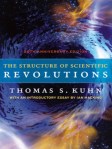
As a person who likes to get things done I often say, “Let’s do something, even if it’s wrong.” I don’t say this to be funny but to express that if we do nothing we won’t know what’s wrong, or how to fix it. Recently when reading the 50th anniversary edition of Thomas S. Kuhn’s The Structure of Scientific Revolutions I came across Kuhn’s learnings from Francis Bacon. He quoted Bacon. I found that Bacon had affirmed my thinking a long time ago.
Francis Bacon’s quote, “Truth emerges more readily from error than from confusion,” suggested that when we make mistakes, we can often learn and clarify our understanding. Errors can lead us to reassess our beliefs and assumptions, ultimately guiding us toward a clearer sense of truth. In contrast, confusion can cloud our judgment and make it difficult to discern what is true, as it often arises from a lack of clarity or understanding. Essentially, Bacon highlighted the importance of learning from our mistakes, as they can be stepping stones to greater insight, while confusion hinders our ability to find clarity.
Kuhn’s reference to Francis Bacon in The Structure of Scientific Revolutions adds depth to Bacon’s original ideas about knowledge, confusion, and the process of learning from mistakes. While Bacon emphasized the importance of learning from errors as a path to greater understanding, Kuhn built on this foundation by introducing the concept of paradigms in scientific progress.
Kuhn argued that science does not progress through a linear accumulation of facts but rather through a series of revolutionary changes in which existing paradigms are challenged and replaced. He suggested that confusion or anomalies within a prevailing paradigm often lead scientists to re-evaluate their understanding, paving the way for new theories.
In essence, Kuhn wanted us to learn that periods of scientific stability (normal science) can give way to crises when anomalies accumulate, forcing scientists to confront their assumptions. This process can initially seem chaotic and confusing, but it is ultimately essential for scientific advancement. Thus, while both thinkers valued the role of error and confusion in the quest for clarity, Kuhn expanded on Bacon by framing it within the broader context of scientific revolutions and paradigm shifts.
 Byron's Babbles
leave a comment