Passion, Chaos, & Order

This week I finished the second book in The Five Towers series, The Red Tower, by J. B. Simmons. The second book was just as incredible as the first and I am looking forward to reading the whole series. I took so many notes about things characters said in the book and now I am reflecting and thinking deeply about those and doing some blogging. The theme in the red tower was “let passion burn.” When I begin to contrast passion, with the genius of the blue tower, whose battle cry was, “respect the mind,” we begin to see the complexities of living our lives. With three books to go, I’m sure there will be even more insight into these complexities.

In The Red Tower, there is a dragon named Behemoth. When the protagonist of the book Cipher and Emma talk to Behemoth, the dragon told them, “Passion holds chaos at its core. All was chaos before order.” The statement by Behemoth suggested a profound philosophical insight into the nature of passion and chaos. Here’s my take on the message the dragon was conveying:
- Passion and Chaos: The phrase “Passion holds chaos at its core” implies that passion, while often seen as a driving force that energizes and motivates us all, can also be unpredictable and tumultuous. It reflects the idea that intense emotions or desires can lead to disorder if not channeled properly.
- Order from Chaos: The second part, “All was chaos before order,” speaks to the cyclical nature of existence. It suggested that chaos is a fundamental state of being, and from this chaos, order emerges. This reflects a philosophical view that creation and structure often arise from initial disarray.
Behemoth’s words, in this novel, indicate a deeper understanding of the human experience: that our passions can be both a source of creativity and turmoil, and that true order often comes from confronting and embracing that chaos. In the context of the novel, this could relate to character development or the overarching themes of struggle, growth, and transformation.
Passing The Baton For The Grand Slam Homer
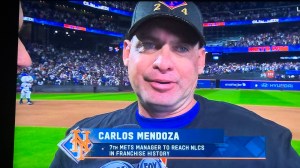
Of course I was watching postseason baseball last night as the New York Mets clinched the Division Series beating the Philadelphia Phillies 4-1. In that game Mets shortstop, Francisco Lindor, who I blogged about yesterday in We Are Never Bigger Than The Moment, hit a grand slam home run. In baseball that is a huge deal – scores four runs. In Mets postseason history that had only been done once before. The thing about this that I want to point out is that for Lindor to bring in the other three runs beside himself, there had to be three other players get on base ahead of him. Everyone was doing their job.
Following the game the Mets incredible manager, Carlos Mendoza, made the comment that the players were, “Passing the baton, no one is trying to do too much.” I loved this comment in the context of how this Mets team is winning in the postseason. As Derek Jeter said after the game, speaking of the Mets team, “They don’t rely on any one person to do it all.” This was referring to the collaborative culture and approach to teamwork and leadership that Mendoza and the Mets have created. Mendoza’s quote used the metaphor of a relay race, where team members pass the baton to one another, indicating that they are working together and supporting each other rather than trying to overshadow or outshine one another.
In this context, it suggests:
- Team Collaboration: Each member plays their part and trusts others to take over when necessary, fostering a sense of unity and shared responsibility.
- Shared Success: The emphasis is on collective achievement rather than individual glory, highlighting that everyone’s contributions are valuable to the team’s success.
- Balance of Effort: It points to a balanced workload where no single person is overwhelmed by responsibilities. Instead, tasks are shared appropriately among team members.
- Empowerment and Trust: It signifies that leaders empower their team members to take charge of their roles, trusting them to perform without the need for micromanagement.
Overall, Mendoza was highlighting a healthy team dynamic where collaboration, trust, and mutual respect are prioritized, leading to greater overall success. Are your team members passing the baton around?
We Are Never Bigger Than The Moment

I love watching baseball and the post-season is always exciting. Last night after the 7-2 New York Mets win over the Philadelphia Phillies, Mets shortstop, Francisco Lindor, was asked about what the key was to everyone performing so well right now together. He said, “No one is trying to be bigger than the moment.” I loved this. We often talk about things being bigger than us or being part of something bigger than us, and I really liked this way of putting it – don’t try being bigger than the moment.
Lindor’s comment, “No one is trying to be bigger than the moment” suggested that in a specific situation or experience, people, in this case a baseball team, are focusing on what is happening right now rather than trying to overshadow it or make it about themselves. It implied an appreciation for the present, recognizing the significance of the moment without any desire to draw attention away from it or elevate individual egos. Essentially, it values humility and presence over self-importance, encouraging individuals to fully engage with their current experiences instead of seeking personal validation or recognition.
Bottom line is one person cannot win a division series or ultimately a World Series. And one person will not make your organization a winner or successful. It takes a team realizing they are not bigger than the moment.
Failure Is An Option

This past weekend, while at the World Dairy Expo, a business person made a comment to me that was intriguing. She said, “Failure is an option.” This caused me to pause because we more often use the phrase “Failure is not an option” associated with NASA Flight Director Gene Kranz and Apollo 13 – even though that is more of a movie line than real quote from Kranz. While both phrases can be useful from a mindset perspective, let’s look at the context being used this weekend when it was said that “failure is an option.”
The phrase, in the context she was using it served as a reminder that adapting to new technology, new genetic research, evolving consumer demands, new techniques, and new equipment is essential for growth, continual improvement, staying relevant, and being profitable. Embracing change, even when it involves facing challenges or setbacks, allows us to learn and innovate. Failing to learn and innovate not only makes failure an option, it makes failure inevitable. Viewing these experiences as opportunities rather than obstacles can motivate us to stay curious and engaged with the world around us. It encourages a mindset where we are open to learning new skills and exploring new possibilities, ultimately leading to greater success in both personal and professional realms. We must recognize that not exploring new possibilities will enable failure to be an option.
Building Relationships By Understanding and Appreciating
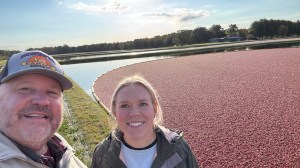
This past week I’ve had the incredible pleasure of being at the World Dairy Expo in Madison, Wisconsin. As you know we raise Jersey dairy show cows and so that is the place to be the first week of October. There will undoubtedly be posts about things I learned and my thoughts about applying what I learned to education, but for now I want to focus on something we (my wife was able to make the trip with me this year) did while in Wisconsin. One of the things I like to do is visit people I work with in the “real job” part of my life. I always say if I am within three hours of visiting someone I work with, I’m going.
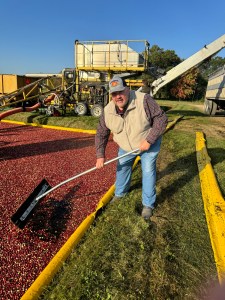
I stayed true to this yesterday. We went up to Tomah, Wisconsin to visit a National FFA Mentor Teacher Ambassador I have the honor of working with in the work I do with the National FFA Organization. We spent the day with Emma Huber who teaches agriculture at Portage Community School District. Emma’s family has a cranberry marsh (farm). Before yesterday, I knew nothing about cranberry production/harvesting. This was the weekend for harvesting the cranberries and my wife and I were able to spend the day taking part in all the operations associated with harvesting cranberries. It was actually quite the family affair, with family members coming from other states to take part. We also learned all about cranberry production. Needless to say, it was a glorious day, I learned A LOT, and we got to know Emma, her husband Josh, Emma’s mom, and the rest of the family and friends.
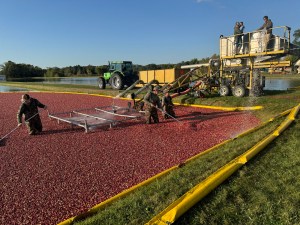
I love days like yesterday! As a curious learner and person who believes that relationships trump all – yesterday was truly was, as I said earlier, glorious. I have had the opportunity to visit several of the Teacher Ambassadors on their home turf or in their schools. This is important to me and one of my core values, “Listen, Hear, Learn, & strive to be better.” This is part of what I call “loving” those we serve. To be loved we must be understood and appreciated. I blogged about the line, “There is no point in being loved if you are not understood…And once loved and understood to be appreciated.” in The Life Impossible by Matt Haig in Living In Our Own Context.
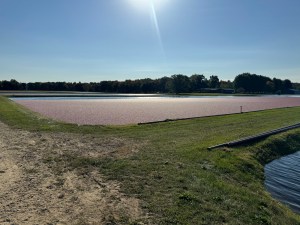
Visiting those we serve in their home work or personal interest environments can offer substantial value to our relationships. In other words, getting to know them on a personal level. Here are some key benefits:
- Building Trust and Rapport: Meeting people in their own space fosters a deeper connection, showing that we care about them as individuals, not just as colleagues or clients.
- Understanding Context: Home visits provide insight into the circumstances and challenges that our teams or constituents face, enabling us to make more informed decisions and policies. We agriculture teachers understand better than anyone, as ag teachers make regular visits to students as part of their Supervised Agricultural Experience Program. It really is all about building the relationship.
- Gathering Feedback: Engaging directly with those we serve allows for open dialogue and immediate feedback, which can lead to better understanding of needs and expectations.
- Demonstrating Commitment: Our presence in our friends and colleagues’ environments signal that we are committed to supporting them and valuing their input.
- Identifying Opportunities: Being on-site allows us to observe firsthand areas for improvement, innovation, and potential collaboration that might not be visible from a distance.
- Inspiring and Motivating: Seeing how our efforts impact individuals’ lives can reignite our own passion for our work and inspire those we serve.
- Encouraging a Culture of Openness: It sets an example of transparency and approachability, encouraging others in the organization to follow suit.
As a rabid learner and relationship guy, these visits are an important strategy that deepen connections and enhance my effectiveness as a leader. Make no mistake; visiting these ambassadors is a “get to,” not a “have to.” I love it!!!
Leading with Heart: Embracing Vulnerability and Purpose in Leadership

I have been a huge fan of the rap rock band Linkin Park since the beginning. Their music has exceptional storytelling qualities. The stories in their songs deliver meaning while obfuscating just enough to keep us thinking. Linkin Park’s songs carry a secret power – they make you think deeply about a subject that suddenly you are making your own sense of. Art at its highest form.
The addition of Emily Armstrong was a a perfect fit. Their comeback single The Emptiness Machine picks up right where they left off. The first time I heard it I was like, “Wow this is what people are struggling with in their careers.” How do we find purpose? How do we sort through false promises? How do we sort through the coercion, manipulation, and leadership by fear? As the song says, “Gave up who I am for who you wanted me to be; Don’t know why I’m hopin’ for what I won’t receive; Fallin’ for the promise of the emptiness machine; The emptiness machine.” The Emptiness Machine reflects themes of internal struggle, existential questioning, and the search for meaning, which offer us valuable lessons as leaders.
The lines, “I only wanted to be part of something; I only wanted to be part of, part of; I only wanted to be part of something; I only wanted to be part of, part of; I only wanted to be part of something; I only wanted to be part” say it all. We all want to belong and be part of something – not just carrying out some so called leaders prideful ambition. After food and safety on Maslow’s Pyramid comes the need to belong. We need to actively support others by getting to know them,
creating opportunities for them to make meaningful social connections and ensuring they have meaningful
contact with us.
The struggle for meaning highlighted in the song underscores the necessity of having a clear purpose. Leaders should articulate a vision that resonates with their team, providing direction and motivation. Belonging takes different forms for different people: cultural, social, sensory, embodied, spatial, material, temporal. Each of
these needs must be given consideration. Boundaries must be recognized and dismantled. To help others find a place to belong we must listen to, accept, appreciate, and understand how others’ purposes mesh with our organization’s purpose. It does not mean everyone must agree, for those differences are what make us great as individual humans and as organizations.
Everyone has some place or setting in which they can feel they belong. For some this is easily and readily attainable, but others will need additional support. Let’s make sure we are not creating organizations that are just empty machines.
 Byron's Babbles
leave a comment