To Visit New Worlds We Need To Change Our Minds

I am just about finished with The Life Impossible by Matt Haig and with every page I continue to be inspired and transported to new ways of thinking. In my most recent reading, the lines, “You see, if you want to visit a new world you don’t need a spacecraft. All you need to do is change your mind… And my mind was absolutely changed” jumped out at me.
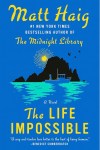
In those lines Haig has the character, Grace Winters, conveying the idea that profound change and exploration don’t always require physical journeys or external tools. Instead, he emphasized the power of mindset and perspective. By changing the way we think about our experiences and challenges, we can open ourselves up to new possibilities and understandings. This reflects a broader theme in his work about mental health, resilience, and the importance of looking at life through different lenses to find joy and meaning, even in difficult times. It encourages readers to realize that personal transformation can lead to a new way of experiencing the world around them.
This theme of visiting new worlds also reminded me of an analogy C. S. Lewis used in a paper entitled “De Audiendis Poetis” (1966). He compared travelling to a foreign country and reading old books. Lewis argued “There are more ways than one of reading old books… There are two ways of enjoying the past, as there are two ways of enjoying a foreign country. One man carries his Englishry abroad with him and brings it home unchanged. Wherever he goes he consorts with the other English tourists. By a good hotel he means one that is like an English hotel. He complains of the bad tea where he might have had excellent coffee… In the same way there is a man who carries his modernity with him through all his reading of past literatures and preserves it intact…” He continued, “But there is another sort of travelling and another sort of reading. You can eat the local food and drink the local wines, you can share the foreign life, you can begin to see the foreign country as it looks, not to the tourist, but to its inhabitants. You can come home modified, thinking and feeling as you did not think and feel before. So with the old literature. You can go beyond the first impression that a poem makes on your modern sensibility. By study of things outside the poem, by comparing it with other poems, by steeping yourself in the vanished period, you can then re-enter the poem with eyes more like those of the natives; now perhaps seeing that the associations you gave to the old words were false, that the real implications were different from what you supposed…” (Lewis, 1966, pp. 1-4).
As you read, Lewis discussed two types of foreign travelers: those who visit a place and absorb its culture and nuances, and those who remain detached and merely observe from the outside. This concept can be related to Matt Haig’s discussions about traveling and experiencing life.
In this way, I believe both Lewis and Haig suggested that genuine transformation, whether through travel or life experiences, comes from full engagement. Just as a meaningful journey is marked by understanding and immersion, rather than mere observation, so too can our lives be enriched by embracing change and finding meaning in moments of difficulty.
Reference
“De Audiendis Poetis” in C.S. Lewis, Studies in Medieval and Renaissance Literature (Cambridge University Press, 1966), pp. 1-4.
 Byron's Babbles
leave a comment