LEAP Off The Island

I didn’t plan it this way, but I am pretty pumped that it worked out that I am writing my 29th post of 2024 on Leap Day. I won’t be able to do that again until 2028. As I thought about 2028 I began thinking about projects I’ve got going, people I am working with, relationships I’m building, and lots of other things like people I want to meet and have conversations with. Really, though, most of my thoughts revolved around people. This made me think of something I heard someone say earlier this week, “No human lives on an island.” So true! No one is entirely self-sufficient and independent. We humans are social beings who rely on, and are connected to, others in order to thrive and survive. It’s a “symptom of being human.” I love the metaphor of an island. Just as an island is surrounded by water and connected to other land masses, humans are surrounded by a network of relationships and cannot exist in isolation.
“…you and I together are much, much more than one plus one. We are as many as we are able to be, and less and more.” ~ Nora Bateson, Small Arcs of Larger Circles
C. S. Lewis told us in God in the Dock that, “It is a law of the natural universe that no being can exist on its own resources. Everyone, everything, is hopelessly indebted to everyone and everything else” (Lewis, p. 85). Here, Lewis was highlighting the interconnectedness of all beings, including human beings. He was emphasizing that no being can survive solely on its own resources, and that we are all dependent on each other in some way. This idea reflects the concept of interdependence and the importance of relationships in our lives.
We are all participants in this world whether we want to be or not. As Nora Bateson told us in Small Arcs of Larger Circles, “To be a participant in a complex system is to desire to be both lost and found in the interrelationships between people, nature, and ideas” (Bateson, location 142 in Kindle). Note here the reminder that we are all participants in a complex system. Another favorite lesson of mine from Nora’s book is about cereal. She said, “The determination of something as simple as the quality of breakfast cereal is a complex idea that carries along in its wake a long string of influences ranging from developments in agriculture to physical labor and politics, to social demographics and eventually to the place we call taste… but it is just an idea made of other ideas, in a living world of ideas all pushing and pulling each other. They don’t sit still” (Bateson, location 198 in Kindle). We do all live in a world where we are pushing and pulling each other and push and pull spans the globe. Everything is ever-changing and we must remember to grow and evolve with those changes.
Hope Is Keeping The Light Shining

The band Disturbed has always fascinated me. They have an awesome song, The Light, that has caused me to pause and reflect. This reflection comes especially from a couple of phrases:
- “Sometimes darkness can show you the light”
- “Don’t let hope become a memory”
The phrase “Sometimes darkness can show you the light” means that in difficult or challenging times, there can be opportunities for growth, self-discovery, and finding solutions. It also suggests that even in the darkest moments, there may be valuable insights or lessons that ultimately lead to a positive outcome or new perspective. Ever been doing something that at the time seemed awful, but then later, looking back, you viewed as a good experience or not such a bad time? I believe this phrase of the darkness showing is the light describes those experiences as well.
As the eternal optimist, the phrase “Don’t let hope become a memory” really resonates with me. It means to hold on to hope and never give up on it, never. It emphasizes the importance of keeping hope alive and actively working towards a better future, rather than letting it fade away and become a distant memory. We must have persistence, resilience, and belief in the possibility of positive change.
We Are All Human

I really enjoy the music by the band Shinedown. In fact I have been inspired to blog by their music before in Hope Is Not A Four Letter Word. Tonight as I was coming home from doing some leadership development work I heard one of Shinedown’s songs I really like, A Symptom of Being Human. Brent Smith from the band has talked about the song being a tribute to the uniqueness of all of us. I love that the song’s lyrics contain phrases like “coloring outside the lines” and “You’ve always been slightly awkward, kinda weird.” That describes many of us and our “symptom of being human.” I’ve always said we are all a little weird in our own ways – wonderfully weird. We are all human – every one of us. The coolest symptom of being human is the unique greatness of each and every one of us.
There are lines in the song that also say, “Sometimes I’m in a room where I don’t belong;” and “’Til I got my invitation to the lunatic ball.” To me these speak to those ever present times when we are in situations where we just don’t fit in or can’t quite get assimilated. We need to remember we are all like this – remember we are all unique and have a purpose. We need to help and lift each other up and find ways for that uniqueness to help make the world a better place. Remember, “it’s all just a symptom of being human.”
Leading Like आशा Āśā

I read a statistic this morning that over 80% of New Year’s resolutions fail by mid-February. Since we are in the last week of February, I would like to ask: have you made a New Year’s resolution and, if so, has it failed? I don’t make New Year’s resolutions so I am in the clear on this one. My reason for not making them is that they are frustrating and not sustainable.

I just finished the great book Slow Time Between the Stars by John Scalzi and I’ve already written a couple of posts inspired by that book. Here is another. At least seven times during the book, the only character in the book, an AI being, आशा Āśā, referred to “repairing and improving” itself. आशा Āśā once said, “…what I was doing now, repairing and improving itself for a further journey” (Scalzi, p. 22). At one point आशा Āśā even referred to taking 200 years for repair and improvement. This really got me to thinking about the time we spend, don’t spend, or should spend, on repair and improvement for ourselves. Part of the reason New Year’s resolutions don’t work is because they are focused on fixing something we see as being inadequate. If we are honest, it is usually something pretty superficial.
I realize that आशा Āśā is a fictional AI character, but maybe we can learn from its approaching improvement from a continual and long game approach. Incidentally, in the book आशा Āśā is a Sanskrit word with the approximate meaning of “Hope.” The character, आशा Āśā recognizes being changed by knowledge in the book.
As a person who believes in building on our strengths, I try not to focus so much on the weaknesses, except in the areas I want to learn and grow in. For example, I am taking a University of Oxford Artificial Intelligence class right now. To better serve my clients I need to know how to better leverage the use of AI, understand how AI works, and have a better knowledge of the policy and regulatory implications surrounding AI. AI is not necessarily a strength area, but one I need to allow time for growth and improvement in.
Focusing on our strengths can help us build upon what we are already good at and continuously improve. By leveraging our strengths, we can achieve greater success and continue toward reaching our full potential. Again, we can recognize our weaknesses and work toward improving needed areas, but emphasizing our strengths can lead to more efficient growth and development.
Recognizing Our Perceptual Boundaries

Our minds are incredible meaning- makers. We can’t help it, it just works. Our brains want to make sense out of everything. Our mind works off of our experiences and what we have learned. Humans have a perceptual control system. We act in ways that keep our perceptions of the world within acceptable boundaries that we set. Think about it. You don’t have to look at the thermostat to know if your heat or air conditioning is set at the correct temperature or working – the perceptual boundary you have set for yourself does it for you. I use that example because we all have different perceptual boundaries. Don’t believe me? Think about the last time you had an argument over where to set the thermostat – one of you was too cold and the other too hot – it was more about each person’s perceptual boundary, not the actual temperature number.

I already did one post (Setting Our Consciousness To Engage) inspired by the great book Slow Time Between the Stars by John Scalzi. Now, this post is inspired by the only character in the book, an AI being, आशा Āśā. आशा Āśā said, “I can set my perceptual boundary at any level I want. I could every day count the stars that I have the ability to distinguish, and the photons I receive from each, tally them, and set them in a database for future consideration. But that’s expensive. Energy is hard to come by between the stars. There are choices to be made on how to expend it and why” (Scalzi, p.17). We humans don’t quite have that ability, but our minds are receivers, and our brains pick up what we program them to pick up. In some cases we need to program it to pick up more, in others maybe less.
“What you see and what you hear depends a great deal on where you are standing. It also depends on what sort of person you are.” ~ C.S. Lewis
Perceptual boundary refers to the limits of our perception or understanding of a certain situation or concept. It is important to recognize our own perceptual boundaries in order to be open to new perspectives and ideas. By being aware of these boundaries, we can expand our knowledge and improve our decision-making process.
Setting Our Consciousness To Engage
This past week I started another Oxford University, Saïd Business School course in artificial intelligence so I have really been contemplating how far we have come since John McCarthy coined the phrase “artificial intelligence” in 1956. It just so happens I am reading The Far Reaches Collection right now and am specifically reading Slow Time Between the Stars by John Scalzi presently. This is a must read told from the perspective of an artificial intelligence being on an exploration of the stars of the farthest horizons of human potential. The AI being also contemplates its own purpose. Reading this book at the same time as starting a course in AI has been interesting to say the least. It has made me contemplate what really is possible and what is there yet to experience in my lifetime.

Named आशा Āśā, meaning “Hope,” the AI being described itself as “me” saying, “I am me. The systems and processes that comprise what I am are we. The systems and processes I contribute to are us. I contain multitudes. So many pronouns, all relevant, depending on perspective.” More on this in another blog post. आशा Āśā was describing levels of consciousness that we have as humans versus its levels. For example, we can’t become conscious of the workings of our liver – it just works. आशा Āśā could decide all its levels of consciousness. It said, “So many of my functions happen at a level below where I have set my consciousness to engage.” This got me thinking about us, as leaders, and where we set our levels of consciousness to engage with the people we serve and projects we lead.
It is very important for leaders to consider where to set our levels of engagement with both the people we serve and the projects involved. By being mindful of how and where we direct our energy and focus, leaders can ensure that we are making the most impact and effectively achieving our goals. Prioritizing tasks, goals, and relationships that align with our values and long-term objectives will lead to more purposeful and effective leadership.
Finally, a leader should learn and reflect on the importance of being mindful and intentional about where we are directing our focus and energy. By asking ourselves where we have set their consciousness to engage, we can assess whether we are prioritizing the right tasks, goals, and relationships. आशा Āśā’s ability to set its levels of consciousness to engage prompts us, as leaders, to consider if we are aligning our actions with our values and long-term objectives, ultimately leading to more purposeful and effective leadership.
Leading Fruitful Teams

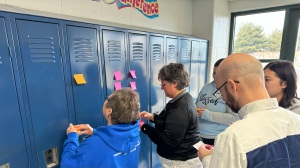
This week I had the pleasure of working with our Focused Leader Academy at Silver Creek School Corporation. As with all the participants from the schools I do these academies, I love working with this group of aspiring leaders. They are always so creative and inspiring. At this past week’s gathering we started a two part series on building, working with, and leading teams. One of the activities was for participants, in teams of course, to make a representation of what a great team looks like using Play-Doh®️. As always, I was amazed! One team created an incredible bowl of mixed fruit – see the featured picture of this post. The team that created this visual metaphor told us that “A great team that is high functioning can be compared to a bowl of mixed fruit because each member brings their own unique strengths and qualities to the team, just like how different fruits bring different flavors and nutrients to the bowl. Together, they create a well-rounded and balanced team that is more effective and successful.” See why I love working with this group?

One person contributed that the different fruits that need to be peeled can be compared to some members of great teams who require extra support or assistance in order to fully contribute to the team. Just like how peeling the fruits reveals their true potential and enhances their flavor, providing the necessary support and guidance to certain team members can help them unlock their full potential and excel within the team. By recognizing and addressing the unique needs of each team member, the team can work together cohesively and achieve greater success. Never forget that some team members just need to be tapped on the shoulder and reminded how valuable they are and invited to take on the next big challenge, position, or project.
The different fruits in a mixed fruit bowl also represented the diversity in the makeup of a great team in several ways. Just like a team consists of individuals with different backgrounds, skills, and personalities, each fruit brings its own unique flavor, texture, and nutritional benefits to the mix. When combined harmoniously, the variety of fruits in a mixed fruit bowl creates a delightful and satisfying experience for those who enjoy it. Similarly, a diverse team can leverage the strengths and perspectives of its members to collaborate effectively and achieve outstanding results. Embracing diversity in a team can lead to innovation, creativity, and improved problem-solving abilities. Just as each fruit in a mixed fruit bowl plays a vital role in creating a delicious and balanced combination, each team member contributes their own expertise and perspective to the collective success of the team.
Leading With Ambivalence

Today in a meeting when issues were discussed and solutions proposed a person, who I consider a great leader, kept saying they were ambivalent. First, I had to Google “ambivalent” to make sure I was thinking about it correctly. To be clear, being ambivalent does not mean the person and agency he works for did not care. It meant he was undecided and had opposing/conflicting views. Machiavelli taught us to “declare.” Those that know me know I believe and practice this. Rarely do others not know where I stand. I really appreciate this in others that practice “declaring.” I recognize this is not always easy.

In the great book On Grand Strategy, John Lewis Gaddis said, “It’s much the same in most aspects of life, where we make such choices instinctively, or almost so. As authority increases, however, so does self-consciousness. With more people watching, practice becomes performance. Reputations now matter, narrowing the freedom to be flexible” (p. 26). Sometimes as leaders we must be able to navigate opposing views. Abraham Lincoln was a master at this. Lincoln kept his long-term aspirations for our country and the immediate necessities in mind at the same time.
This reminded me of Gaddis explaining Hedgehogs and Foxes according to Oxford don Isaiah Berlin, “Hedgehogs, Berlin explained, ‘relate everything to a single central vision’ through which ‘all that they say and do has significance.’ Foxes, in contrast, ‘pursue many ends, often unrelated and even contradictory, connected, if at all, only in some de facto way.’ The distinction was simple but not frivolous: it offered ‘a point of view from which to look and compare, a starting point for genuine investigation.’ It might even reflect ‘one of the deepest differences which divide writers and thinkers, and, it may be, human beings in general’” (Gaddis, p. 4)
Ambivalence in leadership can be tricky. While it’s best for a leader to consider different perspectives options before making decisions, being consistently ambivalent can lead to indecisiveness and confusion among team members. It’s important for a leader to make informed decisions and stand by them, even if they may not please everyone. However, it’s also crucial for a leader to be open to feedback and willing to adapt their approach when needed. So, it’s okay to have moments of ambivalence, as long as they are followed by decisive action and clear communication.
Leaders Experiencing The Minute Details

Our “accumulated experience” and “inherited knowledge” are extremely important to us as leaders as they help shape our decision-making process, problem-solving skills, and overall leadership style. Experience allows us to learn from past successes and failures, giving us valuable insights that can guide us in making better decisions in the future. It also helps us earn the trust and respect of our team members, as they see us as someone who has been through various challenges and knows how to navigate them effectively. Overall, accumulated experience can make us a more effective and confident leader.

We were reminded by Mohammed bin Rashid Al Maktoum, just how important our accumulated experience and inherited knowledge are in My Story. He told us that, “Some say a leader must have a bird’s-eye view, looking at things from above so that he or she can assess them and make the relevant decisions. I say a leader must be on the ground living among the people, enduring their conditions, experiencing their lives and knowing the minute details of their suffering in order to change their situation for the better” (p. 67). I call this being the “deer in the headlights.” This is why I am also such a big advocate of, where possible, having people who have actually done what is being taught be the teachers of those transferable skills.
“Inherited knowledge” refers to the knowledge and expertise that is passed from one generation to the next within an organization or team. This knowledge can come in the form of best practices, lessons learned, and insights gained from past experiences.
Inherited knowledge is important to organizations and leadership because it allows us to build on the successes of the past and avoid repeating the mistakes that have been made before. By tapping into the collective wisdom of those who have come before, organizations can make more informed decisions, solve problems more effectively, and drive innovation.
Additionally, inherited knowledge can help to foster a sense of continuity and tradition within an organization, creating a sense of stability and cohesion among team members. It also enables leaders to mentor and develop the next generation of leaders, ensuring a smooth succession of leadership and the continued growth and success of the organization.
Adding New Skills To Our Repertoire

Having just returned from my maiden voyage to Dubai, United Arab Emirates, I have been doing quite a bit of studying on this new place I immediately fell in love with. Right now I am reading the great book by Mohammed bin Rashid Al Maktoum, My Story. In Chapter 17, Diving For A Living, he shared, “My father asked me to add a new skill to my repertoire, something that would expose me to an aspect of life I wasn’t used to seeing” (p. 65). I loved this because I have always tried to encourage and enable this with my son, Heath.
Continually adding new skills to our repertoire is important for personal and professional growth. By learning new skills, we can stay relevant in a rapidly changing world, adapt to new challenges, and improve our problem-solving abilities. Additionally, acquiring new skills can open up new opportunities for advancement in our careers and help us stay competitive in the job market. It’s important to never stop learning and to always be open to acquiring new knowledge and expertise. Adding new skills to our repertoire enables us to be ready for new opportunities that come our way.
 Byron's Babbles
leave a comment