Discover Life Firsthand

Dave Grohl’s statement “I was discovering life firsthand” in The Storyteller: Expanded…Because There’s More To The Story, emphasized the importance of personal lived experiences and living in the present moment. It implied that he believes in actively engaging with life, seeking new experiences, and learning from them. His mother had provided and made possible many of those experiences. Grohl’s mother was a school teacher and clearly understood the value of lived experiences. This can also serve as a reminder for us to embrace opportunities, take risks, and be open to new perspectives. It encourages us to step out of our comfort zones, seek personal growth, and approach life with curiosity and a sense of adventure.

We need to make sure we are providing these opportunities for adventure and curiosity for all students. There are several ways to ensure that students have opportunities to discover life firsthand. Here are a few suggestions:
- Experiential Learning: Providing hands-on experiences and real-world applications of knowledge. This can include field trips, internships, apprenticeships, or project-based learning.
- Outdoor Education: Encouraging students to spend time outside, connecting with nature and participating in activities such as camping, hiking, or community service in environmental projects.
- Volunteering and Community Service: Encouraging students to engage with their community through volunteering. This provides them with the opportunity to make a positive impact, develop empathy, and gain firsthand experiences.
- Cultural Immersion: Organizing cultural exchange programs or activities that expose students to different cultures, beliefs, and perspectives. This can be done through partnerships with organizations, hosting international students, or arranging cultural events.
- Personal Projects: Allow students to choose and pursue personal projects that align with their interests and passions. This gives them autonomy and allows for self-directed learning, enabling them to engage with life on their own terms.
- Reflection and Discussion: Creating spaces for reflection and discussion where students can share their experiences, learn from each other, and develop critical thinking skills.
These are just a few of many examples, but by providing these opportunities, we can help students develop a deeper understanding of the world around them and foster a sense of curiosity, independence, and personal growth. And, by the way, research tells us that these lived experiences provides prior knowledge which improves students’ ability to learn to read.
People Inspire People

This is another post inspired by the great book, The Storyteller: Expanded…Because There’s More To The Story, by Dave Grohl. Several times in the book he said, “People inspire people.” Many of his stories in the book are how others inspired him to be who he is today. I love how he connects almost everyone he talked about to somehow being a key to his success. This was a reminder of how important every single person is to us and our continual development. Funny, we talk about the formative years being from birth to age eight, but I would argue, and I suspect Grohl would too, that every year of our life is formative as other people continue to inspire us.

As we close out 2023, I can think of many others who have inspired me and that I have learned from in the past year. I am way past the age of eight, but this was still a formative year for me. This is why I believe we should always view everyone as humans and not superheroes. Ordinary people are who inspire us. Grohl has inspired me to continue to be diligent in trying to create educational environments where every child can find and develop their passion. Grohl talked about being different and how tough that was. It shouldn’t be tough! We are all exquisitely unique and we need to be encouraging that uniqueness in others and cultivating our own uniqueness.
When Grohl said, “People inspire people,” he meant that individuals have the power to inspire and motivate each other. He believed that through our actions, words, and creativity, we can have a positive impact on others and encourage them to pursue their dreams and goals. Grohl emphasized the importance of human connection and how we can learn from and be inspired by one another’s experiences and achievements.
Make Time

In the great book, Be Useful: Seven Tools For Life, Arnold Schwarzenegger said, “The key is not to try and find time, but to make time.” He meant that rather than waiting for time become available (which we know never happens), it is necessary to prioritize and allocate time for important tasks or activities.

Schwarzenegger emphasizes the importance of being proactive and taking control of one’s schedule in order to accomplish goals and objectives. Instead of passively searching for free time, it encourages individuals to actively create and dedicate time for things that matter to them.
Question Storming

I’ve got another post inspired by the great book, Change Your Questions, Change Your Life: 12 Powerful Tools For Leadership, Coaching, and Life by Marilee G. Adams. The term “Q-storming” is introduced. Instead of formulating answers, the idea is to generate as many questions as possible. This is really about collaboration, innovation, and deeper understanding. As a person who loves to ask questions I love this concept. This is all about understanding the other person or issue at hand.
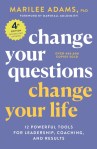
Through question storming, we involve brainstorming through the use of questions rather than statements. This approach allows individuals to explore problems, challenges, or opportunities from different angles. This further promotes curiosity and creativity.
Curiosity To Exercise Judgement

In the great book, Change Your Questions, Change Your Life: 12 Powerful Tools For Leadership, Coaching, and Life by Marilee G. Adams the concept of judger mindset is explored. We can either be judgmental or exercise judgment. And the two are very different. Being judgmental refers to forming negative opinions or making harsh criticisms about someone or something without considering all the facts or being open-minded. It usually involves a biased and narrow-minded perspective.
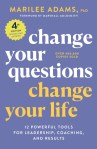
This really comes down to a leadership trait I talk about a lot: being curious. The book reminds us that “our questions shape our world. They can confine us in judgment or liberate us with curiosity.” Exercising judgment means making informed decisions or evaluations based on careful consideration of all relevant factors. It involves using critical thinking skills, gathering information, and analyzing different perspectives before coming to a conclusion. It comes down to, as Adams explained, being a “learner.” Asking, “How can I assist them to thrive?” instead of, “Why can’t they do anything right?” Exercising judgment, as leaders, allows us to be fair, objective, and rational.
While being judgmental can be harmful and create negativity, exercising judgment is an essential skill that helps us navigate through life and make wise choices.
Manifested Twist of Faith

I am a huge believer in vision boards or other visual representations as a reminder of goals, things we want to accomplish, or a future vision we have for our lives. In his great book, The Storyteller: Expanded…Because There’s More To The Story, Dave Grohl explains his experience with the manifestation of his incredible career in music. I wish all young people, and old too, could hear this story. So, read the book! Grohl reminded us in the book that:
- If you can perceive it, you can achieve it.
- What you imagine you create.
- What you think you become.
- What you feel you attract.
Good stuff! Right? As Grohl told us, it’s the Law of Attraction. The Law of Attraction is a belief or theory that states that thoughts and intentions have the power to attract similar experiences and outcomes into our lives. According to the Law of Attraction, what we focus on and believe in will manifest in our reality. suggests that by visualizing and aligning our thoughts and emotions with our desires, we can attract positive experiences and achieve our goals. The Law of Attraction teaches that our thoughts and energy are like magnets, drawing in whatever we focus on, whether it be positive or negative. It is often associated with the idea of manifesting one’s dreams and creating a life filled with abundance and happiness.

A manifested twist of faith is when something unexpected or unplanned occurs in a person’s life that ultimately leads to a positive outcome or change. It is often seen as a result of fate or divine intervention, where circumstances align in a way that brings about a different and favorable outcome than what was originally expected or intended. It is a belief that everything happens for a reason and that even seemingly negative events can lead to something better in the long run.
Back to my original comment on vision boards. Vision boards are an important tool for achieving our dreams and goals because they help to visualize and manifest what we want to achieve. By creating a visual representation of our aspirations, we are able to focus our energy and attention on them, which can increase our motivation and drive to take action towards achieving them. Vision boards also serve as a constant reminder of our goals and can help to keep us on track when faced with challenges or distractions. Additionally, vision boards can help to clarify our desires and provide clarity on what steps we need to take in order to achieve them. Overall, vision boards are a powerful tool for manifesting our dreams and making them a reality.
As a big time Dave Grohl and Foo Fighters fan I highly recommend putting this book at the top of your to read list. You might just have a manifested twist of faith.
Being Compassionate and Competent At The Same Time

This week as I was doing some follow up work for a leader I am coaching and mentoring I had a person describe her as being both compassionate and competent at the same time. Describing this up and coming leader in this way affirmed what I am seeing and was a spot on observation. Then I got to thinking what a perfect combination of leadership traits these are for serving those we lead. A leader who is compassionate and competent at the same time has several advantages. Firstly, their compassion allows them to understand and empathize with the needs and feelings of their team members. This helps build strong relationships based on trust and loyalty, which in turn fosters a positive work environment.
Secondly, their competence ensures that they have the skills and knowledge necessary to effectively lead and make informed decisions. This allows them to inspire confidence in their team members and gain their respect. In my leadership development program we have dubbed this “Not being a moron.” This is not to be funny, but remind us the importance of recognizing what we don’t know, being authentic about those things, and where possible continue to grow and develop.
Additionally, a compassionate and competent leader can also effectively motivate and inspire their team. They understand the importance of recognizing and appreciating their team members’ contributions, and they provide support, guidance, and development opportunities to help their team members succeed.
Overall, a leader who is both compassionate and competent can create a harmonious and productive work environment, leading to higher employee satisfaction, increased productivity, and better overall performance for the organization.
 Byron's Babbles
leave a comment