Trust Is A Verb

I just finished rereading the great book Nuance: Why Some Leaders Succeed and Others Fail by Michael Fullan. I blogged about what prompted me to do this reread in “Nuance: Subtle Differences.” We are, and have been, experiencing times when complexity challenges our ability to adapt. This is particularly true in educational systems where we must meet individual student needs. Fullan offered help for thinking about systems change around three habits of nuance: joint determination, adaptability, and culture-based accountability.

Fullan argued that “trust is a verb before it becomes a state.” Someone can’t earn your trust without you first trusting them on something. In other words you can’t talk your way into trust. Trust becomes part of the community culture in real time. It is an action. When a leader is an active participant and becomes part of the group, accountability becomes a shared norm instead of something imposed from above. This resonates with me so much because I so desire the establishment and maintaining of a culture and community of innovation and commitment. This requires deep levels of trust.
Baby KISS Leadership

I recently had an aspiring leader in a development gathering I was facilitating describe herself as a “baby leader.” I loved that and so did the rest of the group. As a lover of metaphors I immediately started relating all the things we do and learn as a baby to leadership. Then, yesterday I was given a book titled Baby KISS. Awesome! It’s a children’s book for learning colors – using the KISS band members and rock and roll items for learning. As it says on the back cover of the book, “Let’s rock and roll all night! Black-and-white face paint. Pink tongue. Gold cymbals. White Lights. Introduce little ones to legendary KISS in this bright, bold, and rockin’ board book.” This made me think back to our “baby leader” where we began this post. We need to help our aspiring leaders in the same way that the Baby KISS book and KISS themselves help us learn: with big, bold, vivid colors, well-illustrated examples, and recognizable images that are easily remembered.


As a person who grew up with KISS and is still a proud member of the KISS Army, here is what I have learned:
- Overcommunicate – Anthems build enthusiasm – Become infectious by using different ways of telling your story.
- Bring it with shock and awe, and be astonishing – KISS provided fans the band they always wanted to go see. In other words, go a little farther than others are willing to go!
- Don’t be vanilla – Be audacious and authentic. Be crystal clear about who you are and why you are unapologetically proud of it.
Now, I am pretty confident that I have some reading this post who are KISS fans and in the KISS army too. What have you learned you developed from “baby leader” to who you are today?
Finding Your Growth Edges

I love my Monday morning study time. It involves reading the next chapter in Mindset Mondays with DTK by David Taylor-Klaus (DTK). This week’s chapter (37), entitled “Uncomfortably Comfortable” did not disappoint. DTK told us that, “…growth happens when we lean into our edge” (p. 263). I love the imagery of growth edges in self-development. We are invited into a new narrative that is possible for us, but this new narrative is just being written and we have not yet embodied it. It can be uncomfortable to see a new way of being, a new way of doing something, or some new subject to learn, in front of you, understand and be inspired by the possibility of it, and yet still employ your old set of behaviors because it’s all we know to do. This is when we need to let our conscious incompetence take over. DTK reminded us that Martin M. Broadwell first described conscious incompetence as the second part of the “the four levels of teaching” model in February 1969.
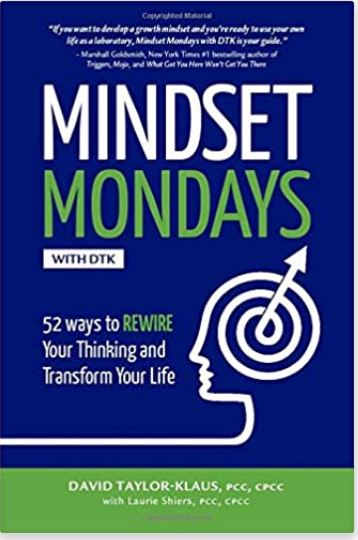
I don’t know about you, but I can appreciate how huge it is to be aware of something that wasn’t even in my consciousness, but then realize the gap. This stage, however, when we become aware of the thing that needs to shift but we haven’t yet shifted, can be a little uncomfortable. It’s having the desire for change while feeling stuck being how we’ve always been. Sometimes it becomes making mistake after mistake after mistake and thinking you’re never, ever going to get it – until you do “get it.” This is where we must channel our inner child and keep falling until we learn to walk. I always tell people we must allow our self the opportunity to bad at something before we can be good at it. DTK said, “Yet juicy, exponential growth comes from breaking free and experiencing what’s out there” (p. 265). Additionally, don’t forget to ask for help. DTK also told us to “…collect allies. Most likely, if you could’ve done it alone, you already would’ve” (p. 265). When we encounter conscious incompetence, we have a choice. We could let our inner critic take over, or we can enjoy being uncomfortable and learning something new.
Finally, we need to appreciate the how huge it is to become aware of something that wasn’t even in our consciousness until now. Think about about it, in this state we know what we don’t know! So, allow yourself to fall as you learn to walk, enjoy the messes you make along the way, and then reflect on how far you’ve come. Will you allow yourself to find the growth edges in your self-development?
Loving Teachers

As we close out Teacher Appreciation Week for 2021 I wanted to weigh in with my thanks and call for us all to love our teachers year round, not just a designated week. During a presentation I recorded for ASCD’s Annual Conference this week, I talked about how we needed to love our teachers if we wanted to stop losing great teachers and change the trajectory of teacher retention in a positive direction. I do not take the term “love” lightly and learned about this form of “love” from Beverly Kaye and Sharon Jordan-Evans, authors of Love ‘Em Or Lose ‘Em. To love our teachers we must be providing opportunities to grow and develop and be the best at carrying out their purpose of serving students every day. I am a former teacher and school leader who has shifted to creating and developing meaningful learning environments and transformative professional learning opportunities for educators and leaders, both in my day to day professional life, and as a citizen leader and policy maker. As a believer that everyone is a leader, we need to make sure we are doing everything possible to love our teachers, listen to their needs and desires, and honor them every day.
We have learned much about leading through a crisis during the past year. The pandemic has challenged us to be more agile in educating our children. Our teachers have met the challenge. Responding to new conditions and new data prompted us all to see school as no longer a single place. My hope is that we will double down on rethinking what success looks like in education. I also want to acknowledge the adjustments that teachers have always made every day to increase equity, access, rigor, and engagement for all students. As I write this I am reminded of the great teachers I have had over the years and continue to have. I am very fortunate to work with teachers every day and must say that I still learn from them each and every day. I was blessed to have teachers who had amnesia for the mistakes and my sometimes (okay, maybe more than sometimes) less than perfect actions. My teachers were pivotal figures in my life. They not only educated me, but set me up for a life of success.
Thank you teachers for inspiring our students to think outside the box, outside of the classroom, and into the future. We need to be guiding students toward their largest, best, life-long interests; not just the narrow obstacle course we now control. Therefore, I stand committed to showing you love by continuing to push for, advocate for, champion for, and be a cheerleader for creating space and flexibility for creativity, curiosity, and innovation you deserve.
Imagining In Your Mind’s Eye

I am sure this is going to be the first of many posts about the new book I am reading by one of my favorites, Malcolm Gladwell. The book is The Bomber Mafia and it is awesome! One of the topics that came out in the book was the idea of seeing things in your mind’s eye. Gladwell discussed that this is something that engineers do very well – seeing something in your mind that hasn’t even been created or creating an image in your mind of something you are not presently looking at or have never even seen. Being the husband of an engineer I can tell you this is a trait – her mind just seems to work differently at times. It turns out, however, we are all able to do this to a certain extent. I just had to dig in and learn more about this.

It has always been amazing to me how I can run into a former student and my mind maybe can’t come up with the name, but I can remember where she liked to sit in the classroom and see the classroom as if I am standing there 25 years ago. Then I sometimes imagine a completely redesigned classroom. Neuroscientists have shown that imagining an object activates some of the same brain regions as looking at that object. When we look out at the world around us we depend on light to bounce off objects and enter our eyes. This light is then converted it into electrical signals. These electrical signals travel to our brain where basic visual features, such as lines, angles, and previously seen patterns are processed. The electrical activity then goes to the front part of our brain where visual areas perform complex processing, and in a few hundred milliseconds of light entering the eye, a perception of the object is created in our brain. This is where the brain takes our previous memories and patterns to form the image.
The latest research suggests that when we imagine an object, the brain activates the entire representation of that object at once rather than building it up in the steps outlined above. The context for this learning in Gladwell’s great book was Carl Norden, a Swiss engineer, who developed the Norden Bombsight. Norden believed the device would lower the suffering and death toll from war by allowing pinpoint accuracy during bombing runs. He imagined the design for the device, that used 64 algorithms, in his mind’s eye. It even had an algorithm taking into account how much the earth would spin in the time it to a bomb to reach earth from 30,000 feet. Gladwell stated that you find paperwork descriptions or drawings. He did all his work in his head.
Gladwell pointed out that these great developments happen from someone becoming obsessed. What are you obsessed with?
Not Done Yet

Not Done Yet!: How Women Over 50 Regain Their Confidence and Claim Workplace Power by Bonnie Marcus
My rating: 5 of 5 stars
I read this book to improve as a leader who works with and serves great women leaders. The insight gained from this book is immediately usable. There have already been many instances where I have been very glad I read the book.
View all my reviews
Nuance: Subtle Differences

Nuance is a word I use a lot as a leader, as a noun, verb, and adjective. For me it is more than a word, however. As a student of Michael Fullan, I am a big believer that nuance is the answer to dealing with complex changes and the complex issues we have in the world today. In fact, being prompted to think deeply about what nuance means to me as a leader while reading Nonsense: The Power of Not Knowing by Jamie Holmes also prompted me to start re-reading Michael Fullan’s great book Nuance: Why Some Leaders Succeed and Others Fail. Holmes argued that straightforward answers are not always the best ones. The challenge is that in times of uncertainty and anxiety, people look for, and want straightforward answers. An inability to weigh new or different options is usually a hindrance. We many times desire simple explanations over ambiguity even when the simple explanations are completely false. Holmes also pointed to how President George W. Bush was reported to have said “I don’t do nuance” after the attacks on 9/11. Bush’s popularity increased following this. The problem was, there might have been some nuances overlooked during that period that could have lead to even better and more lasting solutions, but we were all fearful of other attacks and looking for immediate action. Studying history using hindsight can be dangerous, but there might have been cause to consider the nuances of the time. Harry Truman spoke often about the nuances of leadership and I blogged about this in “Remember, Freedom Is Yours Until You Give It Up.” In fact, I really hadn’t noticed how much I contemplate nuance, but I noticed is preparing this post that I have discussed nuance in nine different blog posts.
“The test of a first rate intelligence, is the ability to hold two opposed ideas in mind at the same time, and still retain the ability to function.”
F. Scott Fitzgerald
Under pressure people want a quick solution. This also drives these same people to favor just being told (authoritarian) what to do. I’ve experienced this before in policy discussions where things get a little messy with multiple good ideas, multiple ideas where the best of bad ideas has to be chosen, or opposing ideas that are both viable options. Individuals will suddenly say things like, “Just tell us what you want us to do.” When thinking of nuance I am reminded that two diamonds can be of identical size and color, but there are always slight differences not recognizable to the untrained eye. These differences can greatly add to or subtract from the value of the diamond. We need to think about the many complexities we deal with in our leadership worlds as diamonds and make sure we are studying all of the subtleties (nuances). The worst leaders tend to speak, direct, manage, and go “hands on” way too much. These leaders miss the nuances and go to what they know (or think they know) and insert themselves and begin “telling.” Remember, this fast and expedient route to the finish line can miss weighing all options and might miss great subtle and nuanced solutions.
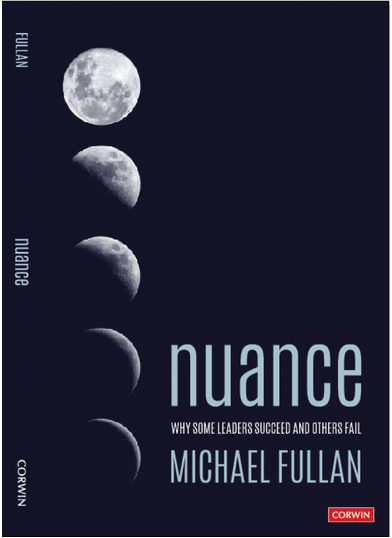
Fullan taught us that “Nuance leaders have a curiosity about what is possible, openness to other people, sensitivity to context, and a loyalty to a better future. They see below the surface, enabling them to detect patterns and their consequences for the system. They connect people to their own and each other’s humanity. They don’t lead, they teach.” If you’ve ever experienced a leader that does this, you are thinking fondly of them right now. Unfortunately, there are so many leaders that have not figured this out. I was fortunate to have a leader early in my career who was a flawless nuance leader. He was extremely humble and I would compare him to being the orchestra director allowing us to express our own talents while bringing each instrument together for beautiful music. Our school was on an upward trajectory and serving our students at the highest level of excellence. Here’s what makes the difference: nuance leaders consider the lived experience of others as a result of the current reality and how that might change with each decision. Don’t forget to look for the subtle differences?
Incremental

In Chapter 36 entitled “Reinvent as Necessary” in Mindset Mondays with DTK by David Taylor-Klaus (DTK) reported that recent high school graduates would have seven different careers in their lifetime. Another prediction he reported was that of those seven careers, four haven’t even been invented yet. Therefore, those graduates, or us for that matter, don’t need to know what they want to do for the rest of their lives; just what they want to do next. DTK taught us that this reinvention can happen any time and that we need to “Lean into the power that comes with the recognition that you are a choice. And since you’re at choice, now you can choose something that serves you well, instead of settling for the status quo” (p. 259). I believe this reinvention is really a gradual evolution. It’s interesting to think back on the person I was back in 1985 and began teaching and then contrast that with the person I am today supporting and developing teachers and school leaders. I love what Rebecca Solnit said in The Faraway Nearby:
“Even earthquakes are the consequence of tensions built up over long spans of time, imperceptibly, incrementally. You don’t notice the buildup, just the release. You see a sick person, an old person, a dying person, the sight sinks in, and somewhere down the road you change your life. In movies and novels, people change suddenly and permanently, which is convenient and dramatic but not much like life, where you gain distance on something, relapse, resolve, try again, and move along in stops, starts, and stutters. Change is mostly slow. In my life, there had been transformative events, and I’d had a few sudden illuminations and crises, crossed a Rubicon or two, but mostly I’d had the incremental.”
Rebecca Solnit, The Faraway Nearby
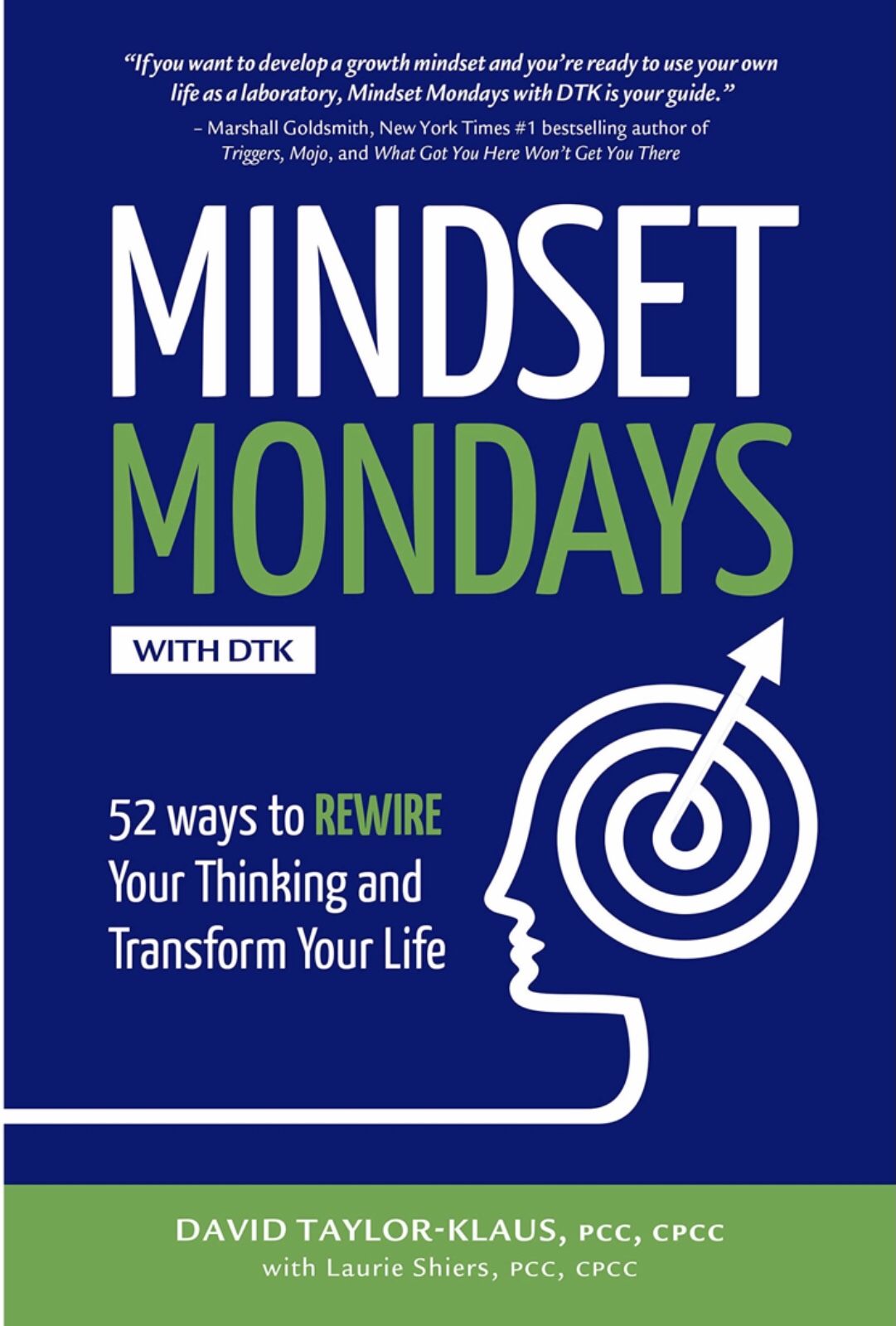
Another point to consider is that this reinvention or evolution encompasses both the personal and professional arenas of our lives. It’s hard to keep them fully compartmentalized. True self-reinvention or evolution happens from the inside out as we realign our lives with our own values, dreams, and priorities. To truly reinvent ourselves we must also go beyond just surface level changes. It goes beyond job changes or changes in the way we look. There is a difference between seeming different and becoming different. Don’t forget, self-reinvention isn’t about becoming someone else—it’s about realigning our own lives with what we want to become. It’s about becoming who we know we can be based on our own choices of what we believe, what we think, and what we will do.
 Byron's Babbles
2 comments